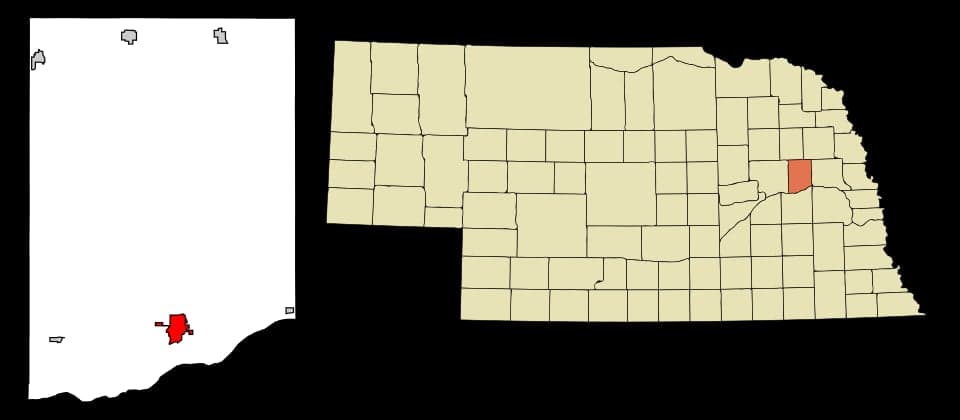
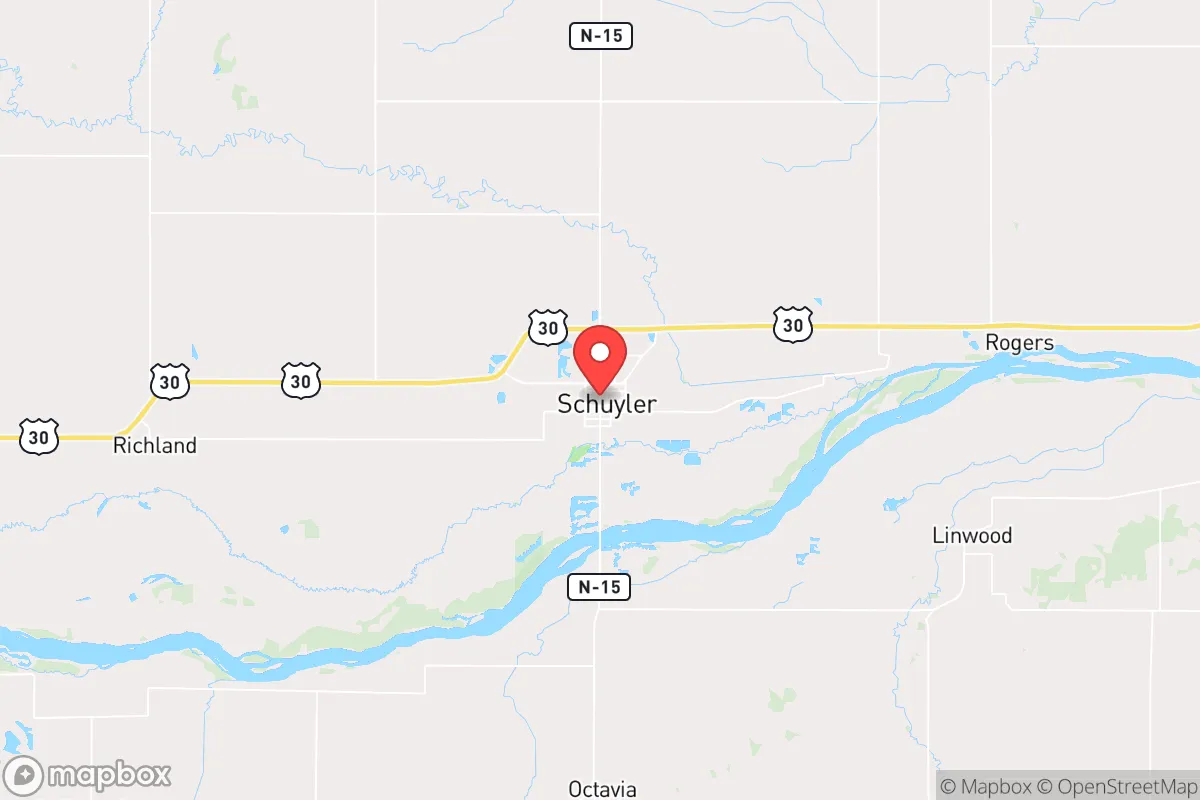
Photo: Wikipedia
Personal Sovereignty in Schuyler, NE
Moderate friction. Expect trade-offs in some aspect of personal liberty and independence.
What does Personal Sovereignty tell us?
Personal Sovereignty measures your capacity for self-reliance and independence with minimal government friction. Higher scores mean fewer barriers between you and the way you want to live... but it assumes you have the space you need and good neighbors.
What does this tell us?
Personal Sovereignty measures your capacity for self-reliance and independence with minimal government friction. Higher scores mean fewer barriers between you and the way you want to live... but it assumes you have the space you need and good neighbors.
State Policy
Energy independence: Importer (35% of energy produced in-state)
Personal Liberty
Homesteading

Personal Liberty Analysis
Schuyler, Nebraska, offers a notably high degree of personal sovereignty, particularly for those prioritizing minimal government interference in daily life. As a small, agricultural community in Colfax County, it operates within a state framework that consistently ranks among the most liberty-oriented in the nation, with no state income tax on Social Security benefits, a flat income tax rate of 5.84% (phasing down to 3.99% by 2027), and a constitutional carry law that respects the right to self-defense without a permit. For single individuals and parents seeking to live with fewer entanglements from state or federal overreach, Schuyler presents a practical, low-friction environment where personal responsibility is not just encouraged but expected.
Tax burden and regulatory posture: How Nebraska compares to high-tax states
Nebraska’s tax structure is a significant draw for those fleeing high-tax jurisdictions. The state’s flat income tax is straightforward and predictable, avoiding the progressive brackets that penalize success in states like California or New York. Property taxes in Colfax County are moderate, with the average effective rate around 1.5% of assessed value, which is slightly above the national average but offset by the lack of a state estate tax and the aforementioned income tax advantages. Sales tax in Schuyler is 7%, combining the state’s 5.5% base with local levies, but essentials like groceries and prescription drugs are exempt. Regulatory posture is equally favorable: Nebraska is a right-to-work state, meaning no forced union membership, and occupational licensing requirements are less burdensome than in coastal states. For a survivalist or prepper, this means fewer bureaucratic hurdles when starting a home-based business, repairing vehicles, or engaging in trades—activities that are often heavily regulated elsewhere. The state’s approach is simple: keep taxes low and regulations minimal, allowing individuals to keep more of what they earn and make their own decisions about how to live.
Self-defense and gun law specifics: Constitutional carry and no red flag laws
Nebraska is a constitutional carry state as of 2023, meaning law-abiding adults can carry a concealed firearm without a permit. This is a bedrock liberty for those concerned with self-defense in an uncertain world. There is no state-level red flag law, no firearm registration, and no waiting period for purchases. The state preempts local governments from enacting stricter gun ordinances, so Schuyler’s city council cannot impose its own bans or restrictions—a critical protection against the patchwork of local gun laws seen in states like Colorado or Washington. For parents, this means the ability to teach children firearm safety and marksmanship without fear of overbearing regulations. Nebraska also recognizes permits from all other states, making travel with firearms straightforward. The only notable restriction is that concealed carry is prohibited in certain locations like schools and government buildings, but these are standard exceptions. For the prepper mindset, this legal environment supports the idea that the individual—not the state—is the first line of defense, and Nebraska’s laws reflect that principle.
Self-reliance and homesteading viability: Lot sizes, zoning, and off-grid feasibility
Schuyler’s rural character makes it a strong candidate for those seeking self-reliance. Residential lots in town can be as small as 6,000 to 8,000 square feet, but properties on the outskirts or in unincorporated Colfax County offer acreage from 1 to 40 acres at prices far below national averages—often under $5,000 per acre. Zoning is minimal: Colfax County has no county-wide zoning ordinance, meaning you can keep chickens, goats, or even a small livestock operation on your property without seeking variances. Off-grid living is feasible, though Nebraska’s climate requires serious planning. The state does not mandate grid connection for new homes, but you will need to comply with the Nebraska State Electrical Code if you wire your own structure. Rainwater collection is legal, and there are no state-level restrictions on solar panels, though net metering policies are modest. For the survivalist, the key advantage is the lack of HOA-style restrictions common in suburban developments—you can build a root cellar, install a wood stove, and store supplies without a homeowners’ association telling you otherwise. The local soil is fertile for gardening, and the Platte River nearby provides a water source for those with the means to access it. This is not a place where the government will stop you from becoming self-sufficient; it’s a place where you’re expected to handle your own needs.
Personal liberties: Parental rights, medical autonomy, speech, and property
Nebraska has a strong track record on parental rights. The state does not have a universal vaccine mandate for schoolchildren, and parents can opt out of specific immunizations for medical or religious reasons with minimal paperwork. During the COVID-19 pandemic, Nebraska was among the least restrictive states, with no statewide mask mandate or prolonged business closures—a reflection of a culture that trusts individuals and families to make their own risk assessments. Medical autonomy extends to the right to refuse treatment, and the state has no law forcing individuals to participate in government-run health programs. Free speech is robustly protected under the Nebraska Constitution, which explicitly states that “every person may freely speak, write, and publish on all subjects.” Property rights are similarly strong: Nebraska has a “private property rights” act that requires government agencies to consider the impact of regulations on property values, and eminent domain for private economic development is restricted. For parents, this means you can homeschool without excessive state oversight—Nebraska requires only that you provide instruction in core subjects, with no mandatory testing or curriculum approval. The overall message is clear: the state views you as a capable adult, not a subject needing management.
In the broader context of American liberty, Schuyler, Nebraska, stands out as a place where personal sovereignty is not just tolerated but structurally supported. Compared to states with high taxes, restrictive gun laws, and aggressive public health mandates, this area offers a refuge for those who value self-reliance and minimal government intrusion. The trade-offs are real—limited job diversity, harsh winters, and a slower pace of life—but for the survivalist or prepper parent, those are features, not bugs. If your priority is to live free, raise your family without state interference, and prepare for whatever comes, Schuyler deserves a serious look.

* Values derived from national, state, county, city and local statistics and may differ in a specific area. Last updated: 2026-05-03T20:32:08.000Z
Narrative content on this page is AI-generated and may contain mistakes. Verify any details that matter before acting on them.
ReloMaps may earn a commission from affiliate links at no extra cost to you.

