Photo: Wikipedia
Political ClimatePolitical Climate in Schuyler, NE
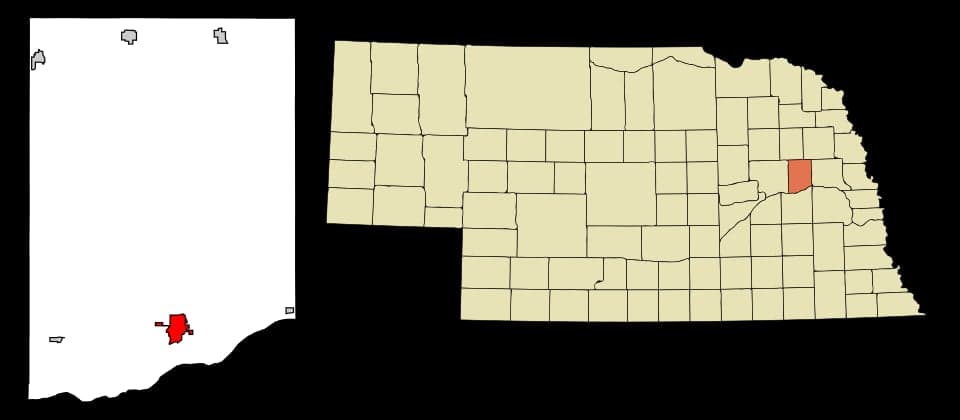
District shown is the primary district for this city’s centroid. Cities may span multiple districts.
Local Political AnalysisPolitical Analysis of Schuyler, NE
Schuyler, Nebraska, sits in a solidly conservative pocket of the state, with a Cook PVI of R+6 that reflects the area’s long-standing preference for limited government and traditional values. The town itself has historically leaned Republican, but like many rural communities, it’s seen a slow cultural shift over the past decade as new residents and economic pressures have nudged the local political temperature. While Schuyler still votes reliably red in most elections, the real story is how the surrounding towns—like Columbus to the west and Fremont to the east—have held the line more firmly, while Schuyler has become a bit of a bellwether for the region’s demographic changes.
How it compares
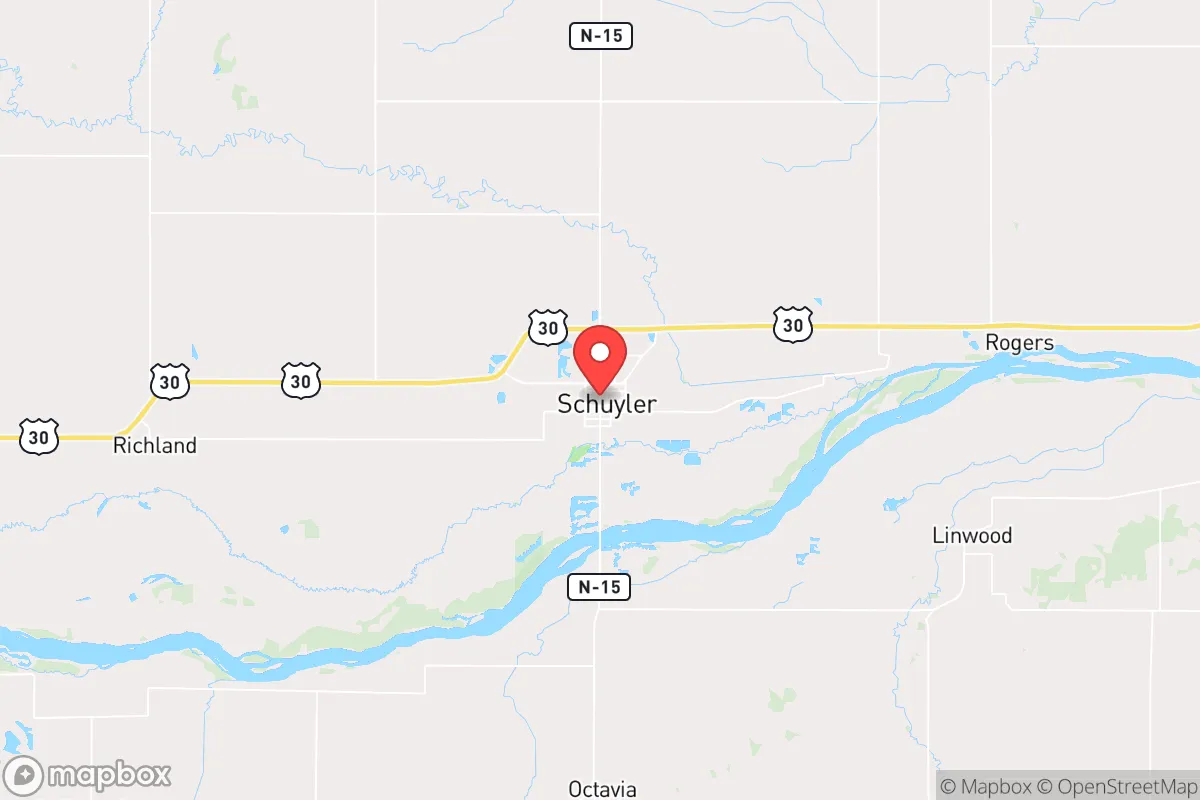
If you drive 20 miles west to Columbus, you’ll find a community that’s even more conservative, with a Cook PVI closer to R+12 and a local government that’s been slower to adopt any progressive policies. Fremont, about 30 miles east, has a similar profile but has seen more tension over immigration and housing issues, which has actually hardened its conservative stance. Schuyler, by contrast, has a growing Hispanic population—now over 40% of the town—that has introduced a more diverse set of political priorities, though the majority still leans right on fiscal and Second Amendment issues. The real contrast is with Lincoln, 80 miles southeast, where the university influence has pushed the city into a solidly blue column; Schuyler residents often view that as a cautionary tale of what happens when government overreach and progressive ideology take root.
What this means for residents
For folks living here, the political climate means you can generally expect local government to stay out of your business—property taxes are relatively low, zoning is minimal, and there’s no appetite for the kind of mask mandates or business closures that plagued bigger cities during the pandemic. The school board has resisted curriculum changes that push critical race theory or gender ideology, and the county sheriff’s office is known for its no-nonsense approach to law enforcement without turning into a social services agency. That said, there are growing concerns about state-level overreach from Lincoln, especially around property tax caps and unfunded mandates on rural schools. The long-term worry is that as Schuyler’s demographics shift, we could see more pressure for affordable housing programs or public transit initiatives that sound good on paper but often lead to higher taxes and more bureaucracy.
Culturally, Schuyler still holds onto its small-town Nebraska roots—the county fair, the volunteer fire department, and the Friday night football games are still the backbone of community life. But there’s a noticeable divide between older residents who remember when the town was nearly all white and younger families who are more accustomed to diversity. The local Catholic church and several evangelical congregations remain influential, and you’ll still see “God Bless America” signs on Main Street. Policy-wise, the city council has been careful not to wade into hot-button issues like sanctuary city status or gun control, which keeps most folks satisfied. The biggest red flag for conservatives here is the creeping influence of state-level progressive policies—like the push for renewable energy mandates or expanded Medicaid—that could eventually trickle down and erode the local autonomy that makes Schuyler a good place to live if you value personal freedom and limited government.

State Political ClimatePolitical Climate in Nebraska
State Political AnalysisPolitical Environment in the State
Nebraska is a reliably red state in presidential elections, but its politics are far more nuanced than a simple "Republican" label suggests. The state has voted for the GOP candidate in every presidential election since 1968, with Donald Trump winning by 19 points in 2024, yet it’s the only state that splits its Electoral College votes by congressional district. Over the past 20 years, the rural-urban divide has widened dramatically, with the eastern metro of Omaha becoming a Democratic stronghold while the rest of the state has hardened its conservative lean. For a conservative-leaning individual or family, Nebraska offers a solidly conservative policy environment, but the growing influence of Omaha’s progressive politics is a trend worth watching.
Urban vs. rural divide
The political map of Nebraska is a tale of two worlds. Omaha (Douglas County) is the state’s Democratic engine, consistently voting blue in statewide races and providing the margin for the 2nd Congressional District to flip to Joe Biden in 2020 and Kamala Harris in 2024. This is driven by a growing professional class, union households, and a significant minority population. Lincoln (Lancaster County) is more of a purple battleground, with the University of Nebraska-Lincoln and state government jobs creating a moderate-to-liberal tilt, though the surrounding rural areas keep the county competitive. In contrast, the rest of the state is deeply red. Grand Island, Kearney, and North Platte are conservative strongholds, while the Panhandle counties like Scotts Bluff and Dawes routinely vote 75-80% Republican. The key shift over the last decade is that Omaha’s blue vote has become more efficient, while rural turnout has remained steady, meaning statewide races are closer than the presidential margin suggests. For example, in 2022, Republican Governor Jim Pillen won by 30 points, but the 2nd District House race was a nail-biter.
Policy environment
Nebraska’s policy environment is a mixed bag for conservatives, with strong points on taxes and regulation but some frustrating compromises. The state has a unicameral, nonpartisan legislature, which sounds good in theory but often leads to backroom deals and a lack of clear party accountability. On the plus side, Nebraska has no state income tax on Social Security benefits and a flat income tax rate that was cut from 6.84% to 5.84% in 2023, with a path to 3.99% by 2027. Property taxes are a sore spot, however, ranking among the highest in the nation as a percentage of home value, which has sparked repeated legislative battles. Education policy is a win for conservatives: the state passed a school choice program in 2023 (LB 753) that provides tax credits for private school scholarships, though it faced a repeal attempt in 2024 that was narrowly defeated. On election integrity, Nebraska requires a photo ID to vote, implemented in 2024, and has no-excuse mail-in voting, which some conservatives view as a vulnerability. Healthcare is a mixed bag: the state expanded Medicaid under the Affordable Care Act in 2020, but it also passed a 12-week abortion ban in 2023, with exceptions for rape, incest, and medical emergencies. The regulatory climate is generally business-friendly, with a right-to-work law and no state-level minimum wage above the federal floor, though Omaha and Lincoln have their own local ordinances.
Trajectory & freedom
On the freedom front, Nebraska has taken some strong steps forward but also some concerning steps backward. The biggest win for personal liberty was the passage of constitutional carry (LB 77) in 2023, allowing law-abiding citizens to carry a concealed handgun without a permit. This was a major victory for gun rights advocates. On parental rights, the state passed the “Parents’ Bill of Rights” (LB 108) in 2024, requiring schools to notify parents of any changes to a student’s health or well-being, including gender identity. This was a direct response to Omaha Public Schools’ policies. However, the state also saw a troubling expansion of government overreach during the COVID-19 pandemic, with Governor Pete Ricketts imposing some of the strictest lockdowns in the Midwest in 2020, though he later resisted federal vaccine mandates. More recently, the legislature has been gridlocked on property tax relief, with a 2024 special session failing to produce meaningful reform, leaving homeowners feeling squeezed. The trajectory is cautiously positive: the legislature is becoming more conservative with each election cycle, but the unicameral system’s nonpartisan nature means that moderate Republicans and Democrats can still block conservative priorities.
Civil unrest & political movements
Nebraska has not seen the level of civil unrest seen in coastal states, but there have been notable flashpoints. The 2020 George Floyd protests in Omaha turned violent, with looting and fires in the Old Market district, leading to a heavy National Guard presence. This event galvanized conservative voters in the suburbs and rural areas. More recently, the immigration debate has been a hot-button issue, with the state’s meatpacking plants in Grand Island, Lexington, and South Sioux City employing large numbers of immigrant workers. In 2023, the legislature passed a bill (LB 535) requiring local law enforcement to cooperate with federal immigration authorities, a response to Omaha’s “sanctuary city” rhetoric. There is no official sanctuary city policy in Nebraska, but Omaha’s city council has passed resolutions limiting cooperation with ICE, which has created tension with the state government. Election integrity remains a concern for conservatives, with the 2020 election seeing a surge in mail-in ballots that some activists view as suspicious, though no widespread fraud has been proven. The “Nebraska for Trump” movement remains active, and there is a growing push for a state constitutional amendment to require a supermajority for tax increases.
Projection
Over the next 5-10 years, Nebraska is likely to become more polarized, not less. The Omaha metro area is growing faster than the rest of the state, driven by tech and insurance jobs, which will continue to shift the 2nd District leftward. This could lead to a scenario where Nebraska’s Electoral College vote is split in every close presidential election, making the state a perennial battleground for that single district. Meanwhile, the rural areas will continue to depopulate, but their political power will remain strong through the state legislature, which is apportioned by county. The biggest wildcard is the unicameral legislature: if Democrats ever win enough seats in Omaha and Lincoln to flip the body, the state could see a rapid shift on issues like abortion, taxes, and education. For now, the conservative majority is safe, but the margin is shrinking. In-migration is modest, with most newcomers coming from blue states like California and Illinois, which could slowly dilute the state’s conservative culture. A new resident moving in now should expect a state that is still reliably red but with a growing blue island in the east, and a political climate that is increasingly defined by the battle between Omaha’s progressive agenda and the rural conservative majority.
Bottom line for a new resident: Nebraska is a good bet for conservatives who want a low-tax, business-friendly environment with strong gun rights and parental control in education. But you’ll need to be aware of the growing progressive influence in Omaha and Lincoln, which will continue to drive legislative battles. If you’re looking for a state where your vote counts and your values are reflected in state law, Nebraska is still a solid choice, but don’t expect it to stay that way without active engagement. The property tax issue is the one that will hit your wallet hardest, so keep an eye on that. Overall, it’s a state where you can still live free, but you’ll have to fight to keep it that way.
* Values derived from national, state, county, city and local statistics and may differ in a specific area. Last updated: 2026-05-03T20:32:08.000Z
Narrative content on this page is AI-generated and may contain mistakes. Verify any details that matter before acting on them.
ReloMaps may earn a commission from affiliate links at no extra cost to you.

