 Popular
Demographics of Sea Island, GA
Historical data isn't available for Sea Island, GA. Trends shown are for Glynn County, GA.
Affluence Level in Sea Island, GA
An upper-middle-class area. Household wealth, education levels, and homeownership run ahead of national benchmarks.
People of Sea Island, GA
Sea Island, Georgia, is an exclusive private resort community with a year-round population of roughly 1,517, characterized by its extreme racial and economic homogeneity. The population is 95.8% White, with negligible Black, Asian, or Hispanic representation (0.0%, 0.0%, and 2.2% respectively), and over half (51.1%) hold a college degree. This is not a typical coastal town but a gated enclave of wealth, privacy, and generational privilege, where the human history is less about waves of settlement and more about the deliberate curation of an elite retreat.
How the city was settled and grew
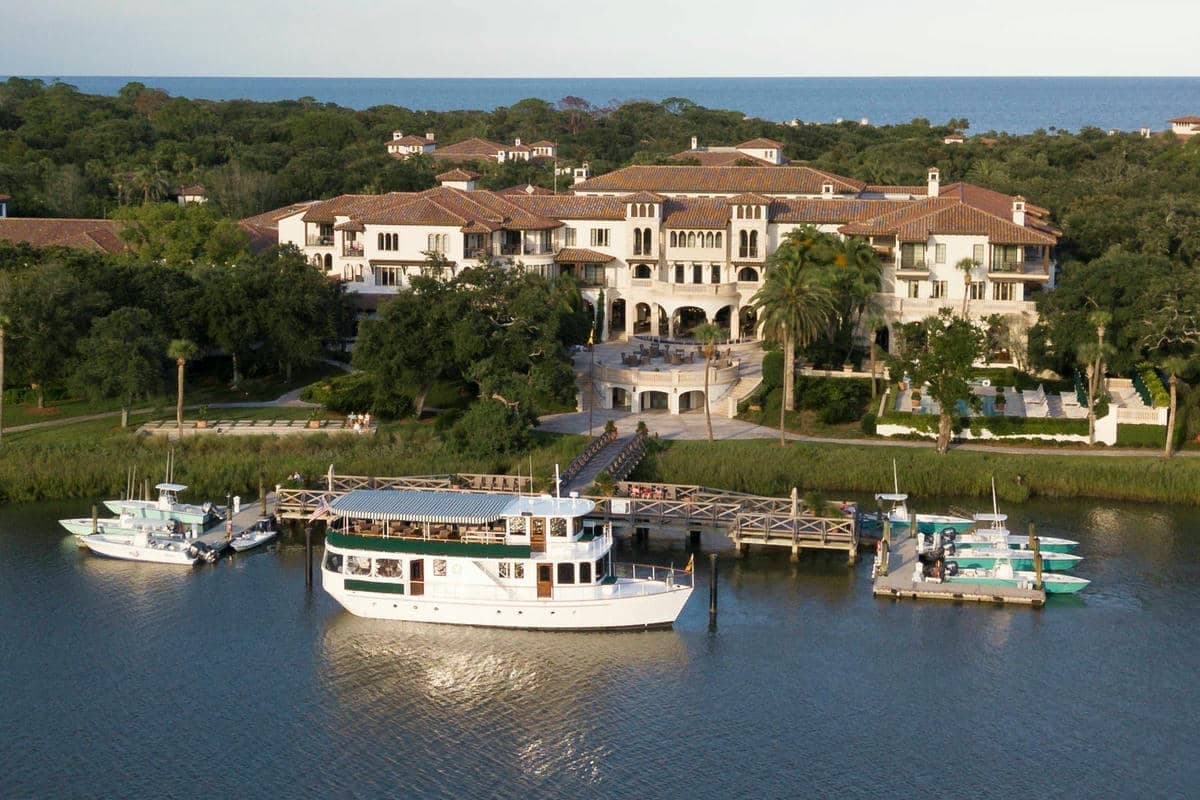
Sea Island was never a traditional settlement town. Its human history begins in the late 1920s, when automobile magnate Howard Coffin purchased the undeveloped barrier island and envisioned a private playground for America’s industrial and political elite. The Cloister resort opened in 1928, and the island’s first permanent residents were not farmers or fishermen but wealthy Northern families who built seasonal “cottages” along Ocean Forest Drive and Sea Island Drive. The original population was entirely White, drawn by exclusivity, golf, and the social cachet of the Cloister. No immigrant labor force settled here; the Gullah-Geechee communities that worked the island’s early resorts commuted from nearby St. Simons Island and Brunswick, living in neighborhoods like Harrington and Glynn Haven—areas explicitly outside Sea Island’s gates. Through the mid-20th century, the island remained a summer-only destination for a narrow slice of America’s upper class, with fewer than 200 permanent residents.
Modern era (post-1965)
The 1965 Immigration and Nationality Act had virtually no effect on Sea Island. The island’s population growth after 1965 came entirely from domestic in-migration of affluent White retirees and second-home buyers, drawn by the resort’s reputation and the 1990s renovation of the Cloister. The River Village area, a collection of luxury homes along the Black Banks River, absorbed many of these newer residents, while the historic Plantation Center district remained the domain of multi-generational families. The island’s racial composition has barely shifted: the 0.0% Black population reflects the fact that Sea Island has never had a Black residential neighborhood, and the 0.7% foreign-born rate is among the lowest in coastal Georgia. The small Hispanic population (2.2%) consists almost entirely of service workers employed by the resort, who live off-island in Brunswick’s Downtown or Arco neighborhoods. Sea Island’s modern era is one of demographic stasis—a place where wealth, not immigration, determines who stays.
The future
Sea Island’s population is likely to remain small, White, and wealthy for the foreseeable future. The island has no land for new development, and the average home price exceeds $2 million, effectively filtering out all but the top 1% of buyers. The foreign-born share (0.7%) may rise slightly as the resort hires more international hospitality workers, but these employees will continue to live off-island. The 0.0% Black and Asian figures are structural: Sea Island has no history of minority settlement, no affordable housing, and no public schools (children attend private or off-island schools). The population is aging—median age is roughly 58—and the next decade will likely see a slow turnover of estates from one wealthy White cohort to another. There is no trend toward ethnic diversification; the island is homogenizing further as property values push out even upper-middle-class families.
For someone moving in now, Sea Island offers a community of extreme privacy, shared affluence, and near-total racial and cultural uniformity. It is not a place of demographic change or diversity but a preserved enclave where the population’s history—elite, White, and resort-oriented—continues to define its present. The practical reality for a new resident is that neighbors will be overwhelmingly White, college-educated, and wealthy, and the social fabric is built around the Cloister, golf, and seasonal events rather than any broader civic life.

* Values derived from national, state, county, city and local statistics and may differ in a specific area. Last updated: 2026-04-23T05:13:01.000Z
Narrative content on this page is AI-generated and may contain mistakes. Verify any details that matter before acting on them.
ReloMaps may earn a commission from affiliate links at no extra cost to you.

