 Popular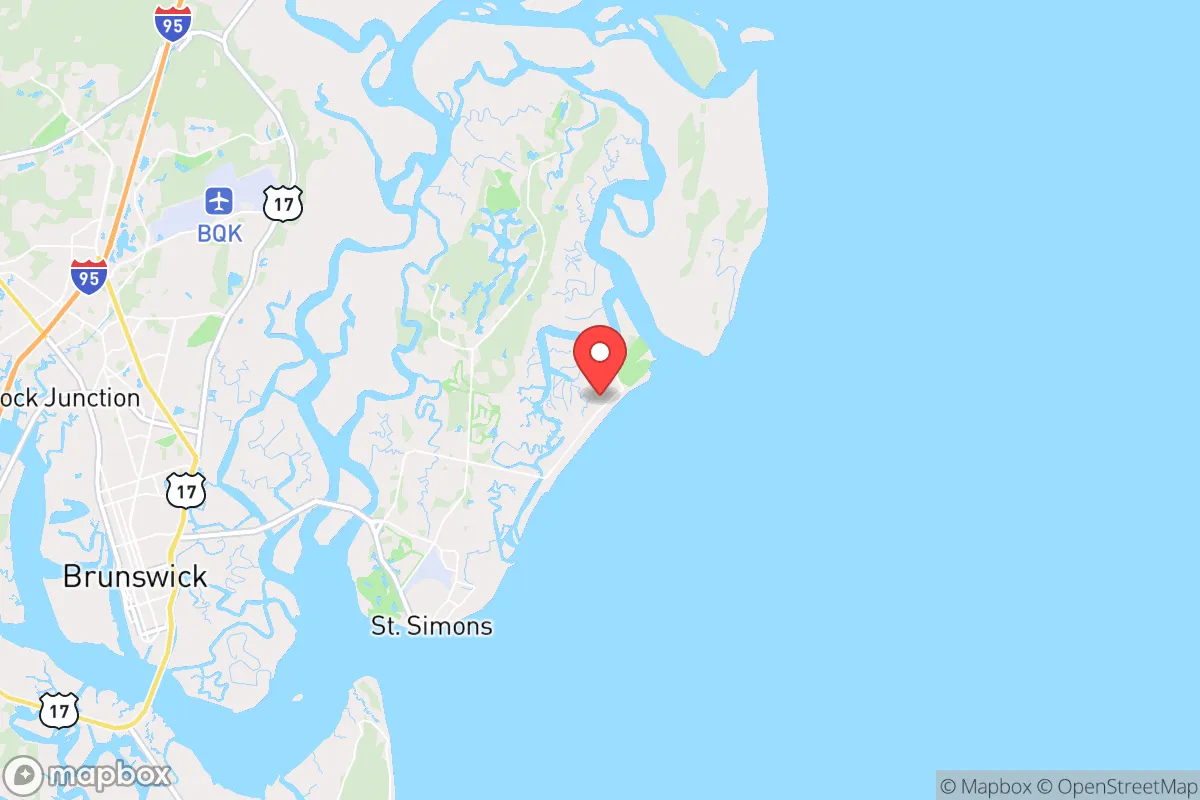

Political ClimatePolitical Climate in Sea Island, GA
District shown is the primary district for this city’s centroid. Cities may span multiple districts.
Local Political AnalysisPolitical Analysis of Sea Island, GA
Sea Island, Georgia, has long been a bastion of traditional conservative values, and that hasn't changed much despite the shifting tides elsewhere. The area sits comfortably in a Cook PVI of R+8, meaning it's reliably Republican by a solid eight-point margin compared to the rest of the country. If you've been coming here for years, you know the political vibe is rooted in a deep respect for personal freedom, limited government, and a fierce independence that's as much a part of the coastal Georgia character as the marsh grass and live oaks. That said, you can feel the pressure from the outside world creeping in, and it's worth keeping an eye on how the local balance holds up.
How it compares
To really understand Sea Island's politics, you have to look at the surrounding area. Just a few miles north, the city of Brunswick and Glynn County have been trending more purple in recent cycles, with some local races getting uncomfortably close for those who value a hands-off government approach. Head west toward Waycross or south to St. Marys, and you'll find communities that still vote overwhelmingly red, but they're more rural and less exposed to the coastal development pressures that Sea Island faces. The contrast is starkest when you compare Sea Island to Savannah, about an hour north, which has swung hard left in recent years with progressive city council members and a mayor who pushes for higher taxes and more regulations. Sea Island residents look at that and see a cautionary tale about what happens when government overreach starts chipping away at property rights and personal choices. The R+8 rating here isn't just a number—it's a reflection of a community that actively chooses to stay the course while the rest of the coast experiments with bigger government.
What this means for residents
For folks living on Sea Island, the political climate translates directly into daily life. You don't have to worry about the kind of zoning overreach or business mandates that plague more progressive towns. Property rights are respected, and the local government generally stays out of your way when it comes to how you run your home or your business. That said, there's a growing concern among long-time residents about the influx of new money and new ideas from out-of-state buyers. Some of these newcomers bring a more progressive mindset, and you can see it in local board meetings where they push for things like stricter environmental regulations or "equity" initiatives that sound good on paper but often lead to more bureaucracy and less freedom. The real test will come in the next few election cycles—if the county commission or school board starts tilting left, you can expect more red tape on everything from short-term rentals to property taxes. For now, though, the conservative majority holds, and most folks here plan to keep it that way.
Culturally, Sea Island stands apart from its neighbors in a few key ways. There's a strong tradition of self-reliance here—people take care of their own property, their own families, and their own business without looking for a government handout or a new regulation. You won't find the kind of mask mandates or business shutdowns that plagued other parts of the country during the pandemic; the local leadership trusted residents to make their own decisions. That's the kind of common-sense approach that keeps Sea Island feeling like a refuge from the chaos of modern politics. The biggest policy distinction is the area's firm stance on property rights and low taxes—there's no appetite for the kind of wealth redistribution or social engineering experiments you see in places like Atlanta or Savannah. If you value your freedom to live your life without a bureaucrat looking over your shoulder, Sea Island is still one of the last good places to do it. Just keep your eyes open and your voice heard at the ballot box, because the fight to keep it that way is never really over.

State Political ClimatePolitical Climate in Georgia
State Political AnalysisPolitical Environment in the State
Georgia has shifted from a reliably red state to a true battleground over the past two decades, with its 2020 presidential vote flipping blue for the first time since 1992 and both Senate seats going Democratic in 2021. The state’s overall partisan lean now sits at roughly 50-50 in statewide races, driven by explosive growth in the Atlanta metro area, while the rest of the state remains deeply conservative. For a conservative considering relocation, Georgia offers a mixed bag: low taxes and business-friendly policies in a state that still values gun rights and parental control, but with a rapidly expanding progressive coalition in its urban core that is reshaping state politics.
Urban vs. rural divide
The political map of Georgia is a tale of two Georgias. The Atlanta metro, including Fulton, DeKalb, Cobb, and Gwinnett counties, now accounts for over 60% of the state’s population and votes overwhelmingly Democratic. Fulton County alone delivered 73% of its vote to Joe Biden in 2020, while DeKalb hit 85%. Meanwhile, rural and exurban counties like Murray, Gilmer, and Union in the north vote 80%+ Republican. The real story is the suburbs: Cobb County flipped from red to blue between 2016 and 2020, and Gwinnett—once a GOP stronghold—now leans Democratic by double digits. Outside Atlanta, cities like Augusta, Macon, and Savannah are Democratic-leaning but surrounded by deep-red rural areas. The divide is stark: a 30-minute drive from downtown Atlanta to Cherokee County takes you from a progressive hub to a county that voted 68% for Trump.
Policy environment
Georgia’s policy environment is a conservative’s dream in many respects, but with growing cracks. The state has a flat income tax rate of 5.49%, which is set to drop to 4.99% by 2027 under a law signed by Governor Brian Kemp. Property taxes are low, and there is no estate tax. Georgia is a right-to-work state, meaning union membership is optional, and the state’s regulatory climate is ranked in the top 10 nationally for business friendliness. On education, Georgia offers a robust school choice program through the Georgia Special Needs Scholarship and the recently expanded Promise Scholarship, which allows state funds to follow students to private schools. However, the state has not passed universal school choice, and public school curriculum battles are ongoing. Healthcare policy is mixed: Georgia rejected Medicaid expansion under the Affordable Care Act, but Kemp’s “Georgia Pathways” program imposes work requirements that have kept enrollment low. Election laws have been a flashpoint: the 2021 Election Integrity Act (SB 202) added voter ID requirements for absentee ballots, limited drop boxes, and restricted third-party ballot collection—measures conservatives see as securing elections but critics call suppression. Gun laws are among the most permissive in the nation, with constitutional carry (no permit needed for concealed carry) signed into law in 2022.
Trajectory & freedom
Georgia is becoming less free in the eyes of many conservatives, though the direction is contested. On the positive side, the 2022 passage of constitutional carry expanded personal liberty for gun owners. The state also passed the “Parental Bill of Rights” (HB 1178) in 2022, which affirms parents’ authority over their children’s education and medical decisions. However, the 2023 expansion of the state hate crimes law and the creation of a new “domestic terrorism” statute have raised concerns about government overreach into speech and association. The biggest threat to freedom, many conservatives argue, is the growing influence of progressive prosecutors in Atlanta and DeKalb County, who have adopted policies of not prosecuting certain low-level crimes, effectively nullifying state law. On medical freedom, Georgia has not passed any broad vaccine mandates, but the state did require COVID-19 reporting for schools, a step some saw as overreach. Property rights remain strong, with no statewide rent control and limited zoning restrictions outside Atlanta. The trajectory is a tug-of-war: conservative rural and exurban areas are digging in, while the Atlanta metro’s progressive policies—like the city’s sanctuary city ordinance—are expanding.
Civil unrest & political movements
Georgia has been a hotspot for political activism on both sides. The 2020 election aftermath saw massive protests in Atlanta, including the “Stop the Steal” rally at the state capitol and the subsequent January 6-related investigations that targeted Georgia Republicans. The 2021 election law (SB 202) sparked boycotts from Major League Baseball, which moved the 2021 All-Star Game out of Atlanta, a move that energized conservative voters. On the left, the “Cop City” protests in DeKalb County—opposing a planned police training facility—turned violent in 2023, with activists firebombing construction equipment and the state designating the movement as “domestic terrorism.” Immigration politics are heated: Atlanta’s sanctuary city policy (which limits cooperation with federal immigration enforcement) has drawn lawsuits from the state, and Governor Kemp has deployed the Georgia National Guard to the Texas border. Election integrity remains a live issue: the 2020 audit and hand recount in Fulton County found no widespread fraud, but many conservatives remain skeptical, and the state’s new election board, appointed by the legislature, has been investigating Fulton County’s election administration. Secession rhetoric is rare, but nullification talk surfaces around federal gun laws and vaccine mandates.
Projection
Over the next 5-10 years, Georgia will likely become more competitive and more polarized. Demographic trends favor Democrats: the Atlanta metro is growing fast with young, diverse, college-educated transplants from blue states. Gwinnett County alone added 100,000 residents between 2010 and 2020, and its electorate is now majority-minority. Meanwhile, rural counties are losing population and aging. This means statewide elections will remain toss-ups, but the state legislature will stay Republican through 2030 due to gerrymandered maps. The real fight will be over local control: expect more clashes between the GOP-controlled state government and progressive cities like Atlanta, Savannah, and Athens over housing, policing, and education. School choice will likely expand, but so will efforts to regulate curriculum and library books. A conservative moving to Georgia should expect to live in a state where their vote matters—but also where the culture war is constant. The safest bet for a conservative family is the exurbs: Forsyth, Cherokee, or Paulding counties, where growth is still conservative-leaning and schools are strong.
Bottom line for a new resident: Georgia offers low taxes, strong gun rights, and a business-friendly climate, but you’ll be living in a state where the political pendulum is swinging. If you’re moving to the Atlanta suburbs, expect a blue-trending environment with progressive local policies. If you choose the exurbs or rural areas, you’ll find a solid conservative community but with fewer job opportunities. The key is picking your county carefully—your local school board and sheriff will matter more than the governor. Georgia is still a good bet for conservatives, but it’s no longer a safe one.
* Values derived from national, state, county, city and local statistics and may differ in a specific area. Last updated: 2026-04-23T05:13:01.000Z
Narrative content on this page is AI-generated and may contain mistakes. Verify any details that matter before acting on them.
ReloMaps may earn a commission from affiliate links at no extra cost to you.

