Photo: Wikipedia
Strategic Assessment of Searcy, AR
Workable tactical position. Some exposure to population density or targets, but generally defensible in a crisis.
What does the Strategic Assessment tell us?
Our Strategic Assessment grades tactical survivability of an area. Major population centers, military targets, fallout zones, natural disasters, and border exposure all drive risk — lower exposure means a more defensible position in a crisis.
This is heavily inspired by Joel Skousen's Strategic Relocation book. Highly recommended you checkout the book ($)What does this tell us?
Our Strategic Assessment grades tactical survivability of an area. Major population centers, military targets, fallout zones, natural disasters, and border exposure all drive risk — lower exposure means a more defensible position in a crisis.
This is heavily inspired by Joel Skousen's Strategic Relocation book. Highly recommended you checkout the book ($)Strategic Pillars

Key Distances
Regional Safe Places
Below is our recommended "safe zones" in Arkansas and the surrounding area based on our strategic heuristics. For most people, it's unrealistic to live in a “safe zone” full-time due to work, family or other personal reasons. They tend to be more rural. However, many of these areas are perfect for second homes and retreat properties that double as a vacation home or even a short-term rental.
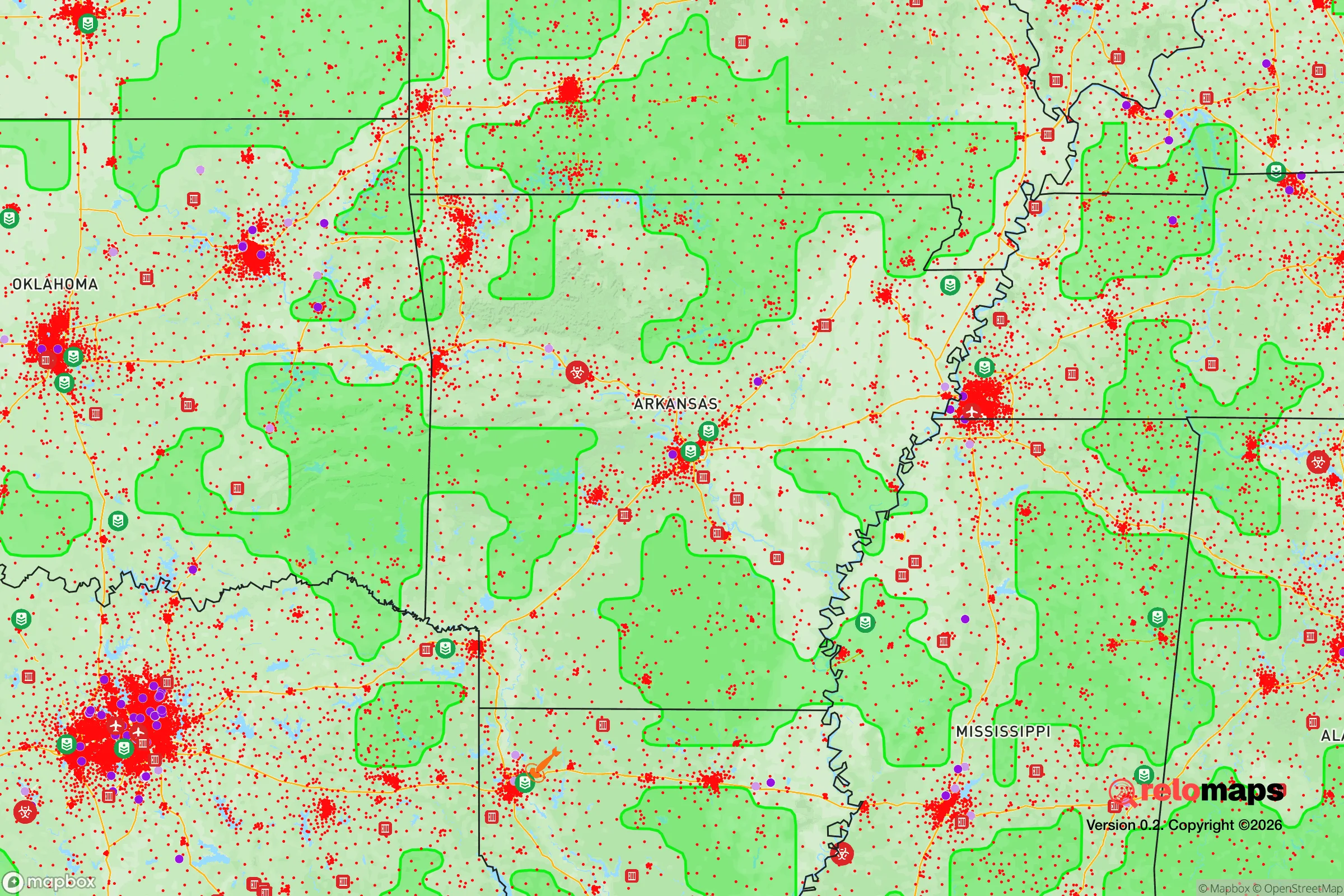
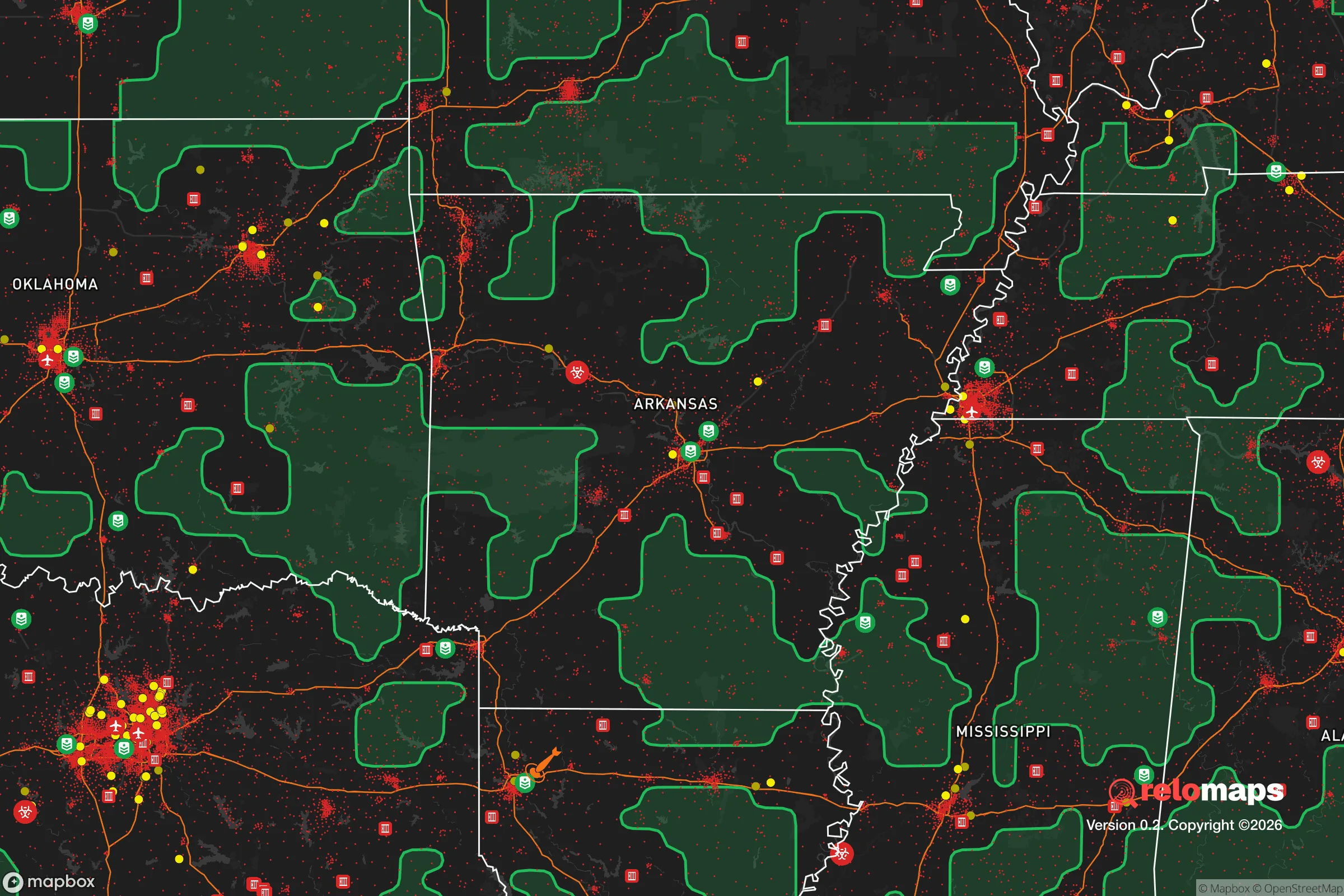


Important Note: For informational purposes only. This does not mean nothing bad ever happens in the green zones. Please use common sense. This is based on public data and modeled with AI. We tried to take a conservative approach but mistakes happen. We update this regularly as new information becomes available.
Solar Generator Recommendations
Backup power matters more here than in safer locations. We've picked three solar generators across budgets and capacity tiers — start with the budget unit if you only need a few essentials, or step up if you want to run a fridge and HVAC for days at a time.

Jackery Portable Power Station Explorer 300
Budget OptionPower on the Go: Weighing only 11 lbs, it's convenient to set up and store with book-sized foldable solar panels

BLUETTI Portable Power Station AC180
Designed for both indoor and outdoor scenarios, AC180 is highly capable as it has a robost capacity and continuous output power.

EF ECOFLOW DELTA Pro Ultra Power Station
Upgraded PickEcoFlow DELTA Pro Ultra is a whole-home energy system designed to grow with your family. Integrated with the Smart Home Panel 2, it scales to meet your evolving energy needs — keeping your home powered, intelligent, and secure through every stage of life.
We earn a commission, at no additional cost to you.
Strategic Assessment Analysis
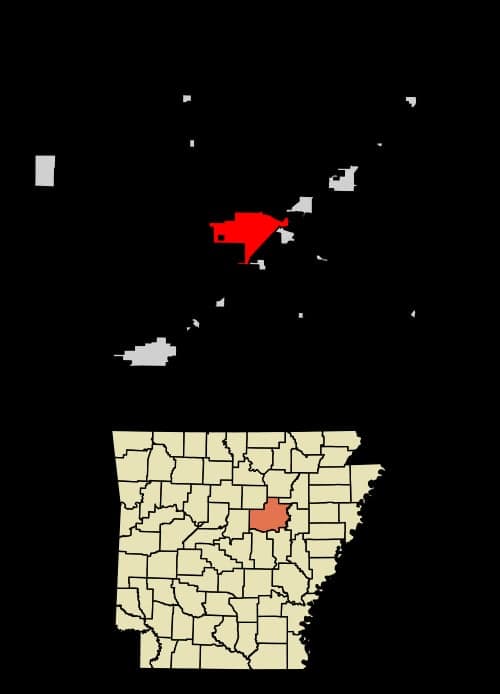
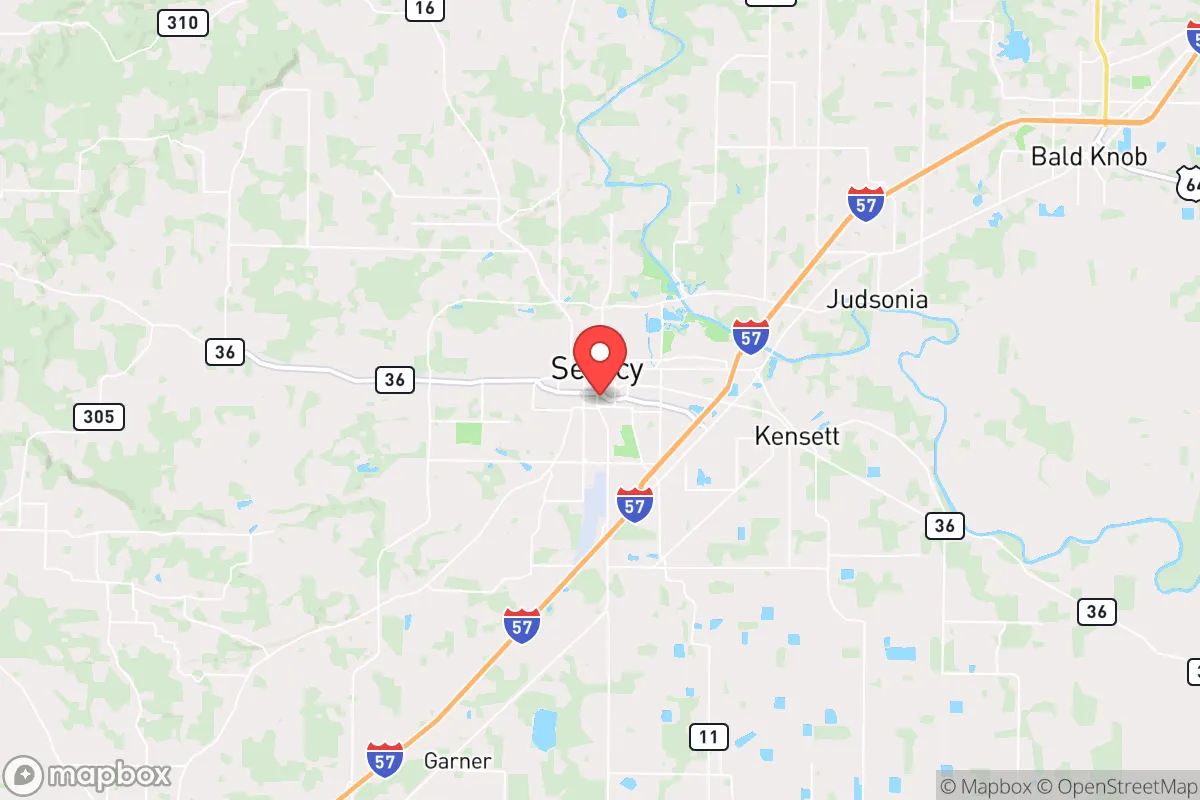
Searcy, Arkansas, occupies a strategic sweet spot in the nation’s midsection that resilience-minded relocators should take seriously. Sitting roughly 50 miles northeast of Little Rock and 90 miles west of Memphis, it offers enough distance from major metro chaos while remaining within a practical supply-and-transport corridor. The city’s population hovers around 24,000, with White County adding another 80,000—small enough to avoid the worst of urban collapse dynamics, yet large enough to sustain a functional local economy and medical infrastructure. For someone weighing civic unrest, supply chain disruptions, or mass casualty scenarios, Searcy’s position along the Ozark foothills and its access to the Arkansas River Valley provide a layered set of advantages that many flatter, more exposed towns simply lack.
Geographic position and natural buffers for long-term security
Searcy sits at the transition zone between the Arkansas Delta and the Ozark Plateau, which gives it a meaningful elevation advantage—roughly 400 to 600 feet above sea level—over the flood-prone lowlands to the east. This terrain offers natural chokepoints and defensible positions if movement becomes restricted during unrest or disaster. The area is laced with spring-fed creeks and lies within the White River watershed, meaning surface water is abundant even during drought years. The surrounding hardwood forests and rolling hills provide both cover and a renewable source of building material and fuel. Unlike the flat, open agricultural land south of I-40, Searcy’s topography forces any large-scale movement into predictable corridors, which is a tactical plus for those thinking about perimeter security or retreat options. The local geology also supports well water at reasonable depths—typically 100 to 300 feet—which is a critical factor when municipal systems fail.
Risks, exposures, and proximity to fallout-relevant landmarks
No location is immune, and Searcy has its share of exposure that a prepper must account for. The most obvious risk is its proximity to Little Rock, a city of 200,000 that sits directly along I-40, a primary east-west logistics artery. In a mass casualty event or civil unrest scenario, Little Rock could become a source of refugee flow northward along US-67/US-167, the main highway connecting Searcy to the capital. That corridor is a double-edged sword: it’s your link to medical and supply resupply in stable times, but it’s also the most likely vector for contagion, violence, or displaced populations. Searcy itself hosts a rail line running through town, which is a minor target risk but also a potential choke point if infrastructure is sabotaged. The nearby Greers Ferry Dam, about 30 miles northwest, is a critical piece of infrastructure—if compromised, it could cause downstream flooding along the Little Red River, though Searcy sits far enough east to avoid direct inundation. There are no nuclear power plants within 100 miles, and the nearest major military installation is Little Rock Air Force Base (40 miles south), which could become a target or a marshaling point during conflict. The area’s tornado risk is real—White County sits in the southern edge of Tornado Alley—but the terrain’s folds and valleys actually reduce the frequency of direct hits compared to the open plains to the west.
Practical resilience for a relocator: food, water, energy, and defensibility
For someone serious about self-sufficiency, Searcy’s practical assets are where the analysis gets concrete. The surrounding agricultural base is strong—White County is a top producer of soybeans, rice, and poultry in the state, and local farmers’ markets operate year-round in the warmer months. This means that even in a supply chain breakdown, local food networks have a fighting chance of persisting. Water is the bigger win: the city draws from the alluvial aquifer of the White River, and rural properties outside city limits commonly have private wells with yields of 10-30 gallons per minute. For energy, the area is served by Entergy Arkansas and First Electric Cooperative, both of which have invested in grid hardening, but the real advantage is the prevalence of propane and wood heat in rural homes—many properties already have backup heating systems that don’t rely on the grid. Solar potential is moderate (about 4.5 peak sun hours per day), but the tree cover means you’ll need a cleared southern exposure for panels. Defensibility is where Searcy shines relative to flatter towns: the road network funnels traffic through a handful of bridges and overpasses, and the residential areas north of the city center are a maze of county roads that are easy to monitor and hard to navigate for outsiders. The local law enforcement presence is solid—White County Sheriff’s Office and Searcy PD maintain a visible posture—but in a prolonged breakdown, you’ll want to be in a small cluster of like-minded neighbors rather than relying on official response times that could stretch to hours.
The overall strategic picture for Searcy is one of calculated trade-offs. It’s not a remote mountain redoubt, and it’s not a fortified compound—but it’s a functional, mid-sized town with enough natural resources, infrastructure, and distance from major targets to serve as a viable base for a prepared household. The conservative lean of the area is reflected in its politics (White County voted +67 for Trump in 2020), its gun-friendly culture, and its church-centered social fabric, which means you’re likely to find neighbors who share your outlook on self-reliance and community defense. The biggest vulnerability is the Little Rock corridor, and any serious plan should account for the possibility of that road becoming impassable or dangerous. If you can secure a property with a well, some acreage for gardening, and a propane backup, Searcy offers a rare combination of accessibility and buffer that most towns in the Mid-South simply don’t match. It’s a place to ride out the storm, not hide from it—and for the strategic relocator, that’s exactly the point.

* Values derived from national, state, county, city and local statistics and may differ in a specific area. Last updated: 2026-04-30T06:49:29.000Z
Narrative content on this page is AI-generated and may contain mistakes. Verify any details that matter before acting on them.
ReloMaps may earn a commission from affiliate links at no extra cost to you.

