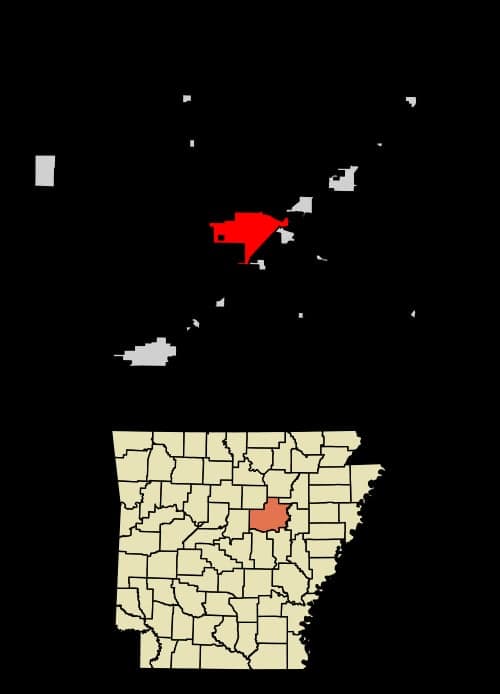
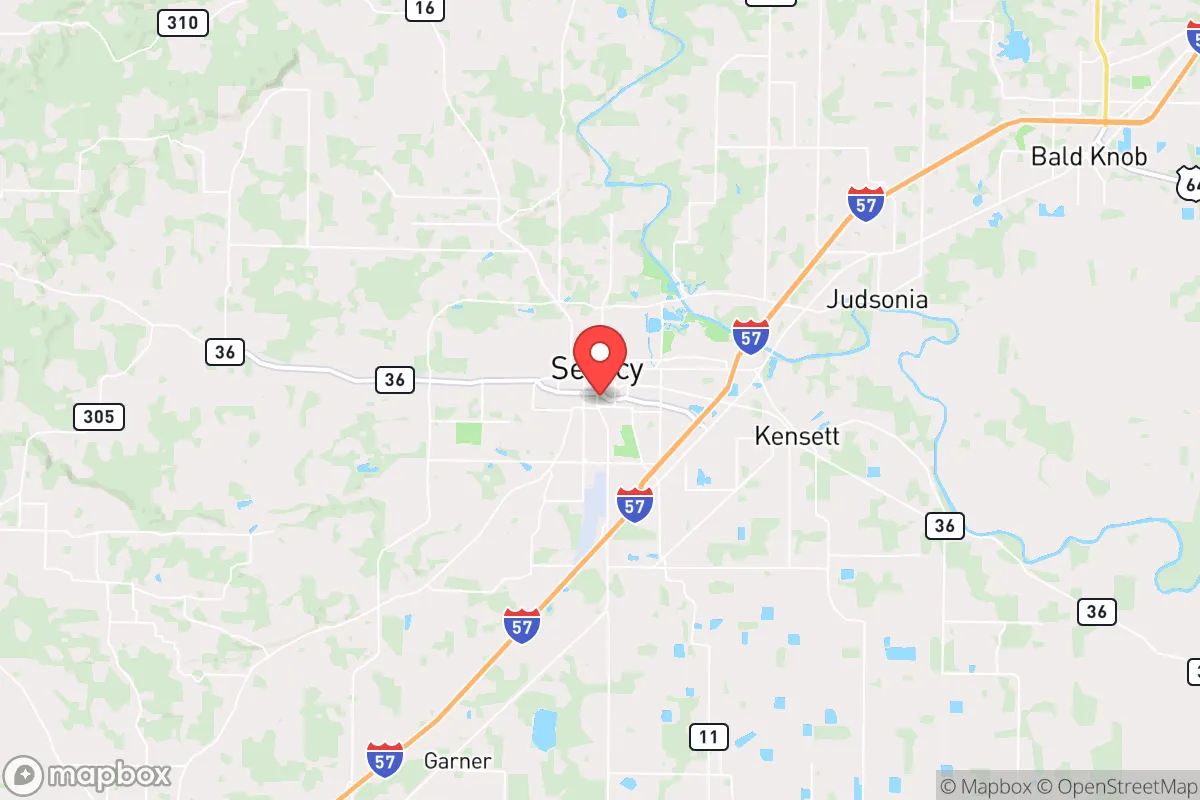
Photo: Wikipedia
Political ClimatePolitical Climate in Searcy, AR
District shown is the primary district for this city’s centroid. Cities may span multiple districts.
Local Political AnalysisPolitical Analysis of Searcy, AR
Searcy, Arkansas, has long been a solidly conservative community, and that hasn't changed. The Cook PVI rating of R+8 tells you the math, but it doesn't tell you the feel. For decades, this was a place where folks minded their own business, went to church, and expected the government to stay out of their lives. That core is still here, but like everywhere else, you can feel the pressure from the coasts and the bigger cities trying to push in. The trajectory is still conservative, but it's a fight to keep it that way, especially as Little Rock's influence creeps north up the 67/167 corridor.
How it compares
Drive thirty minutes south to Conway, and you'll feel a different energy. Conway is more of a college town, with UCA and Hendrix, and it leans noticeably more moderate, even a little left on social issues. You see more Harris/Walz yard signs there than you'd ever see in Searcy. Head west to Clinton or even Fairfield Bay, and you're back in deep-red territory, but it's a different kind of red—more rural, more focused on hunting and fishing rights. Searcy sits in a sweet spot: it's big enough to have a Walmart and a decent hospital, but small enough that most people still know their neighbors. The contrast with Conway is the sharpest. In Searcy, the local paper still runs letters to the editor about school board transparency and property taxes. In Conway, the conversation is more about bike lanes and diversity initiatives. That tells you everything.
What this means for residents
For a conservative who values personal freedom, Searcy is still a good place to be, but you have to stay vigilant. The city council and county quorum court are reliably conservative, but there's always a push to bring in "best practices" from places like Fayetteville or Little Rock. You see it in zoning fights—people wanting to tell you what color you can paint your fence or how many cars you can park in your driveway. The school board has been a battleground, too, with parents pushing back against curriculum that feels like it's teaching kids what to think instead of how to think. The good news is that the Second Amendment is still respected here. You don't get sideways looks for carrying. The bad news is that property taxes have crept up, and there's always some new fee or permit requirement that feels like a solution in search of a problem. If you're looking for a place where the government mostly leaves you alone, Searcy is still that place—but you have to show up to the meetings and vote to keep it that way.
Culturally, Searcy is still defined by Harding University, which brings a strong conservative Christian influence. That means most businesses are closed on Sunday, and you won't find a bar on every corner. That's a feature, not a bug, for a lot of folks. But there's a quiet tension between the old-timers who remember when you could hunt on the outskirts of town and the newer arrivals who want more "amenities." The biggest policy distinction is that Searcy has resisted the kind of rapid, top-down development you see in Northwest Arkansas. There's no city-wide mask mandate on the books, no sanctuary city nonsense, and the local police still focus on real crime, not enforcing political correctness. If you're worried about government overreach, Searcy is a place where you can still breathe. Just keep an eye on the city council agenda—that's where the fights happen now.

State Political ClimatePolitical Climate in Arkansas
State Political AnalysisPolitical Environment in the State
Arkansas has been a reliably red state for decades, with a solid Republican lean that has only deepened since the early 2000s. The state hasn’t voted for a Democratic presidential candidate since Bill Clinton’s 1996 re-election, and by 2024, Donald Trump carried it by a comfortable 30-point margin. The dominant coalition is a mix of rural conservatives, evangelical Christians, and a growing number of fiscally conservative transplants from blue states, all of whom have pushed the state legislature further right on taxes, gun rights, and education. Over the last 10-20 years, Arkansas has shifted from a moderate, Clinton-era Democratic stronghold to a deeply red state where Republicans hold supermajorities in both chambers of the General Assembly and occupy every statewide office.
Urban vs. rural divide
The political map of Arkansas is a textbook study in urban-rural polarization. The state’s two major metro areas—Little Rock and Fayetteville—are the only real blue dots in a sea of red. Pulaski County (Little Rock) has trended Democratic for years, with Biden winning it by 15 points in 2020, while Washington County (Fayetteville) has become a competitive swing area thanks to the University of Arkansas and a growing tech sector. Outside those two corridors, the state is overwhelmingly conservative. Northwest Arkansas suburbs like Bentonville and Rogers are reliably red, though they’ve seen an influx of out-of-state professionals that has softened the edge slightly. The Arkansas Delta, once a Democratic stronghold, has flipped hard red—Jonesboro and West Memphis now vote Republican by wide margins. The rural counties in the Ozarks and Ouachitas, places like Harrison and Mena, are among the most conservative in the nation, often voting 80%+ Republican. The divide isn’t just about party—it’s about culture. Little Rock and Fayetteville feel like islands of progressive policy and lifestyle, while the rest of the state is deeply skeptical of government overreach and protective of traditional values.
Policy environment
Arkansas’s policy environment is aggressively conservative, with a focus on low taxes, limited regulation, and cultural conservatism. The state has a flat income tax rate of 4.4% (down from 7% in 2015) and a sales tax that averages around 9.5% when local levies are included—high for the region, but offset by no tax on groceries or prescription drugs. The regulatory posture is business-friendly: Arkansas is a right-to-work state, and the legislature has repeatedly cut red tape for manufacturers and agricultural operations. On education, the state passed the Arkansas LEARNS Act in 2023, a sweeping school choice law that created universal Education Freedom Accounts, allowing parents to use state funds for private school, homeschooling, or tutoring. This was a major win for parental rights and a direct challenge to the teachers’ union. Healthcare is a mixed bag: Arkansas expanded Medicaid under the private option model, but the state has also enacted some of the strictest abortion laws in the country, including a near-total ban with no exceptions for rape or incest. Election laws have tightened: voter ID is required, and the state purged inactive voters from rolls in 2024. For a conservative moving in, the policy environment is largely aligned with limited government principles, though the high sales tax and Medicaid expansion are points of friction for libertarian-leaning residents.
Trajectory & freedom
Arkansas is moving in a decidedly more free direction on most fronts, especially when it comes to gun rights, parental rights, and economic liberty. The state passed constitutional carry in 2021, allowing permitless concealed carry for anyone 18 or older who can legally possess a firearm. The Arkansas LEARNS Act (2023) expanded school choice and gave parents more control over their children’s education, including a ban on critical race theory and gender ideology in classrooms. On medical autonomy, the state banned gender transition procedures for minors in 2023 and passed a law requiring parental consent for any medical treatment of a minor. Property rights were strengthened with the passage of a law limiting eminent domain for private economic development. However, there are areas where freedom has contracted. The state’s medical marijuana program, legalized in 2016, remains tightly regulated—only a handful of dispensaries operate, and home cultivation is illegal. The state also maintains a strict ban on recreational cannabis, and law enforcement still aggressively enforces drug laws. On taxation, the trend is positive: the income tax rate has been cut repeatedly, and the legislature is discussing a path to full elimination. Overall, Arkansas is becoming more free for conservatives who value gun rights, school choice, and low taxes, but less free for those who want drug legalization or medical autonomy on abortion.
Civil unrest & political movements
Arkansas has seen relatively little civil unrest compared to coastal states, but there have been notable flashpoints. In 2020, Little Rock experienced several nights of protests and property damage following George Floyd’s death, with the governor deploying the National Guard to restore order. The state has a small but vocal progressive activist scene centered around the University of Arkansas in Fayetteville, where groups like Indivisible Arkansas and the Arkansas Public Policy Panel push for higher taxes, expanded Medicaid, and LGBTQ+ protections. On the right, the Arkansas Family Council and the State Freedom Caucus have been highly effective, driving legislation on school choice, abortion bans, and parental rights. Immigration politics are relatively quiet—Arkansas has a small foreign-born population (about 5%), and there are no sanctuary cities. However, the state did pass a law in 2023 requiring local law enforcement to cooperate with ICE. Election integrity has been a hot topic: the 2020 election saw no major controversies, but the legislature passed a law in 2021 banning ballot drop boxes and requiring signature verification for absentee ballots. The most visible flashpoint for a new resident would be the culture war over schools—school board meetings in Bentonville and Rogers have been packed with parents demanding transparency on curriculum and library books. It’s not violent, but it’s passionate.
Projection
Over the next 5-10 years, Arkansas is likely to become even more conservative, driven by two forces: in-migration and demographic trends. The state is seeing a steady influx of conservatives from California, Illinois, and New York, drawn by low housing costs and the policy environment. Northwest Arkansas is the primary destination, with Bentonville and Rogers growing rapidly—this area is becoming a hub for conservative professionals who want a lower cost of living and a red political climate. The Arkansas Delta will continue to depopulate, further reducing the Democratic vote share. The state’s Hispanic population is growing, but early data suggests they are voting more Republican than in other states, especially in Springdale and Rogers. The biggest wildcard is the urban-rural split: if Little Rock and Fayetteville continue to attract progressive transplants, they could become more Democratic, but the state legislature is likely to preempt their policies (e.g., banning local minimum wage hikes or sanctuary ordinances). Expect more school choice expansion, further income tax cuts, and continued cultural battles over abortion and transgender rights. A new resident moving in now should expect to find a state that is solidly red, with a government that is responsive to conservative voters and increasingly hostile to progressive activism.
For a conservative individual or family considering relocation, Arkansas offers a policy environment that respects gun rights, parental control over education, and low taxes. The state is not perfect—the sales tax is high, and the medical marijuana program is restrictive—but the trajectory is clearly toward more freedom on the issues that matter most to conservatives. The political climate is stable, with no serious threat of a blue shift in the near future. If you move to Bentonville or Rogers, you’ll find a community of like-minded transplants and a state government that shares your values. Just be prepared for the culture war to be a constant presence—especially in school board meetings and local elections. It’s a small price to pay for living in a state that still believes in limited government and personal responsibility.
* Values derived from national, state, county, city and local statistics and may differ in a specific area. Last updated: 2026-04-30T06:49:29.000Z
Narrative content on this page is AI-generated and may contain mistakes. Verify any details that matter before acting on them.
ReloMaps may earn a commission from affiliate links at no extra cost to you.

