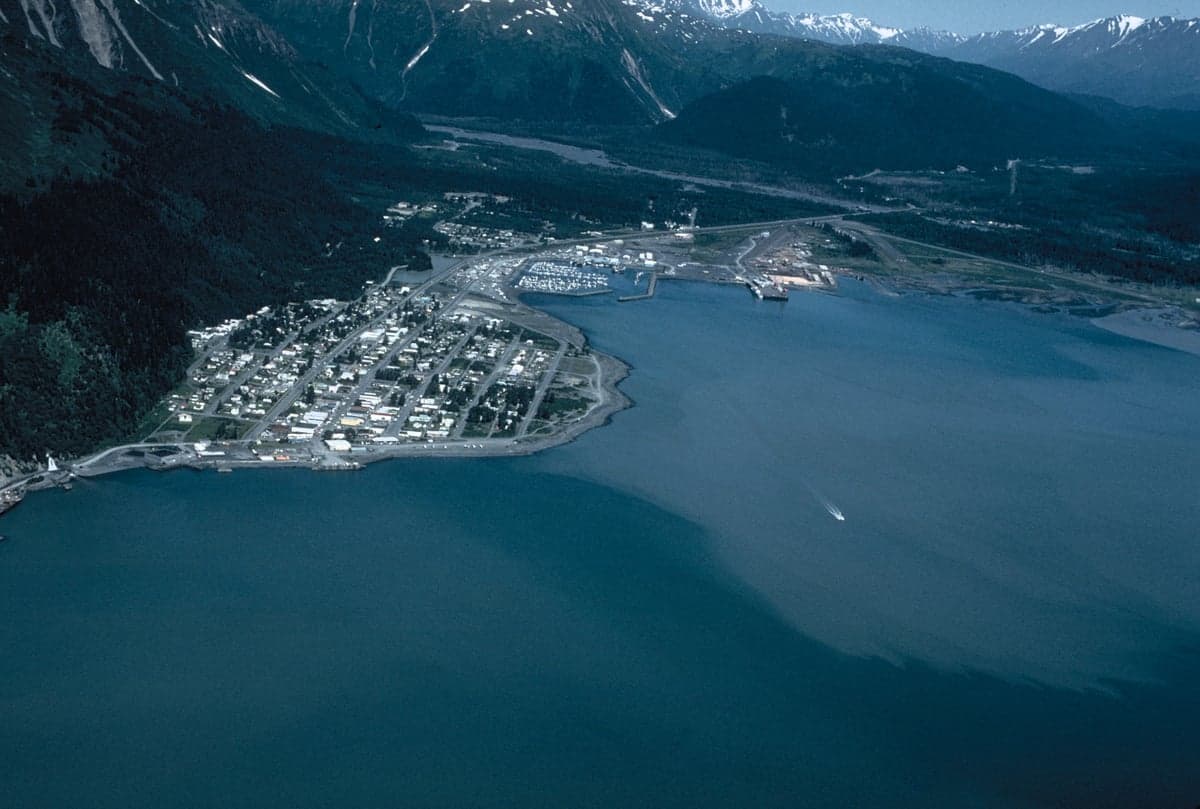
Photo: Wikipedia
Political ClimatePolitical Climate in Seward, AK
District shown is the primary district for this city’s centroid. Cities may span multiple districts.
Inherited from parent state — no local data available.
Local Political AnalysisPolitical Analysis of Seward, AK
Seward, Alaska, has long been a place where folks value their independence and don't take kindly to being told how to live their lives, and that's reflected in its solidly conservative political lean. The area's Cook PVI of R+6 tells you the baseline, but it doesn't fully capture the local sentiment that's been shifting in a concerning direction over the past decade. While the surrounding Kenai Peninsula Borough has historically been a Republican stronghold, Seward itself has seen a slow but steady creep of progressive influence, especially among newer residents and seasonal workers, which has started to water down the traditional, live-and-let-live attitude that made this town great.
How it compares
If you drive up the Seward Highway to Anchorage, you're heading into a much more liberal area, where government overreach into personal freedoms—like mandates and heavy-handed zoning—is more accepted. Down the coast in Homer, you'll find a similar, if not stronger, progressive tilt, with a lot of "outside" ideas taking root. In contrast, towns like Soldotna and Kenai, further north on the peninsula, tend to hold the line better, with a more consistent conservative majority that pushes back against unnecessary regulations. Seward sits in an uncomfortable middle ground: it's not as reliably red as those interior peninsula towns, and the political winds here feel more unpredictable. The local elections and school board races have gotten noticeably more contentious, with candidates pushing for policies that feel like they're imported from Juneau or even Seattle, rather than grounded in what Seward families actually need.
What this means for residents
For a long-time resident, the biggest concern is that the local government is starting to meddle more in things that should be left to individuals and families. You're seeing more talk about "equity" initiatives in the schools, which often means pushing a one-size-fits-all ideology that ignores the fact that every kid and every family is different. There's also been a push for stricter environmental regulations that go beyond common-sense stewardship, threatening the fishing and tourism industries that people here rely on, without offering real alternatives. The property tax burden has crept up, and there's a feeling that the city council is more interested in checking boxes for state grants than in listening to the folks who actually live here year-round. If you value your right to make your own choices—whether it's about how you run your business, what you teach your kids, or how you use your land—you need to be paying close attention to who's running for office, because the trend is not in your favor.
Culturally, Seward still has that rugged, self-reliant spirit, but it's being tested. The annual Mount Marathon Race and the Fourth of July celebration are still big, community-driven events that bring everyone together, but you can feel the divide growing. The biggest policy distinction is the ongoing tension between preserving the town's working-class, fishing-and-logging roots and the push to turn it into a tourist hub with all the progressive baggage that comes with that. In the long term, if the trend continues, Seward could lose the very character that makes it special—a place where your word is your bond and the government stays out of your way. For now, it's still a good place to live if you're willing to fight to keep it that way, but it's not the sure thing it used to be.

State Political ClimatePolitical Climate in Alaska
State Political AnalysisPolitical Environment in the State
Alaska has long been a unique political outlier — a state where libertarian-leaning independence, resource extraction, and a fierce frontier spirit have historically created a Republican-leaning environment, but one that is far from monolithic. Over the past 10-20 years, the state has shifted from reliably red to a more volatile battleground, with the 2022 special election for Congress being a prime example: Democrat Mary Peltola won a seat that had been held by Republicans for nearly 50 years, though the state still voted +10 for Trump in 2020. The dominant coalition is a mix of rural conservatives, oil industry workers, and Native Alaskan communities, but a growing progressive presence in Anchorage and Juneau is pulling the state in a more divided direction.
Urban vs. rural divide
The political map of Alaska is starkly divided between its few urban centers and the vast, sparsely populated rural areas. Anchorage, home to roughly 40% of the state's population, is the key swing region — its more moderate and increasingly liberal voters can tip statewide elections. The city's Assembly has seen progressive majorities in recent years, pushing policies like a 2021 mask mandate extension and a 2023 resolution supporting abortion access. Juneau, the capital, is even more reliably blue, driven by state government employees and a strong environmentalist presence. In contrast, the Mat-Su Borough (Palmer and Wasilla) is the conservative heartland, voting +30 points for Trump in 2020 and serving as a hub for gun rights activists and anti-government sentiment. Fairbanks is a mixed bag — the city itself leans slightly left due to the university, but the surrounding Interior is deeply red. Rural villages, particularly in the Bush, often vote Democratic due to strong ties to the Native Alaska regional corporations and federal subsidies, but their turnout is low and unpredictable.
Policy environment
Alaska's policy environment is a study in contrasts. On the plus side for conservatives, there is no state income tax and no statewide sales tax, making it one of the most tax-friendly states in the nation. The Permanent Fund Dividend (PFD) — an annual check to every resident from oil revenues — is a sacred cow that keeps many Alaskans skeptical of big government expansion. However, the state's regulatory posture is increasingly mixed. The Alaska Department of Environmental Conservation has become more aggressive under Governor Mike Dunleavy (R), but local governments in Anchorage and Juneau have imposed stricter environmental rules on development. Education policy is a flashpoint: the state passed a 2023 law allowing parents to opt their children out of LGBTQ+ curriculum materials, but the Anchorage School District has resisted, creating a patchwork of local control. Election laws are relatively open — Alaska uses a top-four primary system and ranked-choice voting, passed by ballot initiative in 2020, which has frustrated many conservatives who see it as diluting their voting power. Healthcare is dominated by the Alaska Tribal Health System for rural areas, but private insurance costs are among the highest in the nation due to the state's isolation.
Trajectory & freedom
On the freedom front, Alaska is a mixed bag trending in a concerning direction. Gun rights remain strong — the state has constitutional carry and no waiting periods, and in 2023, Dunleavy signed a bill prohibiting state enforcement of any future federal gun bans. However, parental rights have seen both wins and losses: the 2023 opt-out law was a victory, but Anchorage's school board has refused to implement it, and a 2024 bill to require parental notification for student gender identity changes failed in the state House. Medical autonomy took a hit in 2022 when the state Supreme Court ruled that the constitutional right to privacy includes abortion, effectively blocking any legislative restrictions — a decision that rankles many pro-life conservatives. Property rights are generally strong, but the state's vast federal land holdings (60% of Alaska is federal land) create constant friction over resource development, with the Biden administration's 2023 restrictions on oil drilling in the Arctic National Wildlife Refuge being a major sore point. Taxation remains a bright spot — no income or sales tax, and the PFD keeps government spending in check, though the state's reliance on volatile oil revenue means fiscal stability is always tenuous.
Civil unrest & political movements
Alaska has seen its share of political flashpoints, though they tend to be more localized than in the Lower 48. The 2020 election integrity debate was intense, with the Alaska Republican Party officially questioning the ranked-choice voting system and calling for its repeal in 2023. Immigration politics are less prominent due to the state's small foreign-born population, but the issue of sanctuary policies flared up in 2023 when Anchorage's Assembly voted to limit cooperation with ICE, prompting a backlash from the state legislature. Protest history includes the 2022 "Save Our Schools" rallies in Juneau against education funding cuts, and the 2023 "Stand for the Salmon" protests in Anchorage against Pebble Mine development. On the right, the Alaska Independence Party still exists as a fringe movement advocating for secession, though it has little real influence. The most visible flashpoint for a new resident would be the constant tension between environmental activists and resource developers — you'll see "No Pebble Mine" signs in Anchorage and "Drill, Baby, Drill" bumper stickers in Wasilla.
Projection
Over the next 5-10 years, Alaska is likely to become more politically divided, not less. In-migration is heavily skewed toward the Anchorage and Mat-Su areas, with many newcomers from blue states like California and Washington bringing progressive voting habits. The Anchorage bowl will continue to drift left, while the Mat-Su and Interior will harden their conservative stance. The ranked-choice voting system, if it survives legal challenges, will likely produce more moderate or centrist winners, frustrating both wings. The state's fiscal situation is the wild card: if oil prices stay high, the PFD keeps the peace; if they crash, expect a tax fight that could push more people out. For a conservative moving in now, expect to find a state where your personal freedoms (guns, taxes, property) are still strong, but where the cultural and political winds are shifting in the urban centers — and where you'll need to be active in local politics to keep it that way.
Bottom line for a new resident: Alaska offers unmatched personal liberty in terms of taxation and gun rights, but the political climate is increasingly a tale of two states — the conservative, resource-driven Interior and the liberal, government-heavy Southeast. If you're looking for a place where your vote counts and your values are reflected in policy, the Mat-Su Borough or Fairbanks-area are your best bets. Anchorage and Juneau will feel more like a blue state enclave. Come for the freedom, but be ready to fight to keep it.
* Values derived from national, state, county, city and local statistics and may differ in a specific area. Last updated: 2026-04-19T19:36:05.000Z
Narrative content on this page is AI-generated and may contain mistakes. Verify any details that matter before acting on them.
ReloMaps may earn a commission from affiliate links at no extra cost to you.

