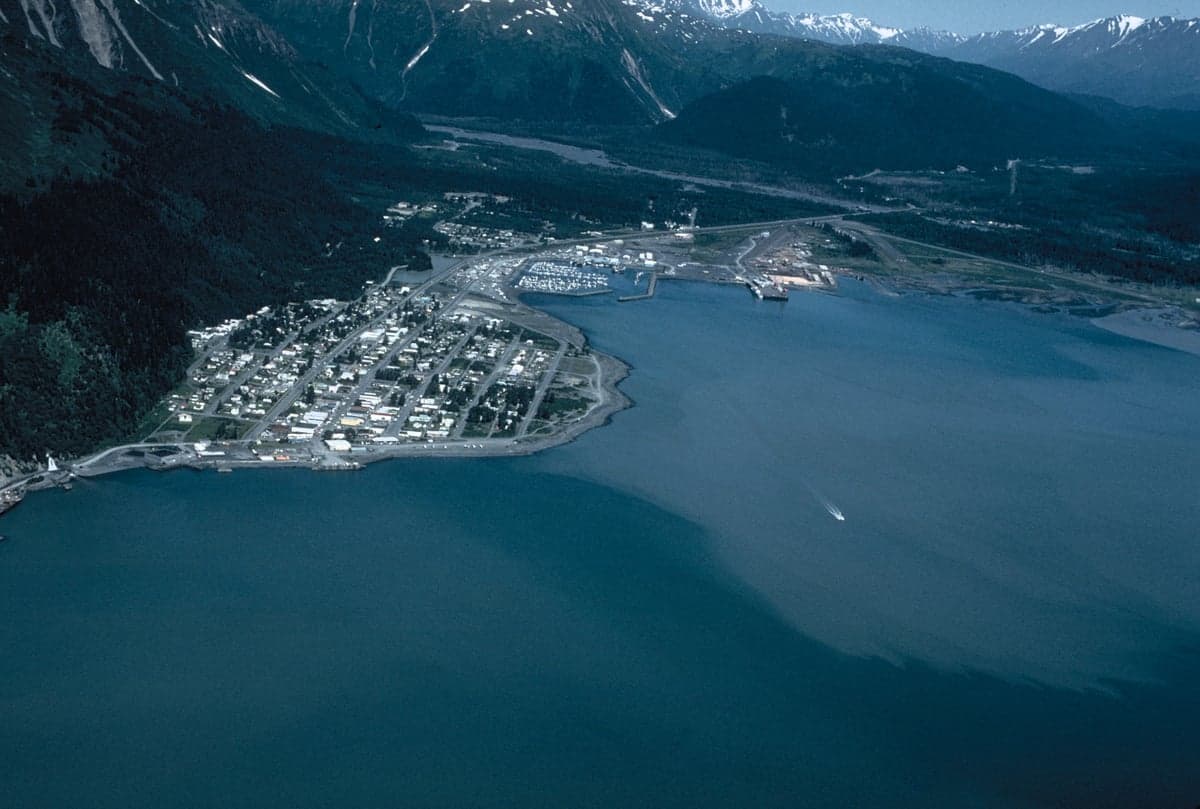
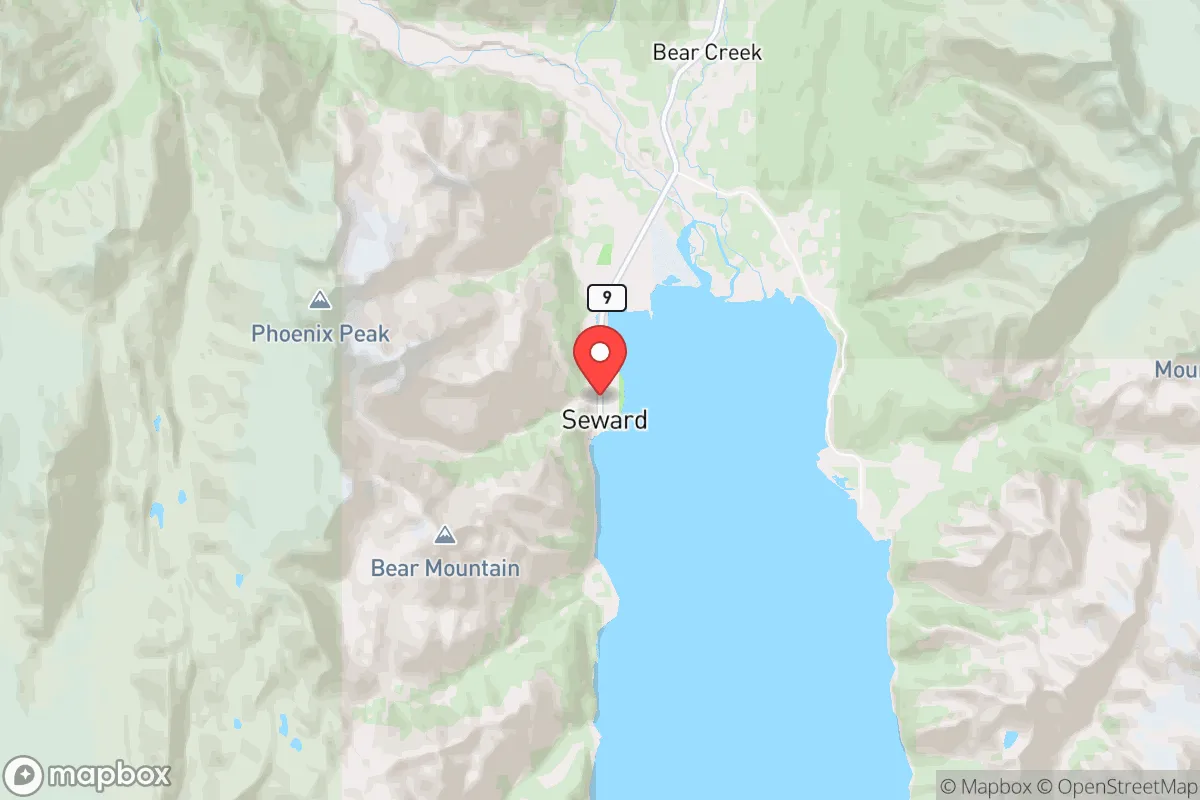
Photo: Wikipedia
Strategic Assessment of Seward, AK
Workable tactical position. Some exposure to population density or targets, but generally defensible in a crisis.
What does the Strategic Assessment tell us?
Our Strategic Assessment grades tactical survivability of an area. Major population centers, military targets, fallout zones, natural disasters, and border exposure all drive risk — lower exposure means a more defensible position in a crisis.
This is heavily inspired by Joel Skousen's Strategic Relocation book. Highly recommended you checkout the book ($)What does this tell us?
Our Strategic Assessment grades tactical survivability of an area. Major population centers, military targets, fallout zones, natural disasters, and border exposure all drive risk — lower exposure means a more defensible position in a crisis.
This is heavily inspired by Joel Skousen's Strategic Relocation book. Highly recommended you checkout the book ($)Strategic Pillars

Key Distances
Regional Safe Places
Below is our recommended "safe zones" in Alaska and the surrounding area based on our strategic heuristics. For most people, it's unrealistic to live in a “safe zone” full-time due to work, family or other personal reasons. They tend to be more rural. However, many of these areas are perfect for second homes and retreat properties that double as a vacation home or even a short-term rental.
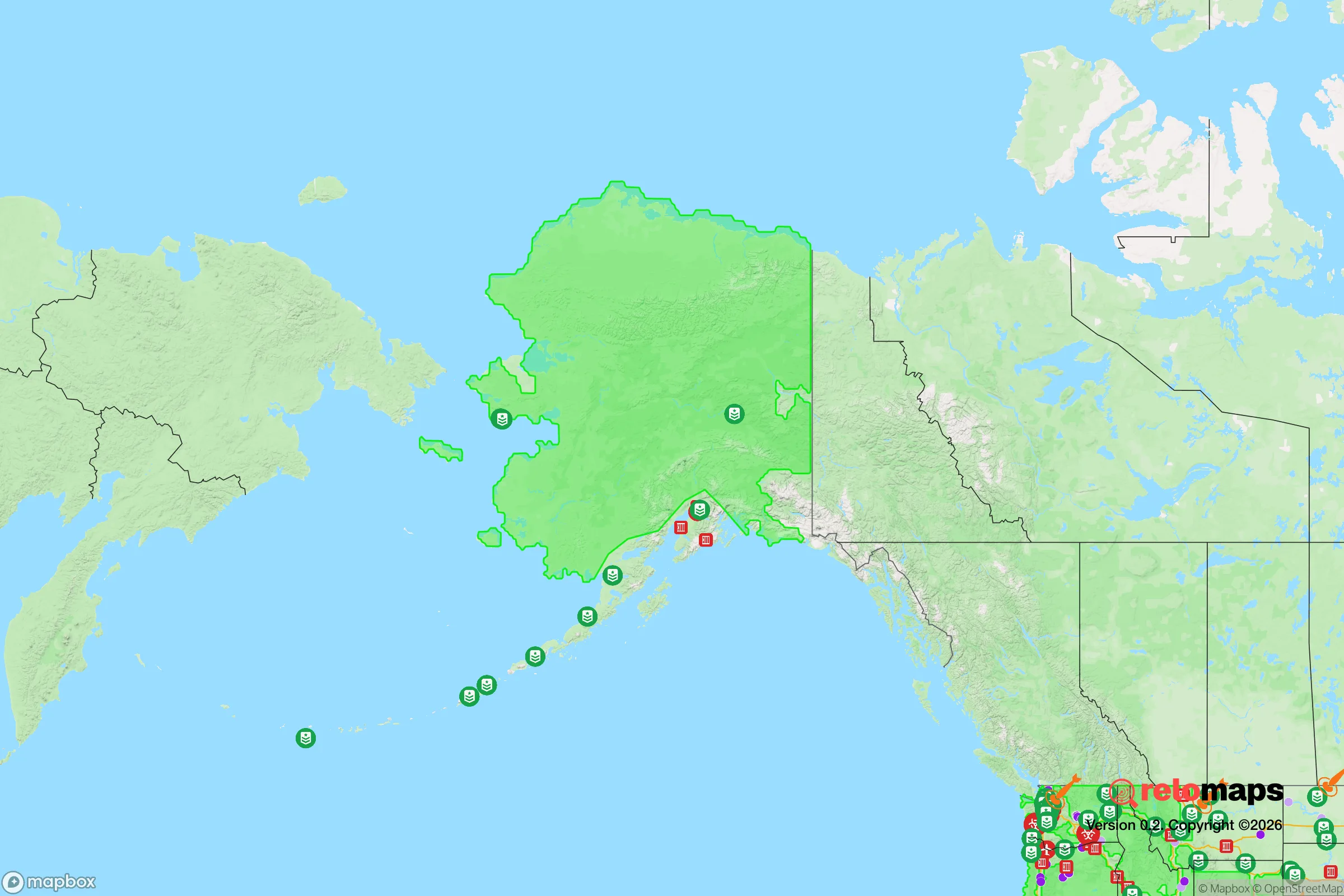
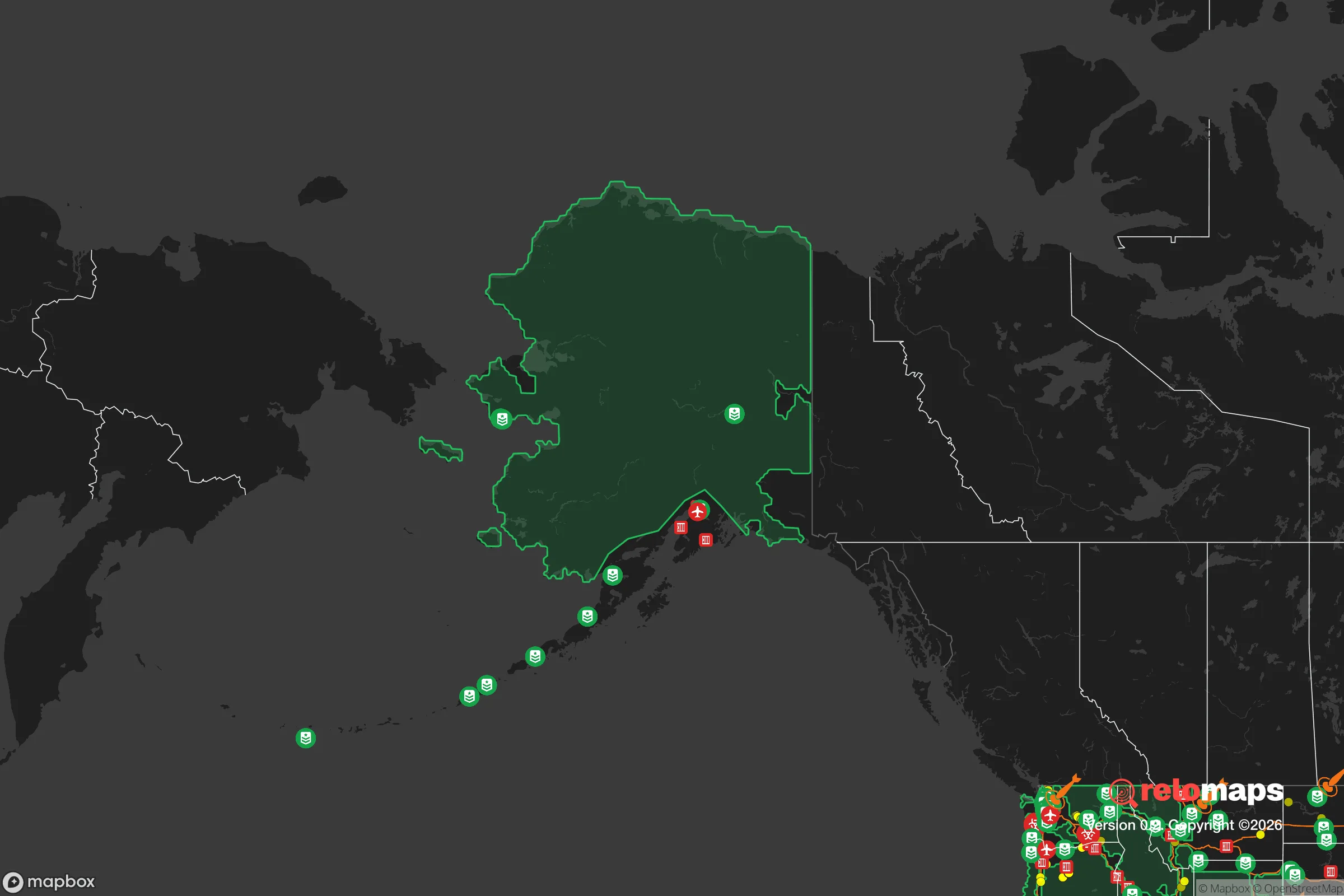


Important Note: For informational purposes only. This does not mean nothing bad ever happens in the green zones. Please use common sense. This is based on public data and modeled with AI. We tried to take a conservative approach but mistakes happen. We update this regularly as new information becomes available.
Solar Generator Recommendations
Backup power matters more here than in safer locations. We've picked three solar generators across budgets and capacity tiers — start with the budget unit if you only need a few essentials, or step up if you want to run a fridge and HVAC for days at a time.

Jackery Portable Power Station Explorer 300
Budget OptionPower on the Go: Weighing only 11 lbs, it's convenient to set up and store with book-sized foldable solar panels

BLUETTI Portable Power Station AC180
Designed for both indoor and outdoor scenarios, AC180 is highly capable as it has a robost capacity and continuous output power.

EF ECOFLOW DELTA Pro Ultra Power Station
Upgraded PickEcoFlow DELTA Pro Ultra is a whole-home energy system designed to grow with your family. Integrated with the Smart Home Panel 2, it scales to meet your evolving energy needs — keeping your home powered, intelligent, and secure through every stage of life.
We earn a commission, at no additional cost to you.
Strategic Assessment Analysis
Seward, Alaska, presents a compelling case for those prioritizing long-term resilience and strategic relocation, but it is not a simple "bug out" paradise. Its advantages are real and significant—extreme geographic isolation, a working port, and access to abundant natural resources—but they come with equally serious trade-offs in cost, logistics, and exposure to specific risks. For the conservative-minded prepper or survivalist, Seward offers a rare combination of defensible terrain and functional infrastructure, provided you understand its vulnerabilities and plan accordingly.
Geographic isolation and natural defensive advantages
Seward sits at the head of Resurrection Bay on the Kenai Peninsula, roughly 125 miles south of Anchorage by road. That road—the Seward Highway—is the only land link to the rest of Alaska, and it is a narrow, winding two-lane route that passes through avalanche zones and over the Turnagain Arm. In a crisis scenario, this single chokepoint is both a blessing and a curse. It makes Seward naturally defensible against mass movement from Anchorage, but it also means any disruption to the highway (landslide, earthquake, intentional blockage) cuts the town off completely. The bay itself is deep and ice-free year-round, giving Seward a working deepwater port that can receive maritime resupply even if the road is gone. The surrounding terrain is steep, forested, and sparsely populated—the Chugach National Forest and Kenai Fjords National Park buffer the town on three sides. This creates a natural security perimeter that would be difficult for any large group to approach undetected. The population is small (roughly 2,600 year-round residents), which means a tight-knit community where outsiders are noticed quickly. For a relocator, this isolation is the core strategic asset: Seward is far enough from Anchorage's 290,000 people to avoid being overrun in a collapse, yet connected enough to maintain trade and travel when conditions are stable.
Risks, exposures, and proximity to fallout-relevant landmarks
No strategic assessment is honest without confronting the risks. Seward sits directly on the Pacific Ring of Fire, and the 1964 Good Friday earthquake—the most powerful ever recorded in North America—destroyed much of the original town and triggered a tsunami that killed 13 people. The same fault lines remain active. Modern building codes and a tsunami warning system have improved survivability, but a major quake would still likely sever the highway and damage the port. The town is also vulnerable to avalanches from the surrounding mountains; the Seward Highway is frequently closed for avalanche control in winter. More critically for the prepper mindset, Seward is approximately 80 miles from Joint Base Elmendorf-Richardson (JBER) in Anchorage, a major military installation that includes an Air Force base and Army post. JBER is a strategic asset for the U.S. military and a potential target in any conflict involving peer adversaries. Seward itself is not a primary target, but fallout patterns from a strike on Anchorage or JBER would depend on wind direction. Prevailing winds in south-central Alaska are generally from the north and east, which could push fallout toward the Kenai Peninsula depending on the season. The port of Seward also handles fuel and cargo for the interior, making it a secondary logistical node that could attract attention in a prolonged conflict. For the relocator, the key takeaway is that Seward is not a zero-risk sanctuary—it is a lower-risk option compared to urban centers, but one that requires serious preparation for natural disasters and the possibility of regional instability.
Practical resilience for a relocator: food, water, energy, and defensibility
For the individual or family looking to live independently, Seward's practical resilience is mixed. Water is abundant—the town draws from surface sources like Salmon Creek and Bear Lake, and rainfall is high (over 60 inches annually). Most homes have well water or municipal supply, but a hand pump or gravity-fed filtration system is wise given earthquake risk. Food production is challenging. The growing season is short (roughly 90 frost-free days), and the soil is thin and rocky. Raised beds and greenhouses are common, but you will not be self-sufficient in vegetables without serious investment. The real food security comes from the ocean: salmon, halibut, rockfish, clams, and mussels are available in Resurrection Bay and the nearby Gulf of Alaska. Hunting for deer and moose is possible but limited by terrain and competition. Energy is expensive and grid-dependent. Seward's electricity comes from the Railbelt grid, which is powered by natural gas from Cook Inlet and hydro from the Bradley Lake project. Rates are high (around 20-25 cents per kWh), and the grid is vulnerable to earthquake damage. Solar is marginal due to low winter sun and heavy cloud cover; wind is better but requires coastal siting. Wood heat is the most practical backup—most homes have a wood stove, and firewood permits are available from the Chugach National Forest. Defensibility is strong at the micro level. The town's layout—a narrow strip between the bay and steep mountains—means only a few roads and trails lead in or out. A small group could effectively monitor access points. The community is armed and self-reliant by Alaskan standards; gun ownership is near-universal, and the local culture is one of mutual aid rather than dependence on distant government. However, the small population also means that a serious medical emergency or supply shortage cannot be solved locally—you need to be prepared to self-treat and stockpile for at least six months.
The overall strategic picture for Seward as a relocation destination
Seward is not a place for the unprepared or the faint of heart. It demands a high level of self-sufficiency, significant financial resources (median home prices exceed $350,000, and cost of living is 30% above the national average), and a willingness to endure long, dark winters with limited social amenities. For the conservative prepper who values geographic isolation, a working port, and a community that does not rely on government handouts, Seward offers a rare combination of assets. It is far enough from Anchorage to avoid the worst of urban collapse, yet connected enough to maintain access to supplies and medical care in normal times. The risks—earthquake, tsunami, avalanche, and proximity to a military target—are real but manageable with proper planning. The food and energy challenges require serious investment in infrastructure and skills. If you are looking for a place where you can live quietly, prepare for the worst, and raise a family away from the chaos of the Lower 48, Seward deserves a hard look. Just do not expect it to be easy, cheap, or safe without effort. It is a strategic outpost, not a retirement community.

* Values derived from national, state, county, city and local statistics and may differ in a specific area. Last updated: 2026-04-19T19:36:05.000Z
Narrative content on this page is AI-generated and may contain mistakes. Verify any details that matter before acting on them.
ReloMaps may earn a commission from affiliate links at no extra cost to you.

