 Popular
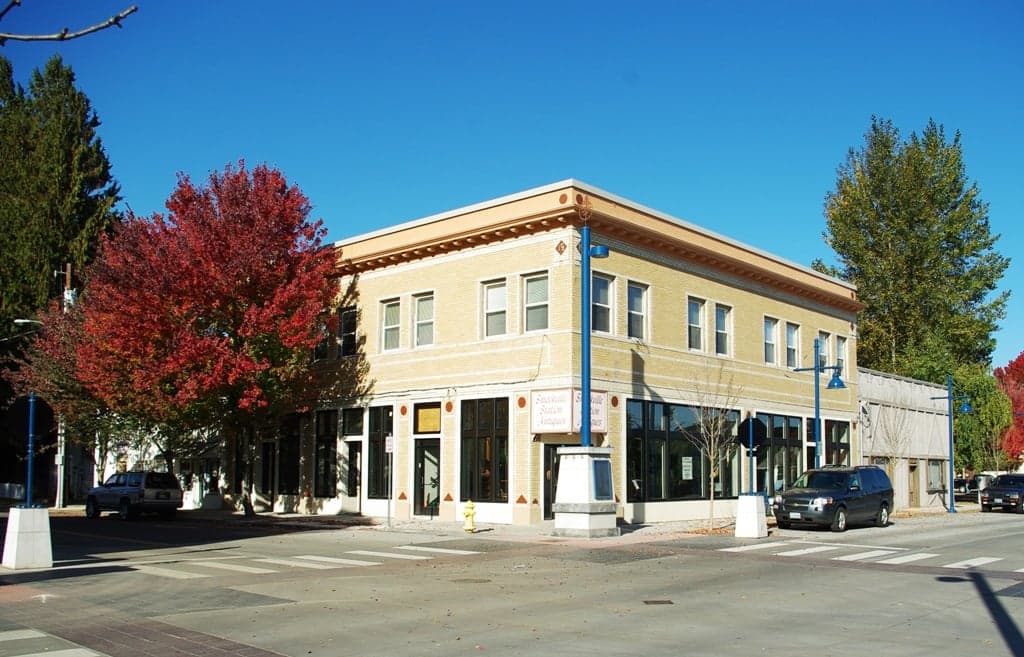
Photo: Wikipedia
Demographics of Sherwood, OR
Affluence Level in Sherwood, OR
An upper-middle-class area. Household wealth, education levels, and homeownership run ahead of national benchmarks.
People of Sherwood, OR
Sherwood, Oregon, is a predominantly white, family-oriented city of 20,227 residents where nearly half of adults hold a college degree, reflecting its character as an affluent, planned suburb of Portland. The city’s population is notably less diverse than the broader Portland metro area, with a 78.2% white majority and a small but established Hispanic community of 8.3%. Foreign-born residents make up just 4.3% of the population, and the city has virtually no Black residents (0.0%), while East/Southeast Asian communities account for 3.2% and Indian-subcontinent residents for 0.7%. Sherwood’s identity is shaped by its agricultural roots, rapid suburbanization, and a deliberate effort to maintain a small-town feel within commuting distance of Portland.
How the city was settled and grew
Sherwood’s original population arrived in the 1840s and 1850s via the Oregon Trail, with white American settlers claiming Donation Land Claims along the fertile Tualatin Valley. The area was originally known as Smockville after early settler John Smock, who built a gristmill and general store near what is now the Old Town Sherwood district. These first families were predominantly of English, Irish, and German stock, farming wheat, oats, and later berries and nuts. The arrival of the Oregon Electric Railway in 1908 transformed Smockville into a shipping hub, and the town was renamed Sherwood in 1911 after the developer’s hometown in England. The historic Railroad District, centered around Pine Street, became the commercial heart where railroad workers, merchants, and farm laborers lived in modest wood-frame houses. By 1950, Sherwood remained a tiny agricultural village of fewer than 1,000 people, with the Edwards Addition neighborhood (platted in the 1920s) housing many of the farm families who worked the surrounding orchards and hop fields.
Modern era (post-1965)
Sherwood’s modern population boom began in the 1970s and accelerated through the 1990s as Portland’s suburban sprawl pushed southwest. The 1965 Hart-Cellar Act had little direct effect on Sherwood’s demographics; the city remained overwhelmingly white through the 1980s, with Hispanic residents comprising less than 2% of the population. The real driver was domestic in-migration of white families from Portland and California seeking larger lots, newer schools, and lower crime rates. The Woodhaven subdivision, built in the 1980s and 1990s, absorbed many of these newcomers with its cul-de-sac layout and four-bedroom homes. The Stoneridge neighborhood, developed in the 2000s, attracted a slightly more diverse mix, including a small number of East/Southeast Asian families (primarily of Chinese and Korean ancestry) who moved for the highly rated Sherwood School District. Hispanic growth has been modest and concentrated in the Mountain View Estates area, where some farmworker families transitioned into construction and service jobs. The Indian-subcontinent population (0.7%) is very small and scattered, with no distinct ethnic enclave, while the Black population remains effectively zero—a notable absence that reflects Sherwood’s historical exclusion and lack of affordable housing stock.
The future
Sherwood’s population is likely to continue homogenizing rather than diversifying, given its high home prices (median over $600,000) and limited rental stock. The Hispanic share may grow slowly from 8.3% as second-generation families age into homeownership, but the city’s zoning favors large-lot single-family homes that price out most immigrant households. The East/Southeast Asian community (3.2%) is plateauing, as younger professionals in this group increasingly choose more diverse suburbs like Beaverton or Hillsboro. The Indian-subcontinent population is too small to form a meaningful enclave and will likely remain scattered. The biggest demographic shift will be aging: Sherwood’s median age of 38.5 is rising as the 1990s-era families stay put and their children leave for college. New construction in the Canterbury and Sherwood Forest subdivisions is attracting some younger white families from Portland, but these are largely replacing, not expanding, the existing demographic base. No major immigrant gateway is emerging.
For a conservative-leaning mover today, Sherwood is becoming a stable, high-amenity suburb where the population is consolidating around a white, college-educated, family-oriented core. The city offers strong schools, low crime, and a deliberate small-town atmosphere, but at the cost of racial and economic diversity. New arrivals should expect a community that values continuity over change, with little pressure to integrate into a multicultural fabric that simply does not exist here.

* Values derived from national, state, county, city and local statistics and may differ in a specific area. Last updated: 2026-05-29T11:01:14.000Z
Narrative content on this page is AI-generated and may contain mistakes. Verify any details that matter before acting on them.
ReloMaps may earn a commission from affiliate links at no extra cost to you.

