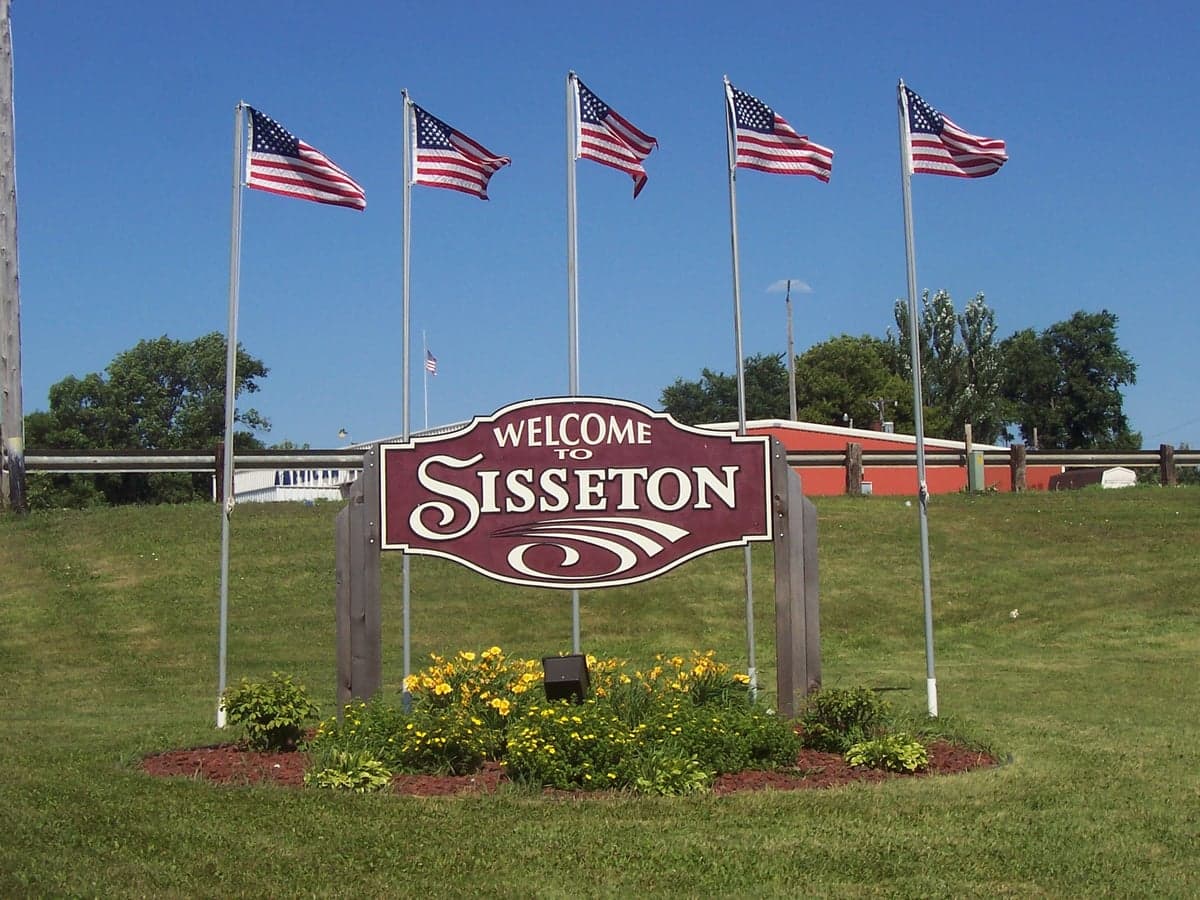
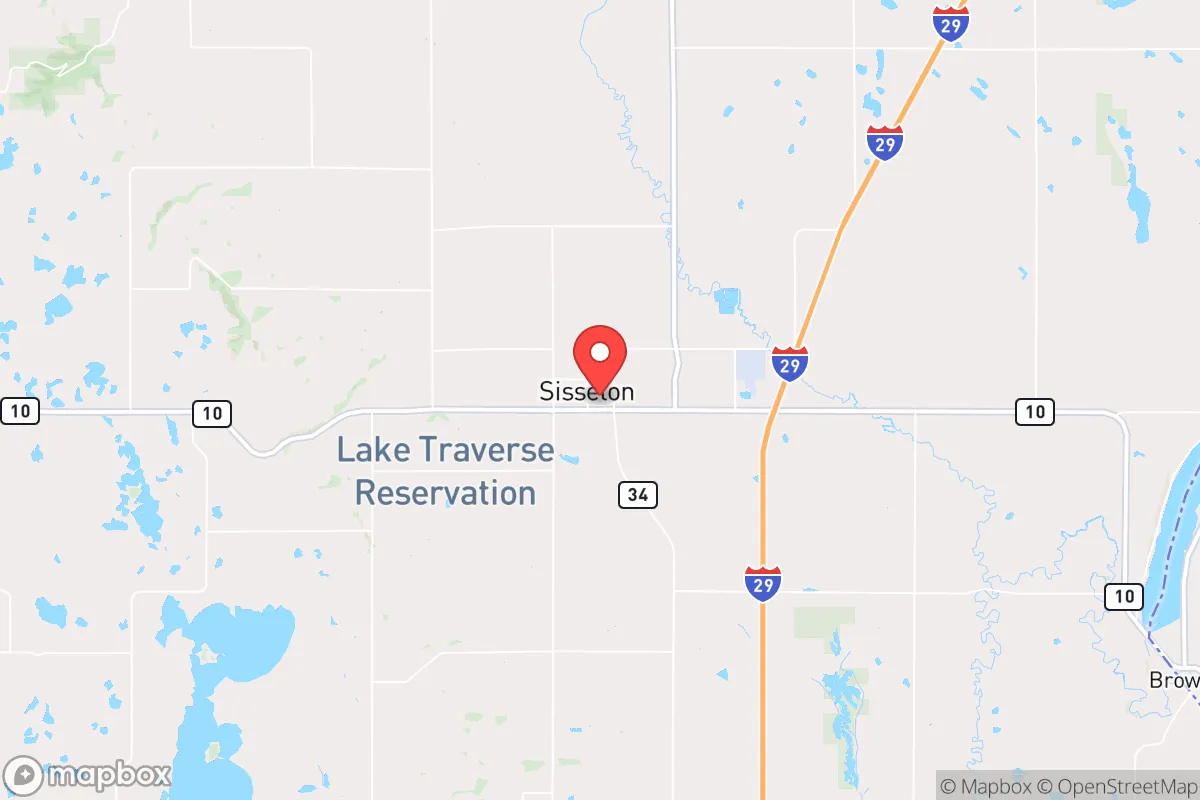
Photo: Wikipedia
Demographics of Sisseton, SD
Affluence Level in Sisseton, SD
A below-average socioeconomic profile. Incomes, home values, and educational attainment trail the U.S., with higher poverty and unemployment.
People of Sisseton, SD
The people of Sisseton, South Dakota today number 2,593, forming a community defined by its stark racial and cultural duality: 41.3% White and a substantial Native American population, primarily enrolled members of the Sisseton Wahpeton Oyate of the Lake Traverse Reservation. The city is the seat of Roberts County and serves as the economic and governmental hub for the reservation, giving it a distinctive identity as a small prairie town where tribal sovereignty and county governance overlap. With only 0.2% foreign-born residents and 20.8% college-educated adults, Sisseton remains one of the most ethnically concentrated and least globally connected cities in the Upper Midwest.
How the city was settled and grew
Sisseton was officially platted in 188桔 as a railroad town on the line of the Great Northern Railway, but its human history begins with the forced displacement of the Dakota people. The 1867 Treaty of Washington established the Lake Traverse Reservation, and the Sisseton and Wahpeton bands were confined to this area after the U.S.-Dakota War of 1862. The city itself was founded on land ceded from the reservation through the 1887 Dawes Act, which broke up communal tribal land into individual allotments and opened "surplus" acres to White homesteaders. The original White settlers were predominantly Scandinavian and German immigrants drawn by the promise of cheap farmland and the railroad's arrival in 1886. They built the core of what is now Downtown Sisseton along Main Street, erecting wood-frame commercial buildings and grain elevators that still define the town's skyline. The Native population, meanwhile, was pushed to rural allotments outside the city limits, particularly in the Agency Village area (the tribal headquarters, four miles west) and the Veblen and Peever communities within the reservation. By 1900, Sisseton's population was overwhelmingly White, with Native families largely excluded from town life except as laborers.
Modern era (post-1965)
The post-1965 era in Sisseton was not shaped by immigration reform—the foreign-born share remains negligible at 0.2%—but by the twin forces of tribal self-determination and White out-migration. The Indian Self-Determination and Education Assistance Act of 1975 allowed the Sisseton Wahpeton Oyate to take over management of their own schools, health clinics, and housing programs, creating a new class of tribal government jobs. This drew Native families back from urban relocation programs of the 1950s and 1960s, and they began settling in the West Side of Sisseton, a residential area west of Main Street where tribal housing developments were built in the 1980s and 1990s. Simultaneously, the White population began a slow decline as young adults left for larger cities like Watertown and Fargo, and as family farms consolidated. The result is that Sisseton's White share dropped from roughly 70% in 1970 to 41.3% today, while the Native share rose correspondingly. The East Side of town, originally the White residential district, has become more mixed, with some Native families moving into older single-family homes. The South Side, near the Sisseton Middle School and the hospital, remains predominantly White and middle-class, while the North Side industrial area along the railroad tracks has seen little new development.
The future
The demographic trajectory of Sisseton points toward continued homogenization into a majority-Native community, with the White population aging and not being replaced. The Hispanic share, at 4.6%, is the only other growing group, driven by a small number of migrant workers employed in the region's turkey processing plants and agricultural operations; these families are settling in the West Side rental units and in mobile home parks on the town's fringe. The Black and East/Southeast Asian populations remain negligible (0.6% and 0.2%, respectively), and there is no Indian-subcontinent community. The tribal government, which is the largest employer in the county, will continue to anchor the local economy, and the Sisseton Wahpeton College (a tribal college) provides a modest pipeline for Native graduates to stay. However, the overall population has been flat to slightly declining since 2000 (down from 2,700), and the lack of private-sector job growth means that most young adults—both White and Native—leave after high school. The city is not tribalizing into distinct enclaves so much as it is becoming a single, Native-majority town with a White minority concentrated in the older East Side neighborhoods.
For someone moving in now, Sisseton offers a tight-knit, low-cost environment where tribal culture and governance are central to daily life, and where the White population is a shrinking but still influential minority. The city is stable but not growing, and newcomers should expect a community where the primary social and economic institutions are tribal, not municipal. It is a place where the past—the treaty era, the allotment era, and the self-determination era—is still visibly shaping the present.

* Values derived from national, state, county, city and local statistics and may differ in a specific area. Last updated: 2026-04-23T02:22:25.000Z
Narrative content on this page is AI-generated and may contain mistakes. Verify any details that matter before acting on them.
ReloMaps may earn a commission from affiliate links at no extra cost to you.

