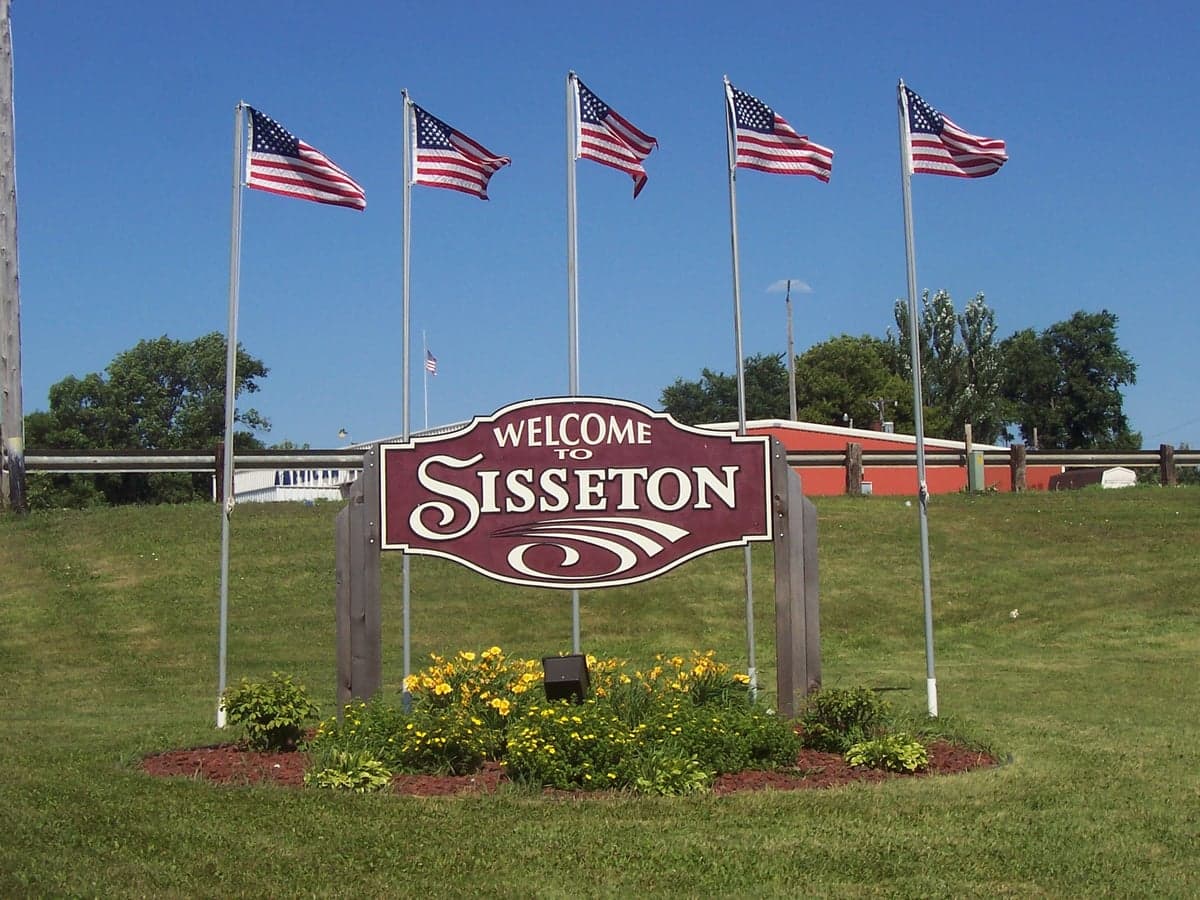
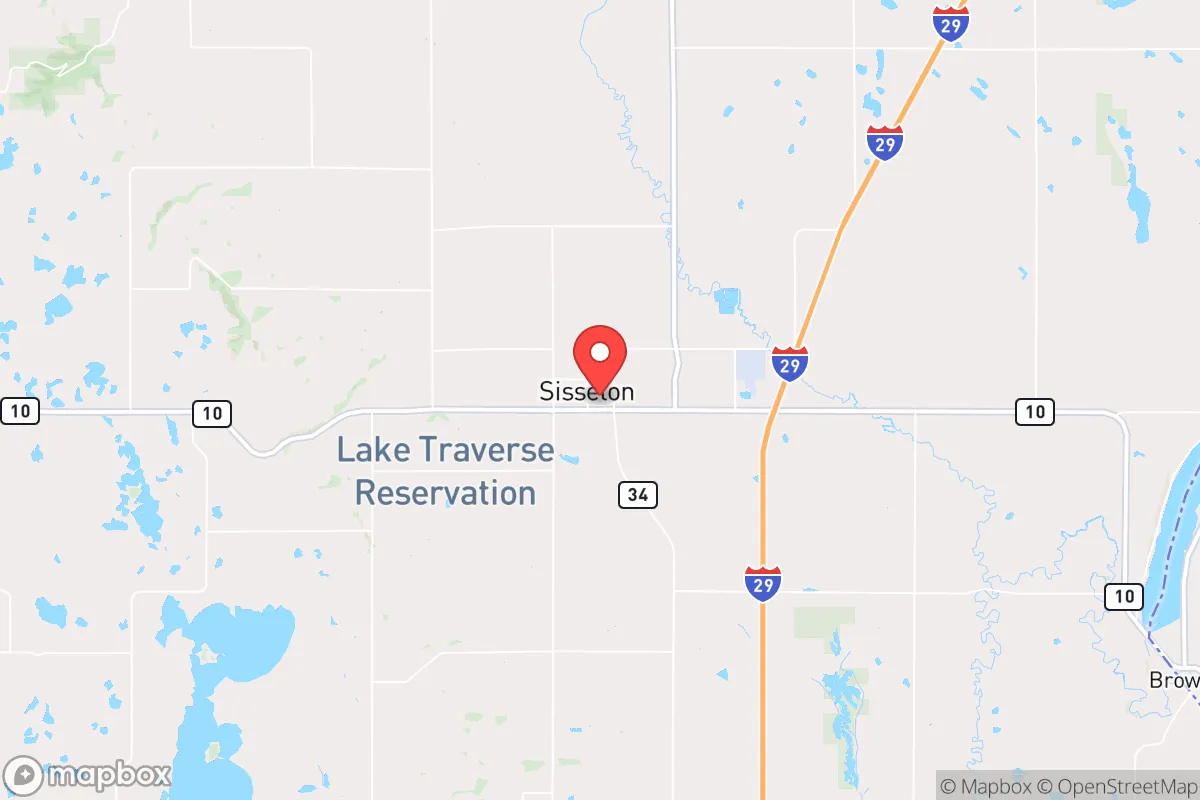
Photo: Wikipedia
Political ClimatePolitical Climate in Sisseton, SD
District shown is the primary district for this city’s centroid. Cities may span multiple districts.
Inherited from parent state — no local data available.
Local Political AnalysisPolitical Analysis of Sisseton, SD
Sisseton, South Dakota, sits in a region that has been reliably conservative for generations, and the numbers back that up with a Cook PVI of R+15. That means the area votes about 15 points more Republican than the national average, and it’s not a fluke—this has been the political baseline here for as long as anyone can remember. But if you’ve been around here a while, you’ve noticed some subtle shifts, and not all of them are for the better. The local lean is still solidly red, but there’s a growing undercurrent of progressive influence creeping in from the state capital and federal mandates, and that’s something folks are keeping a close eye on.
How it compares
When you look at the surrounding towns, the contrast is pretty stark. Drive an hour south to Watertown, and you’ll find a more moderate, sometimes even liberal-leaning vibe, especially in the college crowd and younger professionals. Up north, Aberdeen is similar—still conservative overall, but with pockets of progressive activism that wouldn’t fly in Sisseton. The real difference is with places like Brookings, home to South Dakota State University, where the political climate is noticeably more left-leaning. Sisseton, by contrast, has held the line. The local county commission, school board, and city council are dominated by folks who believe in limited government, personal responsibility, and keeping taxes low. That R+15 rating isn’t just a statistic—it reflects a community that values its independence and isn’t eager to hand over control to bureaucrats in Pierre or Washington.
What this means for residents
For the people living here, the political climate means a few concrete things. First, you’re not going to see the kind of government overreach that’s become common in blue states—no heavy-handed lockdowns, no aggressive mask mandates, and no push to restrict your Second Amendment rights. The local sheriff’s office and county officials have made it clear they prioritize individual freedoms over state directives. Second, property taxes are kept in check, and there’s a general distrust of new spending programs that might saddle future generations with debt. That said, there’s a growing concern about federal funding strings attached to things like infrastructure and education. Some residents worry that accepting certain grants could open the door to progressive mandates on everything from curriculum to land use. It’s a balancing act—keeping the local character while not getting cut off from resources.
One thing that sets Sisseton apart is its strong sense of community self-reliance. You don’t see a lot of people looking to the government to solve problems. Instead, neighbors help neighbors, churches and local nonprofits step up, and there’s a healthy skepticism of any politician promising a quick fix. The cultural distinction here is that while the area is conservative, it’s not rigidly ideological—people are practical. They’ll vote for a candidate who talks straight about keeping government out of their lives, even if that candidate isn’t a perfect party-line Republican. The trajectory, though, is something to watch. If the progressive wave that’s washing over other parts of the country keeps pushing into rural South Dakota through court rulings or federal overreach, Sisseton could find itself fighting harder to preserve the way of life that’s made it a good place to raise a family. For now, the political climate is stable, but the long-term trend is something every resident should be paying attention to.

State Political ClimatePolitical Climate in South Dakota
State Political AnalysisPolitical Environment in the State
South Dakota is about as red as a state gets, with a solid Republican trifecta that’s held for decades. The state hasn’t voted for a Democratic presidential candidate since 1964, and in 2024, Donald Trump carried it by over 29 points. The dominant coalition is a mix of rural conservatives, libertarian-leaning ranchers, and a growing number of out-of-state transplants fleeing blue states. Over the last 10-20 years, the lean has only hardened, with the GOP supermajority in the legislature pushing an aggressively pro-business, low-tax, and culturally conservative agenda. If you’re looking for a place where the government mostly stays out of your way, this is it — but there are some recent cracks in that foundation worth watching.
Urban vs. rural divide
The political map is straightforward: the eastern I-29 corridor, anchored by Sioux Falls, is the state’s economic engine and its most moderate region. Sioux Falls itself leans Republican but is more purple than the rest of the state, with pockets of Democratic voters in the downtown and university areas. Rapid City and the Black Hills region are reliably red, driven by a strong military and tourism presence. The real firepower for conservatives comes from the vast rural expanse — counties like Harding, Perkins, and Ziebach routinely deliver 80-90% Republican margins. The only notable blue spots are the tribal lands, like Pine Ridge (Oglala Lakota County) and Rosebud (Todd County), which vote heavily Democratic but have low turnout. The urban-rural split is widening: Sioux Falls is growing fast with younger, more diverse transplants, while the rural counties are shrinking but voting even redder. That tension is the state’s quiet political fault line.
Policy environment
South Dakota’s policy environment is a conservative dream on paper. There’s no state income tax, no corporate income tax, and no personal property tax on vehicles or business inventory. Property taxes are moderate, and the state’s sales tax is 4.5% (with local add-ons). The regulatory climate is light — no state-level OSHA, no mandatory paid leave, and a right-to-work law. Education policy is a mixed bag: the state has a school choice program (the “Education Savings Account” law passed in 2024) that lets parents use public funds for private or homeschool expenses, but the teacher’s union still has influence in Pierre. Healthcare is dominated by Sanford Health and Avera, both headquartered in Sioux Falls, and the state has not expanded Medicaid under the ACA — though voters approved a ballot measure in 2022 to do so, which the legislature has been slow to implement. Election laws are solid: voter ID is required, no-excuse absentee voting is allowed, and the state has a clean voter roll system. No widespread mail-in ballot chaos here — it’s a model for election integrity.
Trajectory & freedom
On the freedom front, South Dakota has been a national leader in some areas and a cautionary tale in others. The good: constitutional carry (permitless carry) has been law since 2019, and the state has a strong castle doctrine and stand-your-ground law. In 2023, Governor Kristi Noem signed a bill banning transgender procedures for minors — a major parental rights win. The state also passed a “Parents’ Bill of Rights” in 2022, giving parents explicit authority over their kids’ education and medical decisions. On the concerning side, the state has seen creeping government overreach in the name of public health. During COVID, Noem famously refused lockdowns, but local health departments in Sioux Falls and Rapid City imposed mask mandates and business restrictions — a reminder that local governments can still trample liberty. More recently, the legislature has flirted with property rights issues: a 2024 bill that would have banned foreign ownership of agricultural land was watered down, and there’s ongoing debate about eminent domain for carbon pipeline projects (the Summit Carbon Solutions pipeline). That pipeline fight is the biggest flashpoint — it pits property rights against corporate interests, and the state government has been accused of siding with the company over landowners. That’s a red flag for anyone who values private property.
Civil unrest & political movements
South Dakota is not a hotbed of civil unrest, but there are visible political movements. The most active is the property rights movement around the carbon pipeline, with landowners in counties like Brown and Spink organizing protests and lawsuits against eminent domain. On the left, the Indigenous rights movement is strong, particularly around the Oceti Sakowin (Great Sioux Nation) and the fight against the Keystone XL pipeline (now dead) and mining in the Black Hills. There have been small but vocal protests in Pierre over the Medicaid expansion delay and in Sioux Falls over police reform. Immigration is a non-issue here — the state has a tiny foreign-born population, and there’s no sanctuary city movement. Election integrity controversies are minimal, though some rural counties have complained about the state’s centralized voter database. The most visible flashpoint for a new resident would be the pipeline fight: you’ll see “No Eminent Domain for Private Profit” signs on farms and in small-town cafes. It’s a reminder that even in a red state, the government can still overreach when corporate money talks.
Projection
Over the next 5-10 years, South Dakota will likely stay deeply red, but the character of that conservatism is shifting. The biggest demographic change is the influx of remote workers and retirees from California, Colorado, and Minnesota — they’re moving to Sioux Falls, Rapid City, and smaller towns like Spearfish and Brookings. These transplants tend to be culturally conservative but economically moderate, and they’re already pushing for more amenities, better schools, and less resistance to growth. That could soften the state’s hardline libertarian edge. The rural counties will continue to shrink and vote even redder, while the Sioux Falls metro will become more politically competitive — maybe not blue, but less reflexively Republican. The pipeline fight and property rights battles will likely intensify, and the state’s relationship with the federal government (especially on land management in the Black Hills) will remain tense. If you’re moving here now, expect a state that’s still very free but with growing pains — more people, more traffic, more government complexity, but still a far cry from the coastal states you’re leaving.
Bottom line for a new resident: South Dakota is a solid bet if you want low taxes, light regulation, and a culture that respects individual liberty. But don’t assume it’s a libertarian paradise — the state government is still a government, and it will side with corporate interests over your property rights if the money is big enough. Keep an eye on the pipeline fight and the Sioux Falls growth machine. If those trends continue, the state will remain conservative, but the flavor will shift from “leave me alone” to “let’s build something together” — which might be fine, as long as they remember who owns the land.
* Values derived from national, state, county, city and local statistics and may differ in a specific area. Last updated: 2026-04-23T02:22:25.000Z
Narrative content on this page is AI-generated and may contain mistakes. Verify any details that matter before acting on them.
ReloMaps may earn a commission from affiliate links at no extra cost to you.

