Photo: Wikipedia
Demographics of Socorro, NM
Affluence Level in Socorro, NM
A middle-class area roughly in line with national averages across income, home values, education, and employment.
People of Socorro, NM
The people of Socorro, New Mexico today form a compact, historically rooted community of 8,540 residents, where a Hispanic majority of 51.4% and a White population of 34.6% reflect centuries of layered settlement. The city retains a distinctly small-town, family-oriented character, with a median age around 30 and a college-educated rate of 28.0%, buoyed by New Mexico Tech. Foreign-born residents make up just 4.9% of the population, and the community is marked by modest but notable Indian subcontinent (2.3%) and East/Southeast Asian (1.0%) enclaves, alongside a very small Black population (0.4%).
How the city was settled and grew
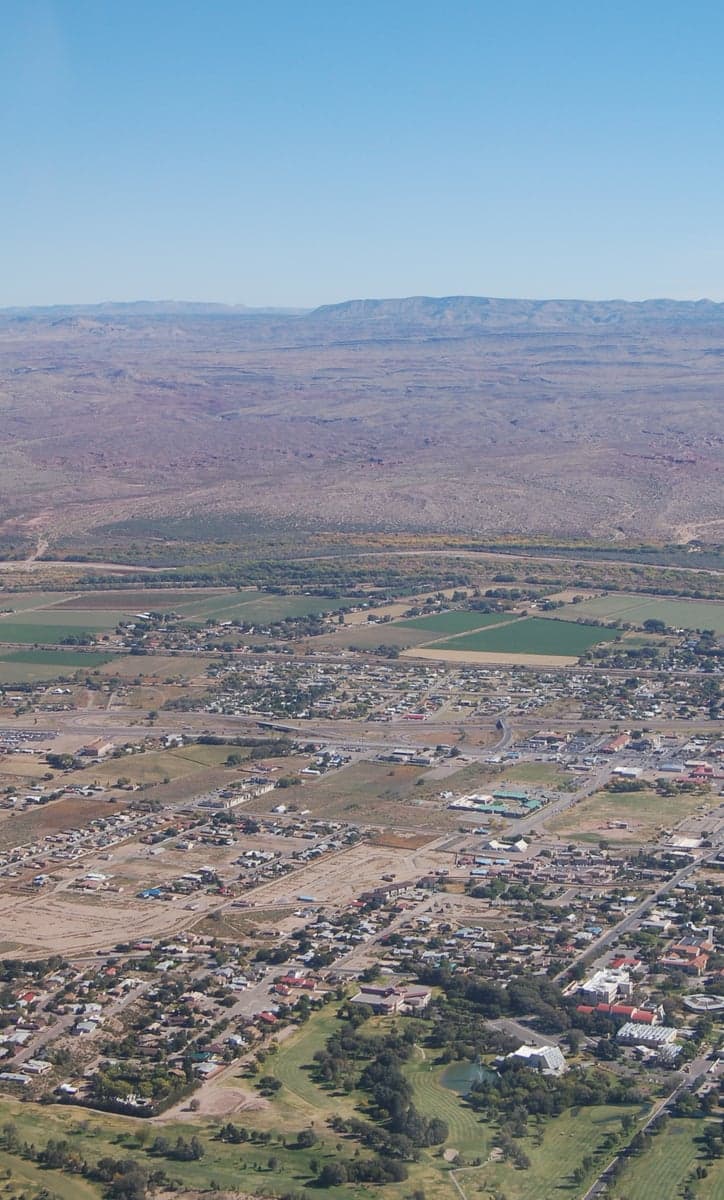
Socorro’s human history begins long before Anglo arrival, with the Piro people inhabiting the Rio Grande valley for centuries. Spanish colonists established the first permanent European settlement in the early 1600s, centered around the San Miguel Mission and the original plaza in what is now Old Town Socorro. The 1848 Treaty of Guadalupe Hidalgo brought the area under U.S. control, and the arrival of the Atchison, Topeka and Santa Fe Railway in 1880 triggered a new wave of Anglo settlers, many of whom built homes and businesses along the rail corridor in Railroad Addition, a neighborhood just south of the plaza. The founding of the New Mexico School of Mines (now New Mexico Tech) in 1889 drew faculty and students from across the country, creating a small but influential professional class that settled in the Tech Area around the campus. Through the mid-20th century, Socorro’s population remained overwhelmingly Hispanic and White, with the Hispanic community concentrated in Old Town and the surrounding Barrio de los Muertos (a historic Hispanic neighborhood near the river), while Anglo families gravitated toward newer subdivisions north of the railroad tracks.
Modern era (post-1965)
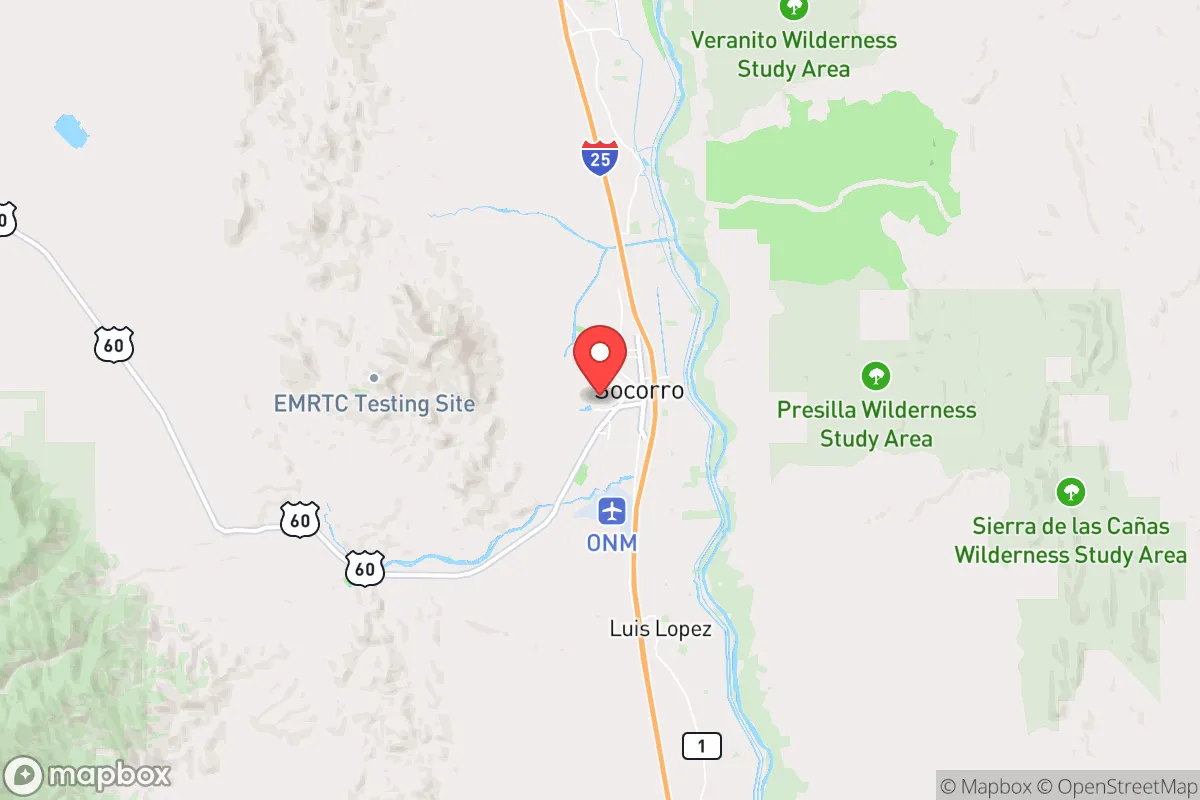
The 1965 Hart-Cellar Act had a limited direct impact on Socorro, as the city’s foreign-born share remains low at 4.9%. However, the post-1965 period saw significant domestic in-migration, particularly of retirees and outdoor enthusiasts drawn to the nearby Bosque del Apache National Wildlife Refuge and the Rio Grande. These newcomers, predominantly White, settled in newer subdivisions such as Valley View Estates and Sunset Hills on the city’s western edge. The most notable demographic shift since 1965 has been the growth of the Indian subcontinent population, now at 2.3%, driven by New Mexico Tech’s graduate programs in engineering and the sciences. These families and students have concentrated in rental housing and apartments near the campus, particularly in the Tech Village area. The East/Southeast Asian population (1.0%) is similarly tied to the university, with a smaller presence in the same campus-adjacent neighborhoods. The Hispanic share has remained stable at around 51%, with younger Hispanic families increasingly moving into the North Socorro area, where newer single-family homes have been built since the 1990s. The White population has declined slightly from historical highs, reflecting a broader rural New Mexico trend of out-migration among younger Anglos.
The future
Socorro’s population is projected to remain stable or grow slowly, with the Hispanic share likely holding steady or increasing modestly as younger Hispanic families age into homeownership. The Indian subcontinent community is expected to grow further, driven by continued recruitment of international graduate students at New Mexico Tech, though many leave after graduation, limiting permanent settlement. The East/Southeast Asian population is likely to plateau, as it remains tightly tied to specific academic programs. The White population will probably continue a slow decline, as retirees are replaced by fewer younger Anglo families. The city is not tribalizing into distinct ethnic enclaves; rather, neighborhoods are becoming slightly more mixed, with the Tech Village area emerging as the most diverse zone. The foreign-born share may rise to 6-7% by 2040, still well below state averages.
For someone moving to Socorro now, the city offers a stable, family-oriented environment where Hispanic and Anglo traditions blend, and where a small but growing Indian subcontinent community adds a new layer. The population is not homogenizing, but it is slowly diversifying around the university, while the historic Hispanic character of Old Town and the Barrio remains intact. New arrivals will find a place where community ties are strong, change is gradual, and the dominant identity remains rooted in the Rio Grande valley’s deep history.

* Values derived from national, state, county, city and local statistics and may differ in a specific area. Last updated: 2026-05-01T04:25:30.000Z
Narrative content on this page is AI-generated and may contain mistakes. Verify any details that matter before acting on them.
ReloMaps may earn a commission from affiliate links at no extra cost to you.

