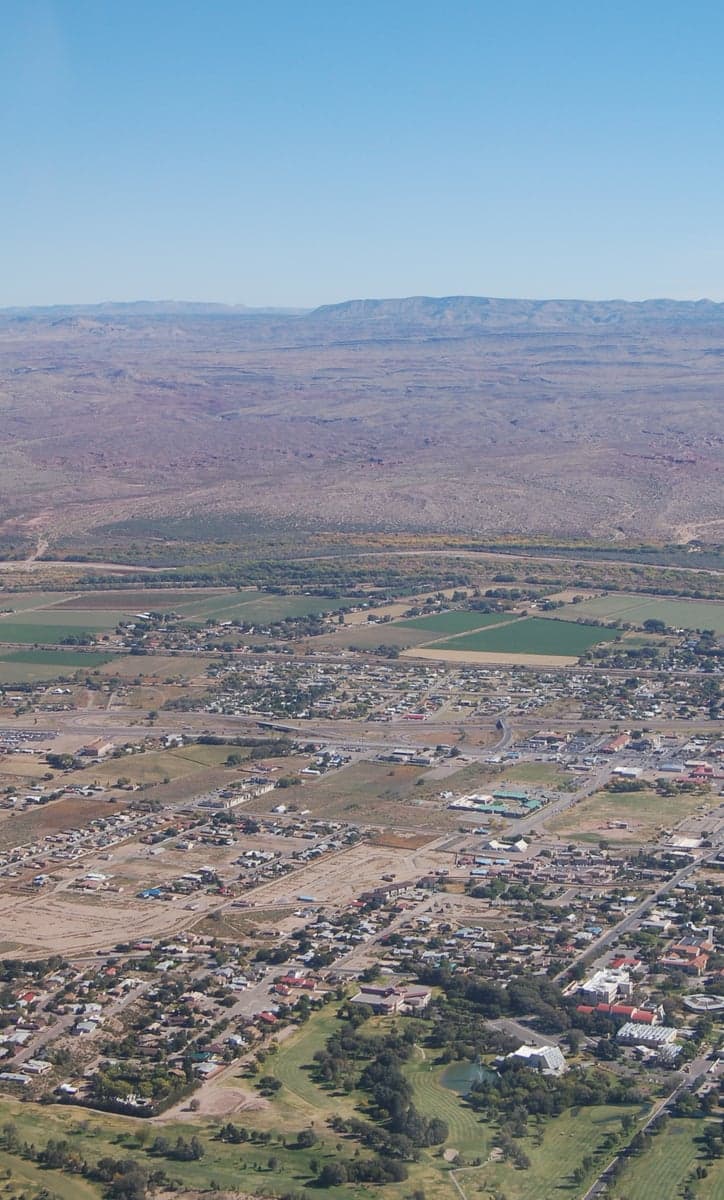
Photo: Wikipedia
Strategic Assessment of Socorro, NM
Workable tactical position. Some exposure to population density or targets, but generally defensible in a crisis.
What does the Strategic Assessment tell us?
Our Strategic Assessment grades tactical survivability of an area. Major population centers, military targets, fallout zones, natural disasters, and border exposure all drive risk — lower exposure means a more defensible position in a crisis.
This is heavily inspired by Joel Skousen's Strategic Relocation book. Highly recommended you checkout the book ($)What does this tell us?
Our Strategic Assessment grades tactical survivability of an area. Major population centers, military targets, fallout zones, natural disasters, and border exposure all drive risk — lower exposure means a more defensible position in a crisis.
This is heavily inspired by Joel Skousen's Strategic Relocation book. Highly recommended you checkout the book ($)Strategic Pillars

Key Distances
Regional Safe Places
Below is our recommended "safe zones" in New Mexico and the surrounding area based on our strategic heuristics. For most people, it's unrealistic to live in a “safe zone” full-time due to work, family or other personal reasons. They tend to be more rural. However, many of these areas are perfect for second homes and retreat properties that double as a vacation home or even a short-term rental.

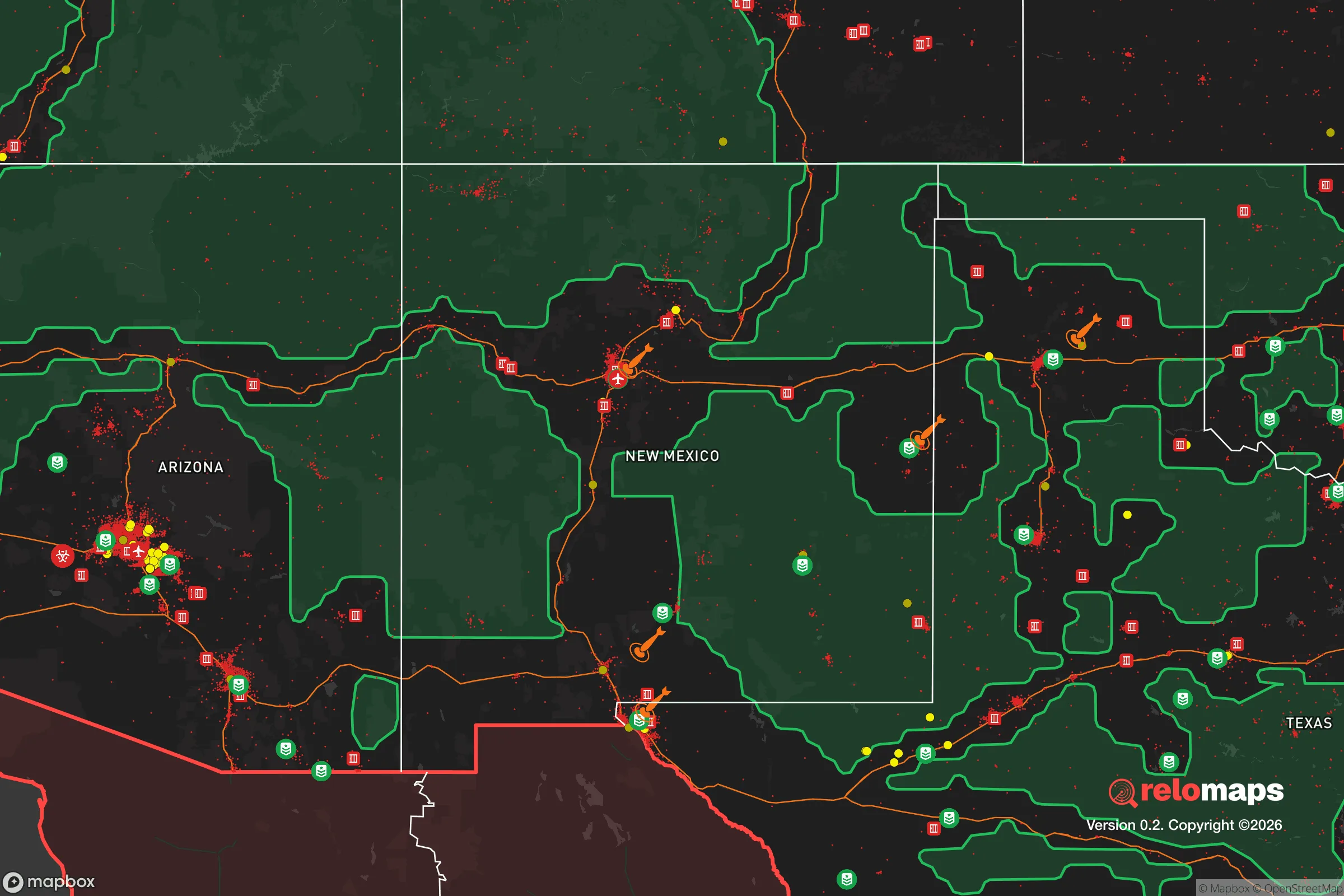


Important Note: For informational purposes only. This does not mean nothing bad ever happens in the green zones. Please use common sense. This is based on public data and modeled with AI. We tried to take a conservative approach but mistakes happen. We update this regularly as new information becomes available.
Solar Generator Recommendations
Backup power matters more here than in safer locations. We've picked three solar generators across budgets and capacity tiers — start with the budget unit if you only need a few essentials, or step up if you want to run a fridge and HVAC for days at a time.

Jackery Portable Power Station Explorer 300
Budget OptionPower on the Go: Weighing only 11 lbs, it's convenient to set up and store with book-sized foldable solar panels

BLUETTI Portable Power Station AC180
Designed for both indoor and outdoor scenarios, AC180 is highly capable as it has a robost capacity and continuous output power.

EF ECOFLOW DELTA Pro Ultra Power Station
Upgraded PickEcoFlow DELTA Pro Ultra is a whole-home energy system designed to grow with your family. Integrated with the Smart Home Panel 2, it scales to meet your evolving energy needs — keeping your home powered, intelligent, and secure through every stage of life.
We earn a commission, at no additional cost to you.
Strategic Assessment Analysis
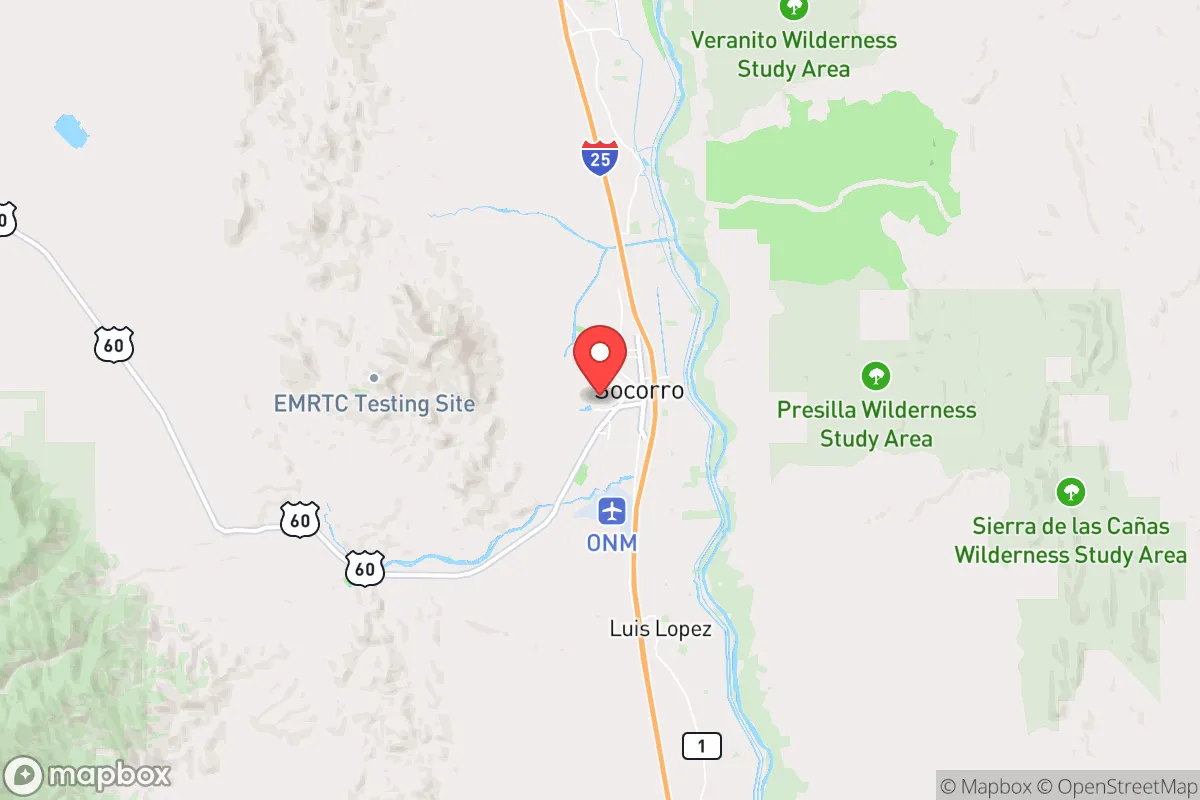
Socorro, New Mexico, sits in a unique strategic pocket that offers genuine resilience advantages for those thinking long-term about security and self-sufficiency, but it comes with real trade-offs that demand clear-eyed assessment. Located roughly 75 miles south of Albuquerque along the I-25 corridor, this small city of about 8,700 people is far enough from major population centers to avoid the worst of urban collapse scenarios, yet close enough that a determined relocator can reach supplies or medical care in a pinch. The surrounding Socorro County is sparsely populated—roughly 17,000 people across 6,600 square miles—which means low population density and minimal competition for resources in a crisis, but also limited infrastructure and a harsh, high-desert environment that punishes the unprepared.
Geographic position and natural advantages for long-term security
Socorro’s location is defined by the Rio Grande Valley, which provides a reliable surface water source—a critical asset in the arid Southwest where water rights are increasingly contested. The city sits at an elevation of 4,579 feet, offering a moderate climate that avoids the extreme heat of southern New Mexico and the brutal cold of the northern mountains. The surrounding landscape is a mix of open rangeland, piñon-juniper hills, and the Chupadera Mesa to the east, which provides natural barriers and limited road access that could slow movement in a grid-down scenario. The area is also home to the Very Large Array (VLA) radio telescope and the New Mexico Institute of Mining and Technology (NMT), which means a small but educated population and some technical infrastructure that could be repurposed. For a prepper, the key advantage is the ability to live within a 30-minute drive of open country where you can establish a remote homestead or bug-out location, while still having access to a Walmart, a grocery store, and a hospital in town. The I-25 corridor also provides a north-south evacuation route, though it’s a double-edged sword—it’s the same road that would bring refugees from Albuquerque in a crisis.
Risks, exposures, and proximity to fallout-relevant landmarks
The most significant strategic liability for Socorro is its proximity to White Sands Missile Range (WSMR) and the Trinity Site, the location of the first atomic bomb test, located about 60 miles south. While the Trinity Site is a historical landmark with no active nuclear material, WSMR is an active military installation that conducts missile tests and stores conventional munitions. In a major conflict or civil unrest scenario, this facility could become a target or a source of hazardous material. Additionally, the area is within 100 miles of Kirtland Air Force Base in Albuquerque, which houses nuclear weapons storage and research facilities. For a prepper, the risk of fallout or military activity in the region is real, though not immediate—you’re not living next to a nuclear power plant, but you are in a corridor that could see military traffic and potential targeting. The other major risk is natural: the Rio Grande is prone to flooding in heavy snowmelt years, and the region sits on the Rio Grande Rift, meaning minor seismic activity is possible. Wildfire risk is moderate, with the Magdalena Mountains to the west and the Manzano Mountains to the east both experiencing periodic burns. For a conservative relocator, the bigger concern is the potential for civil unrest spilling out of Albuquerque or El Paso (about 150 miles south), both of which have seen rising crime and political tensions. Socorro itself is politically mixed—Socorro County voted +12 for Trump in 2024—but the city has a noticeable college-town vibe from NMT, which leans left. In a breakdown scenario, you’d likely see a mix of locals who are armed and self-reliant and transient students who are not.
Practical resilience for a relocator: food, water, energy, and defensibility
Water is the first and most critical factor. The Rio Grande provides a surface water source, but water rights in New Mexico are complex and heavily regulated. If you buy land with a senior water right or a well permit, you can secure a reliable supply, but new wells are increasingly difficult to permit due to groundwater depletion and state oversight. The local aquifer is deep (200-400 feet in most areas), and drilling a well runs $15,000-$25,000. Rainwater catchment is legal and practical here, with the area averaging about 10 inches of precipitation annually—enough to supplement but not replace a well. For food, the growing season is short (April to October) and the soil is alkaline and sandy, but with raised beds and irrigation, you can produce vegetables and some grains. The local agricultural scene is small—a few farms grow alfalfa and chile—so you cannot rely on local food production in a crisis; you’d need to stockpile or grow your own. The nearest major food distribution centers are in Albuquerque, which could be cut off. Energy is a bright spot: Socorro has abundant solar potential, with over 280 sunny days per year. Off-grid solar is straightforward, and wind is viable in the open valleys. Natural gas is available in town, but rural properties rely on propane or wood. Defensibility is mixed. The terrain is open and flat near the river, making it hard to secure a large perimeter, but the surrounding mesas and canyons offer good positions for a remote retreat. The local gun culture is strong, with multiple gun shops and a shooting range, and the county sheriff’s office is generally pro-Second Amendment. However, the local police force is small (about 25 officers), and response times in rural areas can exceed 30 minutes. For a relocator, the practical strategy is to buy a property with a well, solar panels, and good sightlines, and to establish relationships with neighbors before any crisis hits.
The overall strategic picture for Socorro is one of moderate resilience with specific, manageable risks. It’s not a perfect bug-out location—the proximity to military installations and the I-25 corridor are real concerns—but for a relocator who wants to stay within a few hours of Albuquerque for work or supplies while maintaining a low profile and a self-sufficient lifestyle, it’s a viable option. The key is to buy land with water rights, invest in off-grid energy, and build a community of like-minded individuals before the situation deteriorates. The area’s low cost of living (median home price around $180,000) and relatively low crime rate (violent crime is about half the national average) make it accessible for a conservative family or single person looking to get out of the city without going completely off-grid. But don’t kid yourself: this is a harsh environment that demands preparation, and the risks from both natural and man-made threats are real. If you’re serious about long-term survival, Socorro deserves a look—but only if you’re willing to put in the work.

* Values derived from national, state, county, city and local statistics and may differ in a specific area. Last updated: 2026-05-01T04:25:30.000Z
Narrative content on this page is AI-generated and may contain mistakes. Verify any details that matter before acting on them.
ReloMaps may earn a commission from affiliate links at no extra cost to you.

