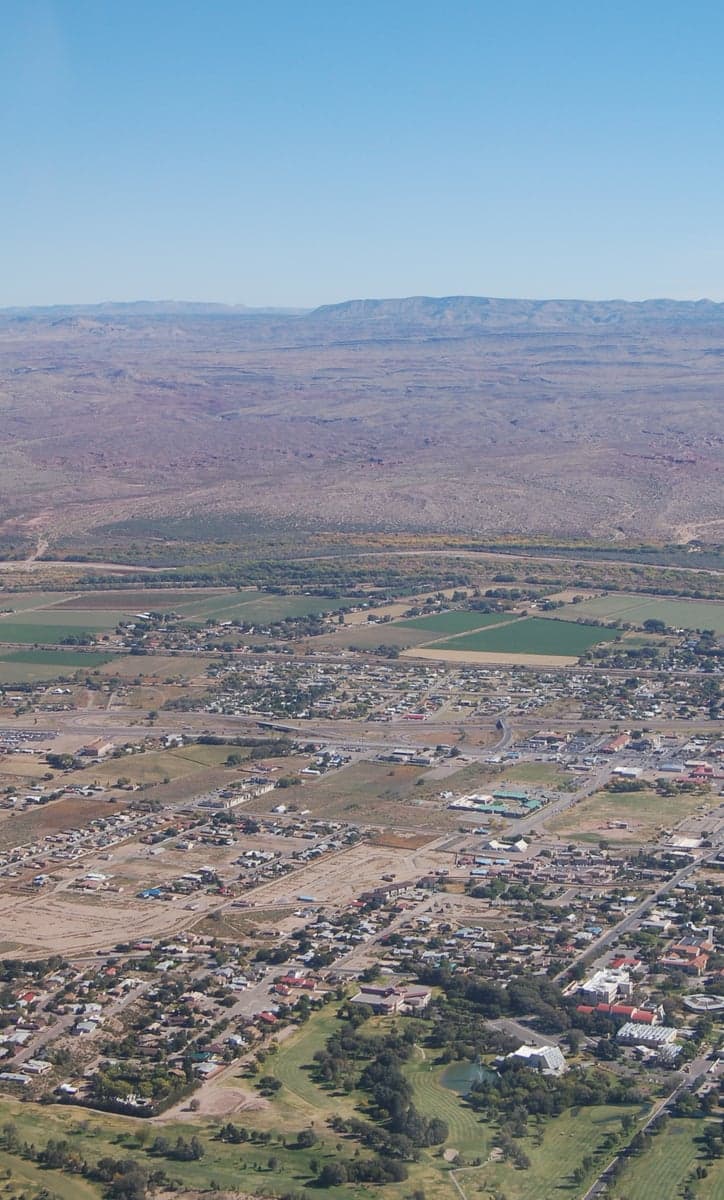
Photo: Wikipedia
Political ClimatePolitical Climate in Socorro, NM
District shown is the primary district for this city’s centroid. Cities may span multiple districts.
Local Political AnalysisPolitical Analysis of Socorro, NM
Socorro, New Mexico, has long been a place where folks value their independence and don't take kindly to being told how to live their lives. The Cook PVI rating of EVEN tells you a lot—this isn't a deep blue or deep red stronghold, but a community that's genuinely up for grabs, and that's been the case for a while. Historically, you'd see a lot of old-school conservative Democrats and moderate Republicans here, folks who care more about local issues and personal freedoms than national party lines. But in the last decade or so, you've seen a real shift, with the area trending more Republican as the national Democratic Party has moved further left on things like gun rights, energy policy, and government mandates. It's a place where the old "live and let live" attitude is still strong, but there's a growing unease about outside influence creeping in.
How it compares
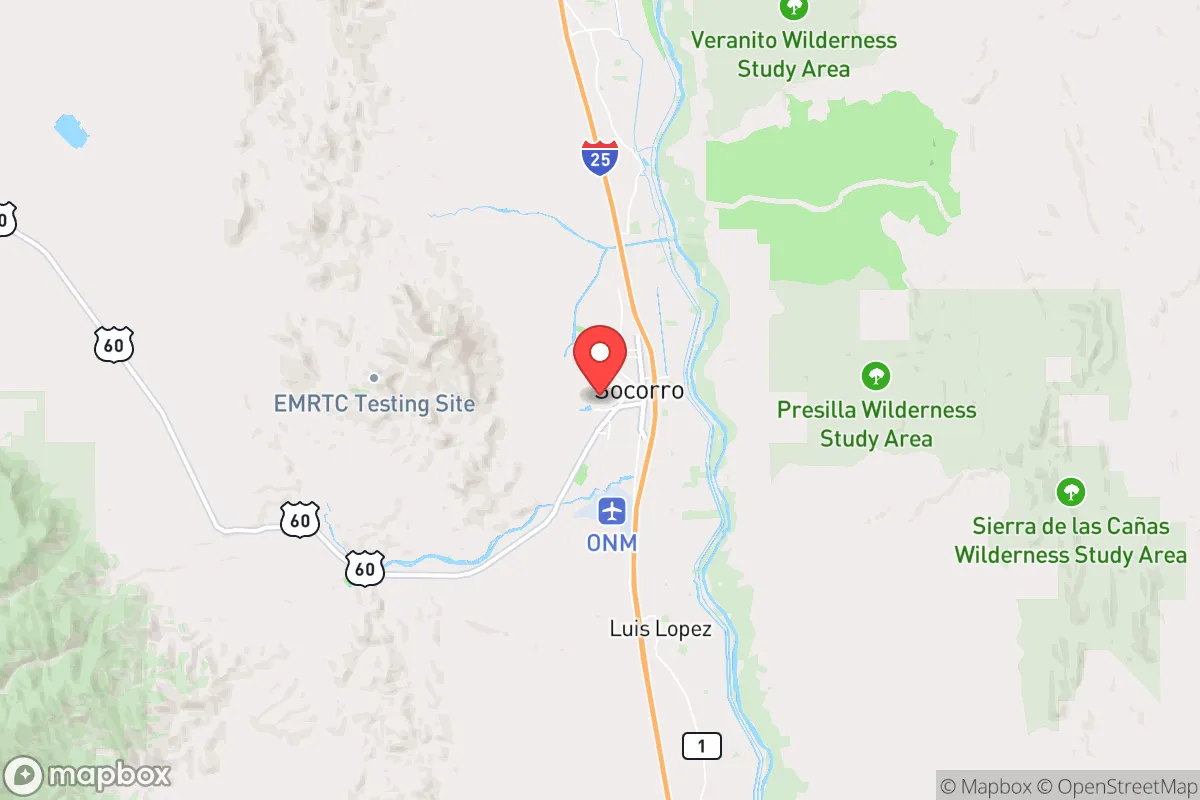
If you drive just 30 miles north to Belen or Los Lunas, you'll feel a different political vibe—those areas are more reliably conservative, with a stronger Republican base and less tolerance for progressive policies. Head south to Las Cruces, and you're in a much bluer area, with a university-driven liberal tilt that can feel worlds apart from Socorro's more grounded, practical outlook. The contrast is stark: in Socorro, you still see folks openly carrying firearms, and there's a general distrust of any government overreach, whether it's from Santa Fe or Washington. The surrounding rural areas, like Magdalena and the smaller communities along the Rio Grande, lean even more conservative, and they look to Socorro as a bit of a buffer against the progressive wave that's hit bigger cities like Albuquerque. It's not that Socorro is a hard-right stronghold—it's that the political center here is still anchored in common sense and personal responsibility, not in the kind of top-down social engineering you see elsewhere.
What this means for residents
For the folks who live here, the political climate means you can still live your life without a lot of bureaucratic nonsense. There's no heavy-handed local government telling you what you can and can't do with your property, and the county sheriff's office is still focused on real law enforcement, not woke social experiments. You don't see the kind of aggressive zoning or business regulations that choke small towns in more liberal areas. That said, there's a real concern about the state government in Santa Fe pushing down mandates—like stricter environmental rules on water usage or energy development—that could hurt local ranching, farming, and the small oil and gas industry that trickles in from the Permian Basin. The biggest worry for residents is that as the state turns bluer, Socorro could get caught in the crossfire, losing its character and its freedom to a one-size-fits-all progressive agenda. It's a place where people still believe in the Second Amendment, in local control of schools, and in keeping government out of their personal lives.
Culturally, Socorro holds onto a few distinctions that set it apart. The annual Festival of the Cranes at the Bosque del Apache National Wildlife Refuge draws birdwatchers from all over, but it's a low-key, family-friendly event, not a platform for political activism. The New Mexico Tech presence brings in some academic types, but the university itself is more focused on engineering and science than on pushing a leftist agenda—it's a practical school for practical people. You won't find many "defund the police" signs here, and the local paper, the El Defensor Chieftain, still covers city council meetings and high school sports without the partisan slant you see in bigger media. The real cultural divide is between the old-timers who remember when Socorro was a quiet, self-sufficient town and the newer arrivals who want to change things. For now, the old guard is holding the line, but you can feel the pressure building. If you're looking for a place where you can still breathe free and raise a family without the government breathing down your neck, Socorro is one of the last good spots in New Mexico—but you'd better get here before the progressives ruin it.

State Political ClimatePolitical Climate in New Mexico
State Political AnalysisPolitical Environment in the State
New Mexico has long been a reliably blue state in presidential elections, voting Democratic in every contest since 2004, but the picture on the ground is far more complicated than a simple partisan label. The state’s overall lean is driven by a powerful coalition of urban progressives in Albuquerque and Santa Fe, combined with a large Hispanic electorate that has historically favored Democrats, though that loyalty is showing cracks. Over the last 10-20 years, the state has shifted leftward on cultural and economic issues, but a growing conservative backlash in the eastern plains, southern border counties, and rural mountain communities is creating a genuine political battleground beneath the surface.
Urban vs. rural divide
The political map of New Mexico is a tale of two worlds. Bernalillo County (Albuquerque) and Santa Fe County are the Democratic strongholds, delivering margins of 20-30 points in statewide races. Santa Fe is the epicenter of progressive activism, with a city council that has passed sanctuary city ordinances and defunded police initiatives. Albuquerque, home to Sandia National Laboratories and a large university population, votes blue but has a more moderate Democratic flavor. In contrast, the eastern plains — Lea County (Hobbs), Roosevelt County (Portales), and Curry County (Clovis) — are deeply red, often voting 70-80% Republican. The southern tier, including Doña Ana County (Las Cruces), is a true swing area; Las Cruces itself leans Democratic, but the surrounding agricultural and oilfield communities are reliably conservative. San Juan County (Farmington) in the northwest is another red stronghold, driven by the oil and gas industry and a large Mormon population. The rural-urban divide is stark: if you remove Bernalillo and Santa Fe counties, the rest of the state votes Republican by a solid margin.
Policy environment
New Mexico’s policy environment has moved decisively left in the last decade. The state has a progressive income tax structure with rates up to 5.9%, and the gross receipts tax (a form of sales tax) is among the highest in the nation, often exceeding 8% in many cities. Property taxes are relatively low, which is a plus, but the state has no right-to-work law, and union influence is strong, particularly in public education and government. On education, the state has adopted the Common Core standards and expanded early childhood education, but school choice remains limited — there is no robust voucher or education savings account program, though a small charter school sector exists. Healthcare is dominated by the state’s Medicaid expansion under the Affordable Care Act, which covers nearly half the population. Election laws are among the most permissive in the country: same-day voter registration, no-excuse absentee voting, and automatic voter registration are all in place. There is no voter ID law, which has been a flashpoint for conservatives concerned about election integrity.
Trajectory & freedom
On the freedom front, the trajectory is mixed but concerning for conservatives. Gun rights have been under sustained assault: in 2021, the state passed a red-flag law (HB 129) allowing courts to temporarily seize firearms from individuals deemed a risk, and in 2023, a 7-day waiting period for firearm purchases was enacted, along with a ban on carrying guns at polling places and in government buildings. These measures were pushed through by the Democratic supermajority in the legislature and signed by Governor Michelle Lujan Grisham. On parental rights, the state has moved in the opposite direction of many red states: in 2023, the legislature passed a law prohibiting school boards from banning books based on viewpoint, and there is no parental notification requirement for a minor seeking an abortion. Medical autonomy was expanded with the legalization of recreational cannabis in 2021, but the state also imposed strict vaccine mandates for healthcare workers and state employees during the pandemic. Property rights are relatively secure, but the state’s high gross receipts tax and regulatory burden on small businesses are a constant complaint. The overall trend is toward more government intervention in personal choices, not less.
Civil unrest & political movements
New Mexico has seen its share of political flashpoints. In 2020, protests in Albuquerque and Santa Fe over the murder of George Floyd turned into days of property damage and clashes with police, leading to a controversial decision by the Albuquerque city council to cut the police budget by $11 million. The state’s sanctuary policies are a major point of contention: the 2019 law (SB 318) prohibits state and local law enforcement from asking about immigration status or cooperating with federal immigration authorities, which has led to tensions with border communities like Sunland Park and Columbus. The 2022 election saw a high-profile controversy when the Otero County Commission refused to certify primary election results based on unfounded claims about voting machines, leading to a court order forcing certification. The New Mexico Civil Guard, a militia group, has been active in border areas, conducting patrols and drawing both support and condemnation. More recently, the 2023 legislative session saw massive protests from gun rights advocates at the state capitol, with thousands of Second Amendment supporters rallying against the waiting period and red-flag laws.
Projection
Looking ahead 5-10 years, the trajectory is not favorable for conservatives. The state’s population is stagnant, with net out-migration to Texas and Arizona, and the people leaving are disproportionately conservative-leaning families and retirees. Meanwhile, the in-migration from California and Colorado tends to be younger, more progressive, and concentrated in Albuquerque and Santa Fe. The Democratic supermajority in the legislature is likely to hold, meaning more gun control, higher taxes, and expanded government programs. However, there is a wild card: the oil and gas industry in the Permian Basin (southeastern New Mexico) is booming, and the workers moving to places like Carlsbad and Hobbs are overwhelmingly conservative. If these communities continue to grow, they could shift the balance in state legislative districts over the next decade. But for now, the state’s political center of gravity is moving left, and a new resident should expect a policy environment that increasingly mirrors Colorado or California.
For a conservative considering a move to New Mexico, the bottom line is this: you will find like-minded communities in the eastern plains, the southern border counties, and the oil patch, but you will be fighting an uphill battle at the state level. The state’s low property taxes and beautiful landscapes are genuine draws, but the political climate is increasingly hostile to gun rights, school choice, and limited government. If you value personal freedom and conservative governance, you will need to be politically active to protect those values, and you should expect the state government to continue pushing in the opposite direction. It’s a beautiful place to live, but it’s not a safe harbor for conservative principles.
* Values derived from national, state, county, city and local statistics and may differ in a specific area. Last updated: 2026-05-01T04:25:30.000Z
Narrative content on this page is AI-generated and may contain mistakes. Verify any details that matter before acting on them.
ReloMaps may earn a commission from affiliate links at no extra cost to you.

