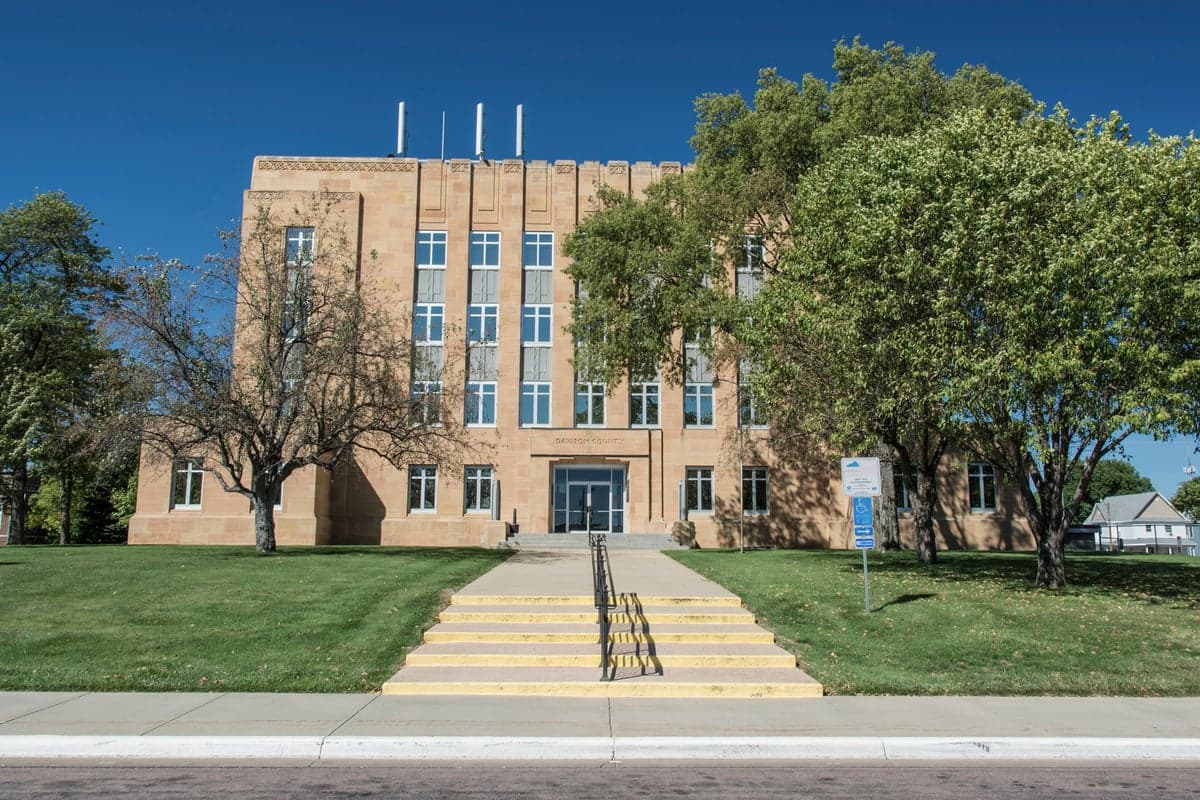
Photo: Wikipedia
Political ClimatePolitical Climate in Davison County
Showing state-level results — no local-only data available.
Local Political AnalysisPolitical Analysis of Davison County
Davison County has long been a rock-solid conservative stronghold, and that hasn't changed. With a Cook PVI of R+15, it's exactly in line with the rest of South Dakota—meaning you're looking at a place where traditional values and limited government aren't just talking points, they're the way of life. The county has voted Republican in every presidential election since at least 2000, and that trend shows no signs of weakening. If you're worried about the kind of progressive overreach you see in other parts of the country, this is about as safe a bet as you'll find.
How it compares
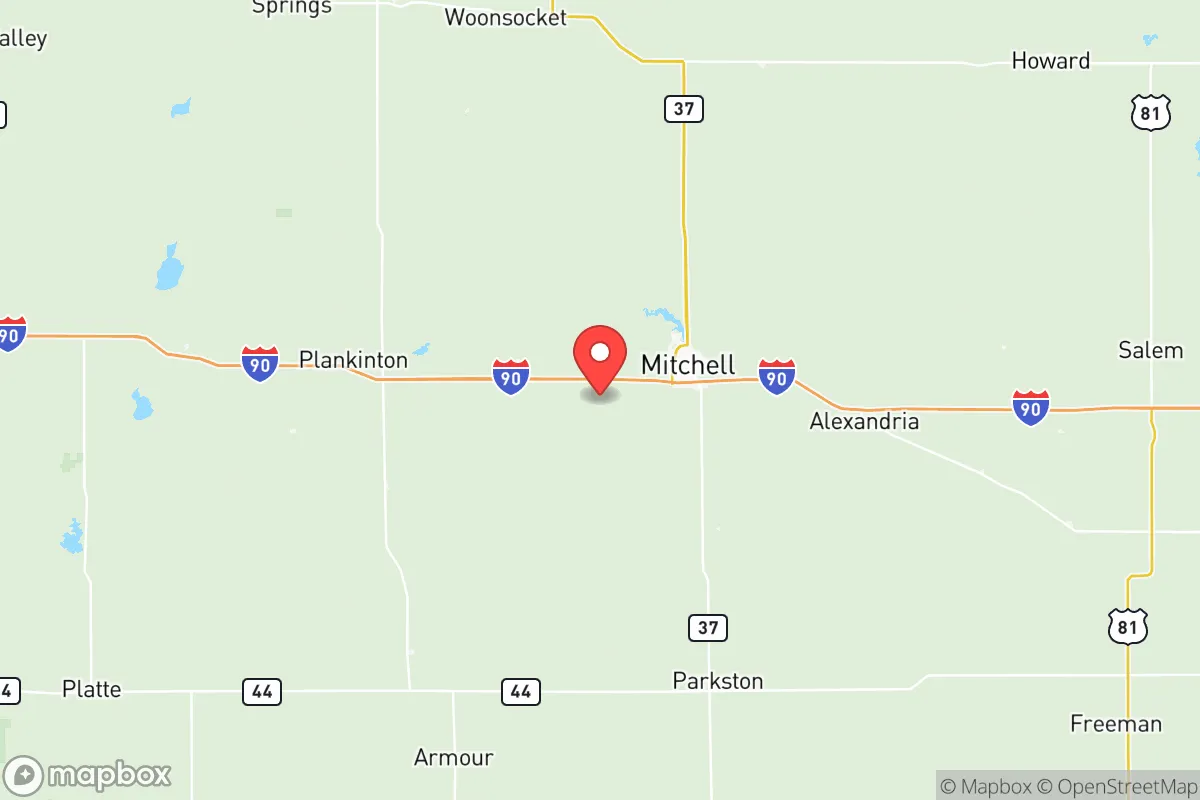
When you stack Davison County up against the rest of South Dakota, the numbers are almost identical—both sit at R+15. That's not a coincidence. The county's politics mirror the state's deep-rooted preference for personal liberty, low taxes, and a government that stays out of your business. The biggest city in the county, Mitchell, is the political and economic hub, and it leans heavily red. But there's some variation if you look closely. The more rural areas, like Ethan and Mount Vernon, are even more conservative—think R+20 or higher. Meanwhile, a few precincts right around Mitchell's downtown and near Dakota Wesleyan University can swing a bit more moderate, sometimes even showing a slight blue tint in local races. But those are small pockets; the countywide picture is overwhelmingly Republican. Compared to the state as a whole, Davison County is a perfect snapshot of South Dakota's political soul—no surprises, just steady, reliable conservatism.
What this means for residents
For folks living here, the political climate translates directly into daily life. You're not going to see the kind of government overreach that's become common in blue states—no heavy-handed mandates, no attacks on the Second Amendment, no nonsense about telling you how to run your business or raise your kids. The county commission and local officials are generally pro-liberty, keeping regulations light and taxes low. That means more freedom to live your life without a bureaucrat looking over your shoulder. The downside? If you're hoping for rapid change or progressive experiments, you'll be disappointed. But for most people, that's a feature, not a bug. The community is tight-knit, and the politics reflect that—people here look out for each other, not for the state to solve their problems.
One thing that stands out is how the county handles cultural issues. You won't find the kind of divisive battles over school curricula or library books that plague other places. Local schools in Mitchell, Ethan, and Mount Vernon tend to focus on basics and respect for traditional values. There's a strong sense that parents—not the government—should be the ones calling the shots on what kids learn. That said, there's a quiet concern among long-time residents that outside influences could start creeping in, especially as the state grows. The key is staying vigilant. If you value personal freedom and a government that remembers its place, Davison County is still a great fit. But like anywhere, it takes active, engaged citizens to keep it that way.

State Political ClimatePolitical Climate in South Dakota
State Political AnalysisPolitical Environment in the State
South Dakota is about as reliably conservative as a state gets, with a Cook PVI of R+15 that has only solidified over the past two decades. The dominant coalition is a blend of rural traditionalists, libertarian-leaning ranchers, and a growing number of conservative transplants fleeing blue states, all united by a deep skepticism of federal overreach. Over the last 10-20 years, the state has shifted from a quiet, low-key Republican stronghold to a more aggressively conservative one, driven by an influx of new residents to places like Rapid City and Sioux Falls who are explicitly seeking a freer environment. The old moderate Republicanism of the 1990s has given way to a harder-edged, more ideologically consistent conservatism, especially on cultural and economic issues.
Urban vs. rural divide
The political map is straightforward: rural areas are deep red, and the few urban pockets are only slightly less so. Sioux Falls, the largest city, is the most politically diverse area, with Minnehaha County sometimes voting more moderately, but it still leans Republican overall—just not by the 70-80% margins you see in the countryside. Rapid City in Pennington County is reliably conservative, driven by a strong military and ranching presence. The real action is in the small towns and unincorporated areas: Box Elder, Spearfish, and Brookings (home to South Dakota State University) are all solidly red, though Brookings has a slight academic-liberal tinge that rarely affects statewide outcomes. The divide isn't really urban vs. rural in the way it is in, say, Illinois or California; it's more like "very conservative" vs. "extremely conservative." The only notable exception is Pine Ridge Indian Reservation in Shannon County, which votes heavily Democratic, but its population is small and turnout is low, so it doesn't shift the state map.
Policy environment
South Dakota's policy environment is a dream for anyone who thinks government should get out of the way. There is no state income tax, no personal or corporate income tax, and the sales tax is a modest 4.5% (local options can push it to 6.5% or so). Property taxes are low relative to the national average, and the state has a right-to-work law. On education, the state has a robust school choice environment, including a tax credit scholarship program and open enrollment, though it hasn't gone full voucher yet. Healthcare is a mixed bag: the state did expand Medicaid under the Affordable Care Act in 2023 via a ballot initiative (which many conservatives opposed), but the legislature has since tried to add work requirements. Election laws are among the most secure in the nation—voter ID is required, same-day registration is not allowed, and the state uses paper ballots. There is no mail-in voting unless you have an excuse. The regulatory posture is aggressively pro-business, with minimal zoning in most rural areas and a strong "at-will" employment doctrine. For a conservative, this is about as close to a policy paradise as you'll find in the contiguous U.S.
Trajectory & freedom
The trajectory is toward more freedom, not less, which is a big reason people are moving here. In 2023, Governor Kristi Noem signed a law banning nearly all abortions after six weeks (HB 1240), with no exceptions for rape or incest—one of the strictest in the nation. The state also passed a "Parents' Bill of Rights" (SB 127) in 2022, requiring schools to notify parents about curriculum changes and medical services. On guns, South Dakota is a constitutional carry state (permitless carry for both open and concealed), and in 2021 it passed a law prohibiting enforcement of federal gun bans that don't exist in state law (the "Second Amendment Preservation Act"). Property rights are strong: there is no statewide zoning, and the state has fought federal land grabs in the Black Hills. The only area where freedom has arguably contracted is on medical marijuana—voters approved it in 2020, but the legislature has since tightened regulations, making it harder to open dispensaries. Still, the overall trend is toward expanding personal liberty, especially on cultural and economic fronts.
Civil unrest & political movements
Civil unrest is almost nonexistent. You won't see protests like in Portland or Seattle. The most visible political movements are on the right: the "Noem for President" buzz in 2023-2024, and a strong Second Amendment sanctuary movement that saw dozens of counties pass resolutions against federal gun control. On the left, there's a small but vocal group in Sioux Falls pushing for LGBTQ+ protections and abortion access, but they rarely get traction. The most contentious issue in recent years has been the Keystone XL pipeline and the related protests at the Standing Rock Reservation (which is technically in North Dakota but spills over into South Dakota's Mobridge area). Those protests were largely driven by out-of-state activists and fizzled out after the pipeline was canceled. Immigration politics are quiet—the state has a very small foreign-born population, and there's no sanctuary city movement. Election integrity is a non-issue here; the state's system is widely trusted. A new resident would notice a distinct lack of political drama—people here just want to be left alone.
Projection
Over the next 5-10 years, South Dakota will likely become even more conservative, not less. The in-migration is heavily skewed toward conservatives from California, Illinois, and Minnesota who are explicitly fleeing high taxes and progressive policies. Rapid City and Sioux Falls are growing fast, and those new residents are pushing the state further right on cultural issues. The only wild card is the growing Native American population, which votes heavily Democratic, but it's not growing fast enough to shift the state's lean. Expect more legislation on school choice (possibly a full voucher program), further restrictions on abortion, and continued resistance to federal overreach on land and energy. The state's biggest challenge will be managing growth without losing its character—zoning battles in Rapid City and Sioux Falls are already heating up. For a conservative moving in now, you can expect the state to be even more aligned with your values in a decade than it is today.
For a new resident, the bottom line is this: South Dakota offers a rare combination of low taxes, strong gun rights, minimal regulation, and a culture that values personal responsibility. You won't find the political chaos of coastal states, but you also won't find the diversity of thought you might in a swing state. If you're looking for a place where the government stays out of your life and your wallet, this is it. Just be prepared for cold winters and a social scene that revolves around hunting, church, and high school sports.
* Values derived from national, state, county, city and local statistics and may differ in a specific area. Last updated: 2026-05-28T12:23:57.000Z
Narrative content on this page is AI-generated and may contain mistakes. Verify any details that matter before acting on them.
ReloMaps may earn a commission from affiliate links at no extra cost to you.

