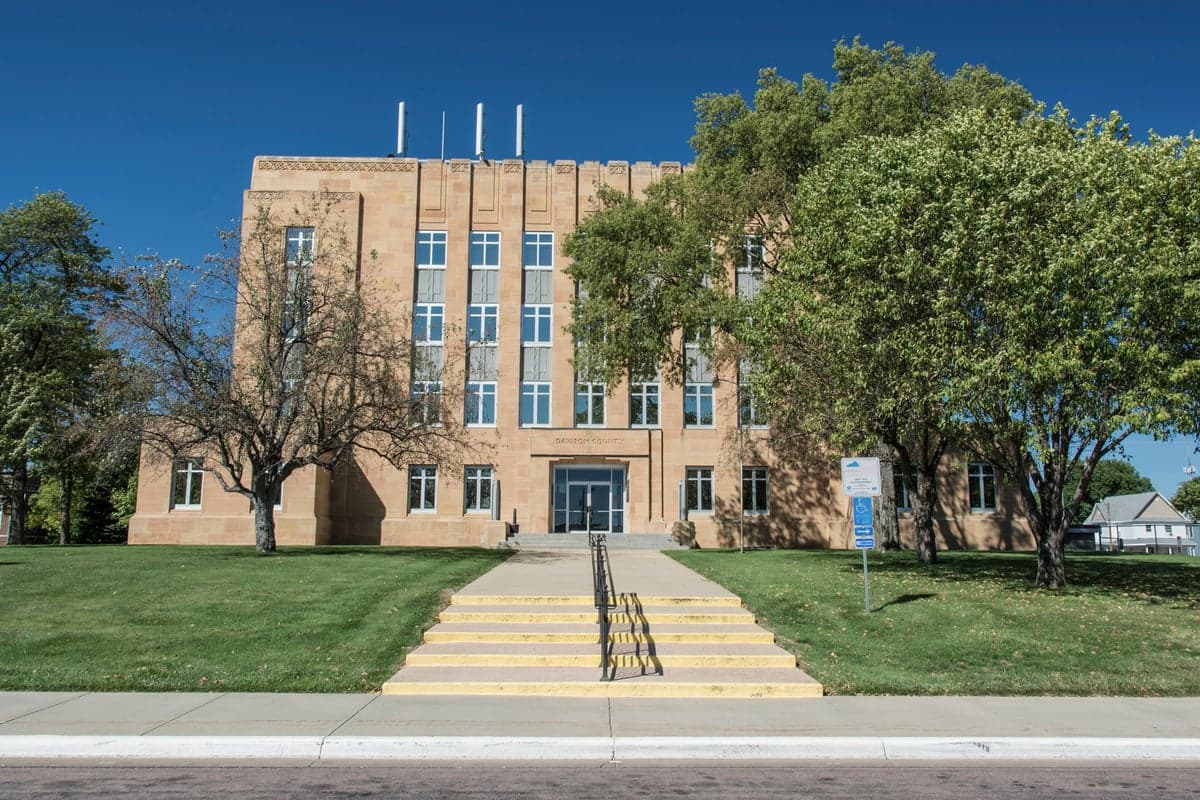
Photo: Wikipedia
Strategic Assessment of Davison County
Strong survivability profile. Good buffer from population centers, with manageable environmental and tactical risks.
What does the Strategic Assessment tell us?
Our Strategic Assessment grades tactical survivability of an area. Major population centers, military targets, fallout zones, natural disasters, and border exposure all drive risk — lower exposure means a more defensible position in a crisis.
This is heavily inspired by Joel Skousen's Strategic Relocation book. Highly recommended you checkout the book ($)What does this tell us?
Our Strategic Assessment grades tactical survivability of an area. Major population centers, military targets, fallout zones, natural disasters, and border exposure all drive risk — lower exposure means a more defensible position in a crisis.
This is heavily inspired by Joel Skousen's Strategic Relocation book. Highly recommended you checkout the book ($)Strategic Pillars

Key Distances
Strategic Assessment Analysis
Davison County, anchored by the city of Mitchell, offers a compelling mix of geographic isolation and practical self-sufficiency that makes it a serious candidate for a strategic relocation, especially for those prioritizing resilience over convenience. Its position in the southeastern part of South Dakota places it far from the major coastal population centers and their associated risks, while still providing access to essential infrastructure like Interstate 90 and the Mitchell Municipal Airport. For a conservative-leaning individual or family looking to weather potential civic unrest, supply chain disruptions, or mass casualty events, this area’s low population density, strong agricultural base, and distance from primary fallout targets create a solid foundation for a long-term preparedness strategy.
Geographic position and natural advantages for long-term security
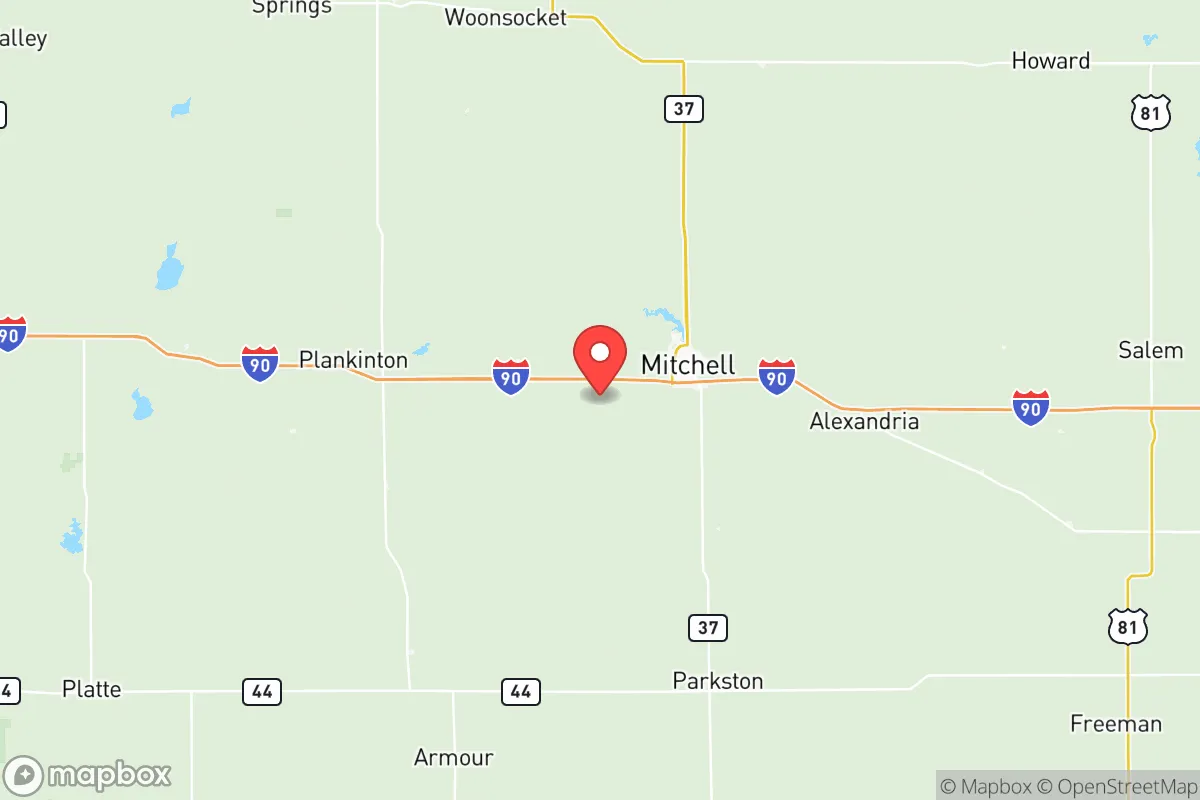
Davison County’s primary strategic asset is its location in the Great Plains, a region often described as the "flyover zone" for a reason—it is far removed from the most likely targets of a major conflict or terrorist event. The county sits roughly 70 miles west of Sioux Falls, the state’s largest city, and over 200 miles from the Minneapolis-St. Paul metro area, which are the nearest high-value population centers. This buffer zone is critical: in a scenario involving a nuclear detonation or a coordinated attack on infrastructure, the fallout and secondary effects would largely bypass Davison County. The terrain is flat, open prairie, which offers excellent visibility for security and limited natural cover for an adversary, but also means that a prepared relocator can easily establish a defensible perimeter around a rural homestead. The James River runs through the county, providing a reliable surface water source, and the area’s aquifer systems are generally robust, supporting both municipal wells and private water supplies. Mitchell itself is a regional hub for agriculture, with grain elevators and processing facilities that would be vital in a prolonged disruption of the national food supply chain.
Risks, exposures, and proximity to fallout-relevant landmarks
No location is without risk, and Davison County has specific exposures that a strategic relocator must account for. The most significant is the county’s proximity to the Trans-Canada Pipeline and the Keystone Pipeline system, which cross through the region. While these pipelines are not primary targets in a conventional war, they are vulnerable to sabotage or cyber-attack, and a rupture could contaminate local water sources and disrupt fuel supplies. Additionally, the county is within 150 miles of the Ellsworth Air Force Base near Rapid City, which houses B-1B Lancer bombers and is a high-priority target in a major conflict. While Davison County is not in the immediate blast zone, prevailing westerly winds could carry fallout from a strike on Ellsworth across the state, though the distance and dispersion would likely reduce the hazard to manageable levels for a prepared household. The Mitchell Municipal Airport is a general aviation facility, not a military base, so it poses no direct target risk. The county’s largest industrial site is the Mitchell Ethanol Plant, which, while not a primary target, could be a secondary objective for saboteurs seeking to disrupt fuel production. For a relocator, the key takeaway is that Davison County is not a zero-risk zone, but its risks are far lower than those in coastal cities or near major military installations like Fort Hood or the Houston refinery corridor.
Practical resilience for a relocator: food, water, energy, and defensibility
Davison County’s practical resilience is where it truly shines for a prepper-minded family. The county is part of the Corn Belt and the Great Plains wheat-growing region, meaning that local food production is abundant and diverse. Mitchell is home to the South Dakota State University Regional Extension Center, which provides resources for small-scale farming, livestock management, and food preservation—critical knowledge for a relocator aiming for self-sufficiency. Water security is strong: the James River flows year-round, and the county’s groundwater is generally high-quality, though testing for agricultural runoff is advisable. For energy, the county is served by NorthWestern Energy and Heartland Consumers Power District, which provide electricity from a mix of coal, natural gas, and wind. However, the grid is vulnerable to extreme weather and cyber-attacks, so a relocator should plan for off-grid solar or wind generation, which is feasible given the area’s high average wind speeds. Defensibility is excellent for a rural property: the open terrain allows for clear sightlines, and the low population density (about 20,000 people in the entire county) means that a prepared household can maintain a low profile. The county seat, Mitchell, has a small police force and a sheriff’s department, but in a crisis, law enforcement would be stretched thin, so personal security measures—like a well-stocked armory, reinforced doors, and a communication plan with neighbors—are essential. The local Mitchell Fire Department and Davison County Emergency Management are competent but under-resourced for a large-scale event, so a relocator should not rely on them for immediate assistance.
The overall strategic picture for Davison County is one of moderate risk with high potential for long-term sustainability. It is not a remote wilderness—it has a functioning economy, schools, and healthcare—but it is far enough from the chaos of major cities to offer a genuine buffer against the worst-case scenarios. For a conservative-leaning relocator who values community, self-reliance, and a slower pace of life, this area provides a realistic foundation for a prepared existence. The key is to act now: secure a property with a reliable water source, invest in renewable energy, and build relationships with local farmers and tradespeople. Davison County won’t make you immune to the world’s problems, but it will give you the space and resources to face them on your own terms.

* Values derived from national, state, county, city and local statistics and may differ in a specific area. Last updated: 2026-05-28T12:23:57.000Z
Narrative content on this page is AI-generated and may contain mistakes. Verify any details that matter before acting on them.
ReloMaps may earn a commission from affiliate links at no extra cost to you.

