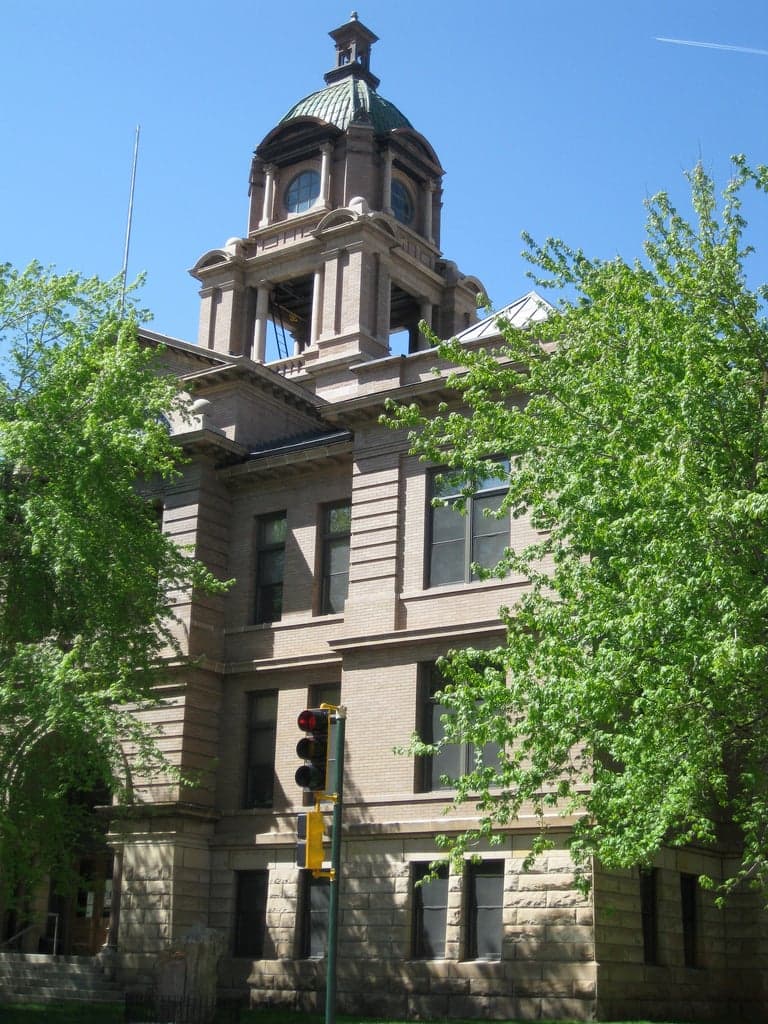
Photo: Wikipedia
Political ClimatePolitical Climate in Lawrence County
Showing state-level results — no local-only data available.
Local Political AnalysisPolitical Analysis of Lawrence County
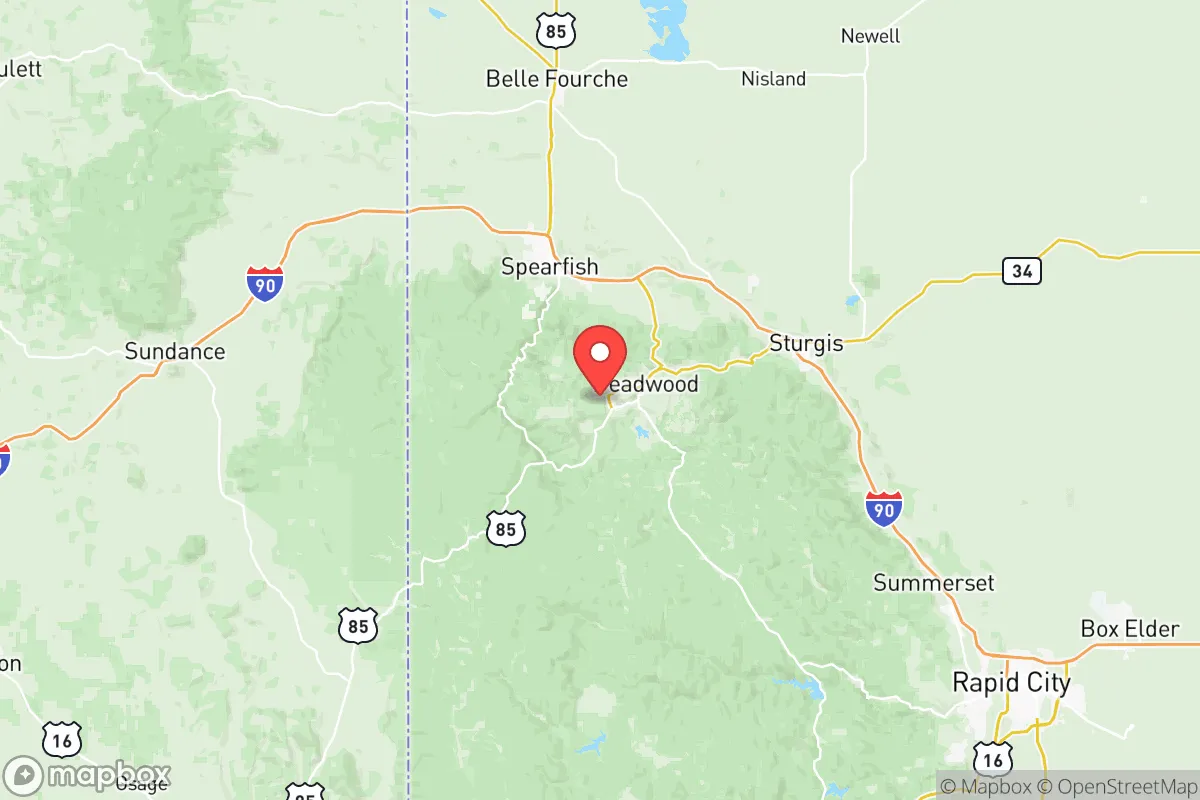
Lawrence County leans solidly Republican with a Cook PVI of R+15, matching the state of South Dakota exactly. That said, if you’ve lived here as long as I have, you know the county isn’t a monolith—there’s a real split between the more conservative rural areas and the slightly more moderate pockets around Spearfish and Deadwood. The overall trajectory has been steady red, but I’ve seen some concerning shifts in the last few election cycles, especially in the college-age precincts near Black Hills State University.
How it compares
On paper, Lawrence County and South Dakota are identical at R+15, but the lived reality is different. The state as a whole is reliably conservative, but Lawrence County has a unique mix: you’ve got the mining and ranching communities in places like Lead and Whitewood that vote deep red, and then you’ve got Spearfish, where the university influence and tourism dollars bring in a more transient, left-leaning crowd. Deadwood is its own animal—historically libertarian, but lately I’ve noticed more progressive pressure on local ordinances, especially around gambling regulations and public land use. The swing precincts are in the Spearfish Valley and around Sturgis, where the motorcycle rally brings in outside money and outside ideas. Compared to the rest of South Dakota, Lawrence County is less agricultural and more tourism-driven, which means the political conversations here are more about land rights and business freedom than crop subsidies.
What this means for residents
For folks who value personal freedom and limited government, Lawrence County is still a good place to be, but you’ve got to keep an eye on things. The county commission has held the line on property taxes and zoning, but there’s been a push from Spearfish city council to adopt more progressive housing policies and environmental restrictions that feel like government overreach. I’ve seen it firsthand—neighbors getting told what they can do with their own land, especially near the Black Hills National Forest. The school board races are getting heated too, with some candidates pushing for curriculum changes that don’t align with traditional values. If you’re moving here, understand that the rural areas are your best bet for keeping that live-and-let-live vibe, but the towns are where you’ll see the most friction.
Culturally, Lawrence County is still rooted in hunting, mining, and small business, but the influx of remote workers and retirees from blue states is slowly changing the conversation. You’ll hear more talk about “sustainability” and “equity” at city meetings than you did ten years ago, and that’s a red flag for anyone who values individual rights over collective mandates. The policy distinctions are subtle but real: the county has resisted mask mandates and vaccine passports, but Deadwood and Spearfish have flirted with them. If you want to avoid the creeping progressive influence, stick to the unincorporated areas or the smaller towns like Nemo or Rochford. The long-term trend depends on who shows up to vote in the primaries—if conservatives stay home, we could see Lawrence County drift left, even if the PVI stays R+15 on paper.

State Political ClimatePolitical Climate in South Dakota
State Political AnalysisPolitical Environment in the State
South Dakota is about as reliably red as a state can get, with a Cook PVI of R+15, meaning it votes roughly 15 points more Republican than the national average in presidential elections. The dominant coalition is a mix of rural conservatives, libertarian-leaning ranchers, and a growing number of relocating families from blue states, all united by a deep skepticism of federal overreach. Over the last 10-20 years, the state has only hardened its conservative posture, with Republicans holding supermajorities in both legislative chambers and the governor’s mansion since 2011. The shift isn’t subtle—it’s a deliberate, voter-driven consolidation around limited government, gun rights, and traditional values, with no serious signs of a blueward drift.
Urban vs. rural divide
The political map is straightforward: the two small metros—Sioux Falls and Rapid City—are the only places where Democrats can even pretend to compete, and even then, it’s a losing battle. Sioux Falls, the largest city with about 200,000 people, leans slightly more moderate but still votes Republican in most statewide races; Minnehaha County went for Trump by 10 points in 2020. Rapid City, in Pennington County, is similar—a mix of military families from Ellsworth Air Force Base and tourism workers, but still solidly red. The real action is in the rural counties: Harding County in the northwest and Gregory County in the south regularly deliver 80-85% Republican margins. The only blip is Brookings, home to South Dakota State University, where the student population occasionally flips the county blue in low-turnout local races, but it’s a rounding error in statewide totals. The divide isn’t about ideology—it’s about density. The fewer people per square mile, the more conservative the vote.
Policy environment
South Dakota’s policy environment is a libertarian’s dream, with a few caveats. There is no state income tax, no corporate income tax, and no personal property tax on vehicles or business equipment—a trifecta that draws in remote workers and small business owners from high-tax states like California and New York. Property taxes are moderate, around 1.1% of assessed value, and the state has a strict spending cap tied to inflation and population growth. Education policy is decentralized: school choice exists via open enrollment and a growing charter school sector, though most districts are small and locally controlled. Healthcare is a mixed bag—the state rejected Medicaid expansion until a 2022 ballot initiative forced it through, but the legislature has since added work requirements. Election laws are among the most secure in the nation: voter ID is required, same-day registration is not allowed, and absentee ballots require a notarized signature or witness. The state also passed a law in 2023 banning ranked-choice voting, a preemptive strike against progressive election tinkering.
Trajectory & freedom
On personal freedom, South Dakota has been on a clear upward trajectory, especially since Governor Kristi Noem took office in 2019. The state passed constitutional carry in 2019, allowing permitless concealed carry for anyone 18 or older who can legally own a firearm. In 2023, the legislature banned COVID-19 vaccine mandates for private employers and government entities, and in 2024, it passed a law prohibiting mask mandates in schools and public buildings—a direct response to federal overreach during the pandemic. Parental rights were strengthened with the Parents’ Bill of Rights in 2022, requiring schools to notify parents about curriculum changes and medical services. On medical autonomy, the state banned nearly all abortions in 2022 via a trigger law, with no exceptions for rape or incest, and in 2023 it banned gender transition procedures for minors. Property rights got a boost with a 2024 law limiting eminent domain for carbon pipeline projects, a populist move against corporate land grabs. The only freedom concern is the state’s heavy reliance on federal farm subsidies and Medicaid dollars, which creates a subtle dependency that could be leveraged by Washington in a crisis.
Civil unrest & political movements
Political activism in South Dakota is low-key compared to coastal states, but there have been flashpoints. The Keystone XL pipeline protests in 2016-2017 drew national attention, with activists from the Standing Rock Sioux Tribe and outside groups clashing with law enforcement in Fort Pierre and Pierre. That movement has largely faded, but it left a residue of distrust between the state government and tribal nations, who often vote Democratic. On the right, the South Dakota Freedom Caucus has been a rising force since 2022, pushing for even more aggressive school choice, property tax caps, and nullification of federal gun laws. There’s no serious secession talk, but a 2021 resolution calling for a constitutional convention to limit federal power passed the House. Immigration politics are quiet—the state has a small but growing Hispanic population in Sioux Falls meatpacking plants, but no sanctuary policies. Election integrity controversies are minimal; the 2020 and 2022 elections ran smoothly, with no major fraud allegations. A new resident would notice the absence of street protests and the general civility of political discourse—people disagree without burning down buildings.
Projection
Over the next 5-10 years, South Dakota is likely to become more conservative, not less, driven by two demographic forces. First, in-migration from blue states—especially California, Washington, and Illinois—is accelerating, with Sioux Falls growing at 2-3% annually. These newcomers are overwhelmingly conservative or libertarian, fleeing high taxes and lockdowns, and they’re reinforcing the existing political culture rather than diluting it. Second, the rural population is aging and shrinking, but the remaining voters are doubling down on their values. The only wildcard is the tribal vote, which could become more organized and shift a few local races in western counties, but it won’t affect statewide outcomes. Expect more legislation on school choice, property tax reform, and federal nullification. The state will likely pass a school voucher program by 2027 and may attempt to opt out of federal education funding entirely. The biggest risk is overreach from the federal government—if a future Democratic administration tries to impose national gun control or vaccine mandates, South Dakota will be a flashpoint for resistance.
For a new resident, the bottom line is this: South Dakota offers a rare combination of low taxes, strong gun rights, and a government that mostly stays out of your life. The trade-offs are a harsh winter, limited cultural amenities, and a healthcare system that’s thin in rural areas. But if you’re looking for a place where your vote actually counts and your freedoms are expanding rather than contracting, this is one of the best bets in the country. Just don’t expect to change the politics—the state is happy with where it is.
* Values derived from national, state, county, city and local statistics and may differ in a specific area. Last updated: 2026-05-16T10:35:59.000Z
Narrative content on this page is AI-generated and may contain mistakes. Verify any details that matter before acting on them.
ReloMaps may earn a commission from affiliate links at no extra cost to you.

