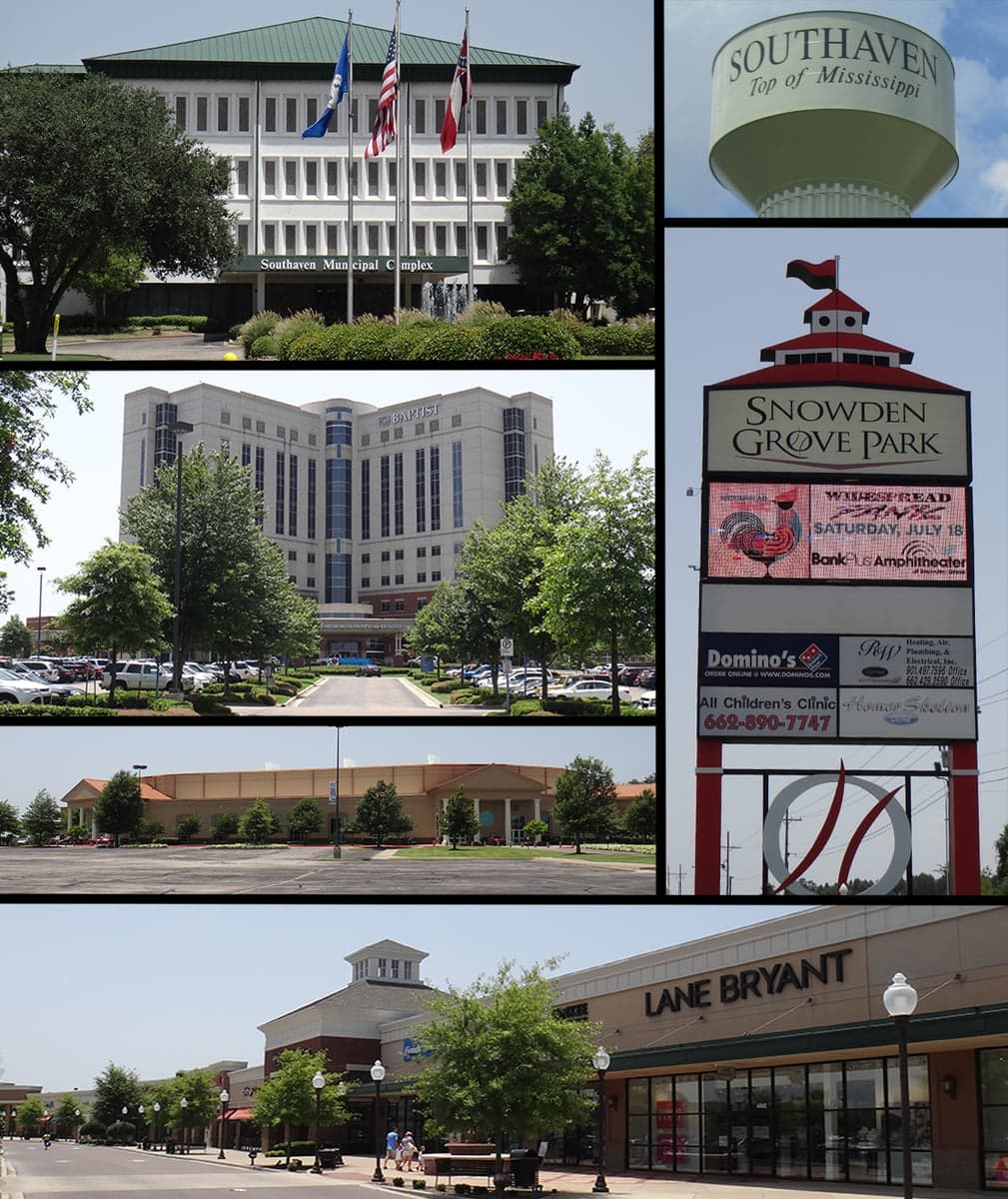
Photo: Wikipedia
Strategic Assessment of Southaven, MS
Multiple tactical vulnerabilities. Population density, target proximity, or disaster risk are likely compounding. A retreat property and exit planning is required.
What does the Strategic Assessment tell us?
Our Strategic Assessment grades tactical survivability of an area. Major population centers, military targets, fallout zones, natural disasters, and border exposure all drive risk — lower exposure means a more defensible position in a crisis.
This is heavily inspired by Joel Skousen's Strategic Relocation book. Highly recommended you checkout the book ($)What does this tell us?
Our Strategic Assessment grades tactical survivability of an area. Major population centers, military targets, fallout zones, natural disasters, and border exposure all drive risk — lower exposure means a more defensible position in a crisis.
This is heavily inspired by Joel Skousen's Strategic Relocation book. Highly recommended you checkout the book ($)Strategic Pillars

Key Distances
Regional Safe Places
Below is our recommended "safe zones" in Mississippi and the surrounding area based on our strategic heuristics. For most people, it's unrealistic to live in a “safe zone” full-time due to work, family or other personal reasons. They tend to be more rural. However, many of these areas are perfect for second homes and retreat properties that double as a vacation home or even a short-term rental.
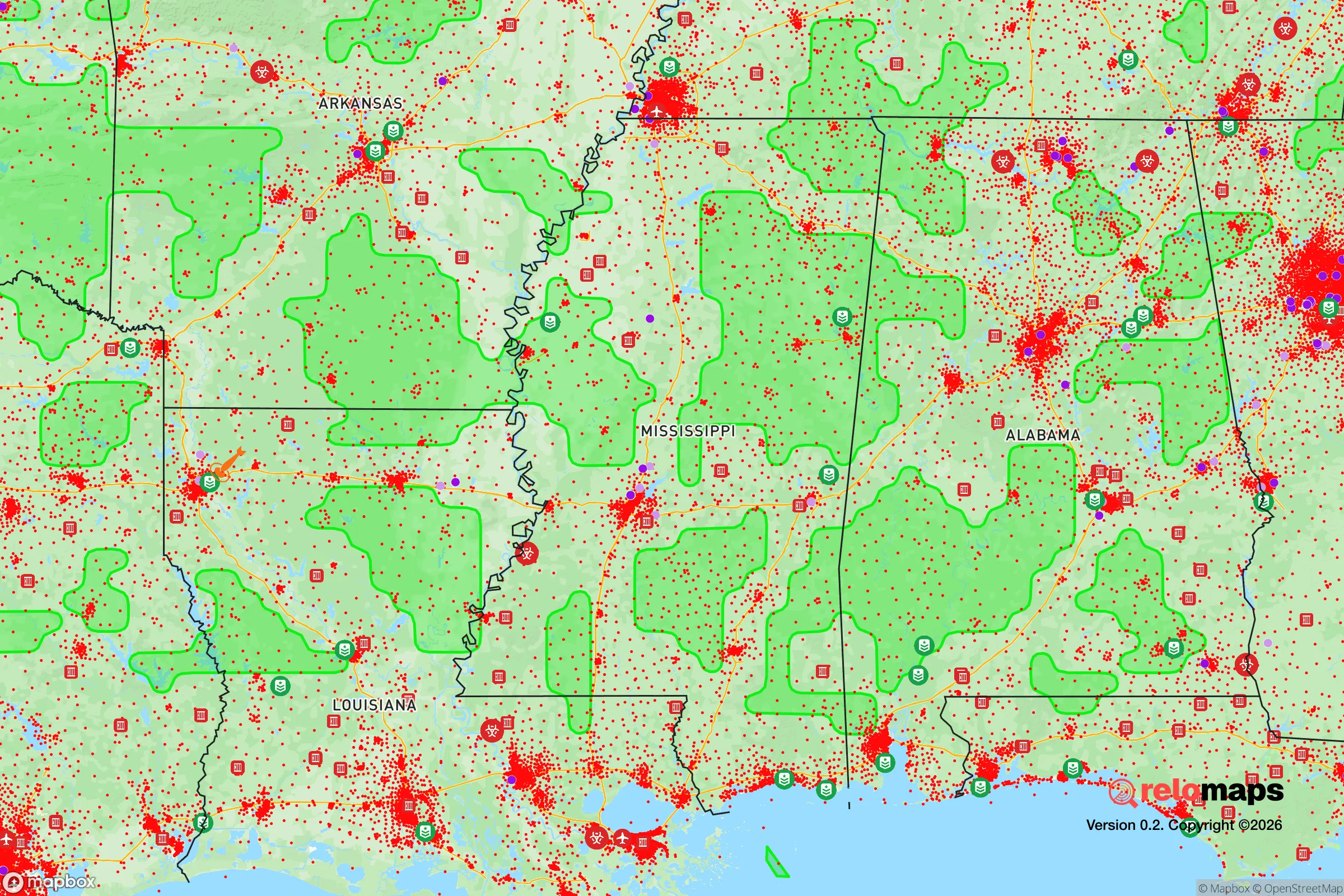
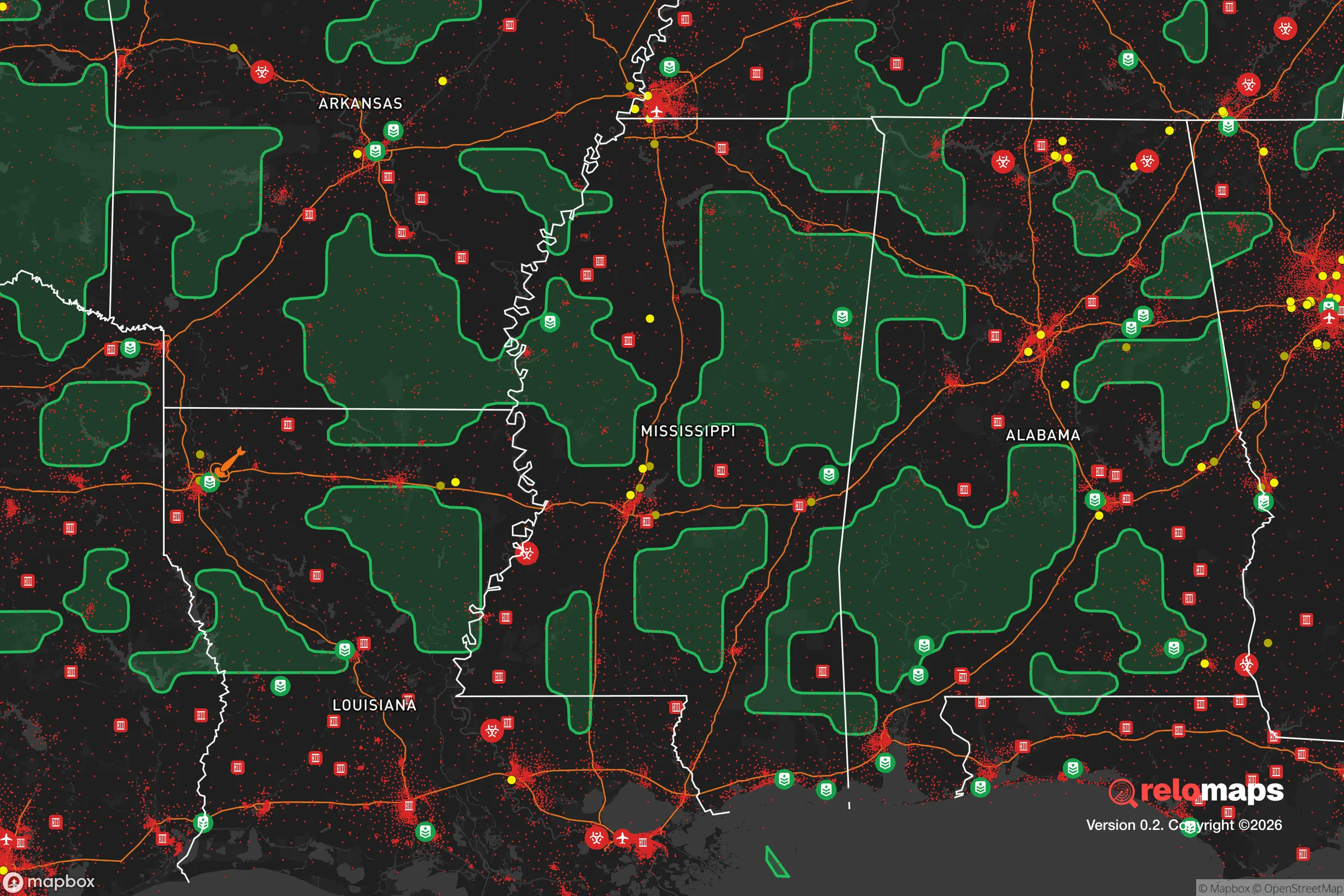


Important Note: For informational purposes only. This does not mean nothing bad ever happens in the green zones. Please use common sense. This is based on public data and modeled with AI. We tried to take a conservative approach but mistakes happen. We update this regularly as new information becomes available.
Solar Generator Recommendations
Backup power matters more here than in safer locations. We've picked three solar generators across budgets and capacity tiers — start with the budget unit if you only need a few essentials, or step up if you want to run a fridge and HVAC for days at a time.

Jackery Portable Power Station Explorer 300
Budget OptionPower on the Go: Weighing only 11 lbs, it's convenient to set up and store with book-sized foldable solar panels

BLUETTI Portable Power Station AC180
Designed for both indoor and outdoor scenarios, AC180 is highly capable as it has a robost capacity and continuous output power.

EF ECOFLOW DELTA Pro Ultra Power Station
Upgraded PickEcoFlow DELTA Pro Ultra is a whole-home energy system designed to grow with your family. Integrated with the Smart Home Panel 2, it scales to meet your evolving energy needs — keeping your home powered, intelligent, and secure through every stage of life.
We earn a commission, at no additional cost to you.
Strategic Assessment Analysis
Southaven, Mississippi, sits in a precarious but potentially workable position for the strategic relocator. Its primary resilience advantage is its location just south of Memphis, Tennessee, placing it within a major logistical corridor while technically being in a different state with a more favorable political and regulatory climate. However, that proximity to a major urban center is a double-edged sword, offering supply access while also exposing the area to the fallout of a metropolitan collapse. For a conservative-leaning individual or family prioritizing self-sufficiency and security, Southaven requires a clear-eyed assessment of its strengths and glaring vulnerabilities.
Geographic position and natural advantages for long-term security
Southaven’s position in DeSoto County, Mississippi, is its most significant strategic asset. The city is part of the Memphis metropolitan area, but the state line provides a legal and cultural buffer. Mississippi’s gun laws are among the most permissive in the nation, with no permit required for concealed carry and strong castle doctrine protections. This legal environment is a major draw for those prioritizing personal defense. The area sits on the Mississippi Delta, a flat, fertile plain that historically supported agriculture. While not mountainous or easily defensible in a tactical sense, the terrain offers good visibility and is conducive to small-scale farming and livestock, a key consideration for long-term food security. The proximity to the Mississippi River (roughly 15 miles west) provides a massive, albeit vulnerable, water source. The region’s climate is temperate, with four distinct seasons, allowing for year-round gardening and reducing the extreme weather risks found further south or north. The primary natural advantage is the sheer amount of undeveloped land in the surrounding county, offering potential for rural retreats within a short drive of the city’s infrastructure.
Risks, exposures, and proximity to fallout-relevant landmarks
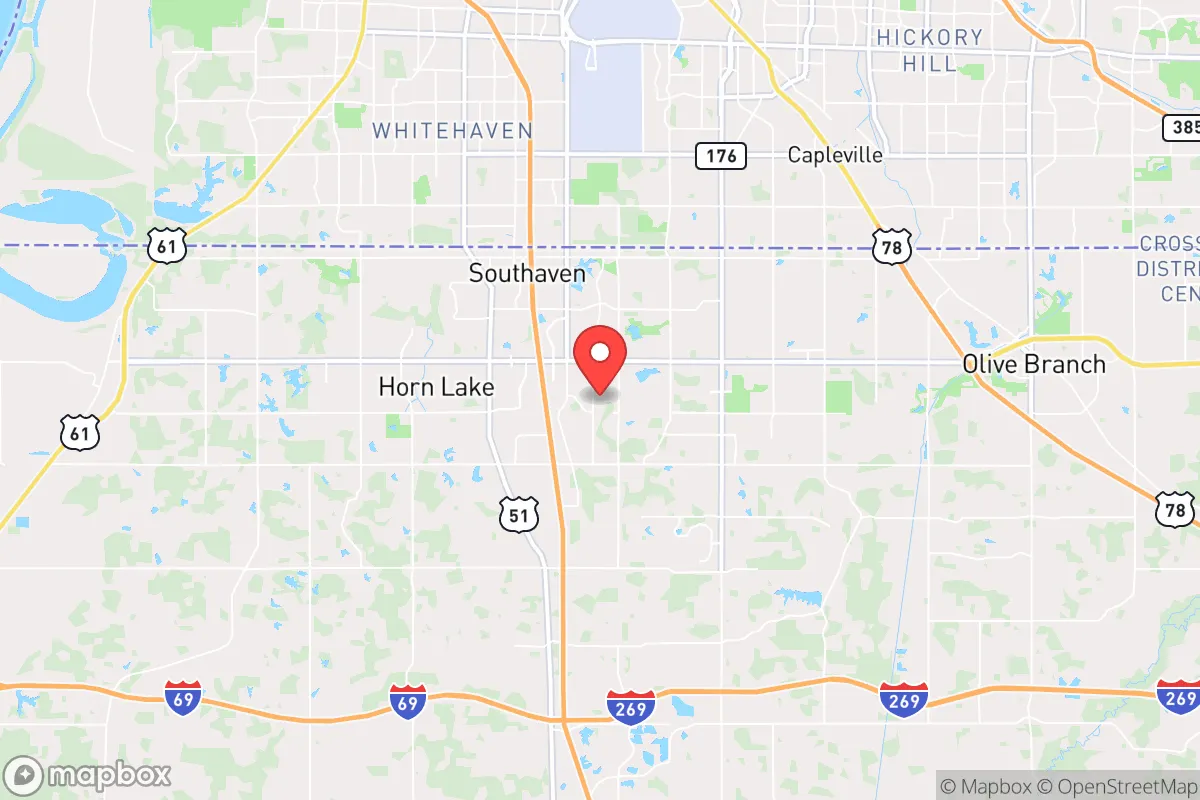
The single greatest risk for a Southaven-based prepper is its adjacency to Memphis. Memphis is a major transportation hub (FedEx’s global superhub is at Memphis International Airport, just 10 miles north) and a city with chronic crime, poverty, and civil unrest issues. In a scenario of national disruption—whether economic collapse, supply chain failure, or widespread civil unrest—Memphis would likely become a high-risk zone. The population density, combined with existing social tensions, could lead to rapid disorder. Southaven would be directly in the path of any exodus from the city. Interstate 55 and Highway 78, the primary arteries connecting Memphis to the south, would become choke points and potential avenues for looting or refugee movement. Furthermore, the Mississippi River itself is a target for infrastructure sabotage or natural disaster. A catastrophic levee failure or a deliberate attack on the river’s locks and dams could disrupt water supply and create flooding risks. The nearby Memphis Sand aquifer, a massive underground water source, is a strategic asset but also a potential target for contamination. For the survivalist, the key takeaway is that Southaven is not a retreat; it is a forward operating base with a high risk of being overrun by urban spillover.
Practical resilience for a relocator: food, water, energy, and defensibility
For a relocator willing to invest in hardening a property, Southaven offers a mixed bag. Water security is achievable but not automatic. While the Memphis Sand aquifer is a deep, high-quality source, municipal water treatment could fail. A well-drilling plan is essential for any property outside the densest subdivisions. Rainwater collection is viable given the region’s average 55 inches of annual rainfall. Food production is a strong point. The growing season runs from April to October, and the soil, while heavy clay in spots, can be amended for productive gardens. Local farmers’ markets and the proximity to agricultural areas in the Delta mean bulk food purchasing is feasible. Energy resilience is a concern. The grid is tied to the Tennessee Valley Authority (TVA), which is reliable under normal conditions but vulnerable to cyberattack or physical sabotage. Solar is viable, but the region’s frequent cloud cover and humidity reduce efficiency compared to the Southwest. A backup generator with a substantial fuel store is a must. Defensibility is the weakest link. Southaven is a suburban sprawl of subdivisions, strip malls, and flat, open terrain. There are no natural chokepoints or high ground. A single-family home on a standard lot offers limited tactical advantage. The best strategy is to be part of a neighborhood watch or a prepper network, or to secure a property on the rural fringe of DeSoto County, where larger lots and fewer neighbors provide more buffer. The local law enforcement (DeSoto County Sheriff’s Office) is generally professional and conservative-leaning, but in a major crisis, response times would stretch to hours or days.
The overall strategic picture for a conservative relocator
Southaven is not a bug-out location; it is a strategic compromise. It offers the economic and logistical benefits of being near a major city (jobs, medical care, supply chains) while operating under the legal and cultural umbrella of a red state. For a single individual or a family who works in Memphis but wants to live in a more secure jurisdiction, it makes sense. The prepper calculus here is about mitigation, not avoidance. You cannot avoid the risk of Memphis’s collapse, but you can mitigate it by living south of the state line, maintaining a low profile, and building a network of like-minded neighbors. The long-term viability of Southaven as a safe haven depends entirely on the stability of the broader region. If the United States experiences a severe but localized crisis (e.g., a Midwest earthquake or a Mississippi River flood), Southaven could serve as a staging area for relief or a temporary refuge. If the crisis is nationwide and involves urban collapse, Southaven’s proximity to Memphis makes it a high-risk zone that would likely need to be abandoned for a more rural, defensible location further south or east. For the strategic relocator, Southaven is a place to build resources and skills, not a place to make a final stand. The smart play is to treat it as a base camp, not a fortress.

* Values derived from national, state, county, city and local statistics and may differ in a specific area. Last updated: 2026-04-22T21:25:58.000Z
Narrative content on this page is AI-generated and may contain mistakes. Verify any details that matter before acting on them.
ReloMaps may earn a commission from affiliate links at no extra cost to you.

