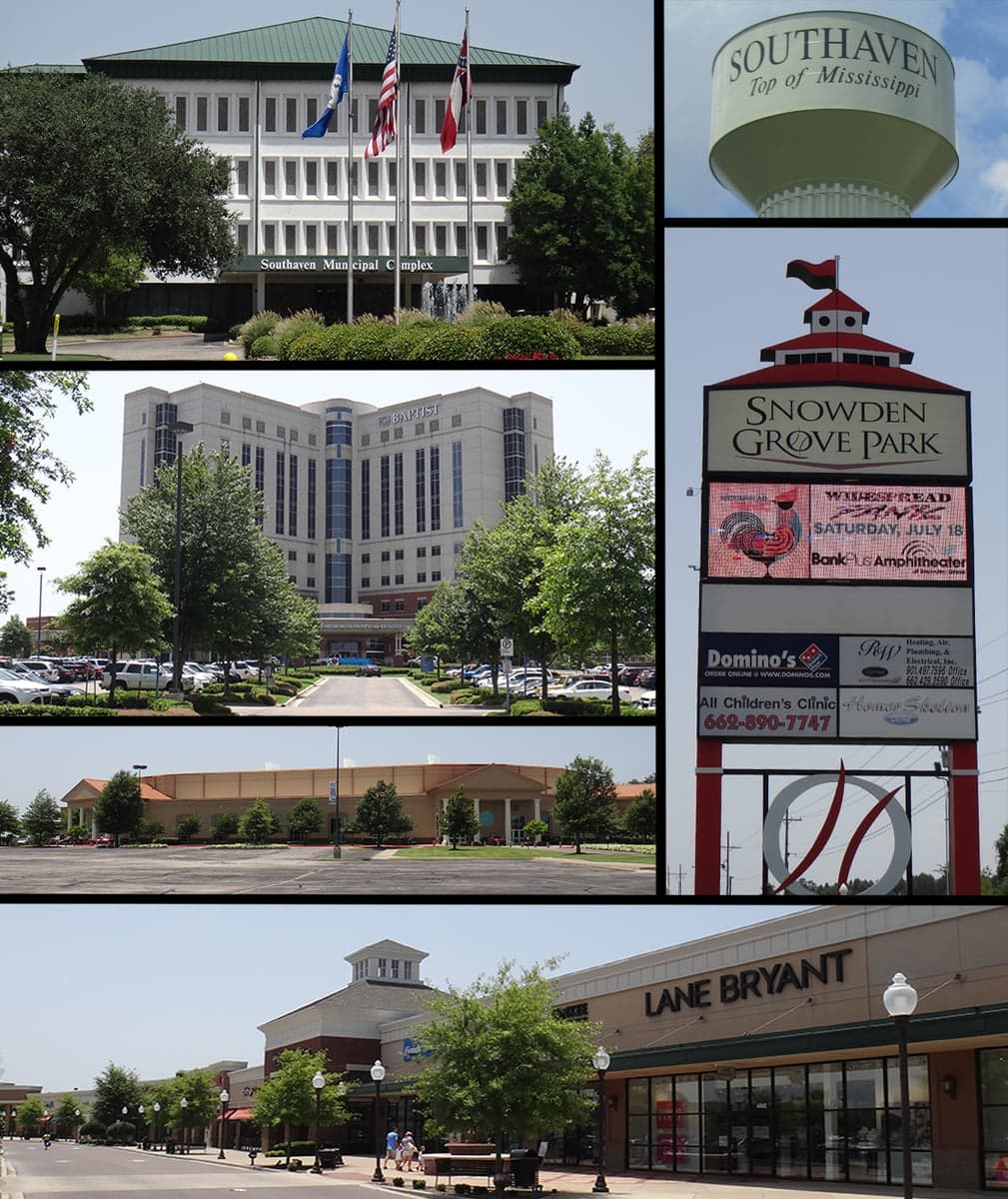
Photo: Wikipedia
Political ClimatePolitical Climate in Southaven, MS
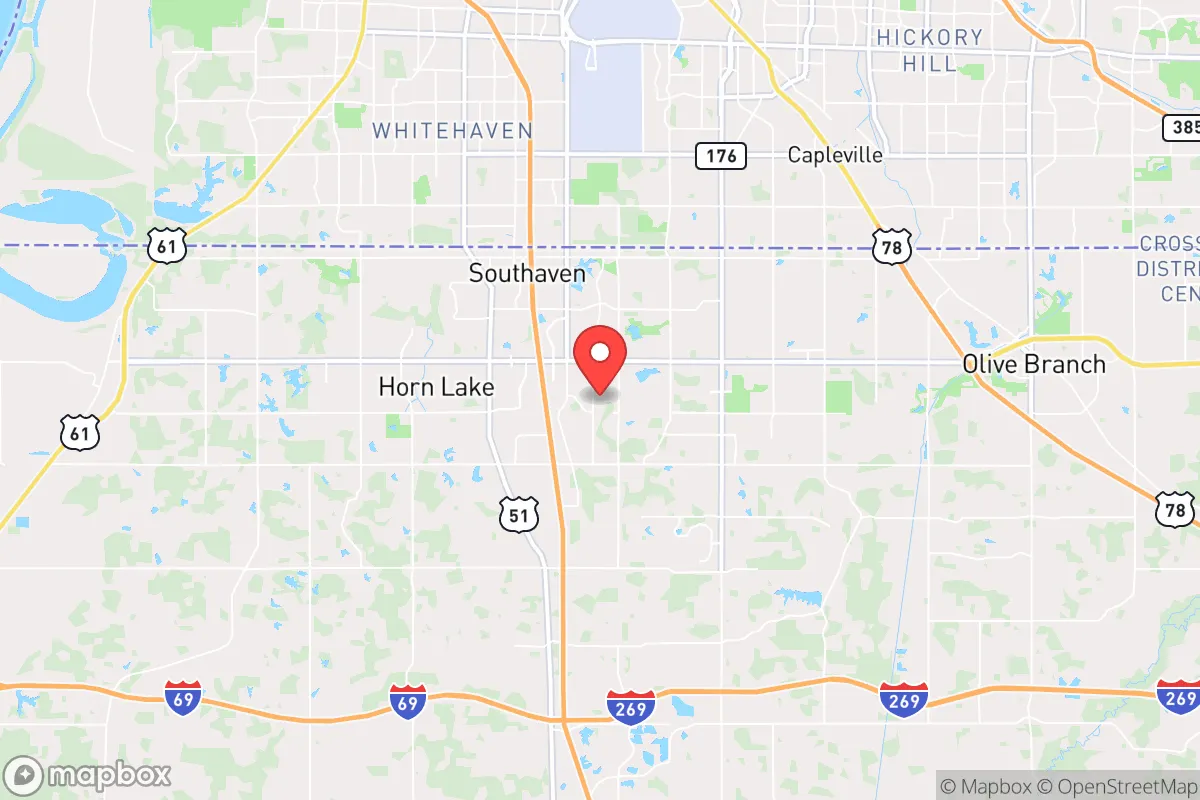
District shown is the primary district for this city’s centroid. Cities may span multiple districts.
Local Political AnalysisPolitical Analysis of Southaven, MS
Southaven, Mississippi, sits squarely in the heart of conservative America, and it’s been that way for as long as most of us can remember. The Cook PVI of R+18 tells you the headline—this isn’t a purple area or a swing district; it’s a place where Republican candidates routinely win by double digits. In the 2024 election, DeSoto County as a whole went about +24 for the GOP, and Southaven, as the county’s largest city, drives that trend. But if you’ve lived here a while, you’ve noticed the political winds aren’t as steady as they used to be. The old guard of rock-solid, limited-government conservatism is still the majority, but there’s a creeping shift—especially among younger folks and newcomers from Memphis—that’s starting to nudge the needle. It’s not a blue wave, but it’s a yellow flag for anyone who values personal freedoms and local control.
How it compares
To really get Southaven’s politics, you have to look at the map. Drive ten minutes north into Memphis, Tennessee, and you’re in a deep-blue urban stronghold—Shelby County went +25 for Biden in 2020. That contrast is stark and immediate. Southaven, along with neighboring Olive Branch and Horn Lake, forms a conservative buffer zone that’s drawn a lot of folks fleeing Memphis’s rising crime, high taxes, and progressive policies. But here’s the thing: some of those newcomers bring Memphis-style voting habits with them. You’ll see it in local school board races and city council elections, where candidates pushing for more government spending or “equity” initiatives are gaining a foothold. Compare that to smaller towns like Hernando, further south, which remains more uniformly traditional. Southaven is still solidly red, but it’s not as reliably libertarian-leaning as it was a decade ago—there’s more chatter about expanding public programs and less pushback against federal overreach.
What this means for residents
For the average Southaven resident, the political climate shapes daily life in ways you might not notice until they’re gone. Property taxes here are still relatively low compared to Memphis, and the city government has historically kept its hands off your business—no mask mandates that lasted forever, no heavy-handed business closures during COVID. That’s the kind of local control that makes Southaven attractive. But there are warning signs. The school district, once a model of parental rights and local curriculum control, is seeing pressure from state-level mandates and activist groups pushing for more centralized oversight. If you’re a parent who wants to decide what your kid reads or learns, you need to stay engaged. The long-term trend is concerning: as the Memphis metro area grows, Southaven’s political identity could dilute. If you value low taxes, Second Amendment rights, and minimal government intrusion, the next five to ten years will require vigilance at the ballot box.
Culturally, Southaven still feels like a place where neighbors know each other and church on Sunday is the norm. The city’s leadership has resisted the kind of progressive social experiments you see in larger metros—no defunding police talk here, and the city’s growth has been managed with an eye toward keeping it family-friendly. But there’s a growing divide between long-time residents who remember when DeSoto County was rural and the newer arrivals who see Southaven as just another suburb. The biggest policy distinction is the city’s stance on taxes and regulation: Southaven has no city income tax, and the sales tax is competitive. That’s a deliberate choice to keep government lean. If that changes—if the city starts chasing federal grants with strings attached or adopts zoning rules that limit property rights—it’ll be a sign that the old conservative consensus is fraying. For now, Southaven is still a good place to live if you want to be left alone, but keep an eye on the local elections. That’s where the real fight for your freedoms happens.

State Political ClimatePolitical Climate in Mississippi
State Political AnalysisPolitical Environment in the State
Mississippi is one of the most reliably conservative states in the nation, with a Republican lean that has only deepened over the past two decades. The state has not voted for a Democratic presidential candidate since 1976, and in 2024, Donald Trump carried it by roughly 17 points. The dominant coalition is a blend of rural, evangelical, and working-class voters, with the GOP holding supermajorities in both chambers of the state legislature and every statewide office. Over the last 10-20 years, the shift has been dramatic: Democrats once held a majority of state House seats as recently as 2010, but now Republicans control about 75% of them. This trajectory reflects a broader realignment where cultural and economic conservatism has solidified, particularly in the northern and central parts of the state.
Urban vs. rural divide
The political map of Mississippi is starkly divided between its handful of urban centers and the vast rural countryside. The Jackson metro area, including Hinds, Madison, and Rankin counties, is the state’s most politically mixed region. Jackson proper is overwhelmingly Democratic and majority-Black, with a strong progressive activist presence, but the suburbs tell a different story. Madison and Ridgeland are reliably Republican, with Madison County voting +23 for Trump in 2024. The Gulf Coast, anchored by Biloxi and Gulfport, leans conservative but has a notable libertarian streak, especially on economic issues. The northeastern corner, including Tupelo and Oxford, is a fascinating microcosm: Tupelo is deeply conservative and evangelical, while Oxford (home to the University of Mississippi) is a blue dot in a red sea, with Lafayette County flipping to Biden in 2020 by a narrow margin. The Mississippi Delta, including Greenville and Clarksdale, is the state’s most Democratic region, driven by high Black populations and persistent poverty, but these areas have little statewide influence due to low turnout. The rural counties in the central and southern parts of the state, like Jones County and Pearl River County, are among the most conservative in the country, routinely voting 80%+ Republican.
Policy environment
Mississippi’s policy environment is among the most conservative in the nation, with a strong emphasis on limited government and traditional values. The state has no income tax on wages (phased out in 2022), and the corporate tax rate is a flat 4%. Sales tax is 7%, among the highest in the country, but property taxes are very low, making it attractive for retirees and families. Education policy is dominated by school choice: Mississippi has a robust charter school law and a growing Education Scholarship Account (ESA) program for special-needs students, with expansion to all families under discussion. The state is a “right-to-work” state and has some of the weakest labor unions in the country. Healthcare is a mixed bag: Mississippi did not expand Medicaid under the Affordable Care Act, leaving a coverage gap, but the state has a strong network of rural hospitals and a growing telehealth sector. Election laws are strict: voter ID is required, early voting is limited to in-person absentee with an excuse, and same-day registration is not allowed. The state has also passed laws restricting ballot drop boxes and limiting mail-in voting, which conservatives view as protecting election integrity.
Trajectory & freedom
Mississippi has been on a clear trajectory of expanding personal freedom in several key areas, particularly gun rights, parental rights, and tax policy. In 2023, the state passed a permitless carry law, allowing any law-abiding adult to carry a concealed firearm without a license. This was a major victory for Second Amendment advocates. On parental rights, Mississippi enacted the “Parents’ Bill of Rights” in 2022, which requires schools to notify parents about curriculum changes and medical services, and gives parents the right to opt their children out of any instruction they find objectionable. The state also passed a near-total abortion ban in 2019, which took effect after the Dobbs decision, and has resisted efforts to expand transgender medical procedures for minors. However, there are areas where freedom is more constrained. The state’s alcohol laws remain restrictive, with dry counties still existing in parts of the Delta and some Sunday sales prohibitions. Property rights are generally strong, but the state has a history of eminent domain abuse for economic development projects, particularly along the Gulf Coast. The overall trend, though, is toward more liberty, especially in the cultural and fiscal domains.
Civil unrest & political movements
Mississippi has a relatively low level of visible civil unrest compared to other states, but there are active political movements on both sides. The most prominent conservative movement is the “Mississippi Freedom Caucus,” a group of hardline state legislators who push for further tax cuts, school choice expansion, and restrictions on government overreach. On the left, the “Mississippi Poor People’s Campaign” and local NAACP chapters organize around voting rights and economic justice, particularly in the Delta. The state has seen occasional protests over Confederate monuments, most notably in Oxford and Jackson, but these have been smaller and less frequent than in other Southern states. Immigration politics are less heated than in border states, but there is a growing concern about illegal immigration in the agricultural sector, particularly in the Delta. The state has no sanctuary cities, and in 2024, the legislature passed a law requiring local law enforcement to cooperate with federal immigration authorities. Election integrity remains a hot-button issue, with the state’s Republican secretary of state, Michael Watson, aggressively purging voter rolls and pushing for stricter ID laws. A new resident would notice that political discourse is generally civil in daily life, but the underlying divisions are real, especially along racial lines.
Projection
Over the next 5-10 years, Mississippi is likely to become even more conservative, driven by several demographic and political trends. The state’s population is aging and slowly declining, with the biggest losses in the Democratic-leaning Delta and the Black-majority areas of Jackson. Meanwhile, the conservative suburbs of Madison, Ridgeland, and the Gulf Coast are growing, as are the exurbs around Tupelo and Hattiesburg. In-migration is modest but tilts conservative, with retirees from the Midwest and Gulf Coast moving to the state for its low taxes and gun-friendly laws. The Republican supermajority in the legislature is unlikely to be challenged, and further tax cuts (including elimination of the corporate tax) are probable. The biggest wild card is the state’s education system: if school choice expands to universal ESAs, it could accelerate the exodus from public schools and further entrench conservative values. However, there is a risk of federal intervention on voting rights and Medicaid expansion, which could create friction. For a new resident, the state will feel even more free in terms of personal autonomy and economic opportunity, but the social fabric will remain deeply divided along racial and geographic lines.
Bottom line for a new resident: If you value low taxes, strong gun rights, parental control over education, and a culture that respects traditional values, Mississippi is one of the best states in the country. You’ll find a welcoming community in the conservative suburbs and rural areas, but you should be prepared for a slower pace of life and limited amenities in many places. The state is not for everyone, but for those who align with its political and cultural trajectory, it offers a level of personal freedom that is increasingly rare in the United States.
* Values derived from national, state, county, city and local statistics and may differ in a specific area. Last updated: 2026-04-22T21:25:58.000Z
Narrative content on this page is AI-generated and may contain mistakes. Verify any details that matter before acting on them.
ReloMaps may earn a commission from affiliate links at no extra cost to you.

