Photo: Wikipedia
Demographics of Southfield, MI
Affluence Level in Southfield, MI
A middle-class area roughly in line with national averages across income, home values, education, and employment.
People of Southfield, MI
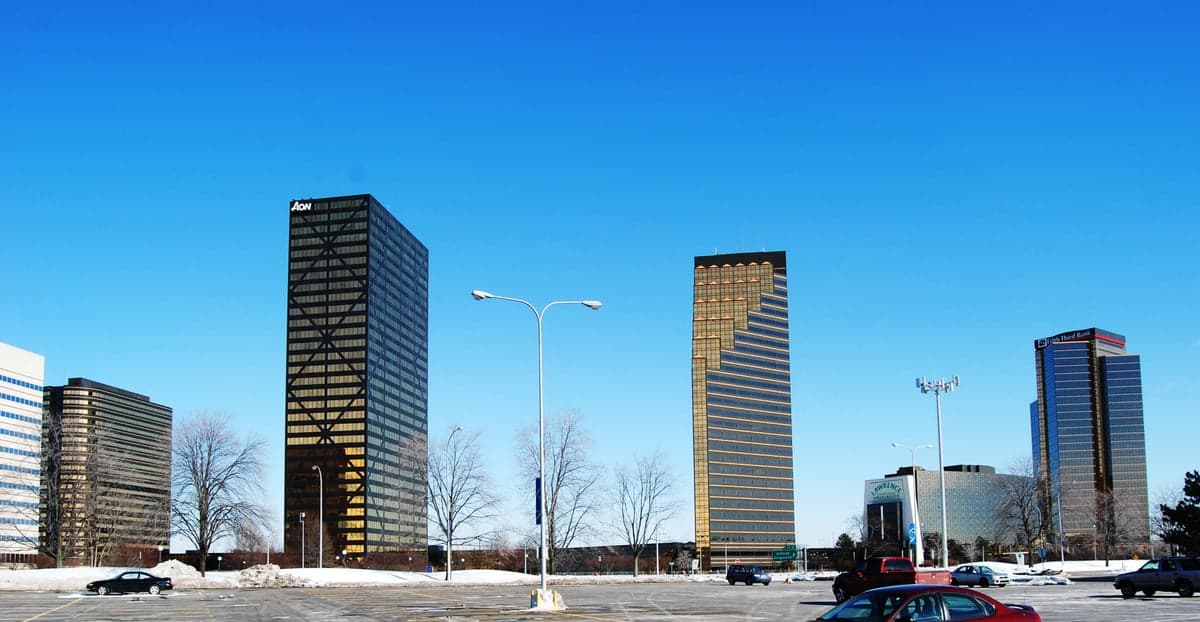
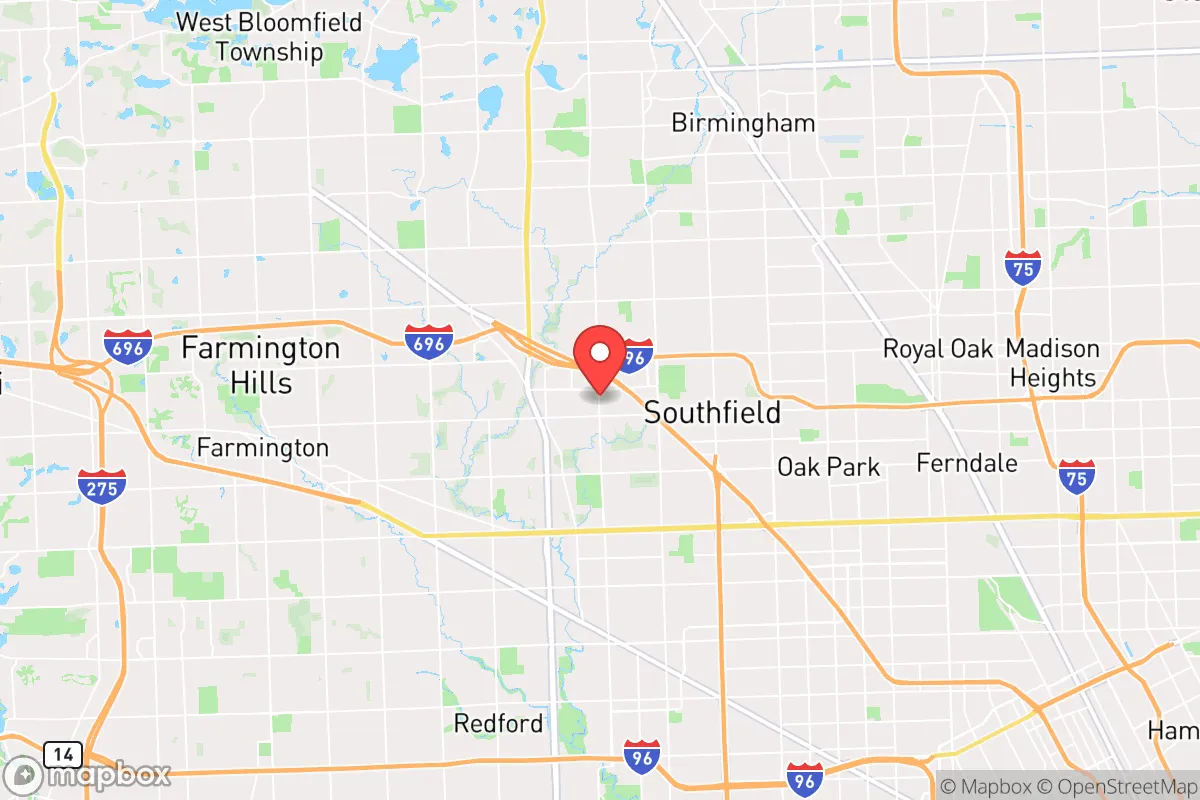
Southfield, Michigan, is a majority-Black, middle-class suburban city of 76,025 residents, known for its high concentration of corporate headquarters and a professional-class population where nearly 40% hold a college degree. The city’s identity is shaped by a dramatic demographic transformation over the past 60 years, shifting from a nearly all-white bedroom suburb to a predominantly Black community with a small but stable foreign-born population of 3.6%. Today, Southfield feels like a self-contained urban center within the suburbs, with a density and commercial vitality that distinguish it from neighboring communities like Oak Park or Lathrup Village.
How the city was settled and grew
Southfield was originally a farming township settled in the 1830s by Yankee and German Protestant families who cleared the land for agriculture. The area remained rural through the early 20th century, with small clusters of homes around the Grand Trunk Western Railroad depot near what is now the intersection of Evergreen Road and 10 Mile Road. The first significant growth wave came after World War II, when the GI Bill and Detroit’s booming auto industry drew white working-class and middle-class families to new subdivisions. Builders platted neighborhoods like Beverly Hills Estates (not to be confused with the separate city of Beverly Hills) and Southfield Gardens in the 1950s, filling them with young couples from Detroit and downriver communities. By 1960, Southfield was 99% white, a classic “outer-ring” suburb of ranch homes and shopping plazas built for the postwar nuclear family.
Modern era (post-1965)
The 1967 Detroit riot and subsequent white flight reshaped Southfield’s population dramatically. Black families, many of them middle-class professionals and skilled tradespeople, began moving out of Detroit’s segregated neighborhoods into Southfield’s affordable ranch homes. The city’s Black population rose from under 1% in 1960 to 15% by 1970, then to 63% by 1990. The Northland Mall area (Greenfield Road and 8 Mile) became an early anchor for Black homebuyers, while neighborhoods like Franklin Hills and Evergreen Hills attracted doctors, lawyers, and auto executives. By the 2000s, Southfield had become a regional hub for Black professionals, with a thriving commercial corridor along Northwestern Highway and a concentration of Black-owned businesses. The white population declined steadily, falling to 25.6% by the 2020s, while the Hispanic share remained low at 1.9% and the East/Southeast Asian share at 1.2%. The Indian-subcontinent population stands at 0.9%, concentrated in newer subdivisions near the Lahser Road corridor. The foreign-born share of 3.6% is low for a metro Detroit suburb, reflecting the city’s primarily domestic migration history.
The future
Southfield’s population is aging and slowly declining — down from a peak of about 78,000 in 2000. The city is not experiencing significant new immigration, and the foreign-born share has remained flat for two decades. Younger Black families are increasingly choosing newer suburbs like Macomb Township or Canton, leaving Southfield with a slightly older demographic profile. The city is not tribalizing into distinct ethnic enclaves; rather, it is homogenizing as a solidly Black-majority community with small white and Asian pockets. The Northland Center redevelopment (the former mall site) could attract some younger residents if mixed-use housing is built, but the overall trend is stability rather than growth. The Indian and East/Southeast Asian communities are small and unlikely to expand rapidly without a major employer relocating to the area. Over the next 10-20 years, Southfield will likely remain a predominantly Black, middle-class city with a stable population and a professional character, but it faces competition from more affordable exurban communities for young families.
For someone moving in now, Southfield offers a dense, amenity-rich suburban environment with strong public services and a well-established Black professional community. It is not a high-growth or high-diversity destination, but it provides stability, good schools, and proximity to Detroit’s job centers. The city’s future is one of slow, steady continuity rather than dramatic change — a place where the demographic story is largely written, not still unfolding.

* Values derived from national, state, county, city and local statistics and may differ in a specific area. Last updated: 2026-04-29T21:34:21.000Z
Narrative content on this page is AI-generated and may contain mistakes. Verify any details that matter before acting on them.
ReloMaps may earn a commission from affiliate links at no extra cost to you.

