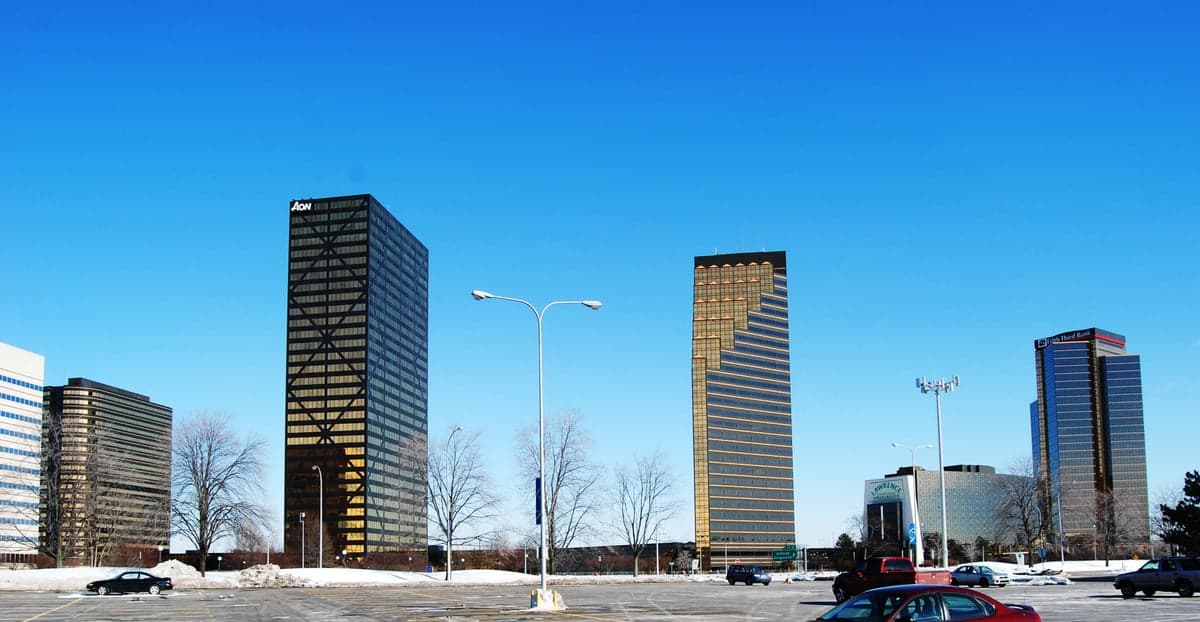
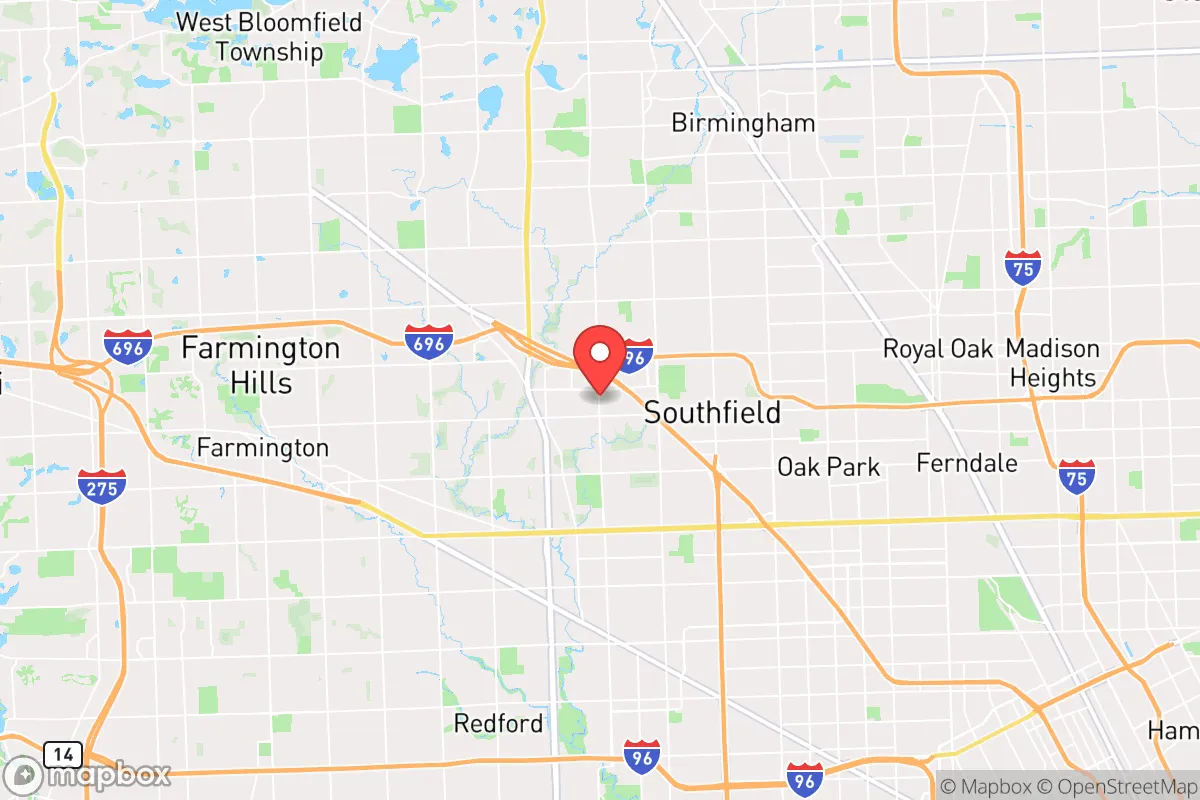
Photo: Wikipedia
Quality of Life in Southfield, MI
Above-average quality of iife. The area offers a reasonable cost of living, decent mobility, and a mix of neighborhood amenities.
What does Quality of Life tell us?
Quality of Life blends cost of living, nearby amenities, socioeconomic signals, and neighborhood character. City-level scores represent the whole municipality; individual neighborhoods can differ.
What does this tell us?
Quality of Life blends cost of living, nearby amenities, socioeconomic signals, and neighborhood character. City-level scores represent the whole municipality; individual neighborhoods can differ.
Cost of Living
1% below national average
The Real Cost of Living in Southfield, MI for 2026
| Tier | Individual | Family (4) |
|---|---|---|
| Survival | $21k | $39k |
| Comfortable | $44k | $65k |
| Luxury | $110k+ | $171k+ |
| Elite (Top 5%) | $130k+ | $201k+ |
102%
The Area Signal
A metric tracking the socioeconomic signals of the area.
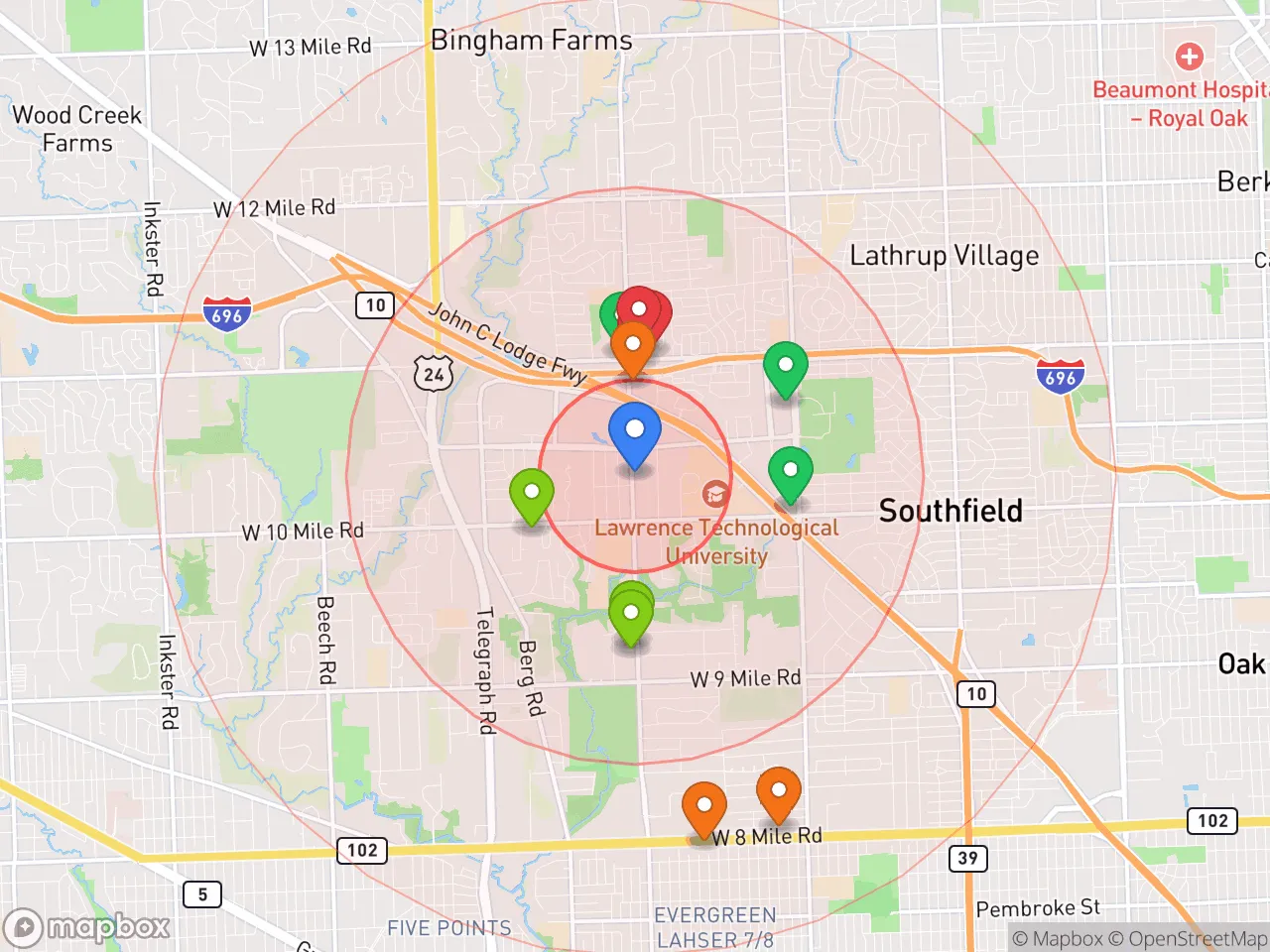
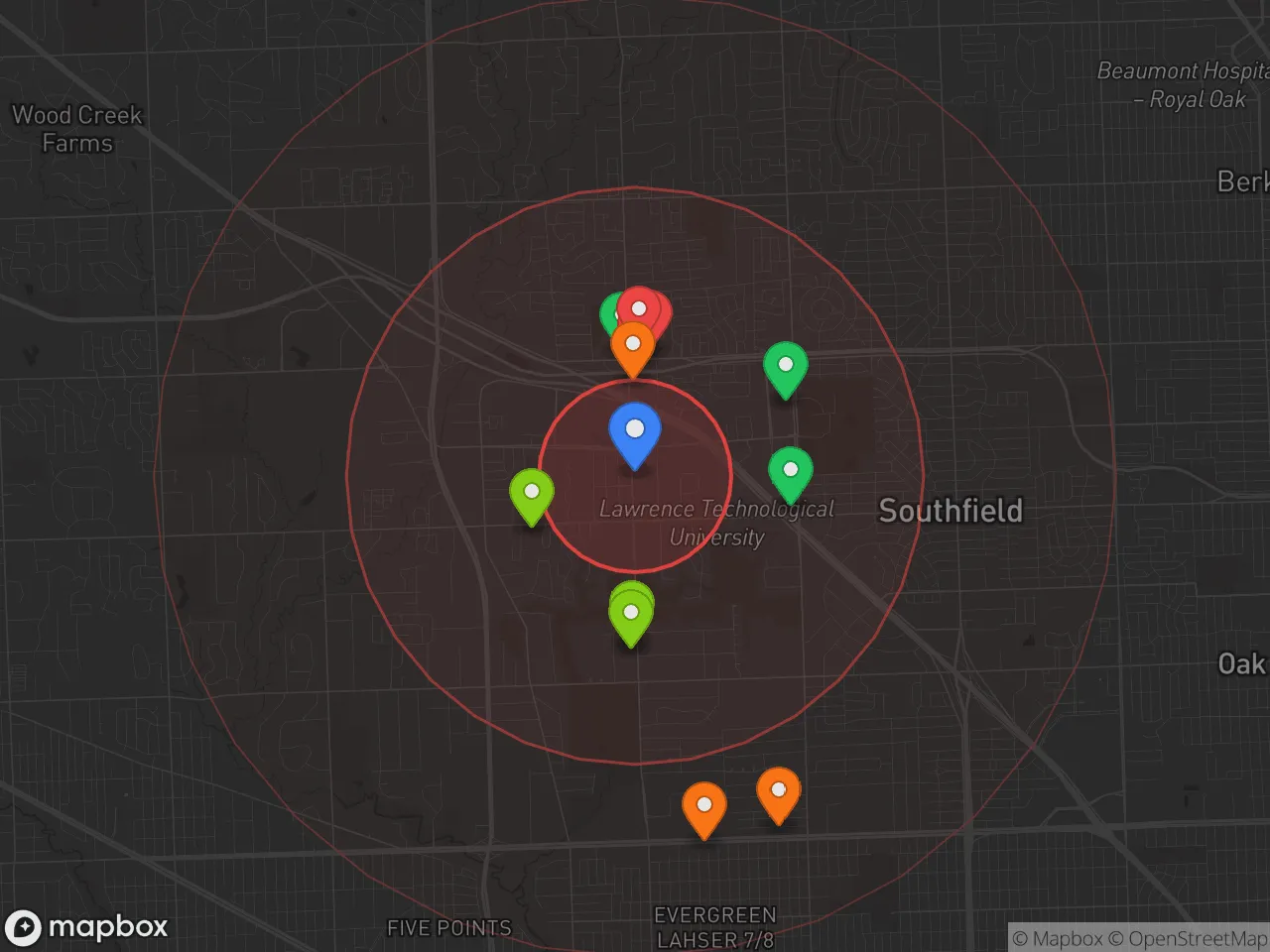
Hobbies
Explore the areaGroceries
6 within 10 miles
Gas
20 within 10 miles
Hospital
20 within 20 miles
Airport
DTW — Detroit Metropolitan Wayne County
Post Office
USPS — Southfield, MI
Critical Amenities
Quality-of-Life Analysis
Southfield, Michigan, offers a quality of life that blends suburban comfort with urban accessibility, appealing strongly to middle- and upper-middle-class professionals, families, and retirees who want proximity to Detroit without the city’s higher costs or density. With a cost-of-living index of 99—essentially at the national average—residents get more square footage and newer housing stock than in many comparable suburbs, while still enjoying a diverse, amenity-rich community. The city’s population of roughly 72,000 is notably educated and professional, anchored by major employers like Blue Cross Blue Shield of Michigan, Lear Corporation, and Beaumont Health, which together draw a workforce that values short commutes and solid public services.
Cost of living, housing affordability, and how Southfield compares to nearby suburbs
Southfield’s housing market is a clear draw: the median home value sits at $226,900, well below the Detroit metro median of roughly $280,000, while median rent is $1,301—about 10% lower than in neighboring Royal Oak or Birmingham. This affordability gap is especially pronounced for buyers; a typical 3-bedroom ranch in Southfield costs $50,000–$80,000 less than a comparable home in Bloomfield Hills or Farmington Hills. The average commute of 23.5 minutes is shorter than the metro average of 27 minutes, thanks to Southfield’s location at the junction of I-696, I-75, and the Lodge Freeway (M-10), making downtown Detroit a 20-minute drive and Troy’s job centers a 15-minute trip. Property taxes in Oakland County are moderate—around 2.1% of assessed value—but Southfield’s lower home prices keep annual tax bills manageable compared to pricier suburbs. For renters, the market is stable, with vacancy rates near 5% and newer apartment complexes like The Standard at Southfield offering amenities (pool, gym, co-working) that would cost 20% more in Ferndale.
What daily life is like: amenities, schools, and local character
Daily life in Southfield centers on a well-maintained network of parks, shopping corridors, and community services. The Southfield Parks & Recreation department operates 20 parks, including the 40-acre Beverly Hills Park with its walking trails and sports fields, and the Southfield Sports Arena for ice skating and hockey. The city’s school system, Southfield Public Schools, serves about 6,500 students and has seen recent investment: the district opened a new Southfield High School for the Arts & Technology in 2023, and elementary schools like Levey Middle School have STEM-focused magnet programs. For shopping, the Southfield Town Center complex offers a mix of retail, dining, and office space, while the nearby Twelve Oaks Mall in Novi is a 15-minute drive. The city’s diversity is a defining trait—Southfield is roughly 70% Black or African American, with a strong Black professional class, and hosts cultural events like the annual Southfield Jazz Festival and the Martin Luther King Jr. Day of Service. Commuters appreciate the SMART bus system connecting to Detroit, though most residents drive. Nightlife is modest—think local breweries like Brewery Faisan and casual restaurants—but the energy of Royal Oak’s bar scene is only 10 minutes away.
Southfield is best suited for professionals and families who prioritize affordability, short commutes, and a stable, diverse community over high-end shopping or a vibrant nightlife. Empty-nesters downsizing from larger Oakland County homes find value here, as do first-time buyers priced out of Birmingham or Royal Oak. The city’s solid school options, low crime rate relative to Detroit (violent crime is about half the city’s rate), and strong municipal services—including a nationally recognized Southfield Public Library—make it a practical, understated choice for those who want a comfortable, connected suburban life without the premium price tag.

Crime in Southfield, MI
Higher crime rates than 66% of comparable U.S. locations.
Violent CrimeViolent Crime Analysis
Property CrimeProperty Crime Analysis
Crime Analysis
Southfield, Michigan, a suburban city bordering Detroit, presents a crime profile that demands careful consideration from potential residents. With a violent crime rate of 408.1 per 100,000 residents and a property crime rate of 1,238.7 per 100,000, the city's safety metrics are significantly elevated compared to national averages. These figures place Southfield in a category where crime is a tangible concern, particularly given its location within a large metro area where progressive judicial philosophies often influence sentencing and prosecution outcomes.
Crime in context
Southfield's violent crime rate of 408.1 per 100,000 is roughly 15% higher than the national average of approximately 380 per 100,000cars, and substantially above the Michigan state average of around 450 per 100,000. Property crime, at 1,238.7 per 100,000, is also elevated, exceeding the national benchmark of about 1,950 per 100,000 but still representing a real risk. These numbers are not outliers for a suburban community adjacent to a major urban core, but they are a clear signal that safety is not guaranteed. The broader context of Oakland County, which includes Southfield, is one of relative affluence, yet the city's crime rates are notably higher than many of its neighboring communities, a disparity often linked to socioeconomic factors and the policies of local prosecutors.
What residents experience
For those living in Southfield, the daily experience of safety is uneven. Property crime—including theft, burglary, and motor vehicle theft—is the most common concern, with residents frequently reporting package thefts and break-ins. Violent incidents, while less frequent, are concentrated in specific areas and often tied to disputes or retail-related crime. A key factor influencing the overall safety climate is the judicial environment in Oakland County and the broader metro Detroit region. Progressive district attorneys and judges, who may prioritize rehabilitation and diversion programs over incarceration, can result in more offenders remaining on the street, potentially increasing recidivism and reducing the deterrent effect of prosecution. This approach, while sympathetic to offenders, can negatively impact justice for victims and the public, making it harder for residents to feel secure in their daily lives.
Neighborhood-level variation is significant in Southfield. Areas west of the I-696 corridor, particularly those with higher home values and more robust homeowners associations, tend to report lower crime rates. Conversely, the eastern and southern sections of the city, closer to the Detroit border and along major commercial corridors like Northwestern Highway and Greenfield Road, experience higher concentrations of both property and violent crime. Prospective residents should examine block-level crime maps and consider that the city's overall statistics may not reflect the safety of a specific street or subdivision. Engaging with local neighborhood watch groups and reviewing police department reports for specific beats is strongly advised before making a relocation decision.
* Values derived from national, state, county, city and local statistics and may differ in a specific area. Last updated: 2026-04-29T21:34:21.000Z
Narrative content on this page is AI-generated and may contain mistakes. Verify any details that matter before acting on them.
ReloMaps may earn a commission from affiliate links at no extra cost to you.

