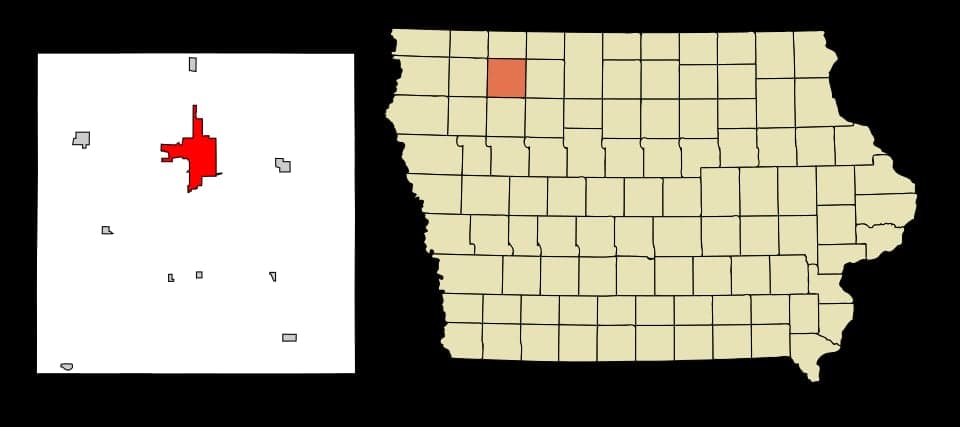
Photo: Wikipedia
Strategic Assessment of Spencer, IA
Workable tactical position. Some exposure to population density or targets, but generally defensible in a crisis.
What does the Strategic Assessment tell us?
Our Strategic Assessment grades tactical survivability of an area. Major population centers, military targets, fallout zones, natural disasters, and border exposure all drive risk — lower exposure means a more defensible position in a crisis.
This is heavily inspired by Joel Skousen's Strategic Relocation book. Highly recommended you checkout the book ($)What does this tell us?
Our Strategic Assessment grades tactical survivability of an area. Major population centers, military targets, fallout zones, natural disasters, and border exposure all drive risk — lower exposure means a more defensible position in a crisis.
This is heavily inspired by Joel Skousen's Strategic Relocation book. Highly recommended you checkout the book ($)Strategic Pillars

Key Distances
Regional Safe Places
Below is our recommended "safe zones" in Iowa and the surrounding area based on our strategic heuristics. For most people, it's unrealistic to live in a “safe zone” full-time due to work, family or other personal reasons. They tend to be more rural. However, many of these areas are perfect for second homes and retreat properties that double as a vacation home or even a short-term rental.
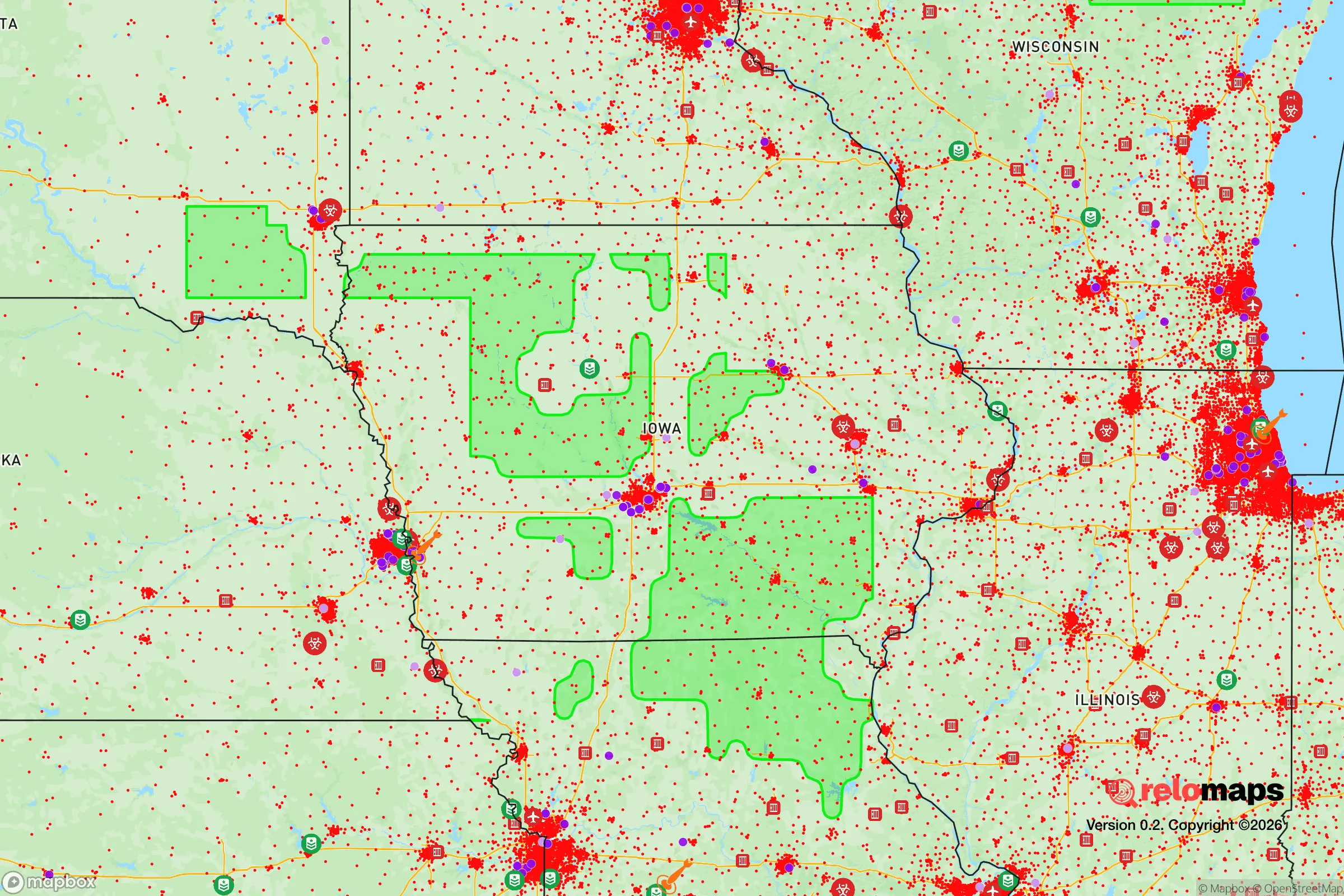
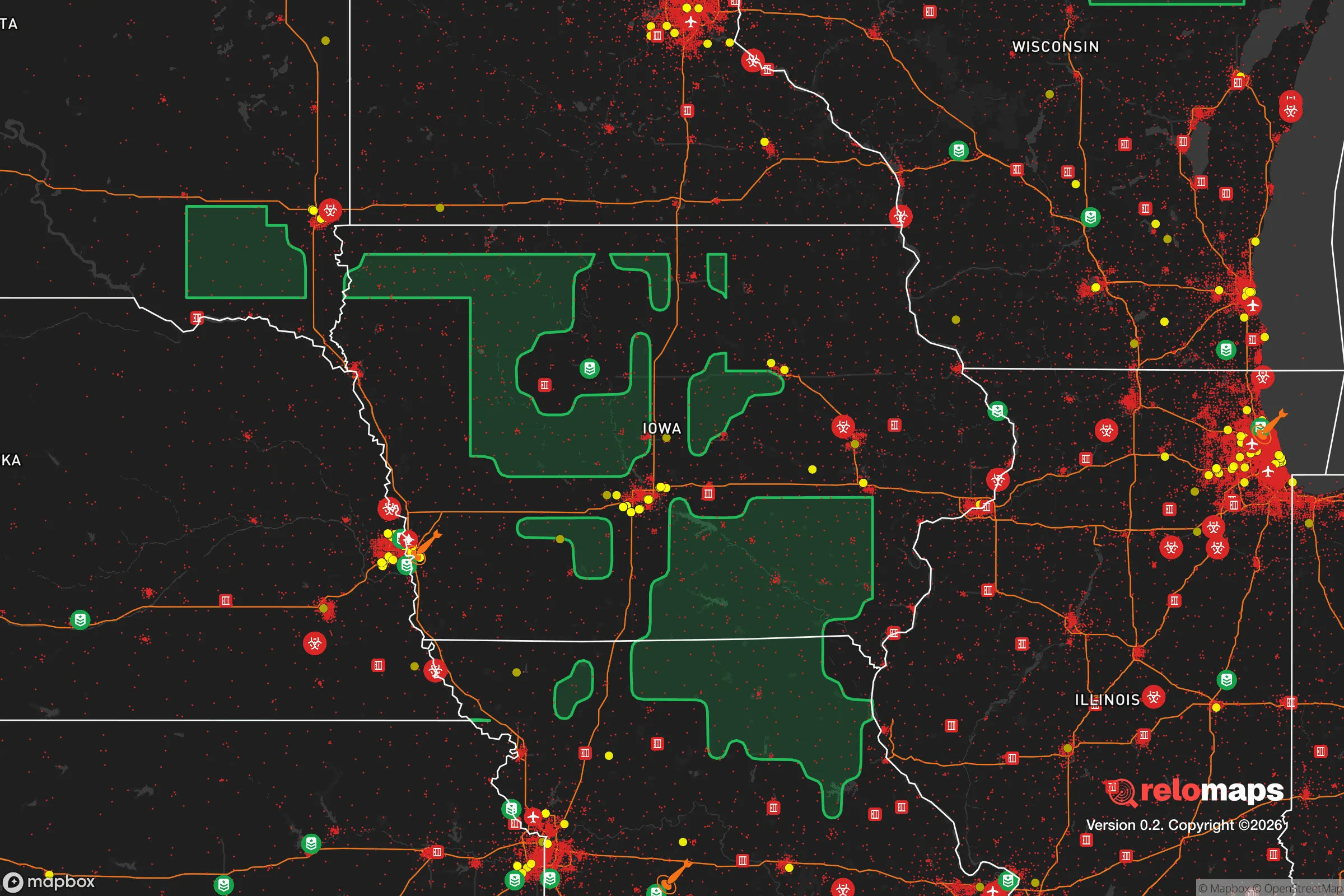


Important Note: For informational purposes only. This does not mean nothing bad ever happens in the green zones. Please use common sense. This is based on public data and modeled with AI. We tried to take a conservative approach but mistakes happen. We update this regularly as new information becomes available.
Solar Generator Recommendations
Backup power matters more here than in safer locations. We've picked three solar generators across budgets and capacity tiers — start with the budget unit if you only need a few essentials, or step up if you want to run a fridge and HVAC for days at a time.

Jackery Portable Power Station Explorer 300
Budget OptionPower on the Go: Weighing only 11 lbs, it's convenient to set up and store with book-sized foldable solar panels

BLUETTI Portable Power Station AC180
Designed for both indoor and outdoor scenarios, AC180 is highly capable as it has a robost capacity and continuous output power.

EF ECOFLOW DELTA Pro Ultra Power Station
Upgraded PickEcoFlow DELTA Pro Ultra is a whole-home energy system designed to grow with your family. Integrated with the Smart Home Panel 2, it scales to meet your evolving energy needs — keeping your home powered, intelligent, and secure through every stage of life.
We earn a commission, at no additional cost to you.
Strategic Assessment Analysis
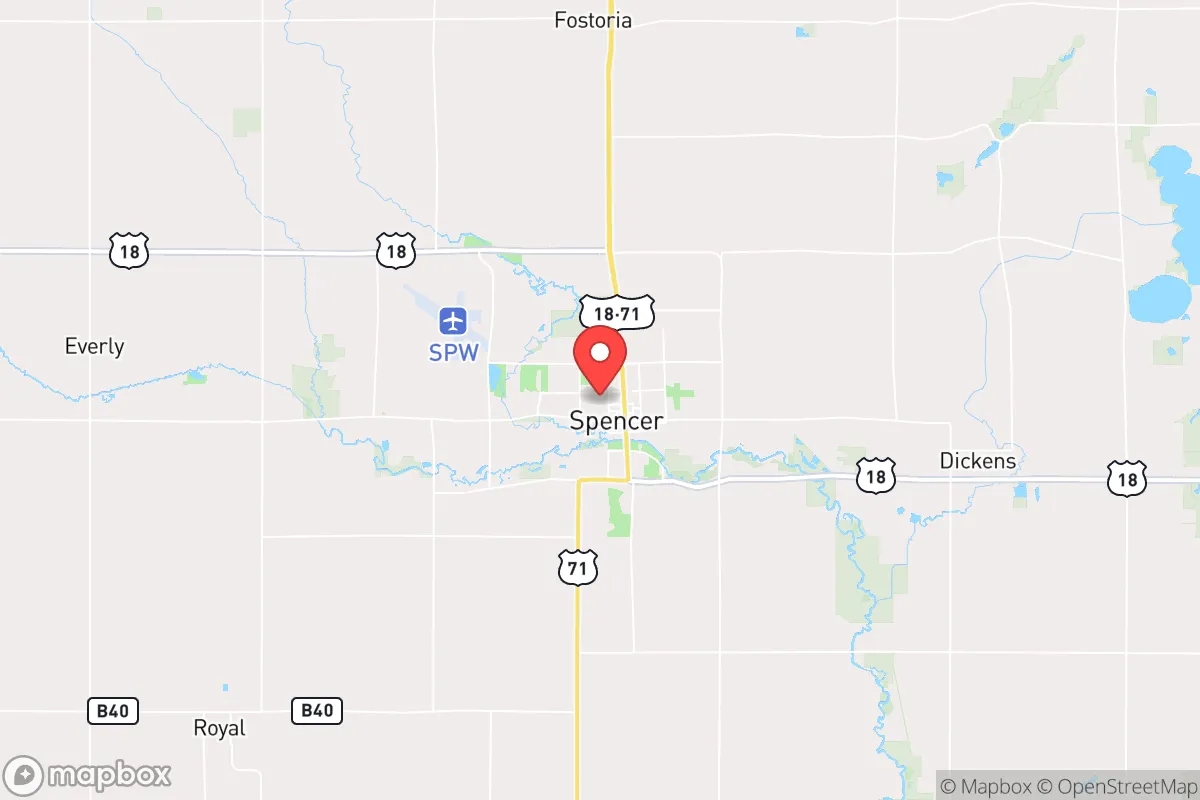
Spencer, Iowa, sits in the northwestern corner of the state, roughly 150 miles from Sioux Falls, 200 miles from Des Moines, and over 250 miles from Minneapolis. This distance from major population centers is its first and most significant strategic advantage. In a scenario of civic unrest, supply chain collapse, or a mass casualty event, being far from the urban core means being far from the primary vectors of chaos. Spencer’s resilience isn’t built on being a hardened bunker; it’s built on being a quiet, functional, and largely self-contained community that can ride out a storm without drawing attention. The town’s economy is anchored in agriculture, manufacturing, and a regional medical center, giving it a baseline of essential services and local food production that many suburbs simply lack.
Geographic position and natural advantages for long-term security
Spencer sits in the heart of the Iowa Great Lakes region, a fact that matters far more than tourism. The area is defined by the Little Sioux River and a chain of glacial lakes—Okoboji, Spirit Lake, and West Okoboji—within a 20-minute drive. For a relocator thinking about water security, this is a major plus. Surface water is abundant, and the local water table is high, meaning private wells are common and reliable. The terrain is flat to gently rolling, which is a double-edged sword: it’s excellent for agriculture and solar panel placement, but offers little natural cover or defensible high ground. The climate is classic Upper Midwest—cold, snowy winters and hot, humid summers—which imposes a natural filter on who will stay and who will leave during a prolonged crisis. The growing season is about 150 days, long enough for a serious garden, and the surrounding farmland is some of the most productive in the world. If you’re looking to be near a reliable food source, you’re in the right place.
Risks, exposures, and proximity to fallout-relevant landmarks
The primary risk in Spencer is not man-made but natural: tornadoes. Clay County sits in the heart of Tornado Alley, and the town was hit by a significant EF-2 tornado in 2022 that caused extensive damage. Any prepper plan here must include a reinforced safe room or basement. Flooding is a secondary concern, particularly along the Little Sioux River, but the town’s core is on higher ground. From a geopolitical and fallout perspective, Spencer’s location is a strong positive. The nearest major military installation is the Iowa Army Ammunition Plant in Middletown, over 250 miles southeast. There are no nuclear power plants within 100 miles—the closest is the Fort Calhoun plant near Omaha, roughly 150 miles southwest. The nearest major rail hub for hazardous materials is in Sioux City, about 90 miles south. In a worst-case scenario involving a nuclear exchange or a major industrial accident, Spencer is far enough from primary targets to avoid direct blast effects and likely outside the most dangerous fallout plumes. The risk is not zero, but it is significantly lower than for anyone living within 50 miles of a major city, military base, or critical infrastructure node.
Practical resilience for a relocator: food, water, energy, and defensibility
For a single individual or a family looking to establish a resilient household, Spencer offers a mix of advantages and trade-offs. Food security is excellent. The town has a strong farmers’ market, multiple grocery stores, and direct access to local producers of meat, eggs, and produce. The Clay County Fair, one of the largest in the state, is a hub for agricultural knowledge and networking. Water security is above average. Many homes in the surrounding rural areas have private wells, and the city’s municipal water comes from groundwater sources, not a single vulnerable reservoir. For energy, the local grid is served by the Midcontinent Independent System Operator (MISO), which has a mixed generation portfolio including wind, coal, and natural gas. The area has good wind resources, making small-scale wind or solar a viable backup. Natural gas is widely available in town, which is a plus for heating and cooking during a grid-down scenario. Defensibility is the weak point. The terrain is flat, and the town is laid out in a typical grid pattern with open fields on the outskirts. There are no natural chokepoints or high ground. A determined group could approach from any direction. The local law enforcement presence is adequate for normal times—the Clay County Sheriff’s Office and Spencer Police Department are professional—but in a widespread collapse, the town would rely on its own residents for security. The good news is that Spencer has a strong hunting and gun culture, and the local sheriff’s office is known for being supportive of Second Amendment rights. Medical resilience is a standout feature. Spencer Hospital is a 25-bed critical access hospital with a Level IV trauma center, and there are multiple clinics and a regional mental health center. For a town of its size (roughly 11,000 people), that’s a serious asset. If you or a family member has a chronic condition or needs regular care, this is far better than being an hour from the nearest ER.
The overall strategic picture for Spencer is one of quiet, unglamorous stability. It is not a prepper’s paradise with mountains, caves, and a militia. It is a working-class farm town with good soil, abundant water, decent medical infrastructure, and a population that largely shares conservative values of self-reliance and community mutual aid. The biggest vulnerability is its flat, open geography and its reliance on a single regional economy. If the agricultural sector collapses, Spencer will feel it. But for someone looking to get out of a dense, politically volatile urban area and into a place where you can actually grow food, store supplies, and know your neighbors, Spencer is a solid, low-profile choice. It’s not flashy, and it won’t make you feel like a survivalist hero. But in a crisis, boring is often the best strategy.

* Values derived from national, state, county, city and local statistics and may differ in a specific area. Last updated: 2026-04-29T20:59:17.000Z
Narrative content on this page is AI-generated and may contain mistakes. Verify any details that matter before acting on them.
ReloMaps may earn a commission from affiliate links at no extra cost to you.

