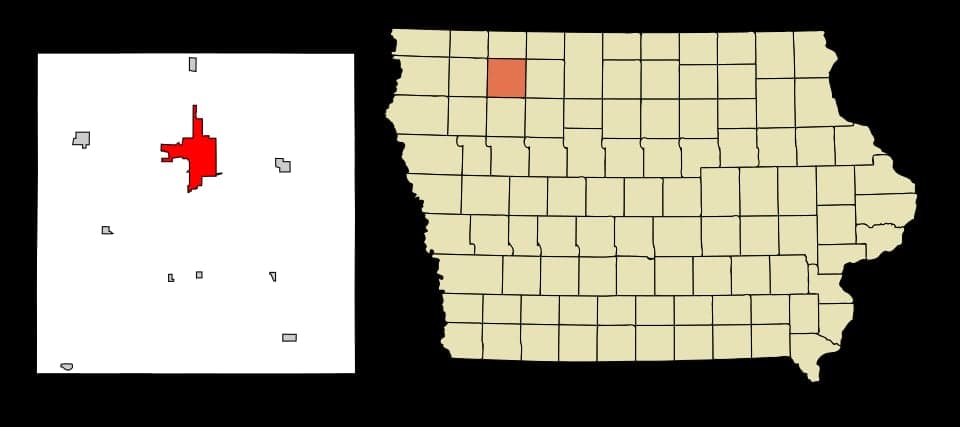
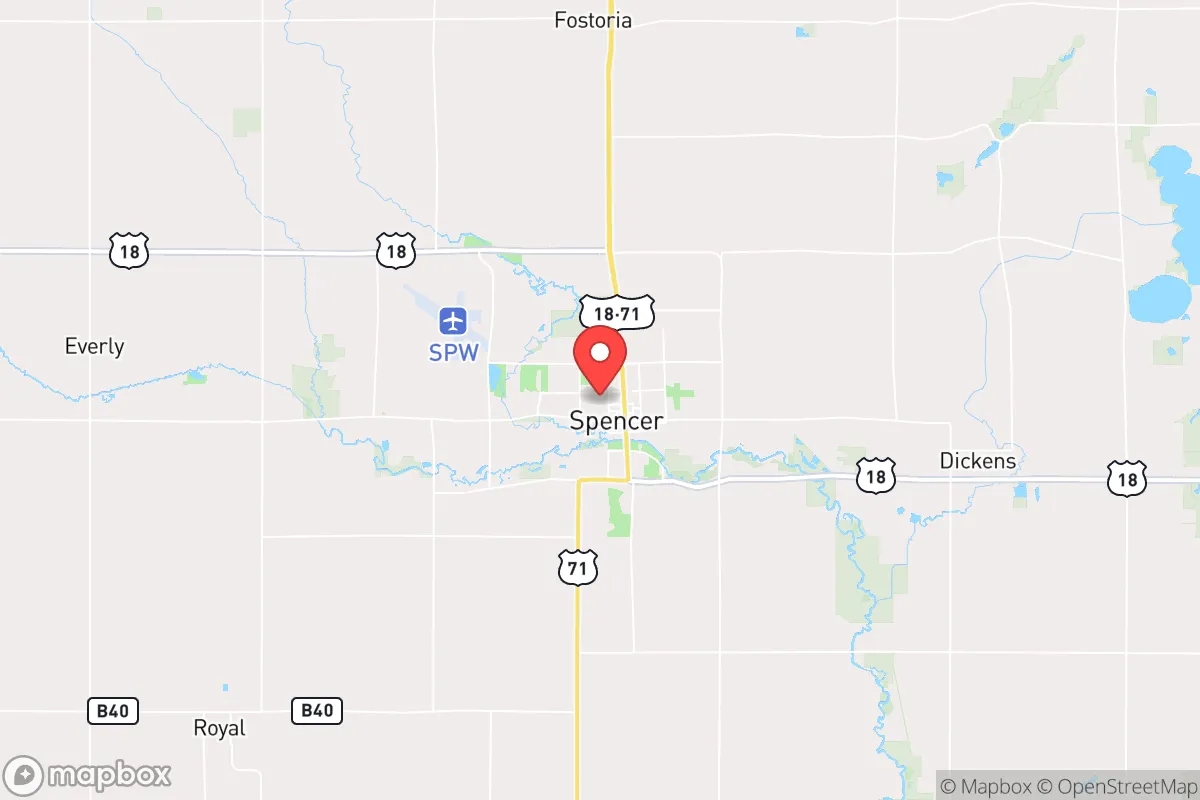
Photo: Wikipedia
Political ClimatePolitical Climate in Spencer, IA
District shown is the primary district for this city’s centroid. Cities may span multiple districts.
Local Political AnalysisPolitical Analysis of Spencer, IA
Spencer, Iowa, sits solidly in conservative territory, with a Cook PVI of R+15 that reflects a deep-rooted preference for limited government and traditional values. This isn't a purple area that flips back and forth; it's a place where folks have consistently voted for smaller government and local control, and that's held true for as long as I can remember. The political lean here is stable, but like anywhere, you can feel the undercurrents of change, and it's worth keeping an eye on how those pressures might shift things in the next decade.
How it compares
When you look at Spencer against its neighbors, the contrast is pretty telling. Head east to places like Okoboji or Spirit Lake, and you'll see a more mixed bag—those lake towns attract a lot of seasonal residents and retirees from bigger cities, so they tend to lean a bit more purple, especially in local races. But Spencer? It's the real heart of the region, and it votes like it. Compared to the Des Moines metro, which has drifted leftward in recent years, Spencer is a stronghold of common-sense conservatism. The surrounding counties—Clay, Dickinson, and Osceola—all vote similarly, but Spencer itself is the anchor. You won't find the same kind of progressive activism here that you might in Ames or Iowa City, and that's a relief for a lot of us who worry about government overreach into our personal freedoms and rights.
What this means for residents
For the people living here, the political climate means a few concrete things. First, you can expect a local government that's generally hands-off when it comes to things like property rights, business regulations, and school curriculum. The city council and county supervisors are overwhelmingly conservative, so there's less appetite for new mandates or zoning rules that tell you what you can do with your own land. Second, it means your tax dollars are spent more cautiously—Spencer isn't the kind of place that jumps into big public projects without a fight. That said, there's a growing concern among long-time residents about the slow creep of progressive ideology, especially in the schools and through state-level policies. We've seen some push for diversity initiatives and social-emotional learning programs that feel like a step away from the basics, and that's got folks watching closely. If that trend accelerates, you might see more families looking at private or homeschool options, which would be a real shame for the community.
Culturally, Spencer still holds onto its rural, self-reliant character. The county fair, the local churches, and the hunting seasons are bigger deals than any political rally. There's a strong sense that your neighbor's business is their own, and that's a value that's getting harder to find. The biggest policy distinction here is the near-universal support for the Second Amendment and a general skepticism of any new state or federal regulations on firearms or land use. If you're looking for a place where you can live your life without a lot of bureaucratic interference, Spencer is still that place—but you've got to be willing to keep an eye on the school board meetings and city council agendas, because the fight to keep it that way is ongoing. I'd say we're holding the line for now, but the next five years will tell the real story.

State Political ClimatePolitical Climate in Iowa
State Political AnalysisPolitical Environment in the State
Iowa has long been a reliably Republican state in presidential elections, voting for the GOP candidate in seven of the last eight cycles, but its internal politics are more nuanced than the simple red-state label suggests. The state’s overall partisan lean is roughly R+6 to R+8, driven by a coalition of rural conservatives, evangelical Christians, and a growing number of exurban and small-town families fleeing left-leaning metros. Over the last 20 years, Iowa has shifted rightward on cultural and economic issues, though a persistent Democratic stronghold in a few urban counties keeps the state from being a deep-red lock.
Urban vs. rural divide
The political map of Iowa is a textbook case of the urban-rural split. The Democratic vote is concentrated in three main metro areas: Des Moines (Polk County), Iowa City (Johnson County), and the Quad Cities (Scott County). Polk County, home to the state capital, has trended blue in recent cycles, voting for Biden by 18 points in 2020. Johnson County, anchored by the University of Iowa, is the bluest county in the state, with Biden winning by 38 points. Meanwhile, the vast rural expanse—counties like Sioux, Plymouth, and Lyon in the northwest—routinely deliver 70-80% Republican margins. The real battlegrounds are the suburban and exurban counties surrounding Des Moines, such as Dallas and Warren counties, which have flipped from purple to solid red over the past decade. Dallas County, for instance, voted for Romney by 2 points in 2012 but for Trump by 12 points in 2020, reflecting the influx of conservative families seeking lower taxes and better schools.
Policy environment
Iowa’s policy environment is among the most conservative in the Midwest, with a strong emphasis on limited government and individual liberty. The state has a flat income tax rate of 3.8% (phasing down to 3.5% by 2027), and property taxes are relatively low compared to neighboring states like Illinois and Minnesota. The regulatory posture is business-friendly, with no state-level minimum wage above the federal $7.25 and a right-to-work law that has been in place since 1947. On education, Iowa passed a universal school choice program in 2023, allowing any family to use state funds for private or homeschool expenses—a major win for parental rights. Healthcare policy is mixed: the state expanded Medicaid under the Affordable Care Act, but has also imposed work requirements for able-bodied adults. Election laws have tightened since 2020, with a voter ID requirement, reduced early voting days, and a ban on ballot drop boxes, all aimed at election integrity. The state also has a constitutional carry law for firearms, passed in 2021, meaning no permit is needed to carry a concealed weapon.
Trajectory & freedom
Iowa is moving decisively toward greater personal freedom, particularly on gun rights, parental rights, and tax relief. The 2021 constitutional carry law (SF 258) eliminated the need for a permit to carry a concealed firearm, and the state also passed a “stand your ground” law in 2022. On parental rights, the 2023 “Students’ First” law (HF 68) banned instruction on sexual orientation and gender identity in K-6 classrooms and required schools to notify parents of any changes in a child’s mental or physical health. The state also passed a six-week abortion ban in 2023 (HF 732), which was upheld by the Iowa Supreme Court in 2024, effectively ending most abortions in the state. On the economic freedom front, the 2022 tax reform bill (SF 619) accelerated the move to a flat income tax and eliminated the inheritance tax. However, there are concerns about government overreach in the form of a state-level “emergency powers” law that gave the governor broad authority during COVID, though that law has since been scaled back. Overall, the trajectory is toward more liberty, but residents should watch for any future attempts to expand state power in the name of public health or safety.
Civil unrest & political movements
Iowa has seen relatively little civil unrest compared to coastal states, but there have been notable flashpoints. The 2020 Black Lives Matter protests in Des Moines and Iowa City were largely peaceful, though a few instances of property damage occurred. The state has seen a rise in organized conservative activism, particularly around school board meetings and library boards, where parents have pushed back against explicit books and critical race theory. The immigration debate is less heated than in border states, but Storm Lake and Postville have become hubs for meatpacking plant workers, leading to tensions over housing and public services. There is no sanctuary city policy in Iowa; in fact, a 2018 law (SF 481) requires local law enforcement to cooperate with federal immigration authorities. Election integrity has been a hot topic since 2020, with the state’s Republican Secretary of State conducting a post-election audit that found no widespread fraud, but the new voting restrictions have been controversial among Democrats. A new resident would notice a general sense of political civility in daily life, but the divide between urban and rural areas is palpable in conversations about COVID mandates, education, and abortion.
Projection
Over the next 5-10 years, Iowa is likely to become more conservative, driven by two demographic trends: the continued exodus of liberal-leaning young adults from rural areas to coastal cities, and the influx of conservative families from high-tax states like Illinois and California. The Des Moines suburbs—places like Ankeny, Waukee, and Johnston—are growing rapidly and are already reliably Republican. The state’s population is aging, which tends to favor conservative policies on taxes and social issues. However, the University of Iowa and Iowa State University in Ames will continue to be liberal enclaves, and the state’s growing Hispanic population (now about 7% of the total) could shift some rural areas toward the center. The biggest wildcard is the state’s agricultural economy: if trade wars or climate policies hurt farm incomes, the GOP could face backlash. Realistically, someone moving to Iowa now should expect a state that is solidly red on most issues, with a strong culture of self-reliance and limited government, but with pockets of blue in the college towns and Des Moines proper.
For a new resident, the bottom line is this: Iowa offers a high degree of personal freedom, low taxes, and a political environment that respects parental rights and gun ownership. The state is not without its political tensions—the urban-rural divide is real, and the culture wars over education and abortion are ongoing—but the overall trajectory is toward more liberty, not less. If you value a place where your vote counts, your voice is heard, and the government stays out of your business, Iowa is a solid bet. Just be prepared for cold winters and even colder conversations about corn prices.
* Values derived from national, state, county, city and local statistics and may differ in a specific area. Last updated: 2026-04-29T20:59:17.000Z
Narrative content on this page is AI-generated and may contain mistakes. Verify any details that matter before acting on them.
ReloMaps may earn a commission from affiliate links at no extra cost to you.

