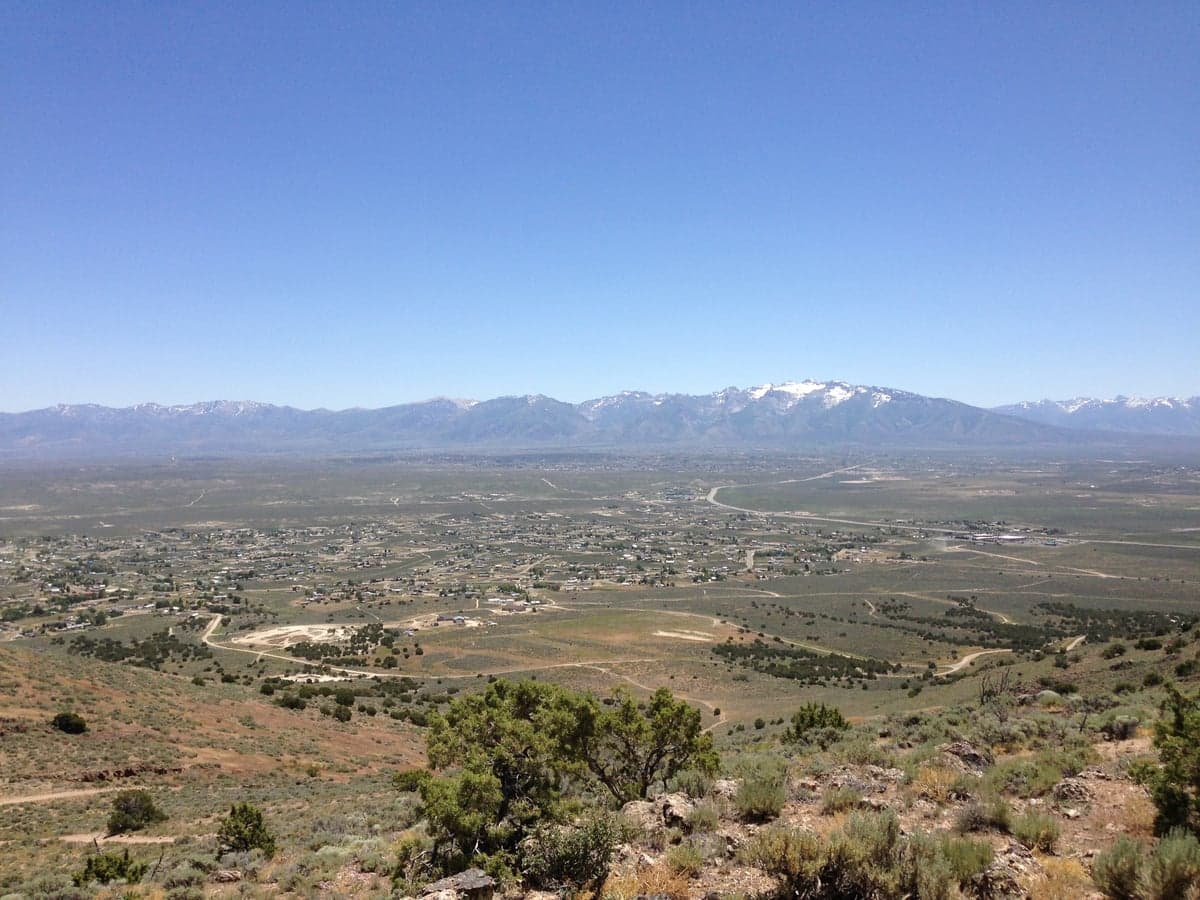
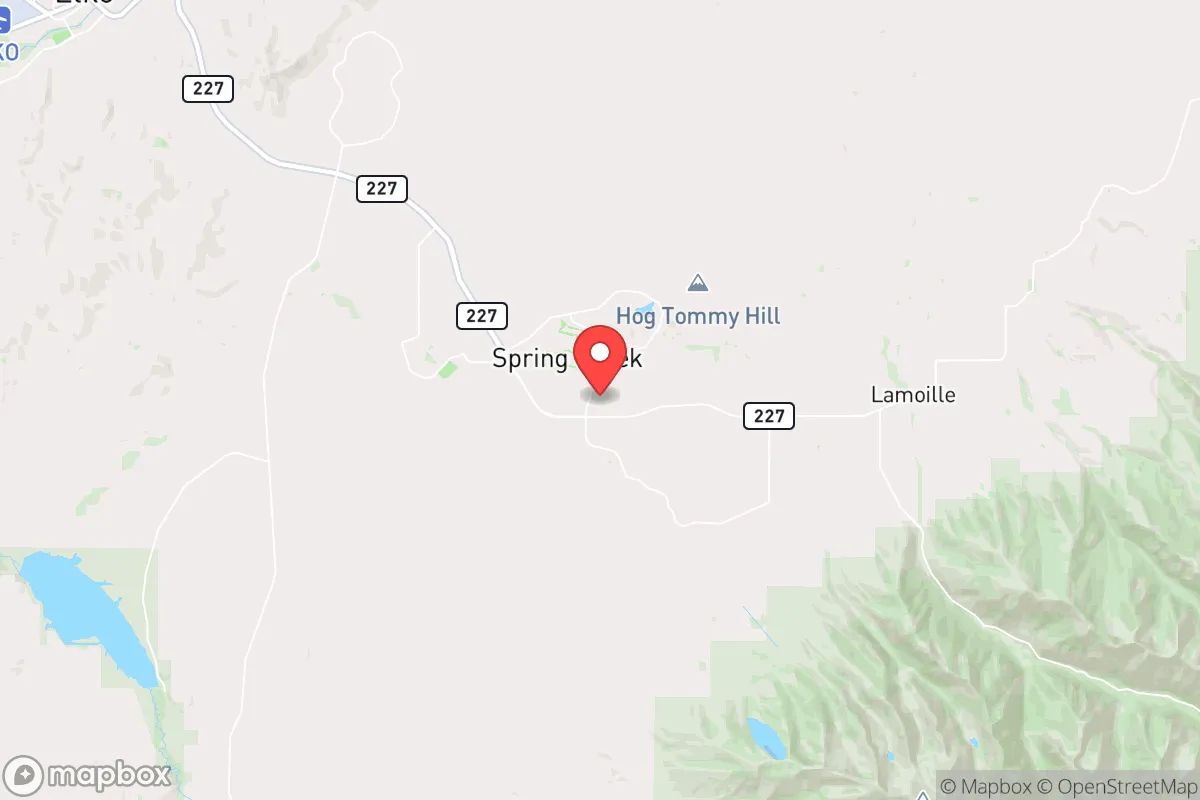
Photo: Wikipedia
Political ClimatePolitical Climate in Spring Creek, NV
District shown is the primary district for this city’s centroid. Cities may span multiple districts.
Local Political AnalysisPolitical Analysis of Spring Creek, NV
Spring Creek, Nevada, has long been a solidly conservative community, and that hasn't changed much despite some national trends. The area's Cook Partisan Voting Index of R+7 tells the real story—this isn't a purple town or a swing district; it's a place where traditional values and limited-government thinking are still the default. If you look at the voting patterns over the last few cycles, Spring Creek and the surrounding Elko County consistently turn out for candidates who prioritize local control, Second Amendment rights, and economic freedom. The political trajectory here is stable, but there's a growing unease among long-time residents about outside influences creeping in from the more progressive pockets of the state, like Reno or Las Vegas.
How it compares
To really understand Spring Creek's political climate, you have to look at the contrast with other parts of Nevada. Elko itself, just a few miles west, is also conservative but has a more transient population tied to the mining industry, which can dilute some of the long-term cultural consistency. Compare that to a place like Reno, which has swung left in recent years thanks to an influx of Californians and tech workers—it's a different world. Spring Creek feels more insulated, more like a rural stronghold where people still know their neighbors and expect the government to stay out of their business. The R+7 rating puts it in line with other conservative rural counties in the Intermountain West, but it's worth noting that even within Elko County, Spring Creek tends to vote a bit more reliably red than the county seat itself. That's a point of pride for folks here, who see it as a sign that the community hasn't been swayed by the progressive messaging that's taken hold in urban centers.
What this means for residents
For someone living in Spring Creek, the political climate directly shapes daily life in ways that matter. You're not going to see the kind of government overreach that's become common in blue states—no heavy-handed mandates on businesses, no erosion of property rights, and no nonsense with the Second Amendment. The local school board and county commission are still run by people who understand that parents, not bureaucrats, should have the final say in how kids are raised and educated. That said, there's a real concern among residents that the state legislature in Carson City is getting more aggressive with bills that chip away at local autonomy. If you're thinking of moving here, you'll find a community that's vigilant about protecting its freedoms, but you'll also need to be aware that the fight to keep outside influence at bay is ongoing. The long-term outlook depends on whether Spring Creek can hold the line as Nevada's population grows and shifts.
One cultural distinction that sets Spring Creek apart is its strong sense of self-reliance and distrust of distant authority. You won't find the kind of progressive social experiments that have popped up in places like Washoe County or Clark County—no defund the police movements, no radical zoning changes, no attempts to restrict energy development. The local economy is built on mining and ranching, industries that thrive when government stays out of the way. If there's a red flag to watch, it's the slow trickle of new residents from states like California who might bring different political habits. But for now, Spring Creek remains a place where a conservative worldview isn't just tolerated—it's expected. That's the kind of stability that keeps people here for generations.

State Political ClimatePolitical Climate in Nevada
State Political AnalysisPolitical Environment in the State
Nevada is a classic swing state with a libertarian streak, but over the past 20 years it has shifted from a reliably red-leaning battleground to a blue-leaning one, driven almost entirely by the explosive growth of the Las Vegas metro area. The state’s overall partisan lean is now a narrow Democratic tilt at the presidential level—Biden won it by just 2.4 points in 2020—but Republicans hold the governor’s mansion and control the state senate, creating a divided government that often frustrates both sides. For a conservative considering relocation, the key takeaway is that Nevada’s political future is being written by the tens of thousands of new arrivals each year, and the direction of that writing depends heavily on where you land within the state.
Urban vs. rural divide
The political map of Nevada is a tale of two extremes. The Las Vegas metropolitan area, anchored by Clark County, is home to nearly three-quarters of the state’s population and votes reliably Democratic. Within Clark, the city of Las Vegas itself is heavily blue, while suburbs like Henderson and North Las Vegas have trended leftward over the past decade, though Henderson still has pockets of conservative voters. The Reno-Sparks area in Washoe County is the second population center and has become a true swing region—it voted for Obama twice, then Trump in 2016, then Biden in 2020, making it the state’s most competitive battleground. Outside these two urban islands, rural Nevada is overwhelmingly Republican. Counties like Elko, Nye, and White Pine routinely vote 70-80% for GOP candidates. The town of Elko in particular is a conservative stronghold, driven by mining and ranching economies. The divide is so stark that in 2020, Trump won 15 of Nevada’s 17 counties but still lost the state because Clark County’s margin was too large to overcome.
Policy environment
Nevada’s policy environment is a mixed bag for conservatives. On the plus side, the state has no personal income tax, which is a major draw for high earners and retirees. The sales tax is moderate (around 8.25% in Clark County), and property taxes are capped by law at 3% annual increases, providing predictability. However, the state’s regulatory posture has grown more progressive in recent years. In 2019, the legislature passed a red flag law (SB 143) allowing courts to temporarily seize firearms from individuals deemed a risk, which gun rights advocates view as a due process violation. Education policy is a sore spot: Nevada consistently ranks near the bottom nationally in K-12 outcomes, and the state’s school choice options are limited compared to Arizona or Florida. The 2023 legislature expanded Medicaid eligibility and codified abortion access into state law, moves that align with progressive priorities. Election laws are relatively accessible—same-day voter registration and no-excuse mail-in voting were made permanent after the pandemic, which conservatives argue weakens ballot integrity.
Trajectory & freedom
Nevada’s trajectory on personal freedom is a tug-of-war. On the positive side, the state remains a Second Amendment sanctuary in practice, with most rural counties passing resolutions against state gun laws. The 2021 passage of AB 286, which created a state-run retirement savings program for private-sector workers, was seen by many as an overreach into personal financial decisions. More concerning for conservatives is the 2023 “parental rights” battle over AB 375, which required schools to adopt policies for notifying parents about students’ mental health and gender identity—the bill failed after heavy opposition from teachers’ unions and LGBTQ advocacy groups. On medical freedom, Nevada did not impose broad vaccine mandates during COVID, but the state did require masks in public indoor spaces longer than most of its neighbors. Property rights are generally strong, with no statewide rent control, though Clark County has considered local measures. The biggest freedom concern is the state’s tax burden on businesses: the Commerce Tax, enacted in 2015, imposes a gross receipts tax on companies with over $4 million in revenue, which critics say discourages small business growth.
Civil unrest & political movements
Nevada has seen its share of political flashpoints. The 2020 election integrity controversy was intense here, with the Trump campaign challenging Clark County’s mail-in ballot process and the state supreme court ultimately upholding the results. The “Stop the Steal” rally at the Nevada State Capitol in Carson City in November 2020 drew thousands, and the building was briefly evacuated after a pipe bomb threat. On the left, the 2020 Black Lives Matter protests in Las Vegas turned violent on several nights, with looting on the Strip and clashes with police. Immigration politics are a constant undercurrent: Nevada has a sanctuary state law (AB 286, 2019) that limits local law enforcement cooperation with federal immigration authorities, a policy that many conservatives view as a magnet for illegal immigration. The “rural secession” movement has gained traction in counties like Nye and Elko, where residents have floated the idea of forming a separate state called “New Nevada” to escape Clark County’s dominance. While not serious legislatively, it reflects deep frustration among rural conservatives.
Projection
Over the next 5-10 years, Nevada is likely to continue its slow drift leftward at the state level, driven by continued in-migration to Las Vegas from California and other blue states. The 2024 election will be a key test: if Democrats hold the presidency and flip the state senate, expect a wave of progressive legislation on gun control, taxes, and education. However, the Reno-Sparks area is growing fast with tech and logistics workers, many of whom are moderate or conservative-leaning, which could keep Washoe County competitive. The wild card is rural growth: towns like Pahrump and Fernley are attracting Californians fleeing high costs, and if those newcomers lean right, it could offset some of Clark County’s blue tide. For a conservative moving in now, expect to live in a state where your vote matters at the presidential level but where state policy will likely become more progressive, especially on social issues. The best bet for a conservative-friendly environment is to settle in a rural county or the conservative suburbs of Reno, where local governance remains more aligned with traditional values.
Bottom line: Nevada offers a low-tax, relatively free environment for those who can navigate its urban-rural split. If you’re a conservative who values no income tax and strong property rights, the state is still a solid choice—but you’ll need to be politically active to prevent the Las Vegas machine from driving the state further left. Pick your county carefully, and expect to fight for the freedom you want to keep.
* Values derived from national, state, county, city and local statistics and may differ in a specific area. Last updated: 2026-05-02T04:19:49.000Z
Narrative content on this page is AI-generated and may contain mistakes. Verify any details that matter before acting on them.
ReloMaps may earn a commission from affiliate links at no extra cost to you.

