Photo: Wikipedia
Demographics of Spring Creek, NV
Affluence Level in Spring Creek, NV
A middle-class area roughly in line with national averages across income, home values, education, and employment.
People of Spring Creek, NV
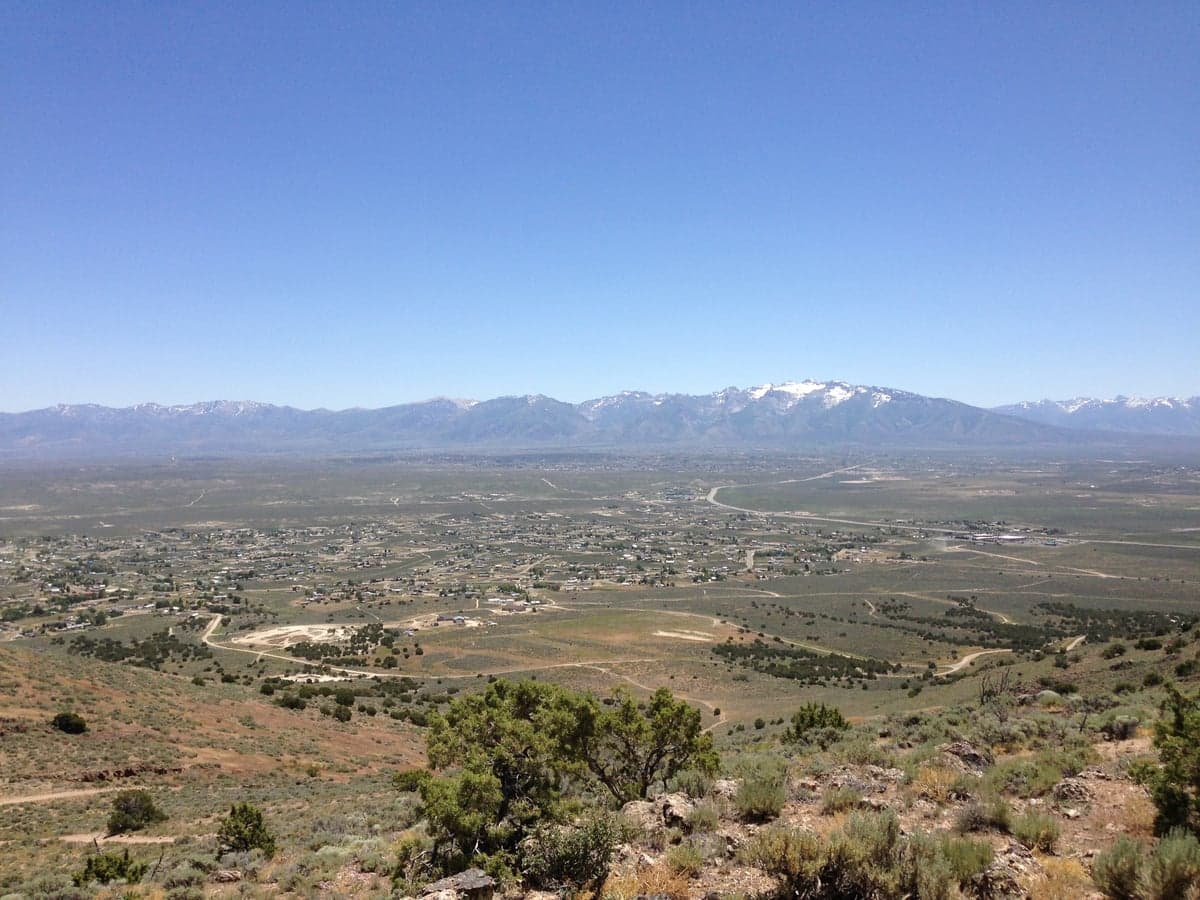
Spring Creek, Nevada, is a predominantly white, family-oriented community of nearly 15,000 residents, characterized by its low density and strong ties to the mining and energy industries. With a foreign-born population of just 1.4% and a Hispanic share of 9.8%, the city remains one of the most ethnically homogeneous in Elko County. Its identity is shaped by a history of resource extraction and a deliberate, planned suburban expansion that attracted working-class families seeking affordable housing and rural lifestyles.
How the city was settled and grew
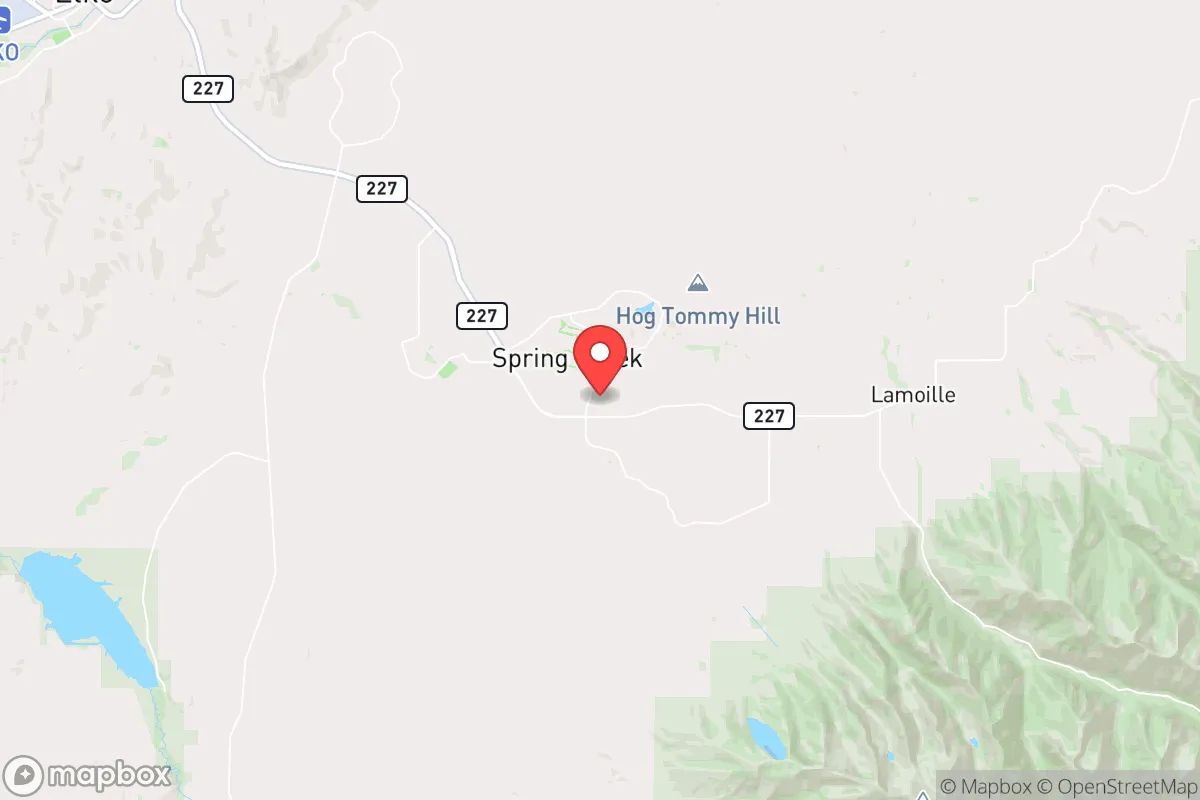
Spring Creek did not exist as a settlement until the late 20th century. Unlike older Nevada towns that grew around mining camps or railroad stops, Spring Creek was a master-planned community, conceived in the 1970s as a bedroom suburb for Elko, the county seat 12 miles west. The land was originally part of the vast open range used by Basque and Anglo sheep and cattle ranchers, but no permanent population cluster existed here before 1970. The first wave of residents arrived in the mid-1970s, drawn by jobs at the nearby Carlin and Jerritt Canyon gold mines, which boomed after the 1973 oil crisis drove up gold prices. These early settlers were overwhelmingly white, blue-collar workers—many from the Midwest and Mountain West—who built homes in the Spring Creek Village core, the original planned neighborhood centered around the golf course and community center. A second wave came in the 1980s and 1990s as the mining industry expanded, filling out Stone Ridge and Mountain View Estates, neighborhoods that offered larger lots and newer construction. No significant immigrant or minority populations settled during this period; the community remained nearly all-white through the 1990 census.
Modern era (post-1965)
The post-1965 immigration reforms that reshaped many Western cities had almost no impact on Spring Creek. The city’s foreign-born share of 1.4% is among the lowest in Nevada, and the Hispanic population—9.8%—is concentrated almost entirely in the El Rancho Springs subdivision, a newer development on the southern edge of town built in the 2000s. This Hispanic cohort is largely composed of second- and third-generation families from northern Nevada and Idaho, not recent immigrants; many work in mining support services or construction. East/Southeast Asian residents (0.7%) and Indian-subcontinent residents (0.1%) are scattered thinly across Willow Creek and Pine View neighborhoods, often as professionals in mining engineering or healthcare at Northeastern Nevada Regional Hospital in Elko. The Black population (0.1%) is negligible. The most notable demographic shift since 2000 has been the aging of the white population: the median age has risen to 38.7, and the share of residents over 65 has grown to 16%, as the original mining families retire in place. College-educated residents (23.1%) are below the national average, reflecting the community’s working-class roots, though Stone Ridge has a slightly higher share of degree-holders due to its appeal to mine managers and engineers.
The future
Spring Creek’s population is projected to grow slowly, at roughly 0.5–1% annually, driven by natural increase and limited in-migration from other Western states. The city is not homogenizing further—it is already nearly as homogeneous as a Nevada community can be—but it is tribalizing into distinct enclaves by age and income. Spring Creek Village is becoming a retirement corridor, with older residents aging in place, while El Rancho Springs is emerging as a younger, more family-oriented area with a slightly higher Hispanic share. The Hispanic population is plateauing, not surging, as the mining industry’s labor demand stabilizes. East/Southeast Asian and Indian communities are likely to remain tiny, as the area lacks the professional job base or university presence that attracts these groups to Reno or Las Vegas. The next decade will see continued white dominance, a modest uptick in Hispanic families moving from Elko for cheaper housing, and no significant foreign-born growth. The city will remain a quiet, low-diversity exurb where mining cycles dictate economic and demographic stability.
For a conservative-leaning mover seeking a safe, affordable, and demographically stable community, Spring Creek offers a rare combination of low crime, strong schools, and minimal cultural flux. It is not a place of rapid change or diversity—it is a place where the population is settled, aging, and deeply rooted in the mining economy. New arrivals will find a community that looks and feels much as it did in the 1990s, with the same values and the same quiet pace of life.

* Values derived from national, state, county, city and local statistics and may differ in a specific area. Last updated: 2026-05-02T04:19:49.000Z
Narrative content on this page is AI-generated and may contain mistakes. Verify any details that matter before acting on them.
ReloMaps may earn a commission from affiliate links at no extra cost to you.

