Demographics of St Anthony, ID
Affluence Level in St Anthony, ID
A below-average socioeconomic profile. Incomes, home values, and educational attainment trail the U.S., with higher poverty and unemployment.
People of St Anthony, ID
The people of St. Anthony, Idaho, today number 3,818, forming a predominantly white (69.7%) and Hispanic (20.0%) community with a notably low foreign-born share of 3.1%. The city retains a small-town, agricultural character, with a median age slightly older than the national average and a college-educated rate of just 11.3%, reflecting a workforce rooted in farming, food processing, and local services. Distinctive identity markers include a strong Latter-day Saint (Mormon) cultural influence, a quiet independence from the nearby college town of Rexburg, and a population that is both stable and slowly diversifying along ethnic lines.
How the city was settled and grew
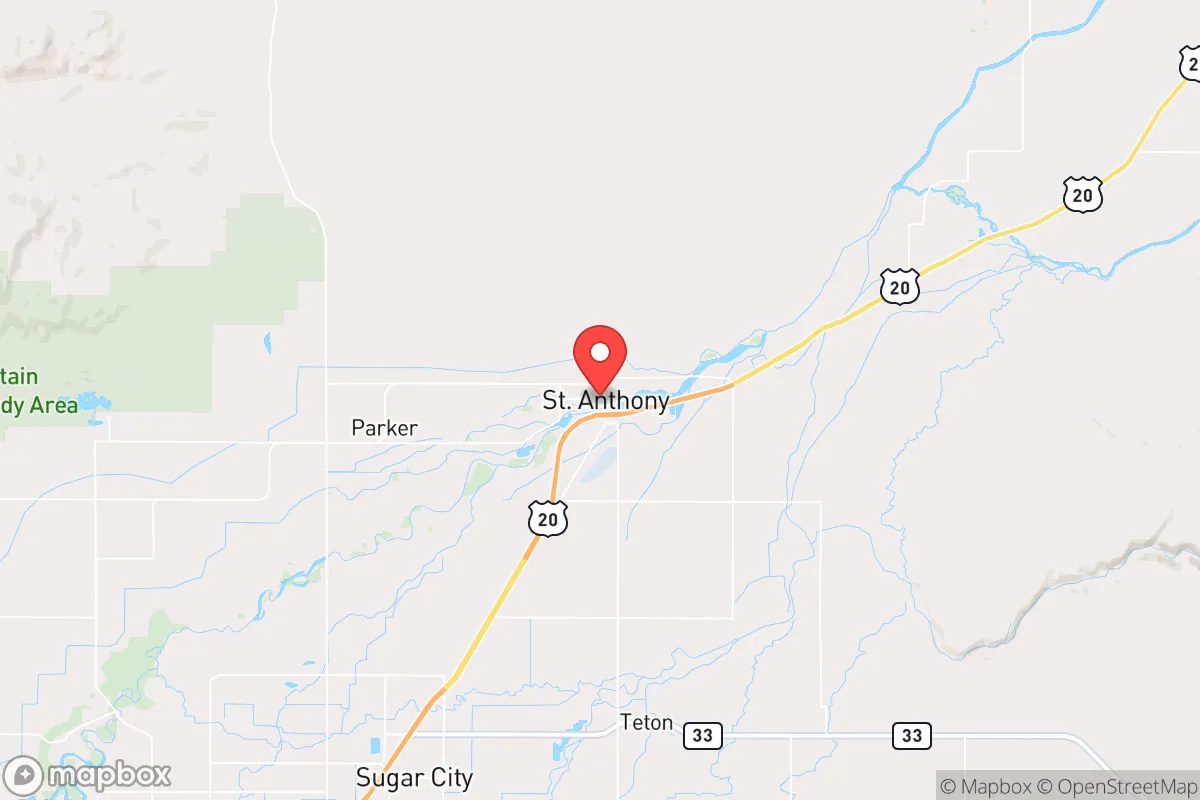
St. Anthony was founded in the 1880s as a Mormon agricultural colony, part of the broader LDS settlement pattern across the Upper Snake River Valley. The original settlers were predominantly Anglo-American converts from the Midwest and Utah, drawn by church-organized irrigation projects and the promise of fertile farmland along the Henrys Fork of the Snake River. The city was named after a local LDS bishop, Anthony W. Ivins, and grew slowly as a service center for surrounding farms. The historic Downtown St. Anthony district, centered on Main Street, was built by these early Mormon families, with many original brick storefronts and the Fremont County Courthouse dating from this era. A second wave arrived in the early 1900s, including a small number of Basque sheepherders and Italian railroad workers, who settled in the South Side neighborhood near the railroad depot. By 1950, the population was nearly entirely white and native-born, with a strong LDS majority shaping local politics and social life.
Modern era (post-1965)
After the 1965 Immigration and Nationality Act, St. Anthony saw minimal direct immigration from new source countries, but the region experienced a significant influx of Hispanic laborers beginning in the 1980s. These workers came primarily from rural Mexico and Central America, drawn by year-round jobs in potato processing plants (notably the Lamb Weston facility in nearby Rexburg) and seasonal agricultural work in sugar beets, wheat, and alfalfa. The Hispanic population concentrated in the West End neighborhood, a modest area of older homes and rental duplexes west of the railroad tracks, and in the Riverbend subdivision, a newer development of manufactured homes and small single-family houses built in the 1990s. Today, Hispanic residents make up 20.0% of the city’s population, with many families now in their second or third generation, though the foreign-born share remains low at 3.1%. The white population, while still the majority at 69.7%, has aged and declined slightly as younger adults move to larger cities like Idaho Falls or Boise for professional jobs. The Black (0.2%) and East/Southeast Asian (0.2%) populations are negligible, with no Indian subcontinent community recorded. The college-educated share of 11.3% is well below the national average, reflecting the area’s blue-collar and agricultural economic base.
The future
Demographic projections suggest St. Anthony will continue to homogenize along ethnic lines, with the Hispanic share slowly rising through natural increase and continued in-migration for agricultural work, while the white share gradually declines. The city is not tribalizing into distinct enclaves—Hispanic and white families live intermingled in the West End and Riverbend areas—but socioeconomic divides persist, with newer Hispanic arrivals often renting in older housing stock while established white families own homes in the East Bench neighborhood, a higher-elevation area with larger lots and newer construction. The immigrant community is plateauing rather than growing rapidly, as the foreign-born share (3.1%) has remained flat for a decade. The next 10-20 years will likely see the city remain a stable, low-cost bedroom community for Rexburg and Idaho Falls, with a slowly diversifying but still predominantly white and LDS population. The college-educated rate may rise modestly as remote work expands, but the city’s economic anchor in agriculture and processing will keep educational attainment below state averages.
For someone moving in now, St. Anthony offers a quiet, affordable, and culturally conservative environment with a strong sense of local identity. The population is becoming slightly more Hispanic but remains overwhelmingly native-born and English-speaking, with a social fabric shaped by LDS church activity and agricultural rhythms. New residents should expect a community that values self-reliance, neighborliness, and a slower pace of life, with limited ethnic diversity beyond the Hispanic minority.

* Values derived from national, state, county, city and local statistics and may differ in a specific area. Last updated: 2026-05-01T13:05:44.000Z
Narrative content on this page is AI-generated and may contain mistakes. Verify any details that matter before acting on them.
ReloMaps may earn a commission from affiliate links at no extra cost to you.

