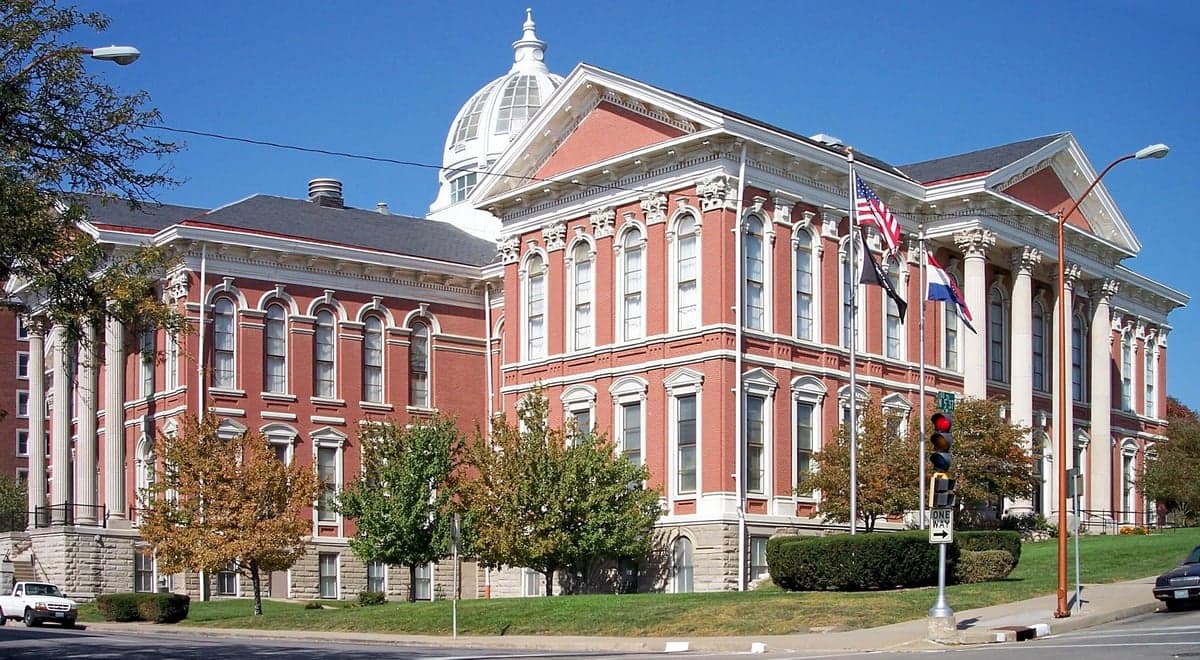
Photo: Wikipedia
Strategic Assessment of St Joseph, MO
Meaningful friction. Expect exposure to either population pressure, blast zones, or natural disaster risk. Consider buying a retreat property.
What does the Strategic Assessment tell us?
Our Strategic Assessment grades tactical survivability of an area. Major population centers, military targets, fallout zones, natural disasters, and border exposure all drive risk — lower exposure means a more defensible position in a crisis.
This is heavily inspired by Joel Skousen's Strategic Relocation book. Highly recommended you checkout the book ($)What does this tell us?
Our Strategic Assessment grades tactical survivability of an area. Major population centers, military targets, fallout zones, natural disasters, and border exposure all drive risk — lower exposure means a more defensible position in a crisis.
This is heavily inspired by Joel Skousen's Strategic Relocation book. Highly recommended you checkout the book ($)Strategic Pillars

Key Distances
Regional Safe Places
Below is our recommended "safe zones" in Missouri and the surrounding area based on our strategic heuristics. For most people, it's unrealistic to live in a “safe zone” full-time due to work, family or other personal reasons. They tend to be more rural. However, many of these areas are perfect for second homes and retreat properties that double as a vacation home or even a short-term rental.


Important Note: For informational purposes only. This does not mean nothing bad ever happens in the green zones. Please use common sense. This is based on public data and modeled with AI. We tried to take a conservative approach but mistakes happen. We update this regularly as new information becomes available.
Solar Generator Recommendations
Backup power matters more here than in safer locations. We've picked three solar generators across budgets and capacity tiers — start with the budget unit if you only need a few essentials, or step up if you want to run a fridge and HVAC for days at a time.

Jackery Portable Power Station Explorer 300
Budget OptionPower on the Go: Weighing only 11 lbs, it's convenient to set up and store with book-sized foldable solar panels

BLUETTI Portable Power Station AC180
Designed for both indoor and outdoor scenarios, AC180 is highly capable as it has a robost capacity and continuous output power.

EF ECOFLOW DELTA Pro Ultra Power Station
Upgraded PickEcoFlow DELTA Pro Ultra is a whole-home energy system designed to grow with your family. Integrated with the Smart Home Panel 2, it scales to meet your evolving energy needs — keeping your home powered, intelligent, and secure through every stage of life.
We earn a commission, at no additional cost to you.
Strategic Assessment Analysis
St. Joseph, Missouri, sits in a sweet spot that resilience-minded relocators should take seriously: close enough to a major metro to access supplies and medical care, but far enough from the urban core to avoid the worst of civil unrest or a mass-casualty event. This city of roughly 72,000 anchors the northwest corner of the state, and its position along the Missouri River gives it a natural buffer that many Midwestern towns lack. For someone thinking about long-term preparedness—whether that means riding out supply chain disruptions, societal breakdown, or a major disaster—St. Joseph offers a blend of industrial infrastructure, agricultural access, and geographic insulation that’s hard to beat at this price point.
Geographic position and natural advantages for long-term security
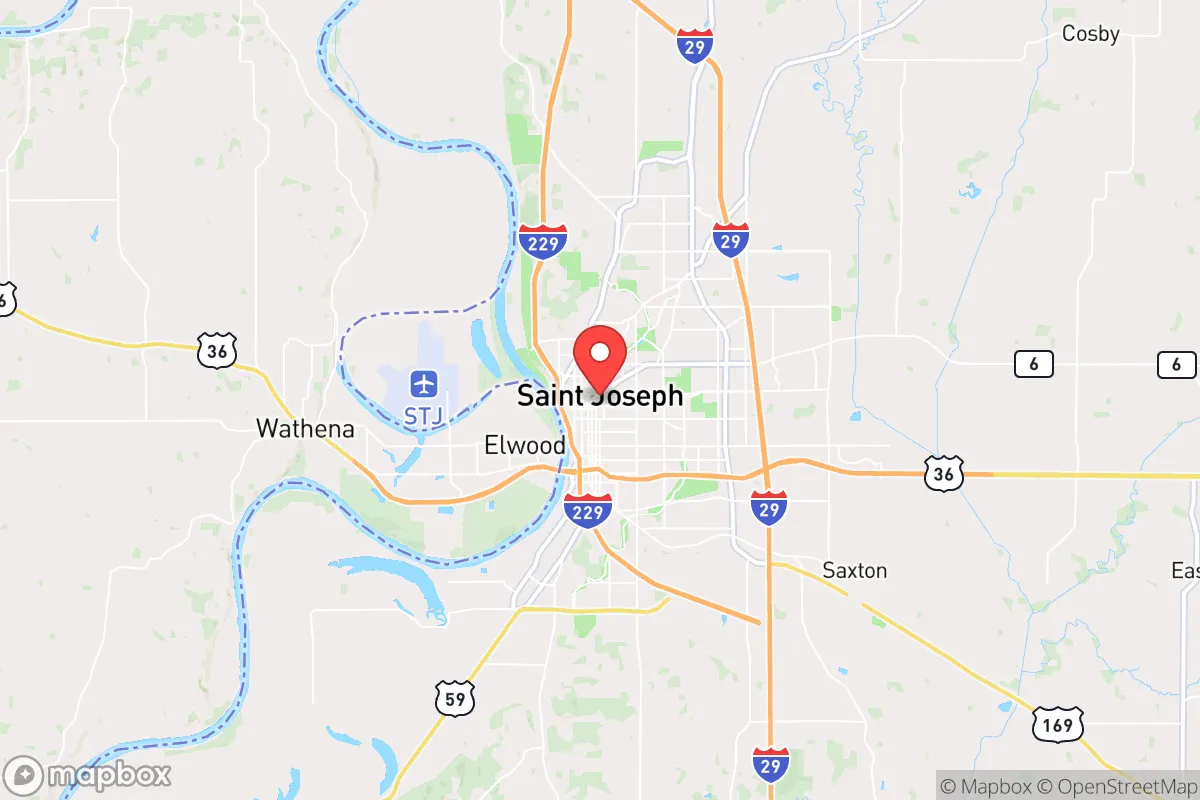
St. Joseph’s location is its strongest card. It sits about 50 miles north of Kansas City, which puts it outside the immediate blast radius of any major event targeting a population center, yet close enough to tap into KC’s medical and logistical networks if things stay stable. The Missouri River runs along the city’s eastern edge, providing a reliable water source and a natural barrier that complicates any approach from that direction. To the west, the land opens into the rolling hills of the Great Plains, offering good drainage and soil that’s been farmed for generations. The city itself is built on a series of bluffs, which means many neighborhoods sit above the floodplain—a critical detail when considering river-related hazards. The surrounding Buchanan County is sparsely populated outside the city limits, with a population density of about 100 people per square mile, giving relocators room to breathe and options for rural retreats within a 15-minute drive. The climate is continental, with hot summers and cold winters, but it lacks the extreme weather of Tornado Alley’s core—tornadoes are a real risk here, but not the daily threat you’d see in Oklahoma or central Kansas.
Risks, exposures, and proximity to fallout-relevant landmarks
No place is immune to risk, and St. Joseph has its share. The most obvious concern is its proximity to Kansas City—a major transportation hub with an international airport, rail yards, and interstate junctions. If civil unrest or a mass-casualty event originates in a large city, St. Joseph could see refugee flow, supply chain disruptions, or secondary violence as people flee the metro. The city itself sits about 30 miles from the Fort Leavenworth military installation, which is a double-edged sword: it means a potential source of order and medical support, but also a potential target for adversaries. The Missouri River is a strategic asset, but it also poses a flood risk—the 1993 and 2019 floods caused significant damage to low-lying areas, and climate models suggest heavier precipitation events are becoming more common. On the industrial side, St. Joseph has a handful of chemical plants and a major meatpacking facility (Triumph Foods), which could become contamination or security liabilities in a crisis. The city is also within 100 miles of the Wolf Creek Generating Station in Kansas, a nuclear power plant that, while not an immediate fallout zone, would be a concern in a major accident or attack scenario. For the prepper mindset, these are manageable risks—not dealbreakers—but they require a plan for evacuation or sheltering in place.
Practical resilience for a relocator: food, water, energy, and defensibility
St. Joseph’s practical resilience is where it shines for someone serious about self-sufficiency. The city is surrounded by some of the most productive farmland in the country—corn, soybeans, and livestock operations dominate the landscape. Within a 30-mile radius, you’ll find dozens of small farms, farmers’ markets, and local food co-ops, meaning fresh produce and protein are accessible without relying on national supply chains. Water is abundant: the Missouri River provides a surface source, and the underlying aquifer is deep and reliable. Many older homes in the area have private wells, and even suburban properties can often be retrofitted with a hand pump or solar-powered well system. Energy is a mixed bag. The local grid is served by Evergy, which has a decent reliability record, but ice storms in winter and thunderstorms in summer can knock out power for days. Solar potential is moderate—St. Joseph gets about 200 sunny days per year, enough for a backup system but not enough to go fully off-grid without battery storage. Natural gas is widely available, and wood-burning stoves are common in rural homes, providing a heating alternative. Defensibility is solid for a small city: the bluffs and river create natural chokepoints, and the street grid in older neighborhoods is narrow and winding, making it hard for large groups to move quickly. The crime rate is higher than the national average—property crime in particular—but violent crime is concentrated in specific areas, and many neighborhoods feel safe during daylight hours. For a relocator, the key is to buy on the outskirts or in a small satellite town like Savannah or Agency, where you get more land, better privacy, and a lower tax burden.
The overall strategic picture for a conservative-minded relocator
St. Joseph isn’t a prepper paradise—it’s not the remote mountains of Idaho or the high desert of Nevada. But for someone who wants to stay within striking distance of civilization while maintaining a serious level of preparedness, it’s a strong contender. The cost of living is low—median home prices hover around $180,000—and property taxes are among the lowest in the state. The political climate leans conservative, with Buchanan County voting +28 points for Trump in 2020, and the local culture is self-reliant and community-oriented. The biggest strategic weakness is the lack of a truly remote fallback position; if things go really bad, you’ll need to bug out further west or north. But for day-to-day resilience—riding out a supply chain collapse, a pandemic, or localized unrest—St. Joseph offers a realistic, affordable base of operations. The river gives you water, the farmland gives you food, and the distance from Kansas City gives you a buffer. It’s not flashy, but it’s solid. And in a world where the lights could go out tomorrow, solid is worth a lot.

* Values derived from national, state, county, city and local statistics and may differ in a specific area. Last updated: 2026-04-30T02:35:25.000Z
Narrative content on this page is AI-generated and may contain mistakes. Verify any details that matter before acting on them.
ReloMaps may earn a commission from affiliate links at no extra cost to you.

