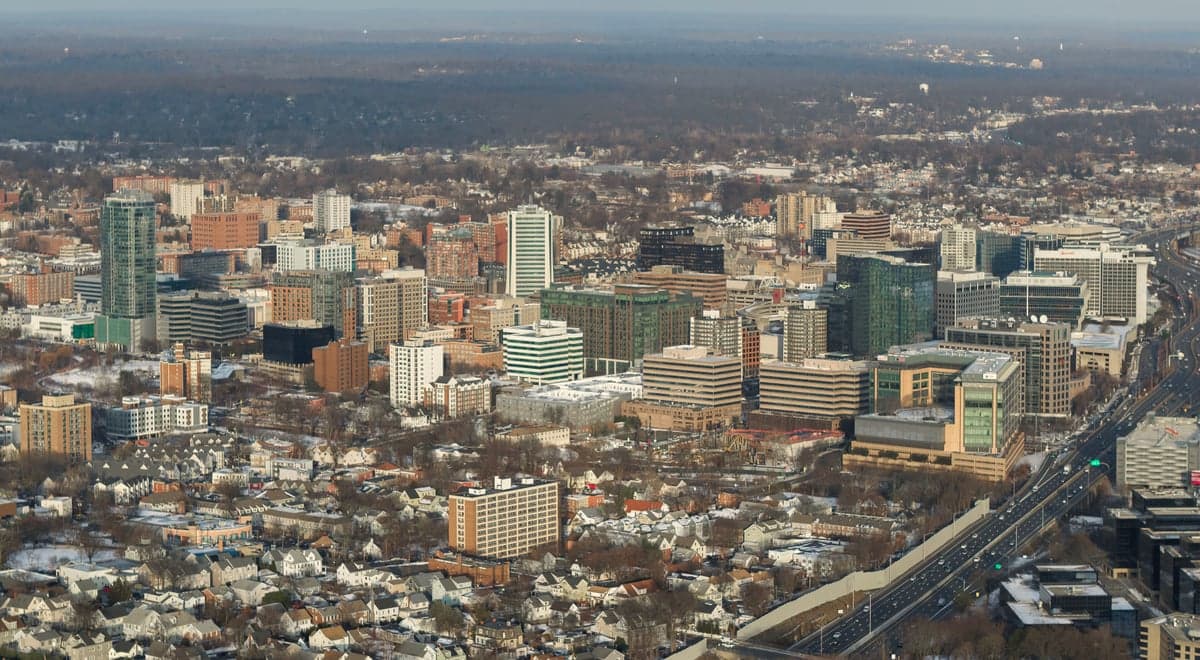
Photo: Wikipedia
Political ClimatePolitical Climate in Stamford, CT
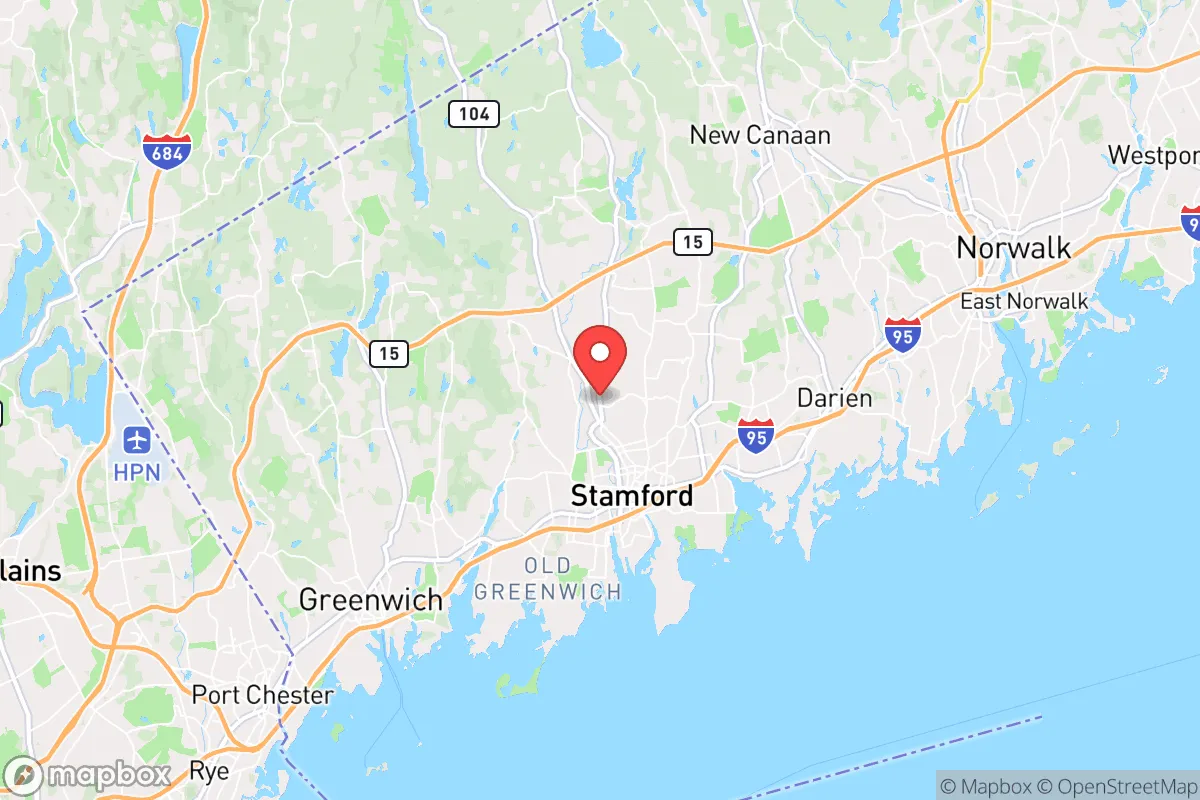
District shown is the primary district for this city’s centroid. Cities may span multiple districts.
Local Political AnalysisPolitical Analysis of Stamford, CT
Stamford, Connecticut, has a Cook Partisan Voting Index of D+13, meaning it leans heavily Democratic, and that tilt has only gotten more pronounced over the last decade. I’ve lived here long enough to remember when this town had a more balanced political mix, but the shift toward progressive policies has been steady and, frankly, a bit concerning for those of us who value personal freedoms and limited government. The local elections are rarely competitive anymore, and the city council and mayor’s office have been firmly in Democratic hands for years, pushing a one-size-fits-all agenda that doesn’t always sit well with folks who just want to be left alone.
How it compares
If you drive 20 minutes north to Darien or New Canaan, you’ll find towns that are still reliably Republican—places where property taxes are high but the local government tends to stay out of your business. Stamford, by contrast, feels like a mini–New York City in its political culture: dense, diverse, and increasingly progressive. The contrast is stark when you look at school board decisions or zoning fights. In Stamford, the push for more affordable housing mandates and “equity” initiatives often means more regulations on homeowners and landlords, while in those northern suburbs, the conversation is still about keeping taxes in check and preserving local control. It’s a tale of two counties, really—Fairfield County is a patchwork, and Stamford is the blue anchor on the coast.
What this means for residents
For the average person, the biggest impact is on your wallet and your daily life. Property taxes in Stamford are already high—among the highest in the state—and the city’s appetite for new spending on social programs and public-sector salaries doesn’t show signs of slowing down. You’ll also see more local ordinances that feel like government overreach: plastic bag bans, strict noise ordinances, and a growing list of permits for small things like renting out a room in your house. The school system has shifted toward progressive curriculum changes that some parents find intrusive, and the police department has faced calls to defund or restructure, even though crime rates in certain neighborhoods are a real concern. If you value the freedom to run your own life without a city council member telling you how to do it, Stamford’s trajectory can feel suffocating.
On a cultural level, Stamford has become a hub for corporate transplants who work in finance or media and bring big-city expectations with them. That means more bike lanes, more density, and more public art projects that some see as vibrant and others see as a waste of money. The long-term outlook, from where I sit, is more of the same: a continued drift leftward, with the state government in Hartford backing Stamford’s progressive moves through mandates on housing and energy. If you’re considering a move here, just know that the political climate is not neutral—it’s actively shaping everything from your tax bill to what your kids learn in school. For those who lean conservative, it’s a place to keep an eye on, but maybe not to put down roots unless you’re ready to fight for your values at every town hall meeting.

State Political ClimatePolitical Climate in Connecticut
State Political AnalysisPolitical Environment in the State
Connecticut has long been a solidly blue state in presidential elections, voting for Democrats by double digits in every cycle since 1992, but its political landscape is far more nuanced than the statewide totals suggest. The state’s partisan lean is driven overwhelmingly by the affluent, densely populated suburbs of Fairfield County and the urban cores of Hartford and New Haven, while the eastern and northwestern corners remain reliably Republican. Over the past 20 years, the state has shifted leftward on social issues and taxation, but a growing conservative backlash is visible in the Litchfield Hills and the Quiet Corner, where voters feel increasingly alienated by Hartford’s one-party rule.
Urban vs. rural divide
The political map of Connecticut is a tale of three regions. Fairfield County, home to hedge fund managers and commuters to New York City, is the engine of Democratic dominance — towns like Stamford, Greenwich, and Westport routinely deliver 60-70% of their votes to Democratic candidates. The cities of Hartford and New Haven are even more lopsided, with precincts often exceeding 80% Democratic. Meanwhile, the rural eastern half of the state — Ledyard, Killingly, Pomfret — votes Republican by similar margins, as do the Litchfield County towns of Torrington and Cornwall. The divide is stark: in 2024, Fairfield County’s suburban precincts voted +35 Democratic, while the northeastern corner voted +25 Republican. The state’s few swing areas are the working-class suburbs of Waterbury and Meriden, where union households and fiscal conservatives often split tickets.
Policy environment
Connecticut’s policy environment is a cautionary tale for anyone wary of government overreach. The state has one of the highest combined state and local tax burdens in the nation, with a progressive income tax topping 6.99% and property taxes among the highest per capita. In 2023, the legislature passed a universal paid family and medical leave program funded by a new payroll tax — a clear expansion of the social safety net that conservatives argue burdens small businesses. Education policy is dominated by the teachers’ unions, with school choice limited to a few magnet schools in Hartford and New Haven; the state has no voucher program and only a weak charter school law. On healthcare, Connecticut expanded Medicaid under Obamacare and in 2022 passed a public option for health insurance, further entangling the state in healthcare markets. Election laws are among the most permissive in the Northeast: no-excuse absentee voting was made permanent in 2023, and same-day voter registration is available. For a conservative, the policy environment feels like a slow but steady march toward a European-style welfare state, with little room for local autonomy.
Trajectory & freedom
On the freedom index, Connecticut is moving in the wrong direction. The most glaring example is gun rights: in 2023, the legislature passed a sweeping gun control package that banned open carry, raised the purchasing age to 21, and expanded the state’s assault weapons ban to include more semi-automatic rifles. This came on top of a 2013 law that already required universal background checks and a 2021 law that banned large-capacity magazines. On parental rights, the state has moved aggressively in the opposite direction of Florida or Texas: in 2021, it passed a law requiring public schools to adopt “affirming” policies for LGBTQ+ students, including allowing them to use preferred names and pronouns without parental consent. Medical autonomy has also been curtailed: in 2022, the legislature passed a law shielding out-of-state abortion providers from legal liability, effectively making Connecticut a sanctuary state for abortion travel. Property rights are under pressure from a 2023 “fair share” housing law that allows the state to override local zoning in towns that fail to meet affordable housing quotas — a direct assault on suburban control over land use. For a conservative, these are not incremental changes; they represent a fundamental shift in the relationship between the individual and the state.
Civil unrest & political movements
Connecticut has not seen the kind of violent protests seen in Portland or Seattle, but it has its own flashpoints. In 2020, Hartford and New Haven saw large Black Lives Matter demonstrations, some of which turned into property damage and looting in downtown Hartford. The state’s sanctuary state status — codified in a 2013 law that limits local police cooperation with ICE — has become a rallying cry for conservative activists, particularly in eastern Connecticut where immigration enforcement is a top concern. The Second Amendment movement is alive and well: the Connecticut Citizens Defense League holds regular rallies at the state capitol, and in 2023, thousands of gun owners protested the new restrictions by refusing to comply with the registration deadline. Election integrity has been a low-grade controversy since 2020, when the state expanded mail-in voting without a voter ID requirement; Republican town committees in Litchfield and Windham counties have filed multiple lawsuits over ballot handling procedures. The most visible political movement on the right is the “Save Our Towns” coalition, which fights the state’s housing mandates and school curriculum changes — a grassroots effort that has flipped several town councils in the 2023 municipal elections.
Projection
Looking ahead 5-10 years, Connecticut’s trajectory is concerning for conservatives. The state’s population has been flat or declining since 2010, with net out-migration to Florida, Texas, and the Carolinas — and those leaving are disproportionately higher-income earners and families with school-age children. The demographics that remain are older, more urban, and more dependent on state services, which creates a self-reinforcing cycle of higher taxes and more government. The 2024 election showed that even Fairfield County is drifting left: Greenwich, once a swing town, now votes Democratic by 20 points. The only countervailing trend is the growth of the “exurban” vote in places like Brooklyn and Canterbury, where new arrivals from New York and Massachusetts are often more conservative than the locals. But these gains are too small to offset the urban and suburban blue vote. Realistically, a conservative moving to Connecticut today should expect to live in a state where the legislature will remain under Democratic supermajority control for the foreseeable future, with no serious prospect of a Republican governor until at least 2030.
For a new resident — especially a parent or someone who values personal liberty — the bottom line is this: Connecticut offers excellent schools, low crime, and beautiful scenery, but it comes with a heavy price tag in taxes and a government that is increasingly comfortable telling you how to raise your kids, what kind of gun you can own, and where you can build a house. If you can afford the taxes and are willing to navigate a school system that prioritizes progressive social goals over academic rigor, the state’s quality of life is undeniable. But if you value local control, fiscal restraint, and the right to live your life without state interference, you will find yourself fighting an uphill battle in Hartford every single year.
* Values derived from national, state, county, city and local statistics and may differ in a specific area. Last updated: 2026-04-30T03:48:24.000Z
Narrative content on this page is AI-generated and may contain mistakes. Verify any details that matter before acting on them.
ReloMaps may earn a commission from affiliate links at no extra cost to you.

