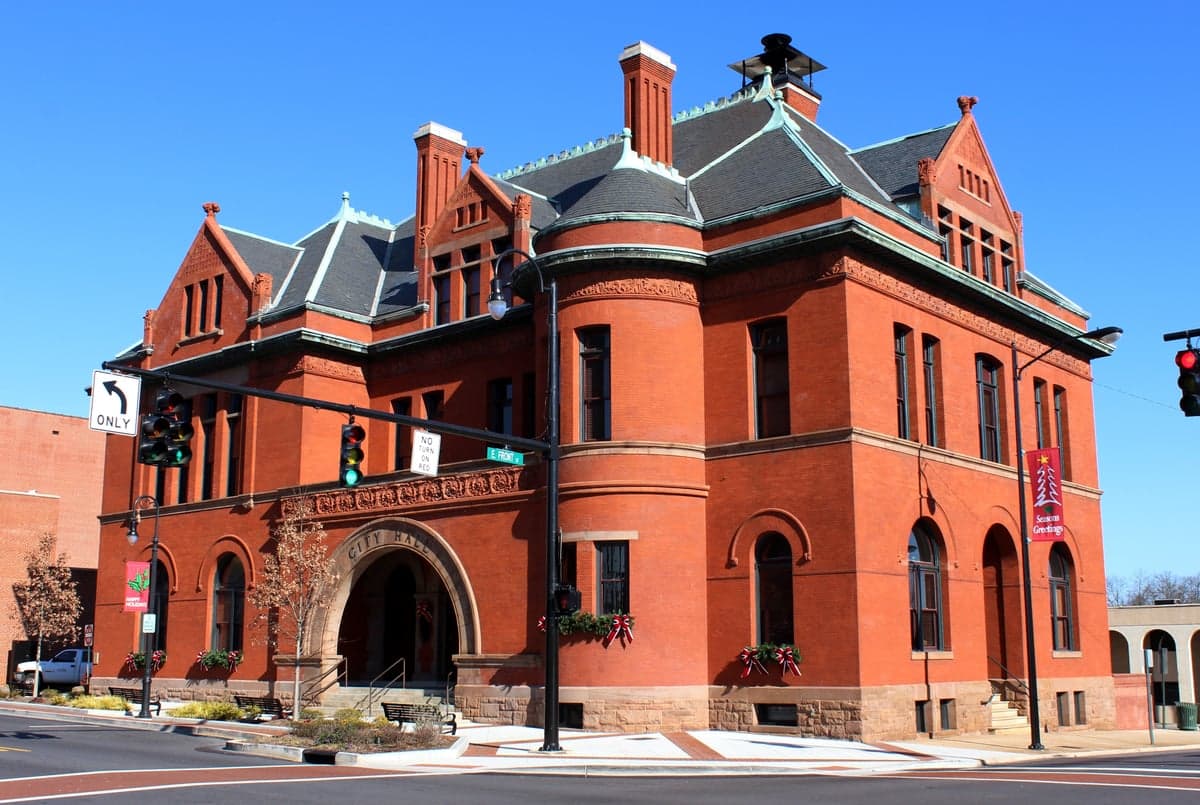
Photo: Wikipedia
Demographics of Statesville, NC
Affluence Level in Statesville, NC
A middle-class area roughly in line with national averages across income, home values, education, and employment.
People of Statesville, NC
Statesville, North Carolina, is a city of 29,161 residents where no single racial or ethnic group holds a majority, reflecting a demographic landscape shaped by distinct waves of migration over two centuries. The city is characterized by a 49.9% white population, a 26.7% Black community, a rapidly growing 17.5% Hispanic population, and smaller but notable East/Southeast Asian (1.2%) and Indian subcontinent (1.0%) communities. With 26.9% of adults holding a college degree, Statesville blends working-class roots with a growing professional class, creating a community that is both historically rooted and visibly diversifying.
How the city was settled and grew
Statesville was founded in 1789 as the seat of Iredell County, drawing its earliest white settlers—primarily of Scots-Irish and German descent—who arrived via the Great Wagon Road from Pennsylvania and Virginia. These families were granted land in the fertile Piedmont foothills, and by the early 19th century, the area around the Downtown Historic District became the commercial and civic core, built by merchants, lawyers, and craftsmen. The arrival of the railroad in the 1850s transformed Statesville into a regional transportation hub, attracting a second wave of European immigrants—mostly German and Irish laborers—who settled in working-class neighborhoods like Shiloh and the West End. After the Civil War, freedmen and their families established a robust Black community centered on the Garfield Street area and the South Race Street corridor, building churches, schools, and businesses that anchored African American life through the Jim Crow era. By 1900, the city's population was roughly two-thirds white and one-third Black, a ratio that held steady through the mid-20th century as textile mills and furniture factories drew additional rural white and Black migrants from surrounding counties.
Modern era (post-1965)
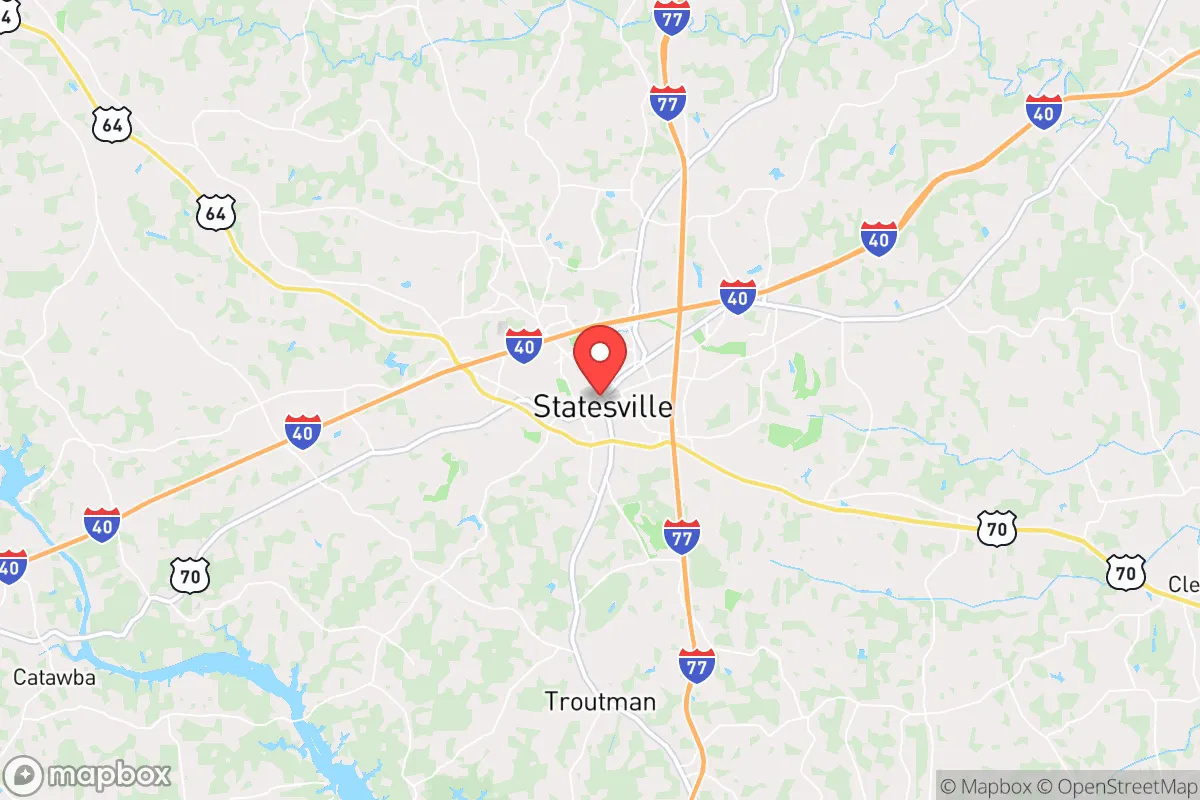
The 1965 Hart-Cellar Act and subsequent immigration reforms opened the door for new populations. The most transformative shift began in the 1990s, when Hispanic immigrants—primarily from Mexico and Central America—arrived to work in poultry processing plants, construction, and agriculture. This community concentrated in the West Broad Street corridor and parts of the Shiloh neighborhood, where Spanish-language businesses and churches now anchor daily life. The Hispanic share of Statesville's population grew from under 2% in 1990 to 17.5% by the 2020s, making it the city's fastest-growing demographic. Meanwhile, the Black population, which had been stable at roughly 30% through the 1970s, declined slightly to 26.7% as some families moved to newer subdivisions in the Eastside and the Barium Springs area. The white population fell from over 65% in 1990 to 49.9% today, driven partly by suburban flight to unincorporated Iredell County and partly by aging demographics. Small but established East/Southeast Asian and Indian subcontinent communities—many connected to the region's medical and logistics sectors—have settled in the newer developments near Interstate 40, including the Shepherds Glen and Fox Run subdivisions.
The future
Statesville's population is trending toward greater diversity, but the city is not homogenizing—rather, it is tribalizing into distinct enclaves. The Hispanic community is growing rapidly through both immigration and natural increase, and its concentration in West Broad Street and Shiloh is likely to intensify as families expand and new arrivals join established networks. The Black population is stable but aging, with younger Black families increasingly choosing suburban Iredell County over the city itself. The white population is declining in absolute numbers, though white residents remain the largest single group and dominate the city's political and economic leadership. The East/Southeast Asian and Indian communities are small but growing, drawn by jobs at the Lowe's corporate headquarters in nearby Mooresville and at the expanding medical facilities in Statesville. Over the next 10-20 years, the city will likely become a majority-minority community, with Hispanics potentially surpassing whites as the largest group by 2040. This shift will test the city's ability to integrate its neighborhoods and schools, as the current pattern of ethnic clustering shows little sign of breaking.
For someone moving to Statesville now, the city offers a genuinely diverse population in a compact, walkable downtown, but the diversity is segmented by neighborhood and income. The city is becoming more Hispanic and more multiethnic, but it remains a place where where you live largely determines who you live among. Newcomers should expect a community in demographic transition, with all the opportunities and tensions that entails.

* Values derived from national, state, county, city and local statistics and may differ in a specific area. Last updated: 2026-04-19T18:12:01.000Z
Narrative content on this page is AI-generated and may contain mistakes. Verify any details that matter before acting on them.
ReloMaps may earn a commission from affiliate links at no extra cost to you.

