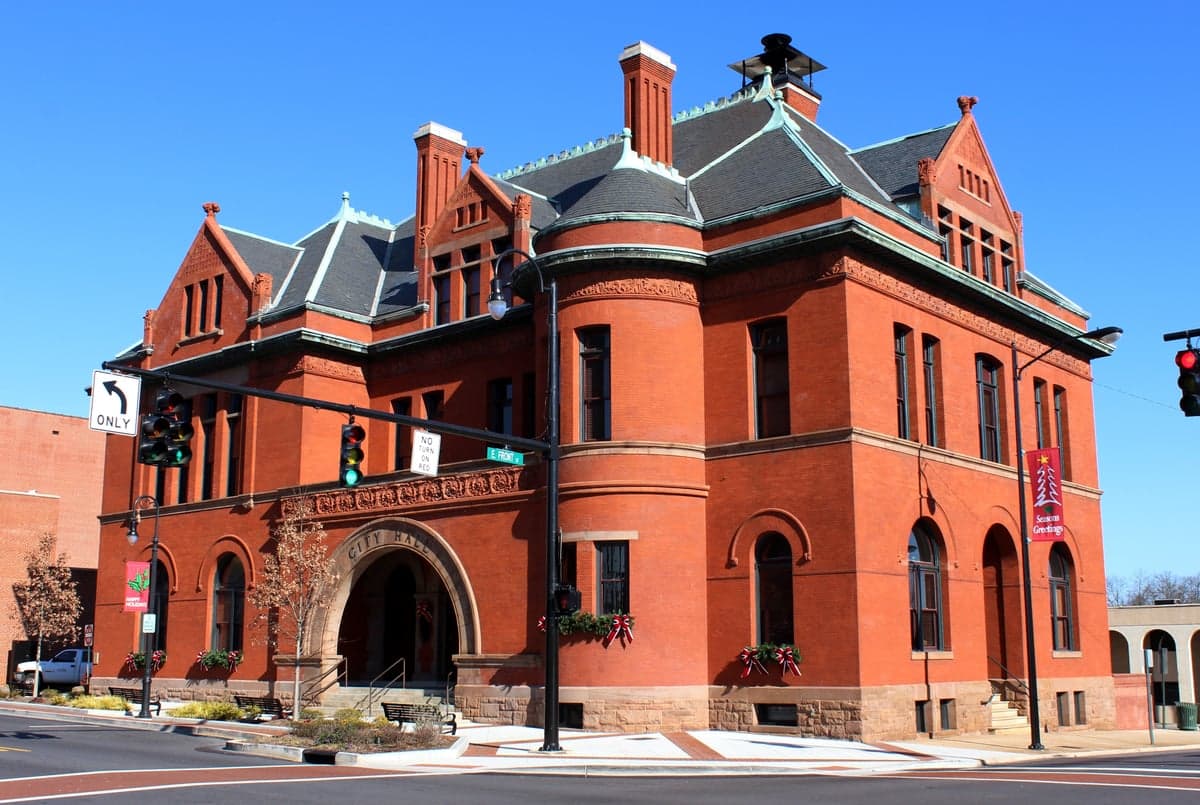
Photo: Wikipedia
Political ClimatePolitical Climate in Statesville, NC
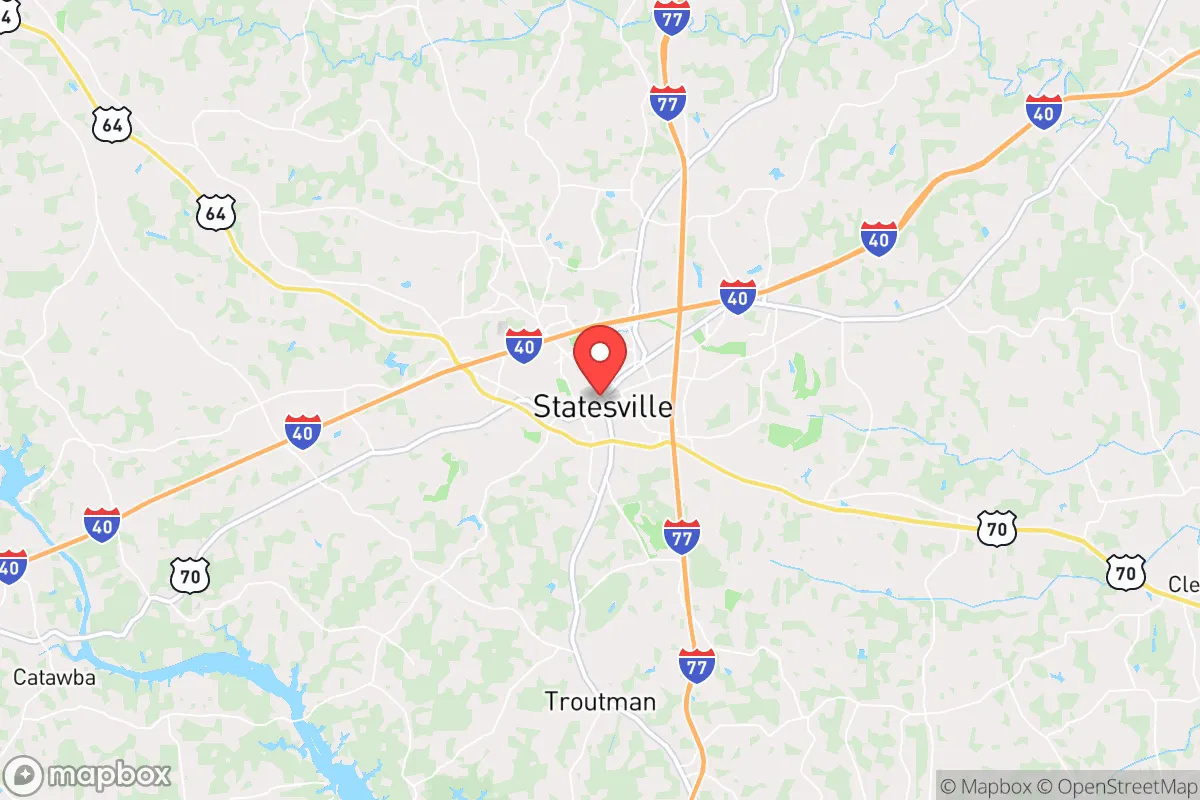
District shown is the primary district for this city’s centroid. Cities may span multiple districts.
Local Political AnalysisPolitical Analysis of Statesville, NC
Statesville, North Carolina, has long been a reliably conservative stronghold, and the numbers back that up with a Cook PVI of R+9. But if you’ve lived here as long as I have, you know the political climate isn’t just about voting patterns—it’s about a way of life that’s been under increasing pressure. The area leans solidly Republican, but the real story is how the local culture and policy battles are shifting, especially as folks from more progressive places like Charlotte and Raleigh start moving in. It’s still a place where most people believe in limited government and personal responsibility, but you can feel the ground shifting under your feet.
How it compares
Compared to nearby cities, Statesville stands out as a conservative island in a sea of change. Drive 45 minutes south to Charlotte, and you’re in a blue-leaning metro where city council debates are all about bike lanes and equity initiatives. Head east to Winston-Salem, and you’ll find a more mixed political scene, with a growing progressive influence from Wake Forest University and the arts district. Even Mooresville, just 20 minutes away, has seen a noticeable tilt left as Lake Norman attracts remote workers from out of state. Statesville, though, has held the line. The surrounding Iredell County voted over 65% for Trump in 2020, and local elections still favor candidates who talk about cutting taxes, protecting gun rights, and keeping government out of your business. That said, the county commission has seen a few close races recently, and the school board is a battleground over curriculum and parental rights—a sign that the old consensus is fraying.
What this means for residents
For those of us who value personal freedoms, the current climate in Statesville is a mixed bag. On the plus side, property taxes are still reasonable compared to Mecklenburg County, and there’s no city income tax. The local government generally stays out of your hair—no mask mandates that lasted forever, no heavy-handed business shutdowns during COVID. But there’s a creeping concern. The influx of new residents from blue states has brought with it a push for more “diversity, equity, and inclusion” initiatives in local schools and even some talk of zoning changes that could limit property rights. If you’re a long-time resident, you’ve probably noticed more “slow down” signs and traffic calming measures downtown—small things, but they add up. The real worry is that as the county grows, the political balance could tip. If you’re looking for a place where your Second Amendment rights are respected and your kids aren’t taught critical race theory, Statesville is still a good bet, but you’ve got to stay engaged in local elections to keep it that way.
Culturally, Statesville has a few distinctions that set it apart. The annual Carolina BalloonFest is a big deal, and it’s still a family-friendly, apolitical event. But you’ll also notice a strong presence of evangelical churches and veteran groups that anchor the community’s values. There’s a palpable resistance to the kind of government overreach you see in larger cities—like the time the city council tried to impose a plastic bag ban a few years back, and it got shot down after a public outcry. That’s the Statesville I know. Looking ahead, the long-term trend is concerning: if the growth continues at this pace, the political lean could shift from solid red to purple within a decade. But for now, if you want a place where your freedoms aren’t just tolerated but defended, this is still one of the better spots in the Piedmont.

State Political ClimatePolitical Climate in North Carolina
State Political AnalysisPolitical Environment in the State
North Carolina has long been the quintessential swing state of the Southeast, but over the past 10-20 years, it has settled into a reliably red-leaning posture, though with a razor-thin margin that keeps every election cycle interesting. The state voted for Donald Trump in both 2016 and 2024, while flipping for Trump again in 2020 after a narrow loss to Biden—a pattern that shows a durable conservative base, especially in rural and suburban areas, but also a growing progressive coalition concentrated in a few fast-growing metros. The dominant coalition today is a mix of traditional rural conservatives, military veterans, and suburban families who have shifted right on cultural issues, while the left is powered by transplants from the Northeast and Midwest pouring into the Research Triangle and Charlotte.
Urban vs. rural divide
The political map of North Carolina is a textbook case of the urban-rural chasm. The three major metros—Charlotte, Raleigh-Durham (the Triangle), and Greensboro-Winston-Salem (the Triad)—drive the Democratic vote, with Mecklenburg, Wake, and Durham counties routinely delivering 60-70% margins for Democratic candidates. But the rest of the state is overwhelmingly red. The rural eastern counties like Robeson, Columbus, and Duplin are deeply conservative, as are the mountain counties in the west like Watauga (though Boone itself is a blue dot) and Haywood. A key battleground is the suburban ring around Charlotte—places like Union County (which voted +35 for Trump in 2024) and Cabarrus County—where conservative families have fled the city proper. Meanwhile, Fayetteville, home to Fort Liberty (formerly Fort Bragg), leans conservative due to the military presence, but its large minority population keeps it competitive. The real story is the I-95 corridor in the east, which is poor, rural, and reliably red, but with a growing Hispanic population that could shift things over time.
Policy environment
North Carolina’s policy environment is a mixed bag for conservatives, but trending in the right direction. The state has a flat income tax rate of 4.5% (down from 7% in 2013), with a scheduled phase-down to 3.99% by 2027—a clear win for fiscal conservatives. There is no state-level property tax; local rates vary, but overall the tax burden is low compared to the Northeast. The regulatory posture is business-friendly, with right-to-work laws and a 2023 law that preempted local governments from enacting their own minimum wage or paid leave mandates, which keeps the playing field level. On education, the state has a robust school choice program: the Opportunity Scholarship Program now provides vouchers for any family, regardless of income, to attend private or religious schools—a huge win for parental rights. However, the state’s healthcare system is a sore spot: the Republican legislature has refused to expand Medicaid under Obamacare, which keeps costs high for the uninsured but also prevents a massive federal entitlement expansion. Election laws are solid: voter ID is required (passed in 2018, implemented in 2023), and the state has a 17-day early voting window that both parties like. The 2023 law also tightened absentee ballot rules, which has reduced fraud concerns.
Trajectory & freedom
North Carolina is becoming more free in several key areas, but the fight is constant. On gun rights, the state is a shall-issue concealed carry state, and in 2023, the legislature passed a law allowing permitless concealed carry (constitutional carry), which took effect in 2024—a major expansion of Second Amendment freedom. On parental rights, the 2023 Parents’ Bill of Rights (HB 755) requires schools to notify parents of any changes in a child’s health or well-being, and prohibits instruction on gender identity and sexuality in K-4 classrooms. This was a direct response to progressive overreach in districts like Chapel Hill-Carrboro and Wake County. On medical autonomy, the state banned nearly all abortions after 12 weeks in 2023 (with exceptions for rape, incest, and fetal anomalies), which was a significant restriction but still more moderate than neighboring states like Tennessee or South Carolina. Property rights are strong: the state has a robust eminent domain law that favors landowners, and there is no state-level rent control. However, the left is fighting back: the Democratic governor, Roy Cooper, vetoed many of these bills, but the Republican supermajority overrode him. The biggest threat to freedom is the influx of progressive transplants from California and New York, who are driving up housing costs and pushing for local policies like sanctuary city status in Durham and Orange County.
Civil unrest & political movements
North Carolina has seen its share of political flashpoints. The 2020 protests in Charlotte and Raleigh over George Floyd’s death turned violent, with looting and property damage in Uptown Charlotte and the destruction of a Confederate monument in Raleigh. The left-wing activist group Raleigh-Durham Democratic Socialists of America is active, pushing for defunding the police and rent control, but they have little influence outside the urban core. On the right, the NC GOP and grassroots groups like Carolina Journal have been effective at mobilizing around election integrity and school board races. The 2020 election saw massive turnout, with Trump winning by 1.3 points, but the left has repeatedly tried to overturn voter ID laws in court. Immigration is a hot-button issue: while the state has no sanctuary cities, Durham and Orange County have declared themselves “welcoming cities,” refusing to cooperate with ICE in some cases. The 2023 law (HB 10) banned sanctuary policies statewide, but it’s being challenged in court. The most visible flashpoint for a new resident would be the constant culture war in school board meetings, especially in Wake County and Mecklenburg County, where parents are fighting against critical race theory and LGBTQ curriculum.
Projection
Over the next 5-10 years, North Carolina will likely remain a red-leaning swing state, but the margin will tighten. The in-migration from blue states is accelerating: the Triangle alone is adding 50-60 people per day, many from California, New York, and Massachusetts. These transplants tend to vote Democratic, but they also bring conservative-leaning values on taxes and crime—many are fleeing high taxes and crime in their home states. The key battleground will be the suburbs: places like Union County and Cabarrus County are growing fast and could flip if the GOP loses touch with suburban families. The rural vote will remain solidly red, but it’s shrinking as young people leave for the cities. The biggest wildcard is the Hispanic population, which is growing rapidly in the eastern counties and could swing the state if the GOP fails to court them. Realistically, expect a decade of close elections, with the state legislature staying red due to gerrymandering, but the governor’s mansion and presidential vote being toss-ups. For a conservative moving in, the state will still feel free on taxes, guns, and school choice, but the cultural battles will intensify, especially in the metros.
For a new resident, the bottom line is this: North Carolina is a great place to live if you want low taxes, strong gun rights, and school choice, but you’ll need to pick your county carefully. Stick to the rural and suburban areas like Union County, Johnston County, or Brunswick County if you want a conservative community. Avoid Durham and Orange County unless you enjoy fighting progressive policies at every turn. The state is trending in the right direction on freedom, but the fight is far from over—and the next decade will determine whether it stays red or becomes another Virginia.
* Values derived from national, state, county, city and local statistics and may differ in a specific area. Last updated: 2026-04-19T18:12:01.000Z
Narrative content on this page is AI-generated and may contain mistakes. Verify any details that matter before acting on them.
ReloMaps may earn a commission from affiliate links at no extra cost to you.

