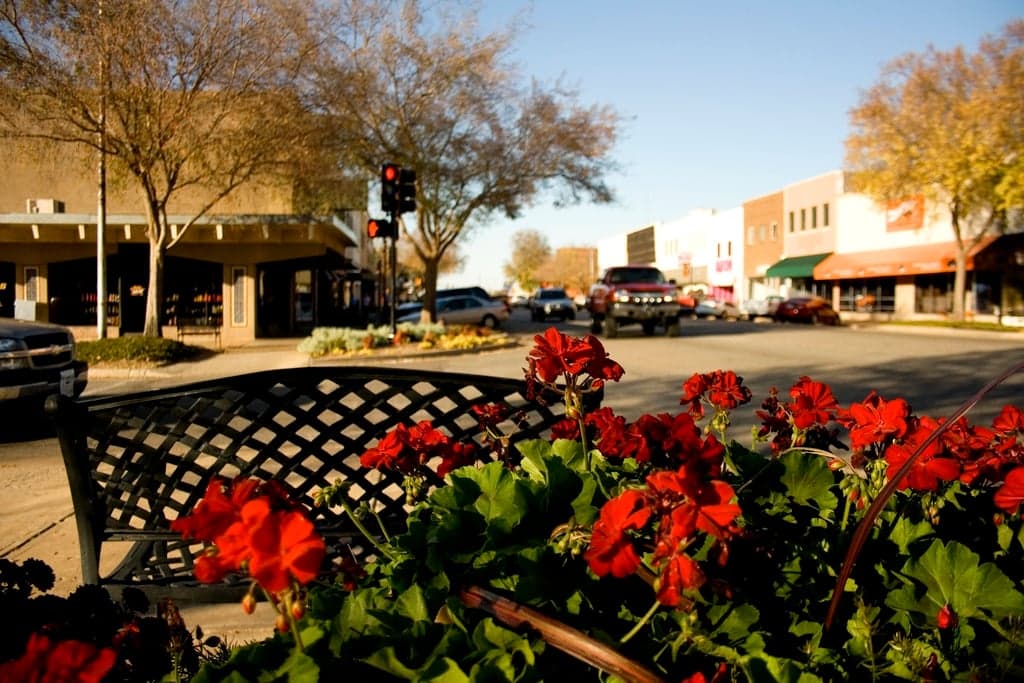
Photo: Wikipedia
Personal Sovereignty in Stillwater, OK
Strong independent fundamentals that actively favor personal liberty and low regulation.
What does Personal Sovereignty tell us?
Personal Sovereignty measures your capacity for self-reliance and independence with minimal government friction. Higher scores mean fewer barriers between you and the way you want to live... but it assumes you have the space you need and good neighbors.
What does this tell us?
Personal Sovereignty measures your capacity for self-reliance and independence with minimal government friction. Higher scores mean fewer barriers between you and the way you want to live... but it assumes you have the space you need and good neighbors.
State Policy
Energy independence: Net exporter (180% of energy produced in-state)
Personal Liberty
Homesteading

Personal Liberty Analysis
Stillwater, Oklahoma offers a notably high degree of personal sovereignty compared to many parts of the country, particularly for those who prioritize minimal government interference in daily life. As the home of Oklahoma State University, the city blends a small-town, self-reliant ethos with the practical advantages of a state that consistently ranks among the most liberty-oriented in the nation. For individuals and parents concerned about federal overreach, regulatory creep, and the erosion of traditional freedoms, Stillwater presents a strategic environment where the default posture of local and state governance leans heavily toward individual autonomy rather than collective mandates.
Tax burden and regulatory posture: How Stillwater compares to high-tax states
Oklahoma’s tax structure is a primary draw for those seeking to keep more of their earnings and avoid the fiscal entanglement that often accompanies government expansion. The state levies a flat income tax of 4.75%, which is among the lowest in the country, and there is no state-level tax on Social Security benefits—a significant consideration for those planning long-term self-sufficiency. Property taxes in Stillwater are exceptionally low, typically ranging from 0.8% to 1.1% of assessed value, which is a fraction of what you would pay in states like New York, Illinois, or California. The regulatory environment mirrors this light-touch philosophy. Oklahoma is a right-to-work state, meaning union membership cannot be a condition of employment, and occupational licensing requirements are less burdensome than in many coastal states. For a prepper or survivalist mindset, this translates to fewer bureaucratic hurdles when starting a home-based business, a trade, or a small farm—activities that are often choked by red tape in more regulated jurisdictions. The state’s general sales tax is 4.5%, with local additions in Stillwater bringing the total to around 8.5%, but the absence of a state estate tax and the overall low property burden mean that wealth accumulation and intergenerational transfer face minimal government claims.
Self-defense and gun law specifics: What Stillwater allows for personal protection
Oklahoma is a constitutional carry state, meaning that as of 2019, any law-abiding adult 21 or older can carry a firearm openly or concealed without a permit. Stillwater, despite being a college town, fully adheres to this state preemption, and local ordinances do not impose additional restrictions beyond state law. This is a critical distinction for those who view self-defense as a non-negotiable right. The state also has strong Stand Your Ground and Castle Doctrine laws, which remove the duty to retreat before using deadly force in any place where you are lawfully present. For parents, this legal framework extends to the home and vehicle, providing clear legal protection for defending family and property. There are no magazine capacity bans, no firearm registration requirements, and no waiting periods for purchases. The only notable restriction is that carrying on public university property, including OSU’s campus, is technically prohibited unless you have a valid handgun license—though the state’s preemption law prevents the university from enacting its own stricter rules. For those storing supplies or maintaining a defensive arsenal, the absence of red flag laws or extreme risk protection orders in Oklahoma provides an additional layer of security against government confiscation without due process.
Self-reliance and homesteading viability: Lot sizes, zoning, and off-grid feasibility
Stillwater’s zoning and land-use policies are generally favorable to self-reliance, though the degree varies depending on whether you are inside city limits or in the surrounding Payne County. Within the city, standard residential lots range from one-quarter to one-half acre, and while suburban covenants may restrict livestock or extensive gardening, many older neighborhoods and unincorporated areas allow for substantial food production. Outside city limits, zoning is minimal, and it is common to find properties of one to five acres where raising chickens, goats, or even a small herd of cattle is entirely legal. Off-grid feasibility is strong in the surrounding county. Oklahoma has no state-level prohibition on rainwater collection, and solar panel installation is not subject to the kind of homeowner association or utility company pushback seen in more restrictive states. The county does not require building permits for agricultural structures under a certain size, and there are no state mandates for grid-tied electricity. For those serious about long-term resilience, the Stillwater area offers affordable land—typically $3,000 to $8,000 per acre for raw parcels—with few legal barriers to constructing a self-sufficient homestead. The main practical limitation is water availability; while the aquifer is adequate, drilling a well can cost $5,000 to $15,000, and drought conditions occasionally prompt voluntary conservation. Still, the regulatory freedom to dig a well, install septic, and live without municipal utility hookups is a significant advantage over states that mandate grid connection or prohibit alternative waste systems.
Personal liberties: Parental rights, medical autonomy, speech, and property
Oklahoma has been a battleground for parental rights in education, and Stillwater reflects that broader state trend. Parents have strong legal standing to opt children out of curriculum or activities they find objectionable, and the state’s open transfer laws allow movement between districts without bureaucratic hurdles. The city’s school system, Stillwater Public Schools, is generally responsive to parental concerns, though the presence of OSU means a more progressive cultural influence than in rural Oklahoma towns. Medical autonomy is another area where the state leans toward individual choice. Oklahoma has not enacted broad vaccine mandates for adults or children beyond standard school requirements, and there are no state-level restrictions on purchasing raw milk, herbal remedies, or dietary supplements. The state’s health freedom laws protect the right to refuse medical treatment and to access alternative practitioners, though licensing for naturopaths and direct primary care is less developed than in some Western states. Free speech protections are robust, with no hate speech laws or social media censorship mandates at the state level. Property rights are strongly defended; Oklahoma is a “measurement by metes and bounds” state with no statewide zoning code, and eminent domain for private economic development is restricted. For those concerned about government overreach during emergencies, Oklahoma’s legislature has passed laws limiting the governor’s ability to issue prolonged executive orders without legislative approval—a direct response to COVID-era restrictions seen in other states.
In the broader landscape of American personal sovereignty, Stillwater occupies a sweet spot for the survivalist or prepper mindset. It lacks the extreme libertarian isolation of rural Alaska or the high-altitude off-grid zones of the Rockies, but it offers a practical, affordable, and legally permissive environment where a family can live with minimal government interference while still accessing modern infrastructure and a university town’s resources. The combination of constitutional carry, low taxes, weak zoning, strong parental rights, and emergency governance safeguards makes it a more viable long-term base than most blue-state suburbs or even many red-state cities that have adopted progressive local ordinances. For those who view personal sovereignty as the ability to live, defend, and provide for themselves without asking permission, Stillwater is a place where the law is largely on your side—and that is increasingly rare.

* Values derived from national, state, county, city and local statistics and may differ in a specific area. Last updated: 2026-04-21T09:09:26.000Z
Narrative content on this page is AI-generated and may contain mistakes. Verify any details that matter before acting on them.
ReloMaps may earn a commission from affiliate links at no extra cost to you.

