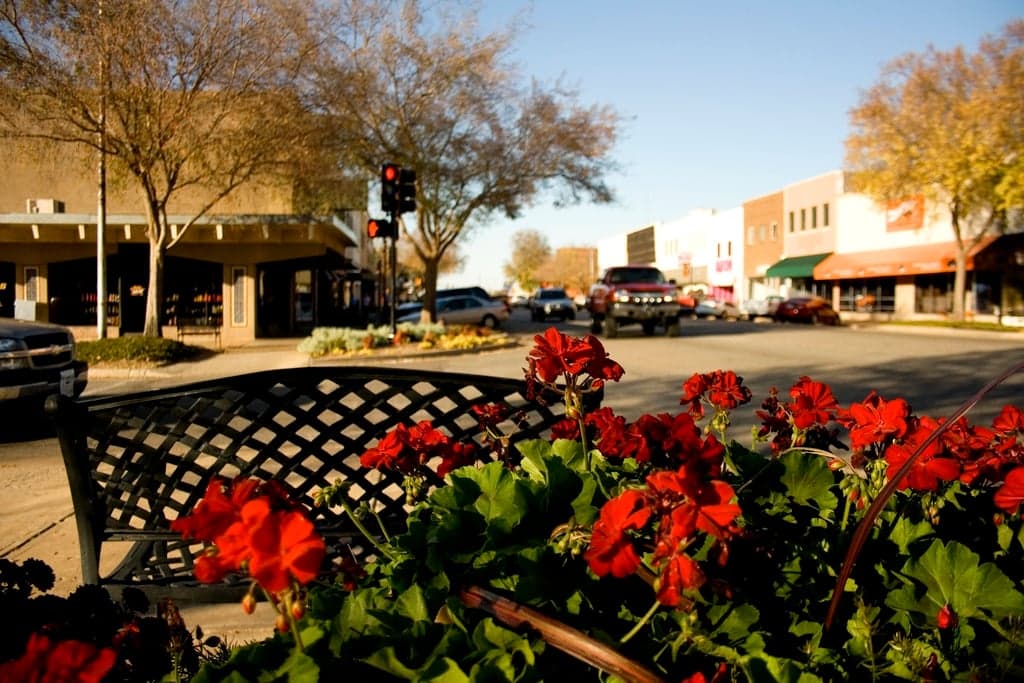
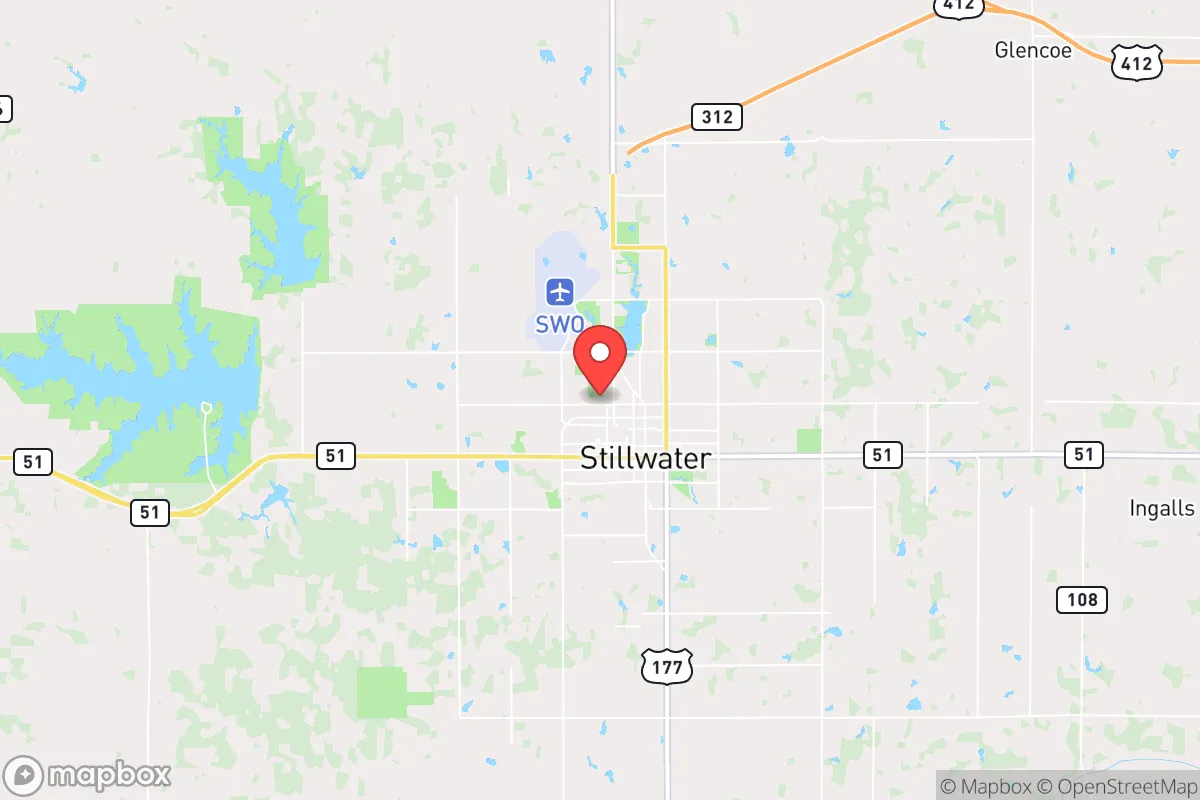
Photo: Wikipedia
Strategic Assessment of Stillwater, OK
Meaningful friction. Expect exposure to either population pressure, blast zones, or natural disaster risk. Consider buying a retreat property.
What does the Strategic Assessment tell us?
Our Strategic Assessment grades tactical survivability of an area. Major population centers, military targets, fallout zones, natural disasters, and border exposure all drive risk — lower exposure means a more defensible position in a crisis.
This is heavily inspired by Joel Skousen's Strategic Relocation book. Highly recommended you checkout the book ($)What does this tell us?
Our Strategic Assessment grades tactical survivability of an area. Major population centers, military targets, fallout zones, natural disasters, and border exposure all drive risk — lower exposure means a more defensible position in a crisis.
This is heavily inspired by Joel Skousen's Strategic Relocation book. Highly recommended you checkout the book ($)Strategic Pillars

Key Distances
Regional Safe Places
Below is our recommended "safe zones" in Oklahoma and the surrounding area based on our strategic heuristics. For most people, it's unrealistic to live in a “safe zone” full-time due to work, family or other personal reasons. They tend to be more rural. However, many of these areas are perfect for second homes and retreat properties that double as a vacation home or even a short-term rental.
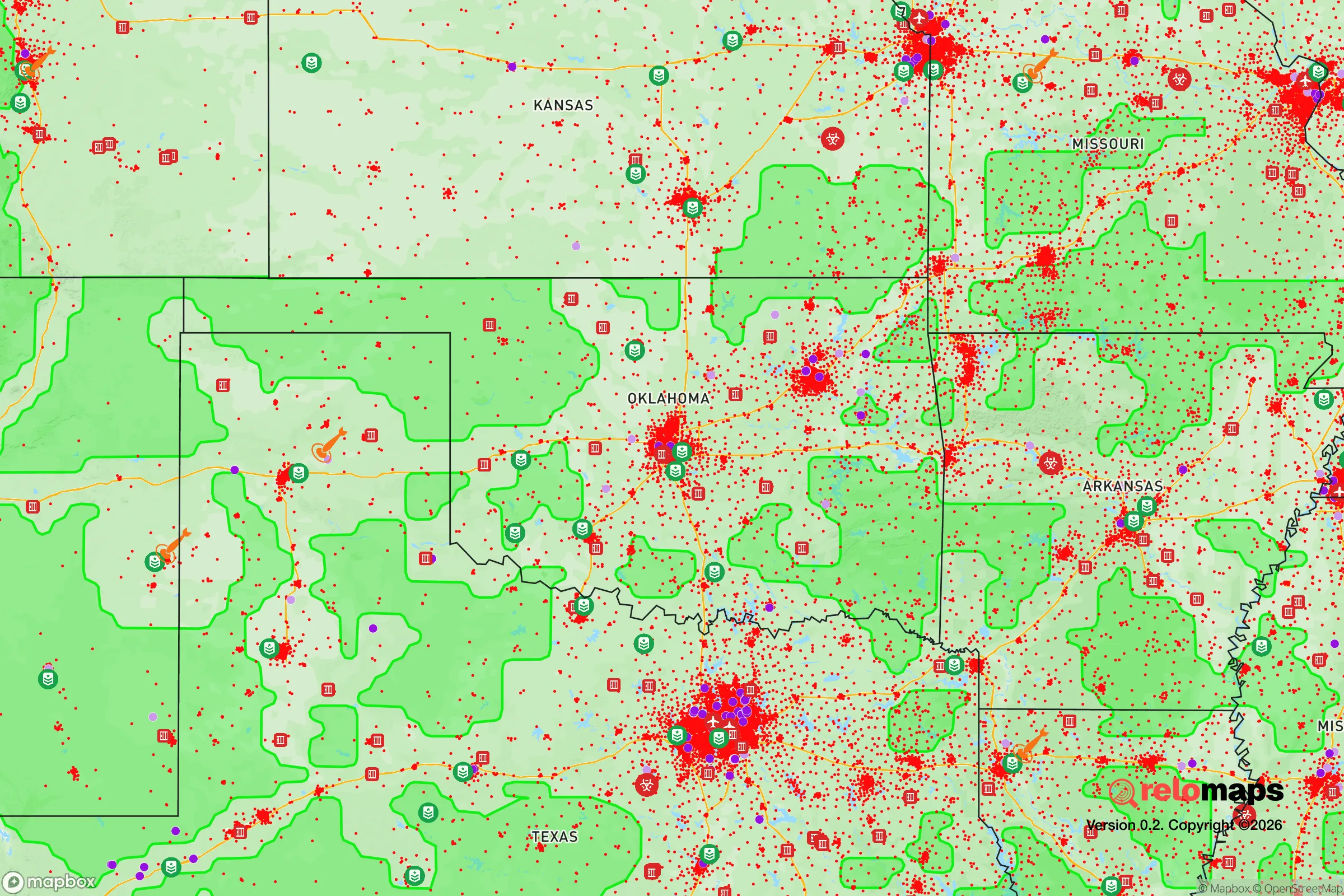
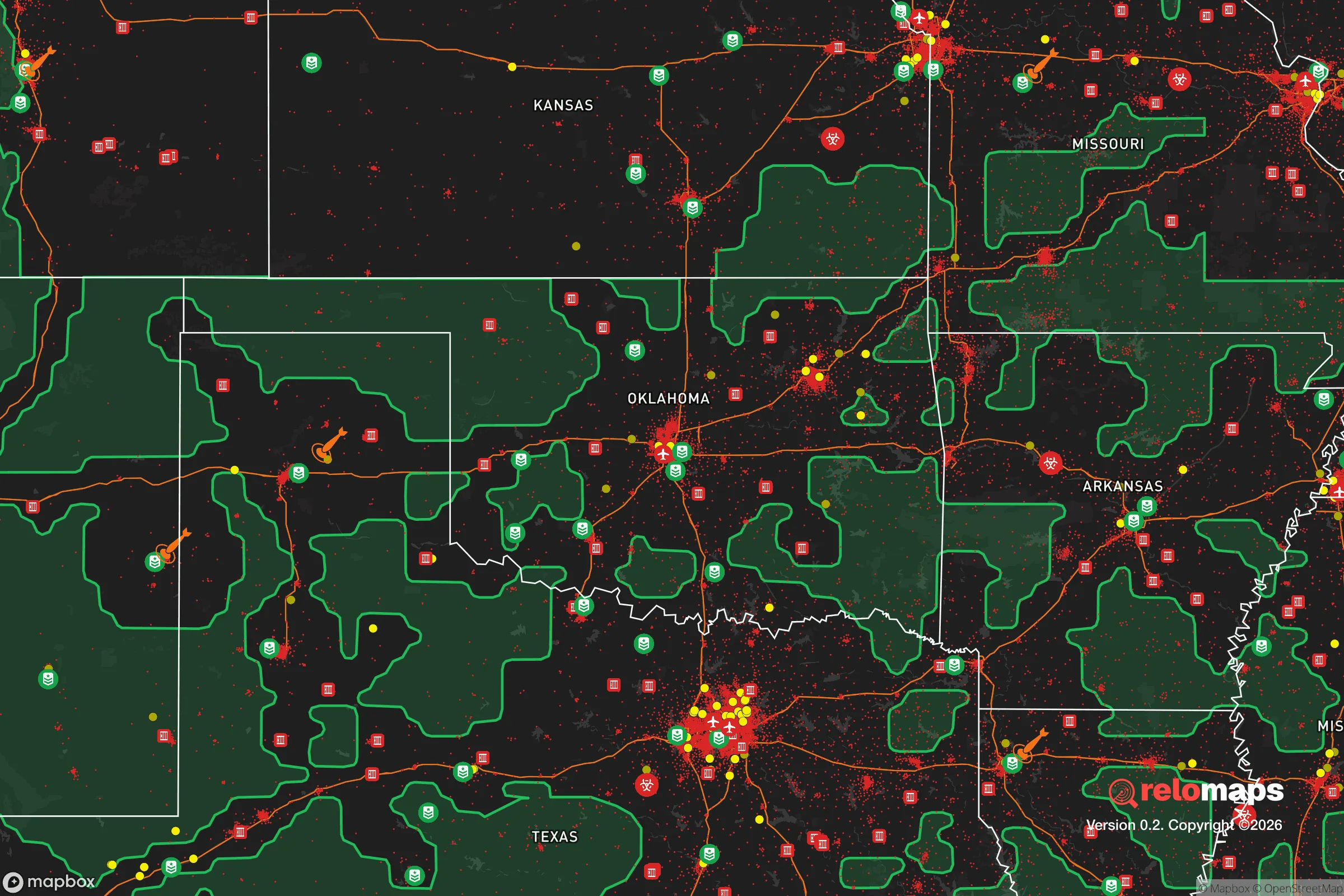


Important Note: For informational purposes only. This does not mean nothing bad ever happens in the green zones. Please use common sense. This is based on public data and modeled with AI. We tried to take a conservative approach but mistakes happen. We update this regularly as new information becomes available.
Solar Generator Recommendations
Backup power matters more here than in safer locations. We've picked three solar generators across budgets and capacity tiers — start with the budget unit if you only need a few essentials, or step up if you want to run a fridge and HVAC for days at a time.

Jackery Portable Power Station Explorer 300
Budget OptionPower on the Go: Weighing only 11 lbs, it's convenient to set up and store with book-sized foldable solar panels

BLUETTI Portable Power Station AC180
Designed for both indoor and outdoor scenarios, AC180 is highly capable as it has a robost capacity and continuous output power.

EF ECOFLOW DELTA Pro Ultra Power Station
Upgraded PickEcoFlow DELTA Pro Ultra is a whole-home energy system designed to grow with your family. Integrated with the Smart Home Panel 2, it scales to meet your evolving energy needs — keeping your home powered, intelligent, and secure through every stage of life.
We earn a commission, at no additional cost to you.
Strategic Assessment Analysis
Stillwater, Oklahoma, sits in a strategic sweet spot that resilience-minded relocators should study closely. Roughly 65 miles from Oklahoma City and 70 miles from Tulsa, the city is close enough to access major medical and supply hubs but far enough to avoid the immediate chaos of a metropolitan collapse. Its position in north-central Oklahoma, away from major fault lines, hurricane corridors, and flood-prone river basins, gives it a baseline geographic stability that many regions cannot claim. For someone thinking about long-term preparedness, Stillwater offers a rare combination of isolation and connectivity that makes it a serious contender for a relocation base.
Geographic position and natural advantages for long-term stability
Stillwater’s location on the Cimarron River valley places it in a region with relatively low seismic activity and minimal risk of catastrophic flooding compared to areas along the Arkansas or Red Rivers. The surrounding landscape is flat to gently rolling prairie, which limits the risk of landslides or wildfire spread that plagues mountainous or forested regions. The climate is continental, with hot summers and cold winters, but tornadoes are the primary natural threat—Oklahoma averages about 50 tornadoes annually, and Payne County sits in the heart of Tornado Alley. However, the city’s infrastructure is built to handle severe weather, with storm shelters common in homes and public buildings. For a prepper, this means the main natural risk is manageable with basic planning—unlike coastal hurricane zones or earthquake-prone fault lines. The area’s agricultural potential is another advantage: the surrounding farmland produces wheat, corn, and cattle, which supports local food security even if supply chains falter.
Risks, exposures, and proximity to fallout-relevant landmarks
The most significant risk for Stillwater in a national crisis scenario is its proximity to Oklahoma City, which houses Tinker Air Force Base, a major military logistics hub, and the Federal Aviation Administration’s Mike Monroney Aeronautical Center. In a conflict or major civil unrest, these could become targets or choke points. Stillwater is also about 90 miles from the Cushing oil storage hub, one of the largest crude oil storage facilities in the world, which could be a strategic target in a war or terrorist attack. The city itself hosts Oklahoma State University, a large public university with a student population over 20,000. In a societal breakdown, a dense campus population could become a source of unrest or resource strain. On the positive side, Stillwater lacks heavy industry, nuclear power plants, or major military bases within its immediate vicinity, which reduces the risk of direct fallout or collateral damage. The nearest nuclear facility is the Wolf Creek Generating Station in Kansas, about 150 miles north—far enough to avoid direct fallout but close enough to be a concern if a major incident occurs. For a relocator, the key takeaway is that Stillwater is not a primary target, but it sits within the shadow of larger strategic assets that could draw trouble.
Practical resilience for a relocator: food, water, energy, and defensibility
Stillwater’s practical resilience starts with its water supply. The city draws from Lake Carl Blackwell and Lake McMurtry, both within 10 miles, providing a reliable surface water source that is less vulnerable to contamination than groundwater aquifers in some regions. For off-grid living, the Cimarron River runs nearby, though it requires treatment due to agricultural runoff. Food resilience is strong: the city has a robust farmers’ market, multiple local farms, and a growing community of homesteaders in the surrounding county. The OSU agricultural extension offers resources for gardening, livestock, and food preservation, which is a tangible advantage for someone learning self-sufficiency. Energy infrastructure is mixed—Stillwater is served by OG&E, which relies on natural gas, coal, and wind. The flat terrain makes solar panel installation straightforward, and the area gets about 230 sunny days per year, which is decent for solar generation. Defensibility is moderate. The city is spread out, with a population around 50,000, which means it’s not so dense that it becomes unmanageable in a crisis, but not so rural that you’re isolated. The surrounding countryside offers numerous rural properties with good sightlines and limited access points, ideal for a retreat-style setup. However, the flat terrain means there are few natural defensive barriers—you’d rely on distance and community networks rather than mountains or forests for security.
The overall strategic picture for Stillwater is one of calculated trade-offs. It offers a solid baseline of natural stability, manageable risks, and practical resources for a prepper or survivalist-minded individual. The proximity to Oklahoma City and Tulsa is a double-edged sword—it provides access to medical care, supplies, and economic opportunity, but also introduces exposure to urban collapse scenarios. For a conservative-leaning relocator concerned with civic unrest, mass casualty events, or supply chain disruptions, Stillwater’s agricultural base, water access, and low target profile make it a defensible choice. The key is to secure property outside the city limits, build a local network, and invest in storm shelters and solar backup. It’s not a perfect fortress, but in a world where few places are, Stillwater offers a realistic foundation for long-term resilience without the extreme isolation of more remote locations. If you’re looking for a place that balances preparedness with livability, this is a strong candidate worth a serious look.

* Values derived from national, state, county, city and local statistics and may differ in a specific area. Last updated: 2026-04-21T09:09:26.000Z
Narrative content on this page is AI-generated and may contain mistakes. Verify any details that matter before acting on them.
ReloMaps may earn a commission from affiliate links at no extra cost to you.

