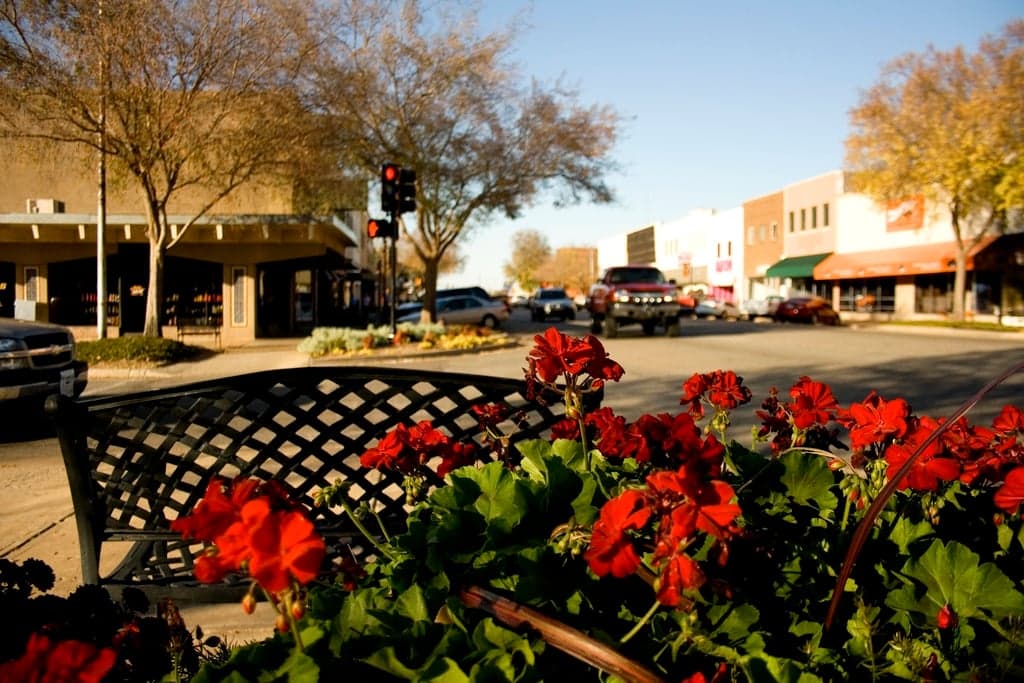
Photo: Wikipedia
Political ClimatePolitical Climate in Stillwater, OK
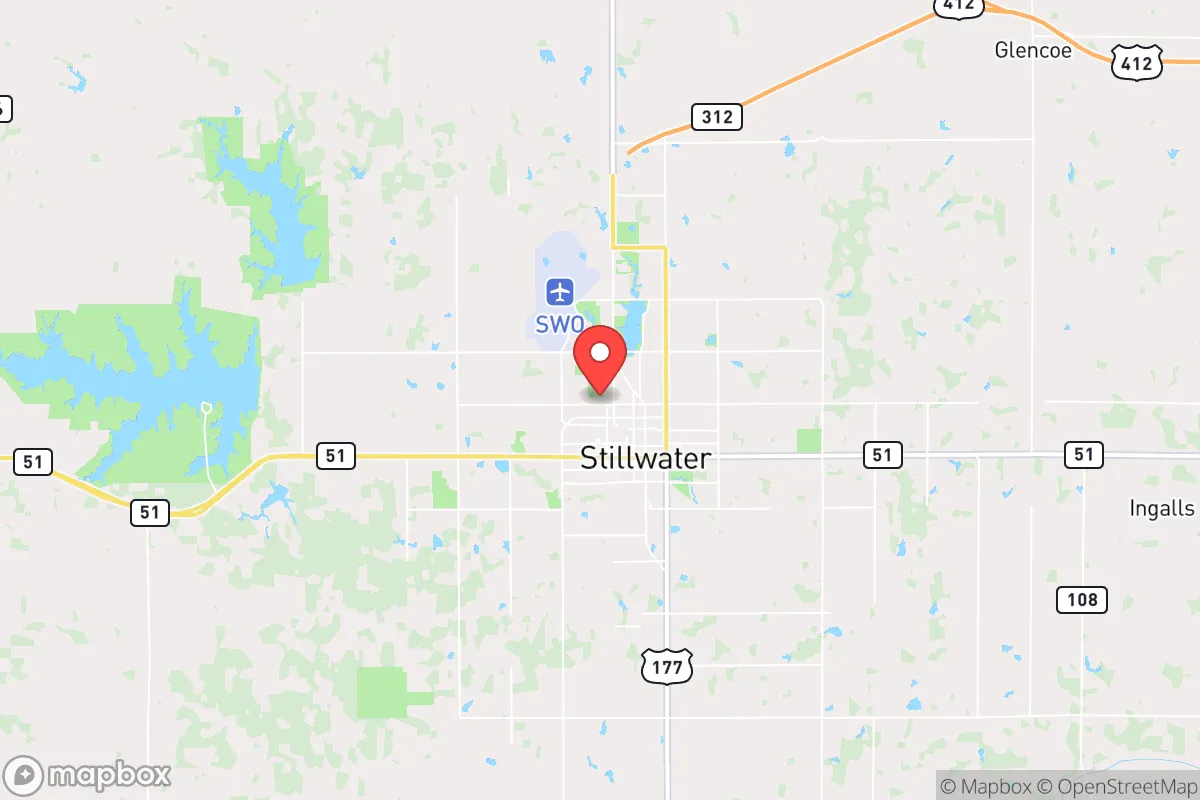
District shown is the primary district for this city’s centroid. Cities may span multiple districts.
Local Political AnalysisPolitical Analysis of Stillwater, OK
Stillwater, Oklahoma, has long been a solidly conservative community, and that hasn't changed much. The Cook Partisan Voting Index (PVI) of R+23 tells you the story right off the bat—this isn't a swing town. Payne County as a whole leans red, and Stillwater is the anchor. But if you've lived here a while, you'll notice the political temperature has shifted a bit, especially around the edges. The core is still deeply Republican, but there's a growing undercurrent of progressive activism, mostly tied to Oklahoma State University's student body and faculty. That said, the city council and county commission remain firmly in conservative hands, and local elections rarely see serious challenges from the left.
How it compares
Drive thirty minutes south to Guthrie, and you'll find a similar conservative vibe, though Guthrie's older, more rural base makes it even more reliably red. Head east to Tulsa, and you're in a different world—Tulsa County is still Republican, but the city itself has a much more competitive political scene, with a vocal progressive minority and a mayor who's been a Democrat. Stillwater, by contrast, feels insulated from that kind of back-and-forth. The surrounding towns—Perkins, Glencoe, Ripley—are even more conservative, often voting +30 or more for Republican candidates. The university is the main source of any political friction, but even OSU's student body leans right compared to most Big 12 schools. If you're looking for a place where the local government isn't constantly pushing new regulations or social experiments, Stillwater is a breath of fresh air compared to college towns like Norman or Lawrence, Kansas.
What this means for residents
For the average family or business owner, the conservative tilt means fewer headaches from city hall. Zoning changes are rare, property taxes stay low, and there's no serious push for things like rent control or new business licensing fees. The county sheriff's office is pro-Second Amendment, and you won't see any local ordinances trying to restrict gun rights. That said, the university's influence does create some tension. You'll occasionally see student groups pushing for more progressive policies—like diversity mandates or climate resolutions—but they rarely gain traction with the city council. The real concern for longtime residents is the long-term trajectory. As OSU grows and attracts more out-of-state students and faculty, the cultural and political balance could shift. For now, though, Stillwater remains a place where the government mostly stays out of your way, and that's exactly how most folks here like it.
One thing that sets Stillwater apart is its strong sense of local identity. You won't find the kind of aggressive, top-down policy changes you see in bigger cities. The city council tends to focus on practical stuff—roads, water, public safety—rather than social engineering. There's no citywide plastic bag ban, no mandatory composting, no "equity" task forces. The biggest political fights in recent years have been over things like a new sales tax for a sports complex or whether to allow alcohol sales on Sundays. That's the level of debate here, and it's refreshing. If you're worried about government overreach, Stillwater is still a place where you can breathe easy. Just keep an eye on the university's influence—it's the one wild card that could change things down the road.

State Political ClimatePolitical Climate in Oklahoma
State Political AnalysisPolitical Environment in the State
Oklahoma has long been one of the most reliably conservative states in the nation, with a deep-rooted Republican lean that has only intensified over the past two decades. The state hasn’t voted for a Democratic presidential candidate since 1964, and every statewide elected office is held by a Republican. Over the last 10-20 years, the shift has been dramatic: in 2004, Democrats still held a majority in the state House and Senate, but by 2010, Republicans had swept both chambers and have since held supermajorities. Today, the dominant coalition is a mix of rural conservatives, evangelical Christians, and energy-sector interests, with a growing libertarian streak on issues like gun rights and taxation. The overall partisan lean is roughly R+33 in presidential elections, making it one of the reddest states in the country.
Urban vs. rural divide
The political map of Oklahoma is a textbook study in urban-rural polarization. The two major metros—Oklahoma City and Tulsa—are both Republican-leaning, but with notable internal variation. Oklahoma City’s core has trended slightly more moderate in recent cycles, with precincts in the Midtown and Plaza District areas occasionally flipping blue in local races, but the surrounding suburbs like Edmond and Yukon are deeply conservative. Tulsa County, home to Broken Arrow and Jenks, is reliably red, though the city of Tulsa itself has a small but vocal progressive contingent centered around the Riverside and Cherry Street neighborhoods. The real engine of Republican dominance, however, is the vast rural expanse. Counties like Texas County in the Panhandle, Roger Mills County in the west, and Pushmataha County in the southeast routinely deliver 80-90% of their votes to GOP candidates. The only reliably blue counties are Oklahoma County (Oklahoma City) and Cleveland County (Norman), and even those are trending rightward—Norman’s progressive city council has sparked backlash that pushed the county from a 2012 Obama win to a 2024 Trump win by 12 points.
Policy environment
Oklahoma’s policy environment is aggressively conservative, with a focus on low taxes, limited regulation, and cultural traditionalism. The state has a flat income tax of 4.75%, which lawmakers are actively working to phase out entirely—a bill to cut it to 3.99% passed in 2025. Property taxes are among the lowest in the nation, capped at 1% of assessed value for most homeowners. There is no state-level estate or inheritance tax. On education, Oklahoma has a robust school choice system: the Oklahoma Parental Choice Tax Credit Act (2023) provides up to $7,500 per child for private school tuition, and the state has one of the highest charter school enrollment rates in the country. Healthcare policy is marked by a refusal to expand Medicaid under the ACA (though voters approved a ballot measure in 2020, the legislature has since added work requirements). Election laws are strict: voter ID is required, early voting is limited to two weeks, and absentee ballots require a notary or two witnesses. The state also passed a 2022 law banning ranked-choice voting and another in 2023 requiring hand-counting of ballots in all precincts—a move that drew national attention but was framed locally as an election integrity measure.
Trajectory & freedom
Oklahoma is moving decisively toward greater personal freedom in several key areas, particularly gun rights, parental rights, and economic liberty. In 2019, the state passed constitutional carry (permitless carry of firearms), and in 2023, it became a Second Amendment Sanctuary State, prohibiting state enforcement of any future federal gun bans. On parental rights, the Parents’ Bill of Rights (2022) guarantees parents access to all school curricula and medical records, and the 2023 Save Women’s Sports Act bans transgender athletes from female sports. Medical autonomy has seen a sharp reversal: abortion is now banned at conception (with no exceptions for rape or incest) under the 2023 Oklahoma Heartbeat Act, which effectively shut down all clinics. On the economic front, the state has eliminated most occupational licensing requirements for low-income workers and passed a Right to Farm constitutional amendment (2016) protecting agricultural property rights. However, there are areas where freedom has contracted: the state’s medical marijuana program, once among the most permissive in the country, has been heavily regulated since 2023 with a moratorium on new licenses and strict testing requirements. Overall, the trajectory is toward more liberty on guns, education, and taxes, with tighter controls on social issues and drug policy.
Civil unrest & political movements
Oklahoma has experienced relatively low levels of civil unrest compared to coastal states, but there have been notable flashpoints. The 2020 George Floyd protests in Oklahoma City and Tulsa were largely peaceful, though Tulsa saw a curfew imposed after some property damage. The state’s most visible political movement in recent years has been the Oklahoma Second Amendment Association (OK2A), which successfully pushed for constitutional carry and sanctuary status. On the left, the Oklahoma Policy Institute and Together Oklahoma have organized around Medicaid expansion and criminal justice reform, but their influence is limited. Immigration politics are relatively quiet—Oklahoma has no sanctuary cities, and a 2024 law requires local law enforcement to cooperate with ICE. Election integrity remains a hot-button issue: the 2022 hand-counting law sparked a lawsuit from the ACLU, but it was upheld in state court. A new resident would notice that political activism is mostly channeled through church groups, gun clubs, and school board meetings rather than street protests. The only major exception is the annual Oklahoma City Pride Parade, which draws both large crowds and counter-protests, but remains peaceful.
Projection
Over the next 5-10 years, Oklahoma is likely to become even more conservative, driven by two demographic trends. First, in-migration from blue states like California and Texas is accelerating—Oklahoma’s population grew by 4.5% between 2020 and 2025, with many newcomers drawn by low housing costs and the state’s political climate. These migrants tend to be conservative-leaning, often fleeing high taxes and regulation in their home states. Second, the state’s rural population is aging but not shrinking as fast as in other Plains states, thanks to the energy and agriculture sectors. The most likely scenario is that Republicans will maintain their supermajorities, the income tax will be eliminated entirely, and school choice will expand further. The wild card is the growing libertarian faction within the GOP, which may push for further deregulation of marijuana and occupational licensing, but could also clash with social conservatives on issues like gambling and alcohol sales. For a new resident, the Oklahoma of 2035 will likely look much like today, only more so: lower taxes, more school options, and a political culture that values personal responsibility over government intervention.
For someone moving to Oklahoma, the bottom line is straightforward: you are choosing a state that prioritizes individual freedom in most areas—especially gun rights, education choice, and low taxation—while maintaining traditional social values. The political climate is stable and predictable, with no serious threat of a leftward shift in the near term. You’ll find a government that stays out of your wallet and your home, but is active in protecting parental rights and election integrity. If you value a community where your vote counts, your business can thrive, and your family’s values are respected, Oklahoma is a solid bet. Just be prepared for hot summers, cold winters, and a political conversation that’s more about school boards and property taxes than national headlines.
* Values derived from national, state, county, city and local statistics and may differ in a specific area. Last updated: 2026-04-21T09:09:26.000Z
Narrative content on this page is AI-generated and may contain mistakes. Verify any details that matter before acting on them.
ReloMaps may earn a commission from affiliate links at no extra cost to you.

