
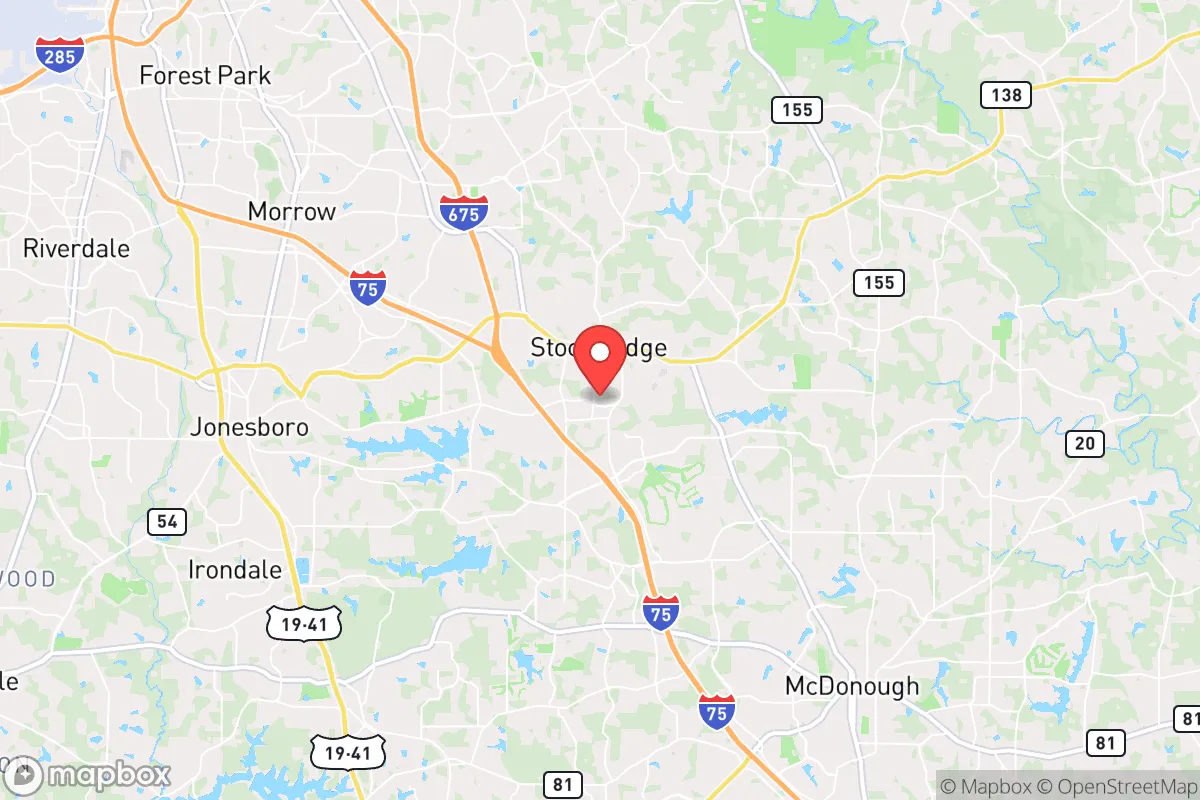

Photo: Wikipedia
Quality of Life in Stockbridge, GA
A high quality of life with strong walkability, manageable living costs, healthy neighborhood signals, and solid amenity access.
What does Quality of Life tell us?
Quality of Life blends cost of living, nearby amenities, socioeconomic signals, and neighborhood character. City-level scores represent the whole municipality; individual neighborhoods can differ.
What does this tell us?
Quality of Life blends cost of living, nearby amenities, socioeconomic signals, and neighborhood character. City-level scores represent the whole municipality; individual neighborhoods can differ.
Cost of Living
9% above national average
The Real Cost of Living in Stockbridge, GA for 2026
| Tier | Individual | Family (4) |
|---|---|---|
| Survival | $23k | $43k |
| Comfortable | $48k | $71k |
| Luxury | $98k+ | $152k+ |
| Elite (Top 5%) | $115k+ | $178k+ |
100%
The Area Signal
A metric tracking the socioeconomic signals of the area.
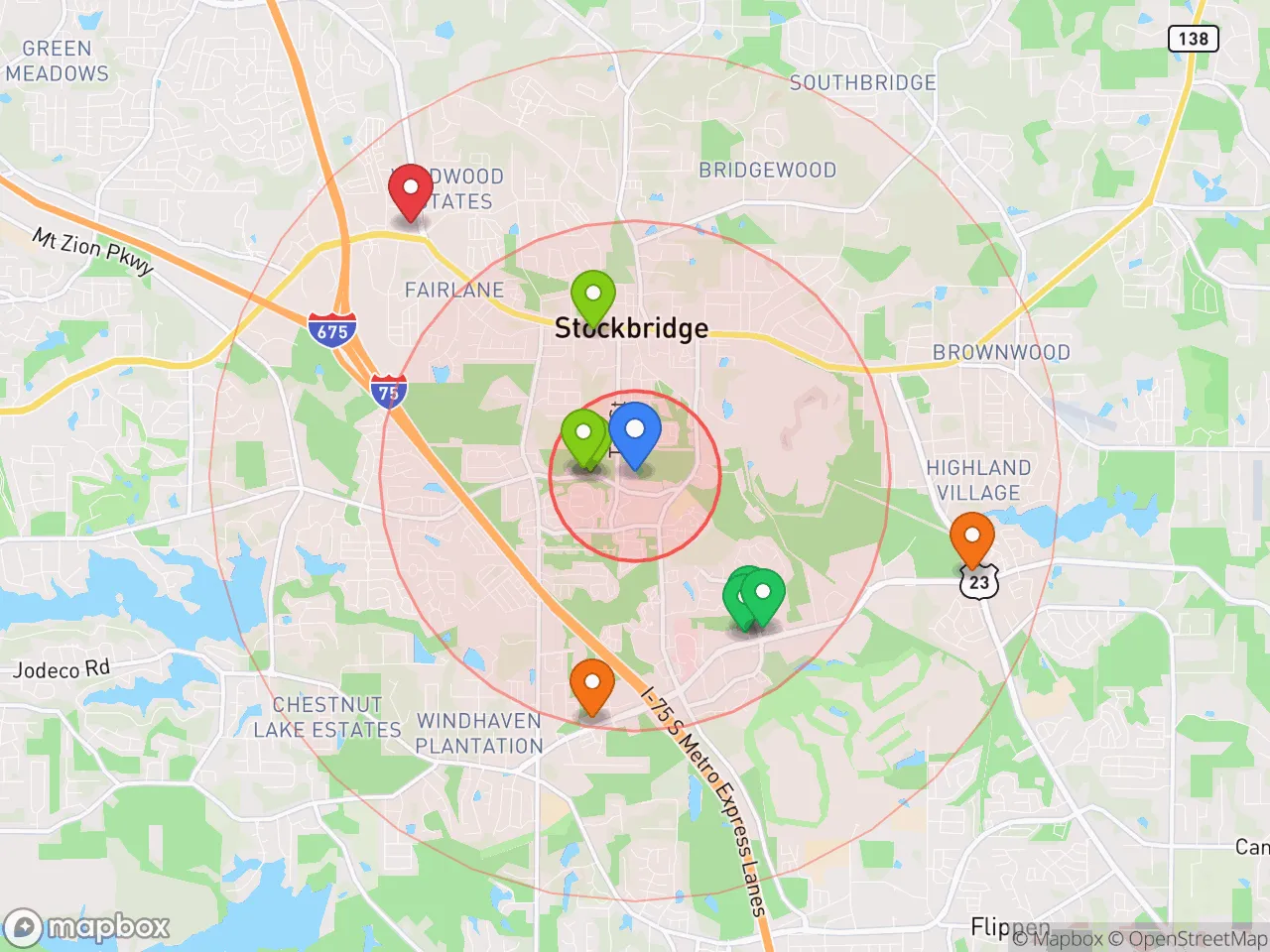
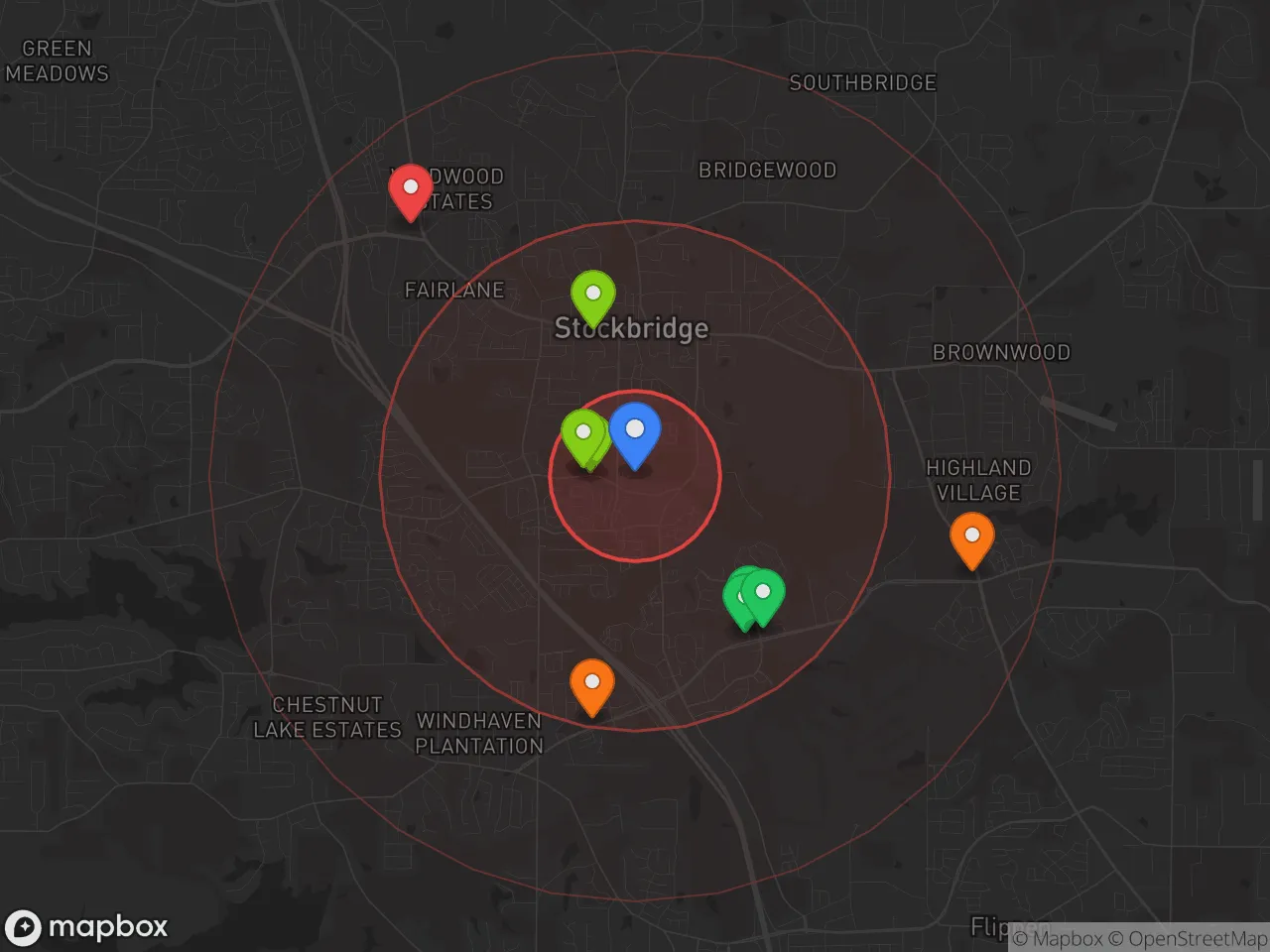
Hobbies
Explore the areaGroceries
7 within 10 miles
Gas
20 within 10 miles
Hospital
20 within 20 miles
Airport
ATL — Hartsfield–Jackson Atlanta International
Post Office
USPS — Stockbridge, GA
Critical Amenities
Quality-of-Life Analysis
Stockbridge, Georgia, presents a quality-of-life profile that blends suburban comfort with proximity to Atlanta’s economic engine, attracting a mix of young families, long-term homeowners, and professionals seeking more space for their money. With a cost-of-living index of 109 (slightly above the national average of 100), the city offers a middle-ground affordability that undercuts much of metro Atlanta while delivering above-average home values and a notably long average commute of roughly 31 minutes. The population skews toward established households and those willing to trade daily travel time for larger homes and quieter streets, creating a community that feels both settled and upwardly mobile.
Cost of living, housing costs, and how Stockbridge compares to nearby cities
Stockbridge’s cost-of-living index of 109 means everyday expenses run about 9% higher than the national norm, but this figure is significantly lower than in Atlanta proper (index ~115) or Alpharetta (~130). The median home value of $248,000 places Stockbridge well below the Atlanta metro median of roughly $380,000, making it one of the more attainable markets in the southern crescent of the metro area. Median rent sits at $1,437, which is about $200–$300 cheaper than comparable rentals in McDonough or Fayetteville, though slightly higher than in neighboring Hampton. Property taxes in Henry County are moderate, with an effective rate around 1.1% of assessed value, and the city offers a homestead exemption that reduces the burden for owner-occupants. The trade-off for these savings is the commute: the average travel time of 30.7 minutes reflects the daily drive north on I-75 or GA-155 into Atlanta or south to industrial hubs like Morrow and Jonesboro. For buyers who can work remotely or flex hours, Stockbridge’s housing affordability becomes a clear advantage over pricier northern suburbs.
What daily life is like for families: schools, shopping, and recreation
Daily life in Stockbridge centers on a mix of local retail corridors and community-oriented amenities. The Henry County School System operates the majority of public schools, with Stockbridge High School and Woodland Middle School drawing families for their extracurricular programs and relatively small class sizes compared to larger metro districts. For shopping and dining, the Stockbridge Village shopping center and the nearby Hudson Bridge Road corridor provide grocery stores, chain restaurants, and big-box retailers, while the city’s historic downtown offers a handful of independent cafes and antique shops. Outdoor recreation is anchored by J.P. Moseley Park, a 90-acre facility with walking trails, sports fields, and a fishing pond, and by the nearby Panola Mountain State Park for hiking and rock climbing. The rhythm of the week is suburban: school drop-offs, errands along the commercial strips, and weekend trips to Atlanta (about 20 miles north) for concerts, museums, or Hartsfield-Jackson airport access. Crime rates in Stockbridge are mixed—property crime is slightly above the national average, but violent crime has trended downward since 2022, and neighborhood-specific safety varies widely between subdivisions like Eagles Landing and older areas near the downtown core.
Stockbridge is best suited for buyers and renters who prioritize housing affordability and a slower pace over ultra-short commutes or urban nightlife. Families with school-age children, remote workers, and retirees downsizing from larger Atlanta homes will find the most value here, especially in the Eagles Landing and Fairview neighborhoods. Those who need to be in downtown Atlanta daily should weigh the 30-minute average commute against the savings on rent or mortgage—a trade-off that many Stockbridge residents accept for the benefit of a detached home with a yard. For professionals seeking a balance of cost, space, and access to the region’s job centers, Stockbridge remains a practical, well-established choice in Henry County’s suburban landscape.

Crime in Stockbridge, GA
Crime rates similar to the national median for U.S. locations.
Violent CrimeViolent Crime Analysis
Property CrimeProperty Crime Analysis
Crime Analysis
Stockbridge, Georgia, presents a crime environment that warrants careful consideration, particularly for those relocating from safer suburban areas. The city's violent crime rate stands at 431.4 incidents per 100,000 residents, while property crime occurs at a rate of 1,811.8 per 100,000. These figures place Stockbridge above national averages for both categories, a reality shaped in part by its position within the broader Atlanta metropolitan area, where progressive prosecutorial policies in surrounding jurisdictions have been linked to reduced accountability for repeat offenders.
Crime in context
Stockbridge's violent crime rate is roughly 23% higher than the national average and significantly exceeds the Georgia state average of approximately 380 per 100,000. Property crime, while lower than some neighboring metro-Atlanta suburbs, still outpaces the national benchmark by about 15%. These statistics reflect a broader regional trend: large metro areas with liberal-leaning district attorneys often see elevated crime rates due to policies that deprioritize prosecution for non-violent offenses and reduce sentences for violent ones. In the Atlanta judicial circuit, which covers parts of Henry County, progressive reforms have included bail reform and diversion programs that, while intended to reduce incarceration, have in practice allowed some repeat property offenders to cycle quickly back onto the streets.
What residents experience
For those living in Stockbridge, the most tangible safety concerns involve property crimes—particularly vehicle break-ins, package thefts, and residential burglaries in neighborhoods near major corridors like Highway 138 and I-75. Violent incidents, though less frequent, include aggravated assaults and robberies, often concentrated around commercial areas and apartment complexes with higher turnover. Residents report that police response times are generally adequate, but the effectiveness of law enforcement is undermined when arrested individuals are quickly released under progressive bail schedules. This creates a frustrating cycle where victims see little justice, and the same offenders reappear in their neighborhoods.
Neighborhood-level variation is notable. Gated communities and subdivisions on the city's south and east sides, such as those near Eagles Landing, experience significantly lower crime rates than areas closer to the interstate or older apartment complexes near the city center. Prospective residents should examine block-level crime maps and consider that Stockbridge's overall numbers are pulled upward by a few high-crime pockets. For families prioritizing safety, choosing a home in the lower-crime southern half of the city—or in unincorporated Henry County with its own sheriff's jurisdiction—can mitigate the risks associated with the metro area's broader justice system trends.
* Values derived from national, state, county, city and local statistics and may differ in a specific area. Last updated: 2026-04-29T23:24:04.000Z
Narrative content on this page is AI-generated and may contain mistakes. Verify any details that matter before acting on them.
ReloMaps may earn a commission from affiliate links at no extra cost to you.

