Photo: Wikipedia
Find The Best Places To Live
in Alpharetta
PRO TIP! You can paste a Zillow or Redfin link to get info on that property.
What It's Like Living in Alpharetta, GA
Alpharetta has a polished, family-first energy that feels less like a typical Atlanta suburb and more like its own small city with a serious case of ambition. Walk through Avalon on a Saturday night and you’ll see young parents pushing strollers past couples grabbing drinks at a rooftop bar, while retirees linger over dinner on a patio—it’s a place where the median age of 41.7 makes sense, because most people here are settled into careers and raising kids. The median household income of $146,581 isn’t just a number; it shows up in the well-kept lawns, the constant construction of new townhomes, and the fact that nearly 72% of adults hold a college degree.
Daily Rhythm and What People Actually Do
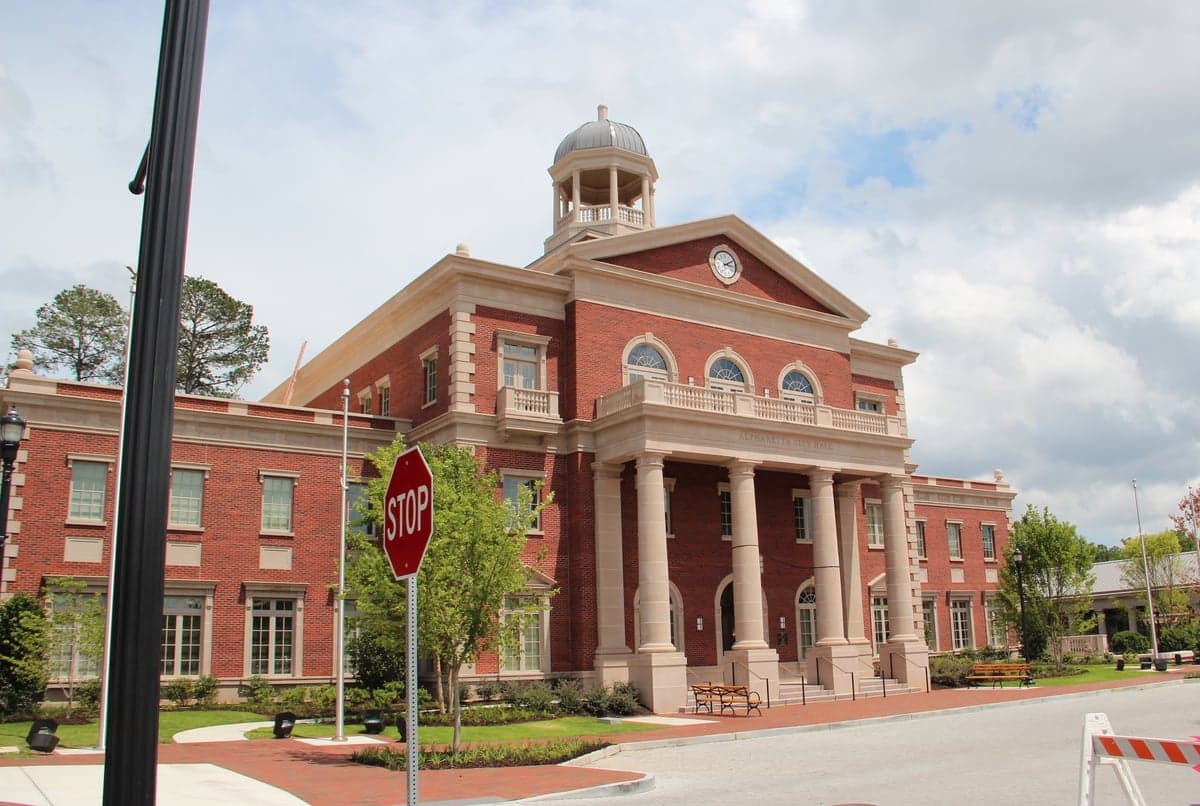
Weekday life in Alpharetta revolves around school drop-offs, work commutes, and evening activities. The average commute clocks in at about 28 minutes, which is manageable for a metro Atlanta suburb—most people head south toward jobs in Sandy Springs, Dunwoody, or Buckhead, though a growing number work locally at tech hubs like Verizon’s Alpharetta campus or the many fintech and software offices along North Point Parkway. After school, you’ll find kids at the Alpharetta Community Center or on soccer fields at North Park, while parents grab coffee at Fellowship Coffee on Canton Street or run errands at the Avalon Whole Foods. Weekends are for farmers markets at the Alpharetta City Hall lawn, hiking the Big Creek Greenway (a paved trail that cuts through town), or grabbing a table at Bones & Brew for barbecue and live music. The city’s median home value of $605,700 means most families own, and you’ll see that pride of ownership in the manicured yards and the constant stream of home improvement projects.
Sports, Community, and the High School Factor
High school sports are a genuine cultural force here. Alpharetta High School and Milton High School draw huge crowds for Friday night football games, and the rivalry between them is the kind of thing that splits friend groups and fills local bars like PURE Taqueria on game nights. The Atlanta United and Atlanta Braves fandom is strong, but it’s the local youth leagues—lacrosse, soccer, baseball—that dominate weekend schedules. The city’s violent crime rate of 218.6 per 100,000 is below the national average, which gives parents the comfort to let kids bike to a friend’s house or walk to the library after school. That safety, combined with top-rated schools like Barnwell Elementary and Autrey Mill Middle School, is the main reason families move here. The cost of living index of 183 (nearly double the U.S. average) is a real trade-off, but most residents see it as paying for a lifestyle where you don’t have to worry about safety or school quality.
What’s There to Do: Festivals, Food, and Outdoor Life
Alpharetta punches above its weight for entertainment. The Ameris Bank Amphitheatre draws national touring acts—everything from country stars to classic rock—and the lawn seats are a summer staple. The Alpharetta Arts Center hosts gallery shows and classes, and the Alpharetta Food Truck Alley at the city hall plaza runs from spring through fall. The biggest annual event is the Alpharetta Brewfest in September, where locals sample craft beers and listen to live bands on the downtown square. For outdoor types, the Big Creek Greenway connects to the Chattahoochee River National Recreation Area, and Wills Park has tennis courts, a pool, and a dog park that’s always busy. The restaurant scene leans upscale but not stuffy—Cibo e Beve for Italian, Table & Main for Southern comfort, and Lucky’s Burger & Brew for a casual burger and a beer. The downtown area around Canton Street is walkable, with brick sidewalks, string lights, and a mix of boutiques and salons that give it a small-town feel despite the city’s population of 66,355.
Honest Pros and Cons of Living Here
What residents love:
- Schools that deliver: The Fulton County school system is a major draw, and homes in the Alpharetta High School zone command a premium. Parents rarely worry about school quality.
- Safety and low stress: The crime rate is low enough that people leave doors unlocked during the day, and kids walk to parks alone.
- Convenient amenities: Avalon and downtown Alpharetta mean you don’t have to drive to Buckhead for a nice dinner or a night out.
What frustrates them:
- Traffic on GA-400: The main north-south artery is a parking lot during rush hour, and the 28-minute average commute hides the fact that a 10-mile trip can take 45 minutes on a bad day.
- High cost of living: The median home value of $605,700 prices out many young professionals and service workers, and rent for a one-bedroom often exceeds $2,000.
- Summer heat and humidity: From June through September, outdoor activities are limited to early mornings or evenings, and the air can feel thick.
A cultural quirk: Alpharetta has a noticeable “keep up with the Joneses” vibe—lawns are perfect, cars are new, and there’s a subtle pressure to have your kids in the right activities. It’s a great place for ambitious families, but it can feel a bit homogeneous if you’re single or child-free. The weather is classic Georgia: mild winters (rarely below freezing), long springs with blooming dogwoods, and summers that hit the 90s with high humidity. Fall is the sweet spot, with crisp air and the Alpharetta Farmers Market running through October. The seasonal rhythm here is dictated by school calendars and sports schedules, not by weather extremes—which is exactly how most residents like it.

Similar small cities to Alpharetta
* Values derived from national, state, county, city and local statistics and may differ in a specific area. Last updated: 2026-04-16T00:21:24.000Z
Narrative content on this page is AI-generated and may contain mistakes. Verify any details that matter before acting on them.
ReloMaps may earn a commission from affiliate links at no extra cost to you.

