Photo: Wikipedia
Political ClimatePolitical Climate in Sulphur, LA
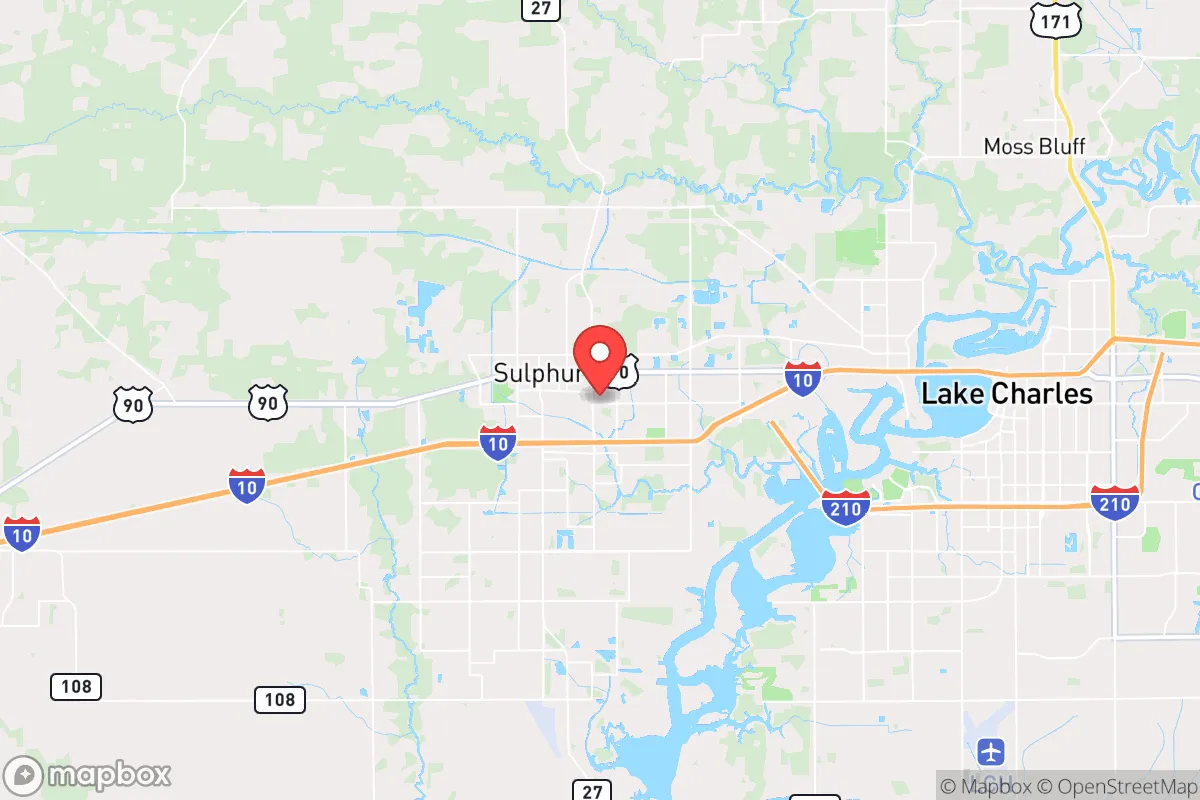
District shown is the primary district for this city’s centroid. Cities may span multiple districts.
Local Political AnalysisPolitical Analysis of Sulphur, LA
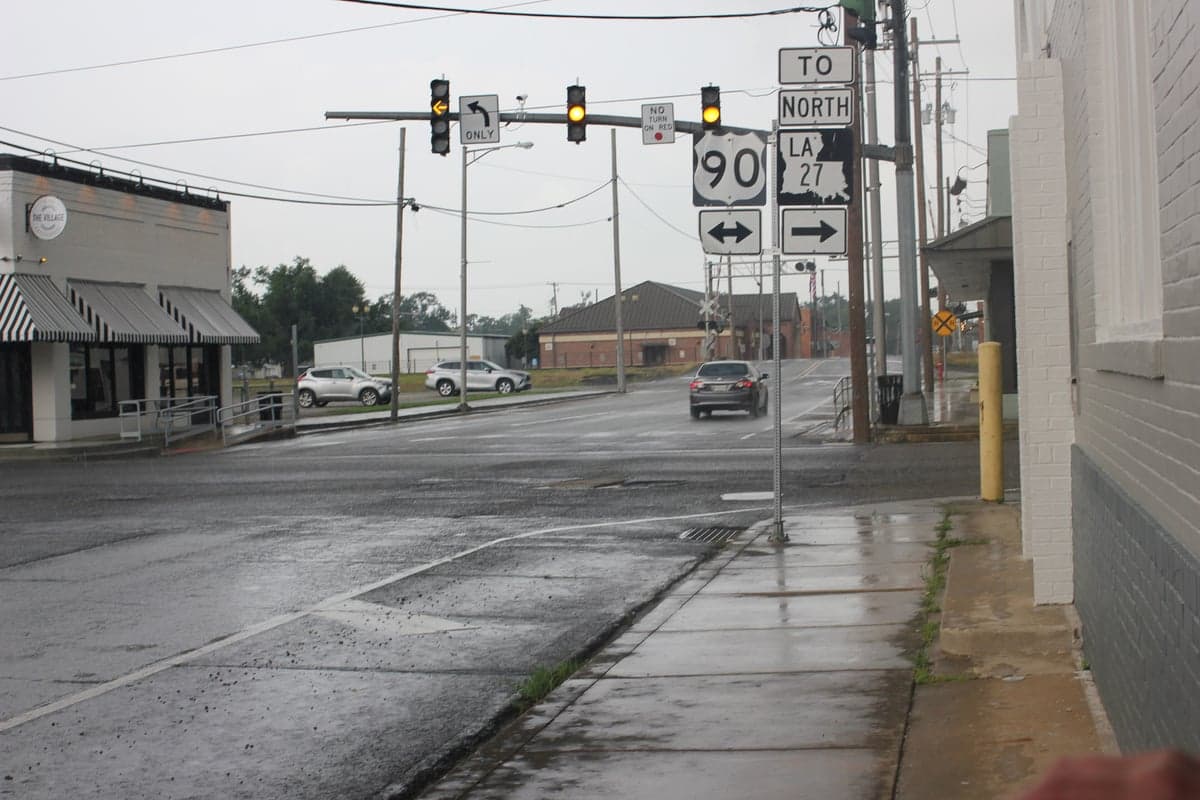
Sulphur, Louisiana, is about as solidly conservative as a place can get, and that’s been the case for as long as anyone around here can remember. The Cook PVI clocks the area at R+26, which means it’s 26 points more Republican than the national average—a number that hasn’t budged much in decades. You’ll find folks here vote straight-ticket red without a second thought, and the local culture reflects that: church on Sunday, hunting leases on Saturday, and a deep-seated suspicion of any politician who talks about “transforming” the way we live. The trajectory is steady, not shifting—if anything, the surrounding rural parishes have only hardened their stance as national politics gets more polarized.
How it compares
Drive 15 minutes east to Lake Charles, and you’ll see a different animal. Lake Charles is still conservative overall, but it’s got a more mixed bag—some younger professionals, a growing Hispanic population, and a few pockets of blue-leaning voters near McNeese State University. Sulphur, by contrast, feels like a time capsule of old-school Louisiana values. Head north to DeRidder or west to the Texas line near Orange, and you’ll find similar politics, but Sulphur stands out for its sheer consistency. There’s no real progressive foothold here; even the local Democratic Party is practically a ghost town. The contrast with Lake Charles is the sharpest—Sulphur residents often joke that they’re the “real” Louisiana, while the city folk are getting too fancy for their own good.
What this means for residents
For someone living here, the political climate means you don’t have to worry about your local government pushing woke agendas or overreaching into your personal life. The school board isn’t trying to sneak critical race theory into the curriculum, and the parish council isn’t wasting time on symbolic resolutions about climate change. You can hunt, fish, and own firearms without anyone batting an eye. But it also means you’re in a bubble—if you’ve got a kid who leans left or a neighbor who’s openly gay, they might feel a little isolated. The downside of such a uniform political landscape is that it can breed complacency; people assume their values are safe, but national trends have a way of creeping in. I’ve seen it happen with zoning laws and property taxes—small encroachments that start with “public safety” and end with more government control.
Culturally, Sulphur is still a place where the Fourth of July parade is a bigger deal than any election. The biggest policy distinction you’ll notice is the hands-off approach to business and land use—no one’s telling you what you can do with your property, and the oil-and-gas industry runs deep. But keep an eye on the long-term: as Lake Charles grows and attracts more out-of-state transplants, that R+26 might start to soften. For now, though, Sulphur remains a refuge for anyone tired of being told how to live by people who don’t share their values. Just don’t expect the local diner to have oat milk.

State Political ClimatePolitical Climate in Louisiana
State Political AnalysisPolitical Environment in the State
Louisiana has long been a reliably conservative state, but its political landscape is more nuanced than a simple red-state label suggests. The state leans Republican by about 20 points in presidential elections, with Donald Trump winning it by 19 points in 2024, but this dominance masks a deep urban-rural split and a complex history of populist, Democratic, and now GOP coalitions. Over the past 20 years, the state has shifted from a competitive purple state—where Democrats held many local offices and the governorship—to a solidly red one, driven by the realignment of white working-class voters and the exodus of moderate Democrats from the party. However, the state’s political culture remains distinct, with a strong emphasis on local control, low taxes, and individual liberty, though recent battles over education, healthcare, and election integrity have created new flashpoints.
Urban vs. rural divide
The political map of Louisiana is a textbook case of the urban-rural divide. New Orleans and its surrounding parishes (Orleans, Jefferson, St. Bernard) are the state’s most reliably Democratic strongholds, with Orleans Parish voting over 80% for Joe Biden in 2020. Baton Rouge (East Baton Rouge Parish) is a swing area, trending blue in presidential years but electing conservative local officials. Lafayette and Shreveport are more conservative, with Lafayette Parish voting +20 R in 2024, while Shreveport’s Caddo Parish is a Democratic holdout due to its large African American population. The rural parishes—like Winn, Jackson, and Bienville—are deep red, often voting 70-80% Republican. The Florida Parishes (east of Baton Rouge, including Livingston and Tangipahoa) have become some of the most conservative areas in the state, driven by rapid suburban growth and a strong evangelical presence. The Acadiana region (Lafayette, New Iberia, Houma) is culturally conservative but has a populist streak, often supporting Democrats at the local level while voting Republican nationally.
Policy environment
Louisiana’s policy environment is a mixed bag for conservatives. On the plus side, the state has no state property tax on vehicles or business inventory, and the homestead exemption shields the first $75,000 of home value from parish property taxes. The state income tax is a flat 3% for individuals, down from a progressive 6% in recent years, thanks to 2024’s tax reform. Sales taxes are high, averaging 9.5% combined state and local, but the state has no estate tax. On the regulatory front, Louisiana is a right-to-work state with a business-friendly tort reform system, though trial lawyers remain powerful. Education policy is a battleground: the state has a robust school choice program (the Louisiana Scholarship Program) and a growing charter school sector, but the teachers’ union and local school boards often resist. Governor Jeff Landry, a Republican elected in 2023, has pushed for parental rights in education, including a 2024 law requiring schools to notify parents of any curriculum changes related to sexuality or gender identity. Healthcare is a sore spot: the state expanded Medicaid under the Affordable Care Act in 2016, a decision many conservatives view as a federal overreach, and the state has one of the highest rates of Medicaid enrollment in the country. Election laws are generally secure: Louisiana requires voter ID, has no widespread mail-in voting (except for absentee with an excuse), and conducts post-election audits. However, the 2020 election saw no major controversies here, unlike some other states.
Trajectory & freedom
Louisiana is moving in a decidedly more conservative direction on several fronts, but the trajectory is not uniformly toward greater freedom. On the positive side, the state has constitutional carry (permitless concealed carry) since 2021, and the 2024 legislative session passed a law banning gender transition procedures for minors, a major win for parental rights advocates. The state also passed a 2024 law requiring public schools to display the Ten Commandments, a move that is being challenged in court but signals a strong cultural conservatism. On the negative side, the state’s high incarceration rate (the highest in the world per capita) and its reliance on for-profit prisons raise concerns about government overreach into personal liberty. The 2023 criminal justice reform package, while reducing some mandatory minimums, also expanded the death penalty to include child rape, a move that divides conservatives. Property rights are generally strong, with no statewide rent control and limited zoning in rural areas, but coastal erosion and flood insurance mandates create a unique regulatory burden. The state’s 2024 tax reform lowered the income tax and eliminated the corporate franchise tax, but it also expanded the sales tax base to include some services, which some see as a hidden tax increase. Overall, Louisiana is becoming more culturally conservative but remains a high-tax, high-regulation state in many respects, particularly on insurance and energy.
Civil unrest & political movements
Louisiana has a history of political activism, but recent years have seen a shift from street protests to legislative battles. The 2020 Black Lives Matter protests in New Orleans and Baton Rouge were large but largely peaceful, with some property damage in the French Quarter. The state’s strong gun culture means that counter-protests by armed citizens are common, particularly around Confederate monument removals. Immigration politics are less heated here than in border states, but the 2024 law allowing state law enforcement to arrest illegal immigrants (SB 388) has been a flashpoint, with the Biden administration suing the state. There is a small but vocal secessionist movement in the Acadiana region, centered on the idea of creating a separate state called “Acadiana,” but it has no real political traction. Election integrity is a major concern for conservatives: the state’s use of electronic voting machines without a paper trail has been criticized, though the 2024 legislature passed a law requiring paper ballots by 2026. The Louisiana Family Forum and other conservative groups are highly active in lobbying for parental rights and religious freedom, while the ACLU of Louisiana fights against the Ten Commandments law and the transgender ban. A new resident would notice the strong presence of church-based political activism, particularly in the Florida Parishes and Acadiana, where pastors often endorse candidates from the pulpit.
Projection
Over the next 5-10 years, Louisiana is likely to become even more conservative, but with significant caveats. The state’s population is aging and declining, with young people leaving for Texas and Florida, which will further entrench the GOP’s rural base. In-migration from blue states is minimal, unlike in Texas or Tennessee, so the state will not see a liberal influx. However, the growth of the Baton Rouge suburbs (like Denham Springs and Prairieville) and the New Orleans northshore (Mandeville, Covington) will create a more educated, suburban conservative electorate that may prioritize economic growth over cultural battles. The state’s dependence on oil and gas revenue means that the energy transition will be a major political issue, with conservatives fighting to protect the industry. The 2024 tax reform will likely lead to further cuts, but the state’s structural budget deficit (due to Medicaid and pension costs) will limit how much freedom can be expanded. The biggest wild card is the courts: the Ten Commandments law and the transgender ban will likely be struck down or narrowed, which could fuel a backlash and push the state toward even more aggressive legislation. A new resident moving in now should expect a state that is culturally conservative and getting more so, but with a government that is still too big, too expensive, and too entangled in personal lives for true freedom.
Bottom line for a new resident: Louisiana offers a strong sense of community, low housing costs, and a conservative culture that respects gun rights and religious freedom. But don’t mistake the red votes for a small government paradise. The state’s high sales taxes, expensive car insurance, and overbearing flood insurance mandates mean you’ll pay for that freedom in other ways. If you’re moving here, expect to fight for your rights at the local level—school boards, parish councils, and city halls are where the real battles happen. The state is trending in the right direction, but it’s a slow, messy process. Come for the culture and the low cost of living, but stay ready to engage politically if you want to keep it that way.
* Values derived from national, state, county, city and local statistics and may differ in a specific area. Last updated: 2026-05-01T17:23:15.000Z
Narrative content on this page is AI-generated and may contain mistakes. Verify any details that matter before acting on them.
ReloMaps may earn a commission from affiliate links at no extra cost to you.

