Photo: Wikipedia
Demographics of Summerville, SC
Affluence Level in Summerville, SC
A middle-class area roughly in line with national averages across income, home values, education, and employment.
People of Summerville, SC
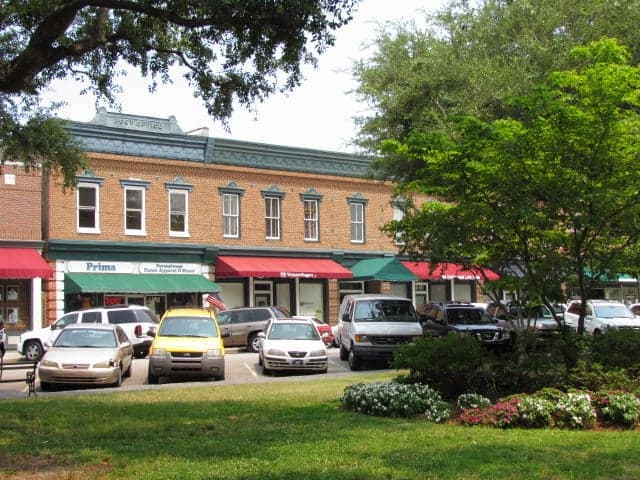
The people of Summerville, South Carolina today number 51,262, forming a predominantly White (66.0%) and Black (20.1%) community with a small but growing Hispanic presence (8.3%) and a very low foreign-born share of just 2.5%. The city retains a distinctly Southern, family-oriented character, with a median age slightly above the national average and a college-educated rate of 31.7% that reflects its role as a bedroom community for Charleston professionals and a hub for retirees. Summerville’s identity is rooted in its historic small-town charm—centered on the Flowertown Festival and its iconic pine-lined streets—but its population is increasingly shaped by suburban expansion from the Charleston metro area.
How the city was settled and grew
Summerville was founded in the late 18th century as a summer retreat for Lowcountry planters escaping Charleston’s heat and malaria. The original population was a mix of wealthy White plantation families and enslaved Black laborers who built the early homes and worked the surrounding rice and cotton fields. After the Civil War, the town’s economy shifted to timber and phosphate mining, drawing a wave of Black families who settled in the Hutchinson Square and Gregg Park neighborhoods, where many descendants still live today. The arrival of the railroad in the 1830s and the establishment of the Pine Forest Inn in the 1890s turned Summerville into a winter resort for Northern tourists, bringing a small influx of White professionals and service workers. By 1900, the population was roughly 2,000, overwhelmingly native-born and divided along racial lines, with Black residents concentrated in the East Summerville area and White residents in the historic Summerville Historic District around Main Street.
Modern era (post-1965)
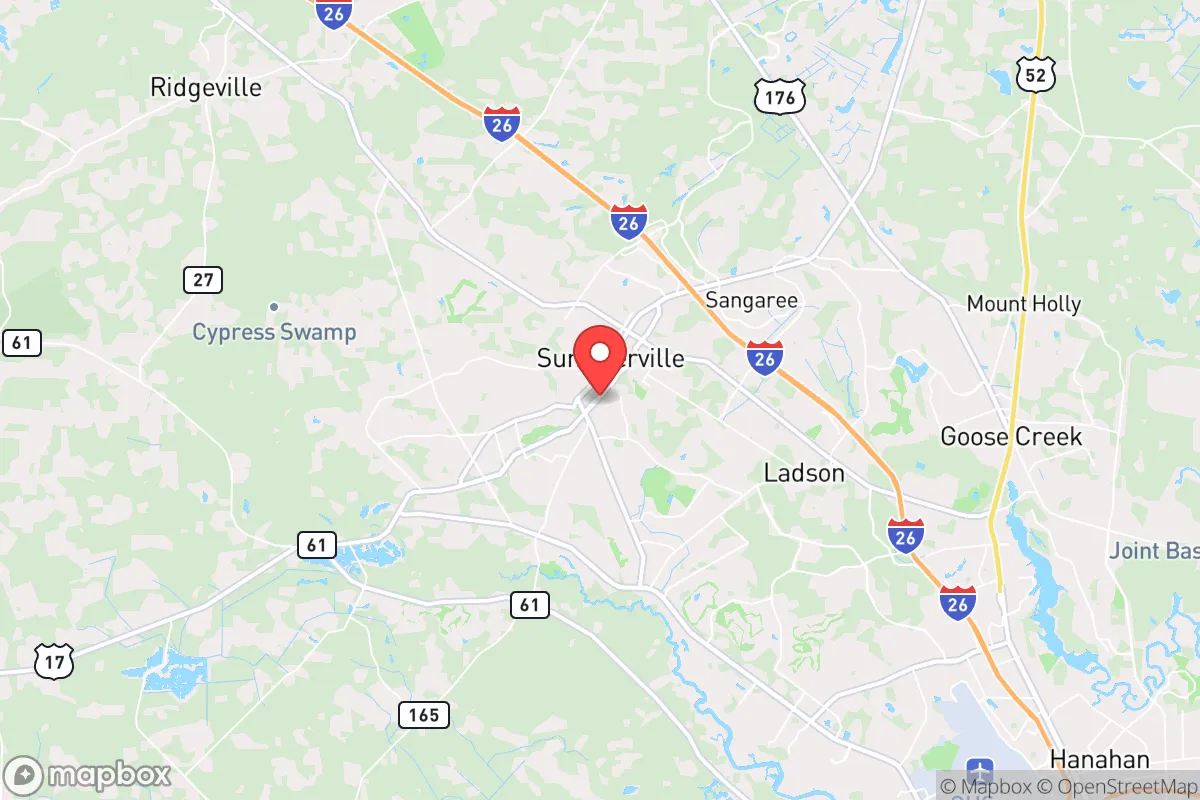
The post-1965 era transformed Summerville from a quiet resort town into a fast-growing suburb of Charleston, driven by the expansion of the Charleston Naval Base, Boeing’s arrival in the 1990s, and the broader Lowcountry economic boom. Domestic in-migration—primarily White families from the Northeast and Midwest—fueled most of the growth, with new subdivisions like Nexton and Cane Bay (technically outside city limits but functionally part of the Summerville area) absorbing tens of thousands of newcomers. Within the city proper, the Black population remained stable at around 20%, concentrated in older neighborhoods like Oakbrook and Lincolnville, while the Hispanic share grew from negligible to 8.3% by 2020, driven by construction and service-sector workers settling in the Dorchester Road corridor. The Asian population is small (1.3% East/Southeast Asian, 0.2% Indian subcontinent), with most families living in newer subdivisions near Interstate 26. The foreign-born share remains low at 2.5%, reflecting Summerville’s character as a primarily domestic migration destination rather than an immigrant gateway.
The future
Summerville’s population is heading toward continued growth and gradual diversification, but within a framework of distinct enclaves rather than wholesale integration. The White share is slowly declining from its 2010 peak of 72%, while the Hispanic and Asian shares are rising modestly, driven by second-generation families moving outward from Charleston and by new arrivals in the service and healthcare sectors. The Black population is expected to remain near 20%, with younger Black families increasingly moving into newer subdivisions like White Gables rather than staying in historic Black neighborhoods. The Nexton and Cane Bay developments are attracting a younger, more diverse demographic mix than the older historic core, which remains predominantly White and older. Over the next 10–20 years, Summerville will likely become slightly more Hispanic and Asian, but it will remain a majority-White, native-born suburb—not a melting pot, but a place where distinct communities coexist within a shared small-town identity.
For someone moving in now, Summerville offers a stable, family-oriented environment with low crime, good schools, and a strong sense of place, but it is not a hub of ethnic diversity or immigrant culture. The city is becoming more suburban and less distinctively Southern with each new subdivision, yet its historic core and established Black neighborhoods ensure it retains a layered, authentic character that newer Sun Belt suburbs often lack. The bottom line: Summerville is a growing, moderately diverse, and overwhelmingly native-born community where newcomers will find a welcoming but culturally homogeneous environment.

* Values derived from national, state, county, city and local statistics and may differ in a specific area. Last updated: 2026-04-30T03:26:00.000Z
Narrative content on this page is AI-generated and may contain mistakes. Verify any details that matter before acting on them.
ReloMaps may earn a commission from affiliate links at no extra cost to you.

