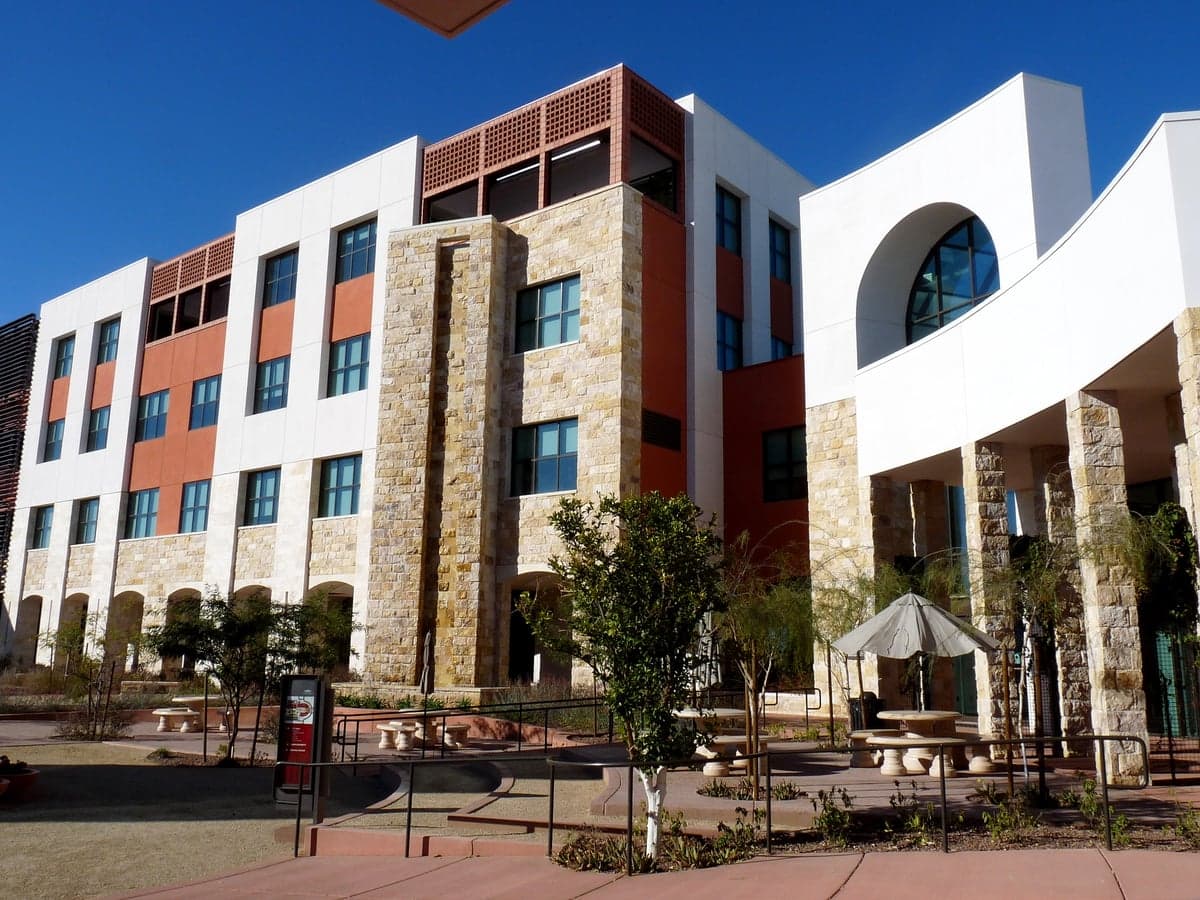
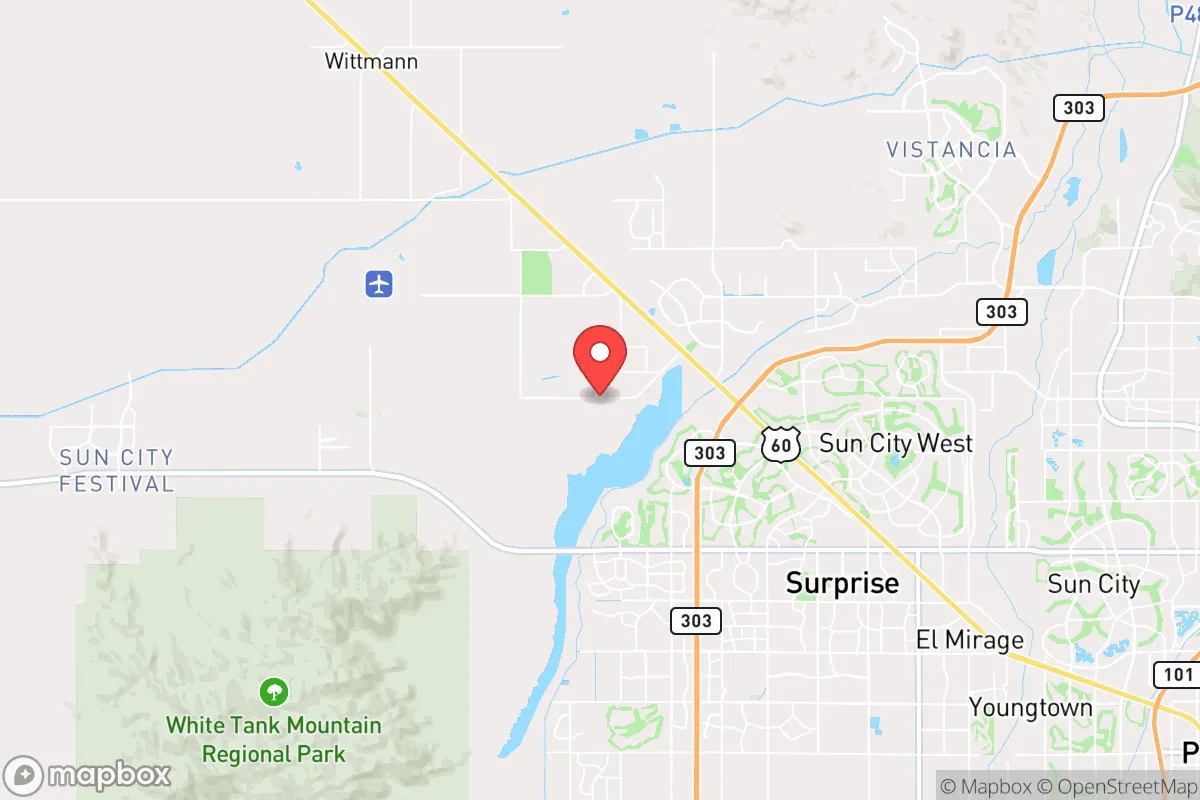
Photo: Wikipedia
Demographics of Surprise, AZ
Affluence Level in Surprise, AZ
An upper-middle-class area. Household wealth, education levels, and homeownership run ahead of national benchmarks.
People of Surprise, AZ
The people of Surprise, Arizona, today form a predominantly white, family-oriented, and politically conservative community of 149,519 residents, with a notably low foreign-born share of just 2.2% and a Hispanic population of 19.2%. The city is characterized by its master-planned retirement and family subdivisions, a high proportion of single-family homes, and a demographic profile that skews older than the national average, though younger families are increasingly arriving. Distinctive identity markers include a strong sense of civic order, a heavy reliance on the Sun Cities' recreational infrastructure, and a population that is 66.9% white, 4.6% Black, and 2.3% East/Southeast Asian, with a negligible Indian subcontinent presence at 0.1%. This is a place where the population has grown almost entirely through domestic in-migration, not international immigration, and where the social fabric remains deeply rooted in Sun Belt suburban values.
How the city was settled and grew
Surprise is a genuinely post-1900 creation, with no colonial or 19th-century settlement of note. The city was founded in 1938 by Flora Mae Statler, who reportedly named it because she would be "surprised" if the desert town ever amounted to much. For decades, it remained a tiny agricultural outpost, with a population of just a few hundred people working cotton and citrus farms. The first major wave of settlement came in the 1960s and 1970s with the development of the Sun City Grand and Sun City West retirement communities, which were master-planned by Del Webb specifically for active adults aged 55 and older. These neighborhoods drew a nearly exclusively white, middle-class, and conservative retiree population from the Midwest and Northeast—people seeking warm winters, low taxes, and golf-course living. The original core of the city, around Surprise Farms and the historic downtown area near Greenway Road, housed the small service population that supported these retirees.
Modern era (post-1965)
The post-1965 era in Surprise is defined not by the Hart-Cellar Act (which had minimal impact here) but by explosive domestic suburbanization. The city's population grew from roughly 3,000 in 1980 to over 30,000 by 2000, and then to nearly 150,000 by 2025. The key driver was the expansion of the Sun City model into new master-planned communities like Marley Park (opened 200ON), which targeted younger families and working-age professionals, and Rancho Gabriela, a large master-planned development that attracted a mix of white and Hispanic families. The Hispanic population, now 19.2%, concentrated in older, more affordable neighborhoods like Surprise Farms and the area around Bell Road and 163rd Avenue, where many work in construction, landscaping, and service industries serving the retiree economy. The Black population (4.6%) and East/Southeast Asian population (2.3%) are small but growing, with Black residents more likely to be found in newer subdivisions like Cottonflower and Asian residents in the Marley Park area, drawn by the school quality and newer housing stock. The Indian subcontinent population (0.1%) is virtually nonexistent, a notable contrast to other Phoenix suburbs like Chandler or Gilbert. The college-educated share of 31.0% is slightly below the national average, reflecting the city's blue-collar and retiree-heavy employment base.
The future
The population of Surprise is heading toward continued growth, with projections reaching 200,000 by 2040, but the character of that growth is shifting. The city is not homogenizing into a single bloc; rather, it is tribalizing into distinct enclaves based on age and housing type. The retiree-heavy Sun City neighborhoods are aging in place, while younger families—overwhelmingly white and Hispanic—are filling new subdivisions like Whitewing and Sterling Hills. The Hispanic population is growing organically through higher birth rates and continued domestic in-migration from California and Texas, but the foreign-born share remains extremely low (2.2%), meaning assimilation into English-dominant, conservative civic culture is rapid. The East/Southeast Asian and Black populations are likely to grow modestly as Phoenix's overall diversity spreads outward, but Surprise will remain a predominantly white, English-speaking, and politically conservative community for the foreseeable future. The next 10-20 years will see the city become more family-oriented and less retiree-dominated, but its demographic DNA—domestic, suburban, and culturally traditional—will persist.
For someone moving in now, Surprise is becoming a younger, more diverse version of its former self, but it remains a place where the population is overwhelmingly native-born, conservative, and oriented around single-family homes and planned communities. The low foreign-born share and high white majority mean that new residents, particularly those from the Midwest or West Coast, will find a familiar, orderly, and English-dominant environment. The city's future is one of steady, managed growth that preserves its suburban character while slowly absorbing modest demographic shifts from within the United States.

* Values derived from national, state, county, city and local statistics and may differ in a specific area. Last updated: 2026-05-01T10:07:37.000Z
Narrative content on this page is AI-generated and may contain mistakes. Verify any details that matter before acting on them.
ReloMaps may earn a commission from affiliate links at no extra cost to you.

