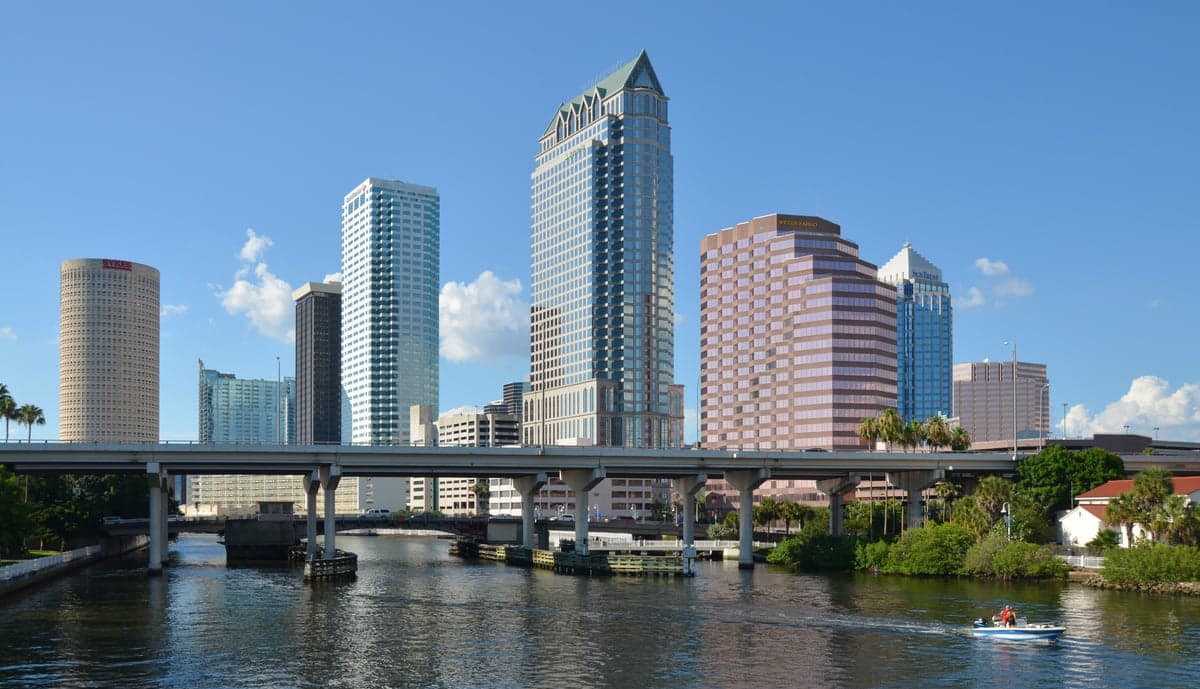
Photo: Wikipedia
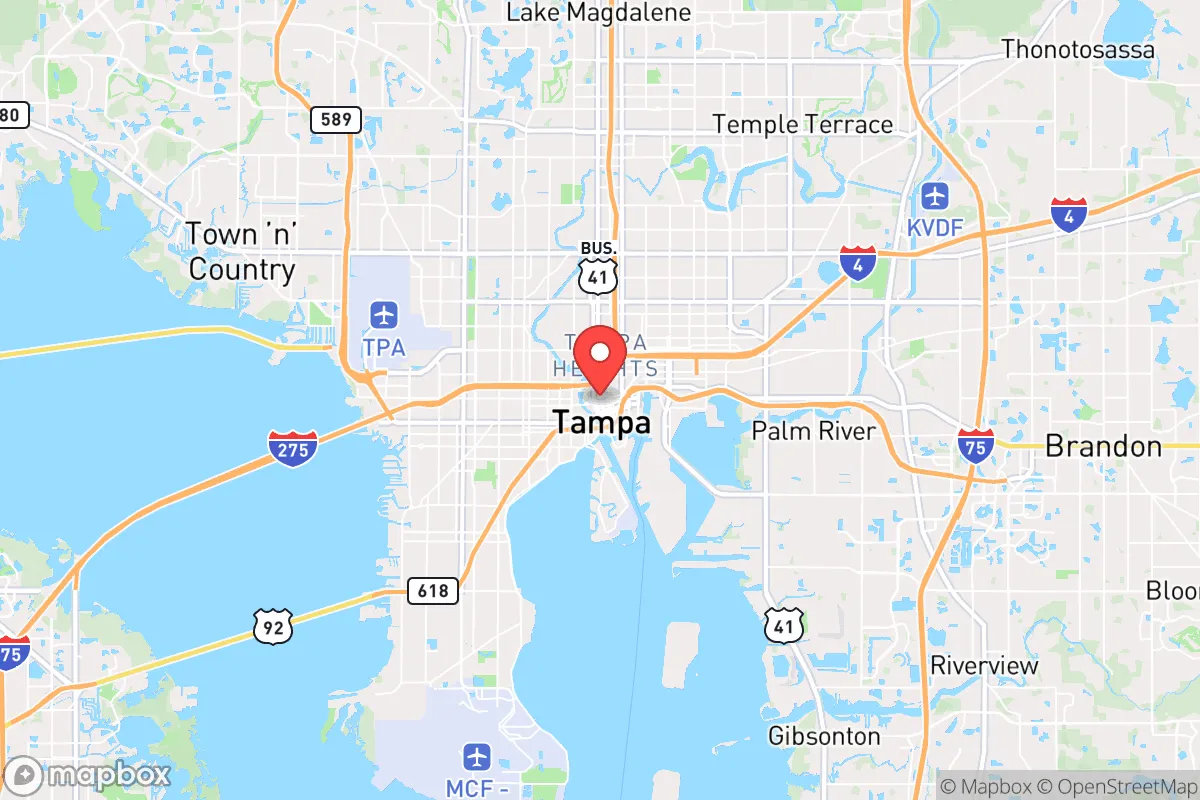
Strategic Assessment of Tampa, FL
High tactical risk. This location is likely close to major population centers, strategic targets, or sits in a high-disaster corridor. A retreat property and careful exit planning is required.
What does the Strategic Assessment tell us?
Our Strategic Assessment grades tactical survivability of an area. Major population centers, military targets, fallout zones, natural disasters, and border exposure all drive risk — lower exposure means a more defensible position in a crisis.
This is heavily inspired by Joel Skousen's Strategic Relocation book. Highly recommended you checkout the book ($)What does this tell us?
Our Strategic Assessment grades tactical survivability of an area. Major population centers, military targets, fallout zones, natural disasters, and border exposure all drive risk — lower exposure means a more defensible position in a crisis.
This is heavily inspired by Joel Skousen's Strategic Relocation book. Highly recommended you checkout the book ($)Strategic Pillars

Key Distances
Regional Safe Places
Below is our recommended "safe zones" in Florida and the surrounding area based on our strategic heuristics. For most people, it's unrealistic to live in a “safe zone” full-time due to work, family or other personal reasons. They tend to be more rural. However, many of these areas are perfect for second homes and retreat properties that double as a vacation home or even a short-term rental.

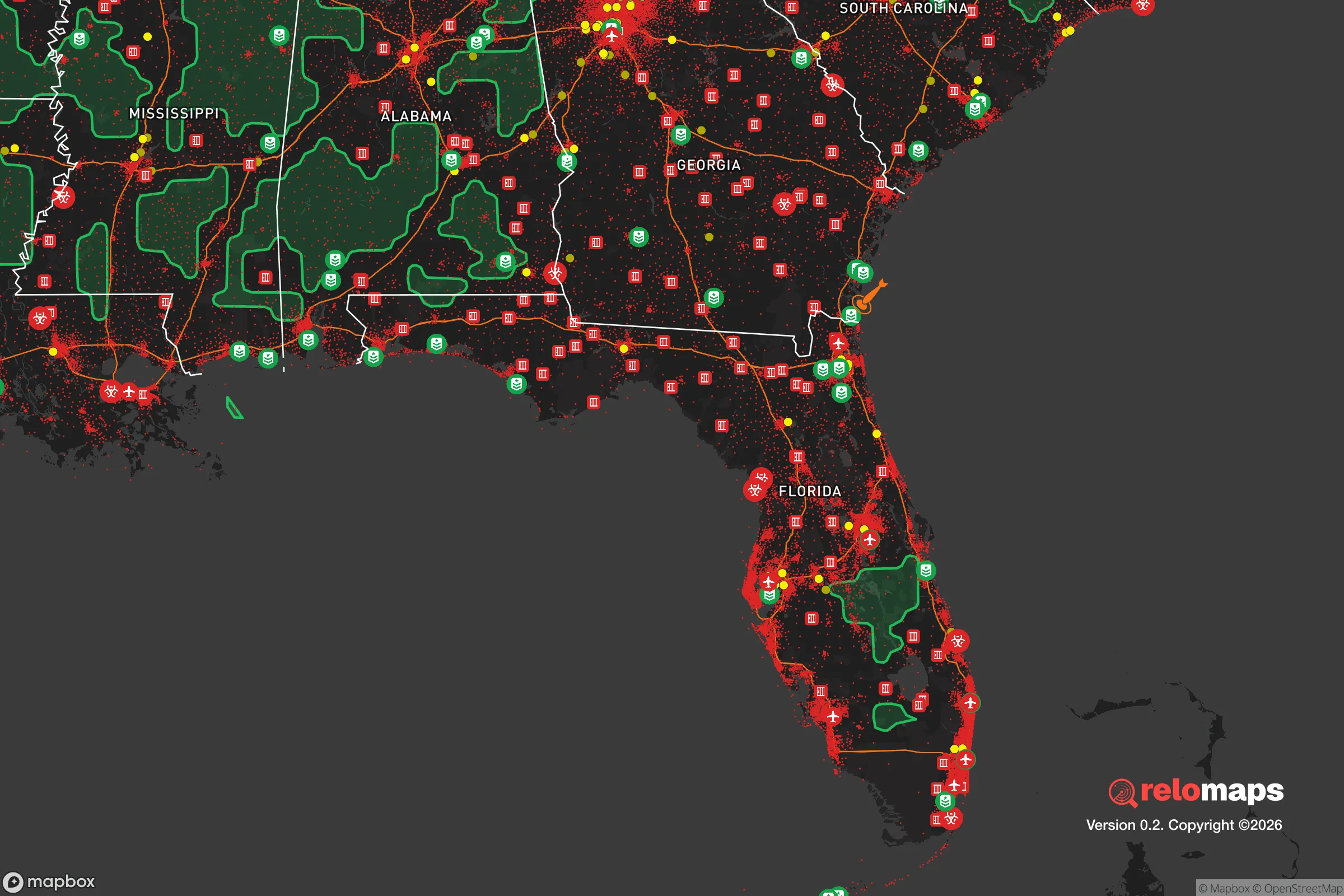


Important Note: For informational purposes only. This does not mean nothing bad ever happens in the green zones. Please use common sense. This is based on public data and modeled with AI. We tried to take a conservative approach but mistakes happen. We update this regularly as new information becomes available.
Solar Generator Recommendations
Backup power matters more here than in safer locations. We've picked three solar generators across budgets and capacity tiers — start with the budget unit if you only need a few essentials, or step up if you want to run a fridge and HVAC for days at a time.

Jackery Portable Power Station Explorer 300
Budget OptionPower on the Go: Weighing only 11 lbs, it's convenient to set up and store with book-sized foldable solar panels

BLUETTI Portable Power Station AC180
Designed for both indoor and outdoor scenarios, AC180 is highly capable as it has a robost capacity and continuous output power.

EF ECOFLOW DELTA Pro Ultra Power Station
Upgraded PickEcoFlow DELTA Pro Ultra is a whole-home energy system designed to grow with your family. Integrated with the Smart Home Panel 2, it scales to meet your evolving energy needs — keeping your home powered, intelligent, and secure through every stage of life.
We earn a commission, at no additional cost to you.
Strategic Assessment Analysis
Tampa, Florida, presents a mixed bag for the strategic relocator operating from a survivalist and conservative perspective. On one hand, its geographic position offers genuine natural advantages in terms of climate, water access, and agricultural potential. On the other, it sits squarely in the crosshairs of hurricane risk, is uncomfortably close to major military and civilian infrastructure that could become fallout targets, and is burdened by the same demographic and political pressures that plague much of coastal Florida. For a single individual or family prioritizing long-term resilience, self-sufficiency, and distance from population-dense chaos, Tampa requires a clear-eyed, risk-weighted assessment rather than a simple thumbs-up or thumbs-down.
Geographic position and natural advantages for long-term survival
Tampa’s location on the west coast of Florida, nestled along Tampa Bay and the Gulf of Mexico, provides a few genuine strategic assets. The region sits on a large, relatively flat peninsula with access to abundant fresh groundwater from the Floridan Aquifer, one of the most productive aquifers in the world. This means that, unlike parts of the arid West or even inland Florida, water scarcity is not an immediate concern for a prepared household with a well or rainwater catchment. The subtropical climate allows for year-round food production, with a growing season that extends from February through November. For a family looking to establish a garden, raise chickens, or even keep small livestock, Tampa’s climate is forgiving. The bay itself offers a massive natural harbor, which historically has been a logistical asset for trade and could serve as a waterborne evacuation route or resupply corridor in a crisis. The proximity to the Gulf also means access to marine protein—fish, crab, and shellfish—for those willing to learn the skills. However, the flat terrain offers almost no natural defensibility. There are no hills, ridges, or chokepoints to leverage for perimeter security. The region is a sprawling coastal plain, which makes it easy to traverse but hard to defend against any organized threat or mass movement of people.
Risks, exposures, and proximity to fallout-relevant landmarks
The most glaring vulnerability is Tampa’s exposure to tropical cyclones. The area has a direct hit probability of roughly once every 10–15 years, with storm surge being the primary killer. A Category 3 or higher storm could inundate large portions of the city, including the downtown core, MacDill Air Force Base, and the Port of Tampa. For a prepper, this means any stockpile of food, ammunition, or equipment stored at ground level in a flood zone is at risk. Beyond weather, Tampa sits uncomfortably close to several high-value military and industrial targets. MacDill Air Force Base, home to U.S. Central Command (CENTCOM) and U.S. Special Operations Command (SOCOM), is a top-tier strategic asset. In any major conflict or escalation, MacDill would be a primary target for a kinetic or cyber attack. The Port of Tampa is one of the busiest in the state, handling petroleum, phosphate, and container cargo, making it a secondary target. Additionally, the nearby Citrus County nuclear power plant (Crystal River) is roughly 70 miles north, and while not an immediate fallout zone for Tampa proper, a catastrophic failure there could contaminate water supplies and force a mass evacuation. The city’s population of over 400,000, with a metro area pushing 3.2 million, means that any major event—natural or man-made—will trigger a chaotic, traffic-clogged exodus along a limited number of evacuation routes, primarily I-75, I-275, and US-41. For a relocator, being inside the urban core during a crisis is a liability, not an asset.
Practical resilience for a relocator: food, water, energy, and defensibility
For a single individual or family willing to live on the outskirts—say, in eastern Hillsborough County, northern Manatee County, or southern Pasco County—Tampa’s practical resilience improves significantly. Food production is viable year-round, but the sandy, nutrient-poor soil requires amendment. Raised beds, compost, and hydroponics are almost mandatory for serious yields. Local farmers’ markets and agricultural supply stores are plentiful, but reliance on them in a grid-down scenario is risky. Water is the strongest asset: the Floridan Aquifer is deep and reliable, but a well requires a permit and a pump that runs on electricity or a generator. A hand pump or solar-powered pump is a wise investment. Energy is a mixed picture. Tampa Electric (TECO) provides grid power, but outages are common during storms. Solar panels are viable, but the region’s frequent cloud cover and hurricane winds mean you need a robust mounting system and battery storage. Natural gas is available in many suburban areas, which can run generators indefinitely if the pipeline stays intact. Defensibility is the weakest link. The flat, open terrain and dense suburban sprawl mean that a rural homestead in eastern Hillsborough is still only 30 minutes from a major population center. In a collapse scenario, that proximity is a double-edged sword: you have access to resources, but you are also a short drive from desperate urban populations. A defensible property would need to be on a dead-end road, with good sightlines, a perimeter fence, and a neighborhood watch or mutual assistance group. The local gun culture is strong, and Florida’s constitutional carry law (effective July 2023) makes it easy to arm yourself, but that also means your neighbors are armed. Social cohesion in exurban Tampa is mixed—some areas have strong church and community networks, while others are transient bedroom communities with little neighborly trust.
Overall, Tampa is a high-risk, moderate-reward location for the strategic relocator. Its natural advantages—water, climate, and food-growing potential—are real, but they are offset by hurricane exposure, proximity to high-value military targets, and a population density that guarantees chaos in any major crisis. For a conservative-minded individual or family willing to invest in hardening a property on the rural fringe, Tampa can work as a base of operations, but it is not a retreat. It is a forward operating base that requires constant vigilance, a solid evacuation plan, and a willingness to leave when the indicators turn red. If your goal is true self-sufficiency and distance from the fray, look further inland—north toward Ocala or west toward the Panhandle. If you need to stay near the coast for work or family, Tampa is survivable, but only with serious preparation and a clear-eyed understanding of the risks.

* Values derived from national, state, county, city and local statistics and may differ in a specific area. Last updated: 2026-04-15T23:46:30.000Z
Narrative content on this page is AI-generated and may contain mistakes. Verify any details that matter before acting on them.
ReloMaps may earn a commission from affiliate links at no extra cost to you.

