
Photo: Wikipedia
Personal Sovereignty in Shelby County
Viable for self-reliance. Generally workable, though some barriers may limit total independence.
What does Personal Sovereignty tell us?
Personal Sovereignty measures your capacity for self-reliance and independence with minimal government friction. Higher scores mean fewer barriers between you and the way you want to live... but it assumes you have the space you need and good neighbors.
What does this tell us?
Personal Sovereignty measures your capacity for self-reliance and independence with minimal government friction. Higher scores mean fewer barriers between you and the way you want to live... but it assumes you have the space you need and good neighbors.
State Policy
Energy independence: Importer (25% of energy produced in-state)
Personal Liberty
Homesteading

Personal Liberty Analysis
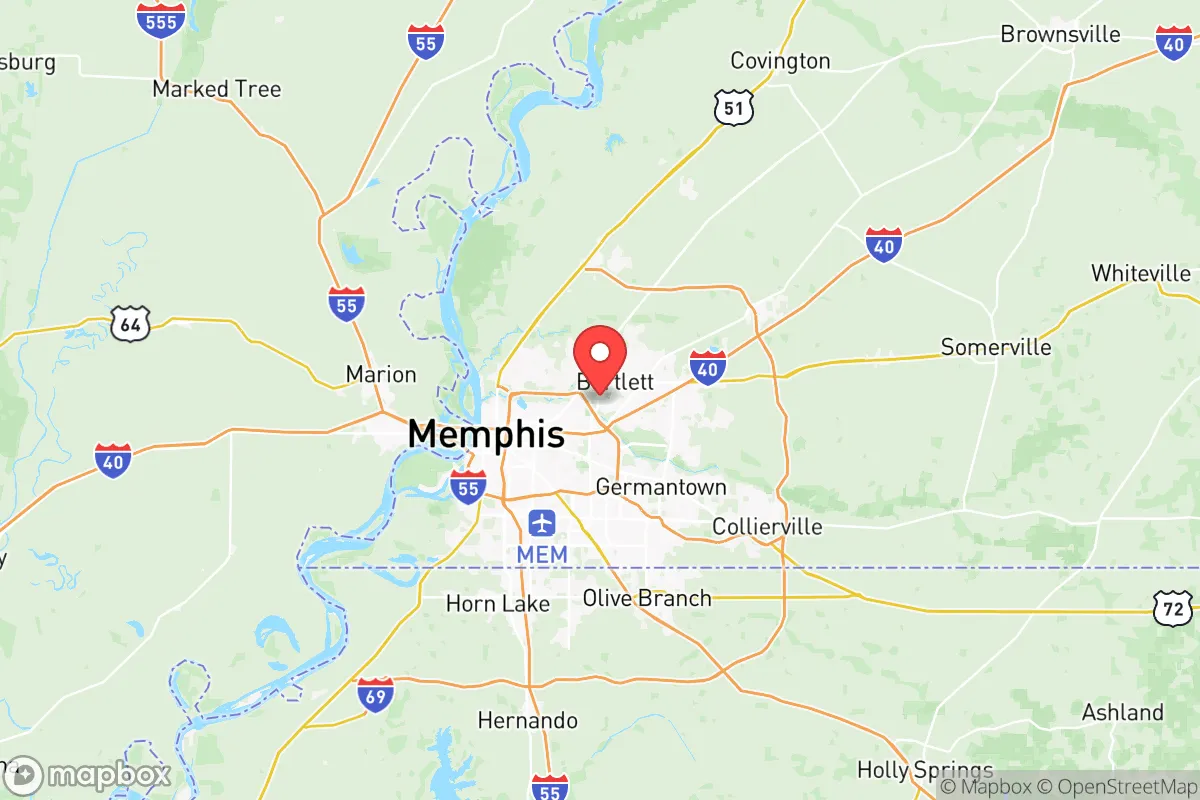
Shelby County, Tennessee, presents a mixed picture for those prioritizing personal sovereignty, where the autonomy of living in a low-tax, lightly regulated state is tempered by the more interventionist posture of its largest city, Memphis. While Tennessee’s state-level framework strongly favors individual freedom—with no state income tax, broad gun rights, and limited government overreach—the county’s urban core imposes a heavier regulatory hand that contrasts sharply with its more rural and suburban communities. For the relocation researcher weighing self-reliance and independence, the key is understanding that personal sovereignty in Shelby County is not uniform; it varies significantly depending on whether you choose the city limits of Memphis, the suburban corridors of Germantown and Collierville, or the unincorporated rural stretches near Arlington and Millington.
Tax burden and regulatory posture: How Shelby County compares to surrounding areas
Tennessee’s tax structure is a major draw for sovereignty-minded individuals, as the state has no personal income tax and a relatively low sales tax rate of 7% (with local add-ons pushing it to about 9.75% in Shelby County). Property taxes in Shelby County are moderate, with an effective rate around 1.2% of assessed value, but this varies by municipality: Memphis levies a combined city-county rate of roughly $3.40 per $100 of assessed value, while Germantown and Collierville have lower city rates, making them more attractive for those seeking to minimize recurring tax burdens. The regulatory posture in unincorporated areas of Shelby County is notably lighter than inside Memphis. For example, building permits and zoning restrictions are less onerous in rural pockets near Arlington and Millington, where you can erect a workshop or accessory structure with fewer bureaucratic hurdles. In contrast, Memphis enforces a strict zoning code, historic preservation overlays in neighborhoods like Midtown, and a business licensing regime that can feel burdensome to entrepreneurs. The state’s right-to-work laws and lack of occupational licensing for many trades further enhance personal economic freedom, but the county’s urban core still imposes more red tape than the surrounding region.
Self-defense and gun law specifics: What the Second Amendment looks like in Shelby County
Tennessee is a constitutional carry state, meaning any law-abiding adult 21 or older can carry a handgun openly or concealed without a permit—a strong foundation for personal sovereignty. Shelby County, however, has a history of local friction with state preemption laws. In 2021, the Memphis City Council attempted to pass an ordinance banning guns in city parks, which was quickly challenged and struck down under state law that prohibits local governments from regulating firearms more strictly than the state. As of 2026, Memphis remains a “gun-friendly” city by legal statute, but the cultural climate is more cautious; many private businesses post “no firearms” signs, and the Memphis Police Department has been criticized for slow response times in high-crime areas, making personal firearm ownership a practical necessity for some residents. In suburban Germantown and Collierville, the gun culture is more relaxed, with fewer posted restrictions and a stronger tradition of hunting and sport shooting. Stand-your-ground laws apply statewide, and Tennessee’s Castle Doctrine explicitly covers vehicles and places of business. For the self-reliant individual, the legal framework is robust, but the practical experience of exercising that right varies by neighborhood—rural areas near Lakeland feel far more permissive than downtown Memphis.
Self-reliance and homesteading viability: Lot sizes, zoning, and off-grid feasibility
Homesteading and off-grid living are viable in Shelby County, but only in specific areas. Inside Memphis, lot sizes are typically small (under 0.25 acres in most urban neighborhoods), and zoning codes prohibit keeping livestock, installing rainwater catchment systems for primary water supply, or constructing permanent off-grid dwellings without utility connections. The city’s building code requires adherence to the International Residential Code, which can complicate straw-bale, earth-sheltered, or tiny-house builds. However, in unincorporated Shelby County and towns like Arlington and Millington, lot sizes of 1 to 5 acres are common, and zoning is far more permissive. Arlington allows up to two horses or cattle per acre on parcels over 2 acres, and many residents keep chickens, goats, and bees without issue. Off-grid solar is legal statewide, but net metering policies from the Tennessee Valley Authority (TVA) are less favorable than in some other states—TVA caps net metering at 50 kilowatts and pays a wholesale rate for excess power, not retail. Rainwater collection for non-potable uses is unrestricted, but using it as a primary water source requires a permit from the Shelby County Health Department. For those serious about self-reliance, the rural fringe near Rossville (just south of the county line) offers even looser restrictions, but within Shelby County proper, Collierville’s agricultural zoning district provides the best balance of proximity to services and homesteading freedom.
Personal liberties: Parental rights, medical autonomy, speech, and property
Tennessee has been a national leader in asserting parental rights, with a 2023 law (HB 1189) affirming that parents have the fundamental right to direct their child’s education, healthcare, and moral upbringing. In Shelby County, this plays out in school board politics: the Collierville and Germantown school districts have been proactive in notifying parents of curriculum changes and allowing opt-outs for sensitive materials, while Memphis-Shelby County Schools (MSCS) has faced lawsuits over its handling of parental notification policies. Medical autonomy is more constrained: Tennessee has strict abortion laws (banning the procedure at conception with narrow exceptions), and vaccine mandates for schoolchildren remain in place for standard immunizations, though COVID-19 mandates have been repealed. The state’s “medical freedom” laws allow individuals to refuse any medical treatment, but emergency room protocols in Memphis hospitals may override patient wishes in life-threatening situations. Free speech is robustly protected under the Tennessee Constitution, and Shelby County has no local ordinances restricting political speech or assembly beyond standard time-place-manner regulations. Property rights are strong, with Tennessee’s “private property rights protection act” requiring governments to prove a compelling interest for any regulatory taking. However, Memphis’s aggressive code enforcement—including fines for tall grass, unkempt lots, and unregistered vehicles—can feel like an infringement on personal autonomy for those who value a hands-off approach to property maintenance.
Overall, personal sovereignty in Shelby County is a tale of two landscapes. The state’s low taxes, constitutional carry, and strong parental rights provide a solid foundation for individual freedom, but the regulatory density of Memphis and its immediate suburbs can erode that autonomy in practice. For the relocation researcher, the most sovereignty-friendly areas are the unincorporated rural stretches near Arlington and Millington, where lot sizes are larger, zoning is lighter, and the cultural expectation of self-reliance is higher. Suburban Collierville and Germantown offer a middle ground—good schools and low crime with moderate regulation—while Memphis itself demands a more transactional relationship with local government. Compared to peer counties in the Mid-South, Shelby County’s autonomy environment is stronger than Cook County, Illinois, but weaker than Williamson County, Tennessee, or DeSoto County, Mississippi. For those willing to navigate the urban-rural divide, Shelby County offers a viable, if uneven, platform for personal independence.

* Values derived from national, state, county, city and local statistics and may differ in a specific area. Last updated: 2026-08-23T18:59:44.000Z
Narrative content on this page is AI-generated and may contain mistakes. Verify any details that matter before acting on them.
ReloMaps may earn a commission from affiliate links at no extra cost to you.

