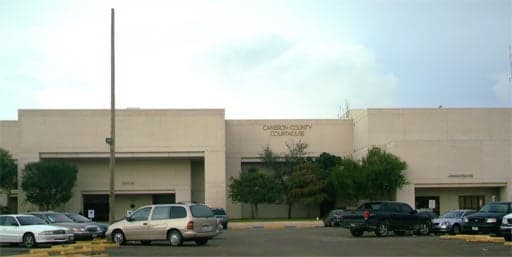
Photo: Wikipedia
Personal Sovereignty in Cameron County
Strong independent fundamentals that actively favor personal liberty and low regulation.
What does Personal Sovereignty tell us?
Personal Sovereignty measures your capacity for self-reliance and independence with minimal government friction. Higher scores mean fewer barriers between you and the way you want to live... but it assumes you have the space you need and good neighbors.
What does this tell us?
Personal Sovereignty measures your capacity for self-reliance and independence with minimal government friction. Higher scores mean fewer barriers between you and the way you want to live... but it assumes you have the space you need and good neighbors.
State Policy
Energy independence: Net exporter (220% of energy produced in-state)
Personal Liberty
Homesteading

Personal Liberty Analysis
Cameron County offers a unique sovereignty environment that blends Texas’s strong state-level protections with the practical realities of life in the Rio Grande Valley. For those prioritizing minimal government intrusion, the county benefits from Texas’s right-to-work laws, no state income tax, and preemption of local firearm ordinances, meaning city-level overreach is limited. However, the county’s proximity to the border, heavy federal presence, and some municipal restrictions in Brownsville and Harlingen create friction for those seeking maximum personal autonomy. The key is knowing where to position yourself within the county to leverage state protections while avoiding local hotspots of regulation.
Tax burden and regulatory posture across Cameron County
Texas imposes no state income tax, and Cameron County’s property tax rates are moderate for the region. The effective property tax rate hovers around 2.1–2.3% of assessed value, which is higher than the state average but lower than some urban Texas counties like Travis or Dallas. The county has not enacted the patchwork of local business regulations seen in more progressive metros — there are no extra sales taxes on firearms or ammunition, and occupational licensing for trades remains standard Texas-level. However, the cities of Brownsville and Harlingen have adopted stricter short-term rental ordinances and sign codes that can frustrate those who want to run a home-based business or exercise property rights without red tape. San Benito and Los Fresnos are notably more relaxed, with fewer bureaucratic hurdles for small-scale enterprises. The overall regulatory posture is light compared to the West Coast or Northeast, but not as libertarian as rural West Texas counties — you’ll find a middle ground here where state preemptions protect core freedoms, but local zoning and permitting can still slow you down.
Self-defense and gun law specifics in the Rio Grande Valley
Texas law guarantees permitless carry for law-abiding adults 21 and older, and Cameron County does not add its own layer of restrictions. Open carry of handguns is legal with a License to Carry (LTC), and concealed carry without a permit is fully allowed. The county’s sheriff has historically been supportive of Second Amendment rights, and no local “red flag” ordinances exist — state preemption blocks them. That said, the border location means you will encounter more federal law enforcement presence, and checkpoints near the river can occasionally lead to interactions. Port Isabel and South Padre Island see more tourist traffic and local police may be more watchful of people openly carrying, but no legal prohibition exists. For homesteaders, rural areas near Rio Hondo or along Farm-to-Market roads provide safe places for defensive firearm practice on private land, as long as you remain beyond city limits and observe discharge ordinances. Ammunition availability is good in stores around Harlingen and Brownsville, though prices may be slightly elevated due to border demand. Overall, the gun culture is strong, and you can defend yourself without navigating municipal nonsense — a clear win for personal sovereignty.
Self-reliance and homesteading viability: lot sizes, zoning, and off-grid feasibility
If you aim to get off the grid — water catchment, solar, small-scale livestock — Cameron County offers mixed prospects. The county’s unincorporated areas have minimal zoning, allowing container homes, tiny houses, and alternative structures as long as they meet basic building codes for health and safety. However, the Lower Rio Grande Valley Water District and local floodplain regulations can complicate rain catchment and well drilling; you may need permits for wells deeper than 25 feet. Lot sizes range from quarter-acre suburban parcels near La Feria and Santa Rosa to 5-20 acre tracts in the more sparsely populated western parts of the county. Combes and Sebastian are relatively homestead-friendly, with large lots, fewer HOAs, and more tolerance for chickens and goats. In contrast, Brownsville and Harlingen city codes restrict livestock and require platting for accessory structures. Off-grid solar is legal and net metering is available through the local electric co-op (Magic Valley Electric), but the grid connection requirement can be a hassle. Water access is the bigger variable: you’ll need to secure a reliable source, as municipal water lines don’t reach all rural parcels. Overall, with careful site selection away from the urban cores, you can achieve a respectable level of self-reliance here — just factor in the subtropical climate and occasional flood risk.
Personal liberties: parental rights, medical autonomy, speech, and property
Texas law provides strong parental rights in education, including the ability to opt children out of curriculum materials and to access school records. Cameron County’s school districts — such as Los Fresnos CISD and San Benito CISD — have largely complied with state law, though some parents report pushback on mask mandates or transgender policies in Brownsville ISD. Home schooling is straightforward: you file a simple affidavit with the county, no state oversight beyond that. Medical autonomy is reinforced by Texas’ ban on vaccine passports and restrictions on medical mandates imposed by local governments during emergencies. The county did not impose prolonged lockdowns or mask mandates after 2021, and local businesses largely respected individual choice. Property rights are protected by Texas’s strong eminent domain restrictions, though the border wall construction has created a unique federal override that has angered many landowners in the eastern part of the county near La Paloma and Laguna Vista. Free speech is robust; no local governments in Cameron County have attempted to restrict political speech or religious expression. Overall, the county leans more collectivist in its voting patterns, but the legal framework still protects most individual liberties — you just may need to engage with school boards and city councils to ensure they stay that way.
Compared to deep-blue states or even other Texas counties along the I-35 corridor, Cameron County gives you a solid base for personal sovereignty if you choose your municipality carefully. The state’s preemptive shield keeps the worst overreach at bay, while the slower, more rural character of towns like Los Fresnos and Rio Hondo offers breathing room to live as you see fit. The border location and occasional federal overreach are the biggest drag on autonomy, but for a survivalist or prepper willing to navigate those currents, this region delivers cost of living advantages and usable land that many upwardly mobile counties have already priced out.

* Values derived from national, state, county, city and local statistics and may differ in a specific area. Last updated: 2026-05-20T18:41:18.000Z
Narrative content on this page is AI-generated and may contain mistakes. Verify any details that matter before acting on them.
ReloMaps may earn a commission from affiliate links at no extra cost to you.

