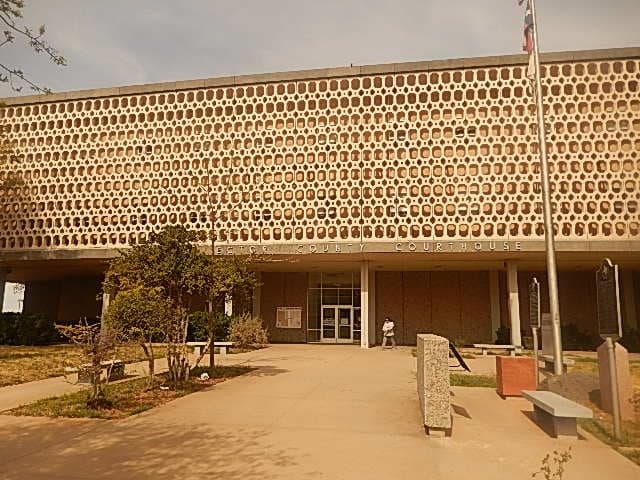
Photo: Wikipedia
Quality of Life in Ector County
A livable area that tracks near national norms for affordability, walkability, and neighborhood health.
What does Quality of Life tell us?
Quality of Life measures an area by evaluating factors like cost of living, nearby amenities, country club access, airport proximity, socioeconomic signals and neighborhood character. For large states, this is a general average — quality of life can vary dramatically between metro areas, suburbs, and rural communities within the same state.
What does this tell us?
Quality of Life measures an area by evaluating factors like cost of living, nearby amenities, country club access, airport proximity, socioeconomic signals and neighborhood character. For large states, this is a general average — quality of life can vary dramatically between metro areas, suburbs, and rural communities within the same state.
Cost of Living
7% below national average
131%
The Real Cost of Living in Ector County for 2026
| Tier | Individual | Family (4) |
|---|---|---|
| Survival | $20k | $39k |
| Comfortable | $37k | $54k |
| Luxury | $122k+ | $189k+ |
| Elite (Top 5%) | $143k+ | $222k+ |
Quality-of-Life Analysis
Ector County, Texas, anchored by the mid-sized city of Odessa, offers a quality-of-life spectrum that ranges from the fast-paced, industry-driven energy hub of its largest population center to the quiet, wide-open spaces of its smaller communities and unincorporated rural pockets. The county primarily attracts workers and families tied to the Permian Basin’s oil and gas sector, alongside those seeking a lower cost of living relative to national averages. With a cost of living index of 93 (100 being the U.S. average), a median home value of $190,500, and a median rent of $1,284, the county presents a clear trade-off: residents in Odessa gain access to the region’s densest concentration of jobs, retail, and services, while those in outlying areas like Penwell, Goldsmith, or West Odessa trade some convenience for more land, lower density, and a quieter pace of life.
Largest town(s) & population centers
Odessa is the undisputed population and economic center of Ector County, home to roughly 120,000 residents and the vast majority of the county’s jobs, schools, and amenities. Daily life in Odessa is shaped by the rhythms of the Permian Basin oil patch, with a significant portion of the workforce employed directly in drilling, extraction, or related support services. The city offers a full range of big-box retail, national chain restaurants, and healthcare facilities, including Medical Center Hospital. Commute times average 25.3 minutes, reflecting a city that is spread out but not yet gridlocked by major metro standards. Housing here is the most expensive in the county, with median home values near the countywide figure of $190,500, though prices can climb above $250,000 in newer subdivisions on the west side near the Music City Mall. For families, the Ector County Independent School District (ECISD) operates numerous elementary, middle, and high schools, with Odessa High School and Permian High School being the largest. The city also hosts the University of Texas Permian Basin (UTPB), a key educational and cultural anchor. Residents seeking nightlife, entertainment, and the densest job market will find Odessa the most practical choice.
Smaller towns & rural pockets
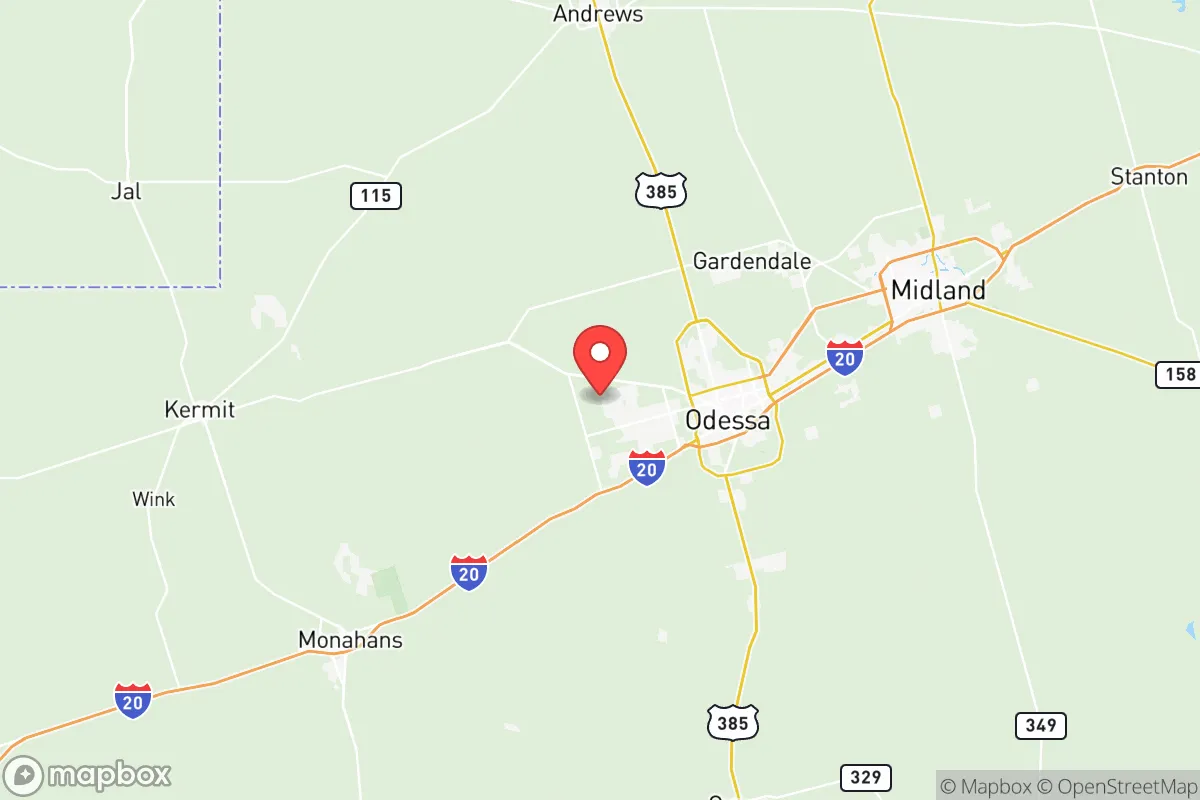
Outside Odessa, Ector County contains several smaller communities and unincorporated areas that offer a distinctly different lifestyle. West Odessa, a census-designated place (CDP) immediately west of the city limits, is the largest of these, with a population around 9,000. It functions as a bedroom community for Odessa, with many residents commuting the short distance into the city for work. Housing here is noticeably cheaper, with older mobile homes and smaller single-family homes often priced well below the county median. Goldsmith, a tiny town on the county’s northwestern edge, is a classic West Texas oil patch community with a population under 300. Life in Goldsmith is extremely quiet, with no major retail or services; residents drive 15–20 minutes into Odessa for groceries and errands. Penwell, located east of Odessa along Interstate 20, is another unincorporated area with a sparse population, dominated by industrial facilities and truck stops. These rural pockets offer the lowest housing costs in the county — some homes in Penwell or Goldsmith can be found for under $100,000 — but come with trade-offs in access to schools, healthcare, and shopping. The Ector County Sheriff’s Office provides law enforcement in these areas, and emergency services are more distant than in Odessa.
Cost & lifestyle range
The cost and lifestyle spread across Ector County is wide but predictable. At the high end, west Odessa neighborhoods near the intersection of 42nd Street and Loop 338 feature newer construction homes in the $250,000–$350,000 range, with access to the city’s best schools, parks, and the Odessa Country Club. At the low end, rural Goldsmith and Penwell offer the cheapest real estate in the county, with older homes and mobile homes often selling for $60,000–$90,000. Rent follows a similar pattern: the countywide median of $1,284 is achievable in Odessa’s older apartments, but drops to under $900 for a small house or mobile home in West Odessa or Goldsmith. The lifestyle difference is stark: Odessa residents enjoy a 15-minute drive to a Walmart or a movie theater, while those in Goldsmith face a 25-minute drive for the same errands. The average commute of 25.3 minutes reflects this — it is a county where nearly everyone drives, and a car is essential for daily life in every part of the county.
Who thrives in Ector County? The county is best suited for individuals and families whose livelihoods are tied to the oil and gas industry, who value a low cost of living and a no-frills West Texas lifestyle, and who are comfortable with long drives for shopping and entertainment. Odessa works well for those who want urban amenities and job density without big-city prices. The smaller towns and rural pockets appeal to those who prioritize space, privacy, and the lowest possible housing costs, and who do not mind a 20–30 minute commute for basic services. Retirees on fixed incomes and younger workers starting out in the oil fields are common in the county’s cheaper rural areas. Anyone seeking walkable neighborhoods, extensive public transit, or a diverse cultural scene will find Ector County limiting — but for those who fit the Permian Basin mold, it offers a practical and affordable base.

Crime in Ector County
Crime rates similar to the national median for U.S. locations.
Violent CrimeViolent Crime Analysis
Property CrimeProperty Crime Analysis
Crime Analysis
Ector County, anchored by the city of Odessa in the Permian Basin, reports a violent crime rate of 344.4 per 100,000 residents and a property crime rate of 1,791.9 per 100,000, placing it above both the Texas state average and the national median for property offenses. While the county is not among the most dangerous in the state, its crime figures reflect the challenges of a rapidly growing oil-and-gas hub where economic booms have historically strained law enforcement and infrastructure. Residents in outlying communities like Gardendale and West Odessa generally experience lower incident density than those in central Odessa, though property crime remains a concern countywide.
Crime in context
Ector County’s violent crime rate of 344.4 per 100,000 is roughly 15% higher than the Texas average of 299 per 100,000 and significantly above the national rate of 380 per 100,000. Property crime, at 1,791.9 per 100,000, exceeds the Texas average of 1,650 per 100,000 and the national rate of 1,954 per 100,000. Compared to nearby Midland County, which reports a violent crime rate of 280 per 100,000 and a property crime rate of 1,450 per 100,000, Ector County is notably more dangerous. The disparity is partly attributed to Odessa’s larger population and its role as a regional commercial and transportation hub, which attracts transient workers and associated criminal activity. In contrast, smaller towns like Goldsmith and Notrees, with populations under 1,000, report negligible violent crime but still face occasional theft and burglary linked to oilfield equipment.
What residents experience
For most residents, property crime is the most tangible safety issue. Vehicle burglaries, catalytic converter thefts, and residential break-ins are common, particularly in neighborhoods near Interstate 20 and the Loop 338 corridor. The Odessa Police Department reports that over 60% of property crimes are committed by repeat offenders, a pattern that raises concerns about the local justice system’s effectiveness. Ector County is served by the 70th Judicial District, where progressive-leaning judges have, in recent years, emphasized diversion programs and reduced bond amounts for nonviolent offenders. Critics argue this approach has contributed to a revolving-door effect, with known thieves and drug offenders quickly returning to the streets. In 2024, the county saw a 12% increase in auto thefts, many linked to individuals awaiting trial on prior charges. Violent crime, while less frequent, is concentrated in Odessa’s central and south-side neighborhoods, including the area around East 8th Street and the downtown district. Residents in these areas report higher rates of aggravated assault and robbery, often tied to drug trafficking along the I-20 corridor.
Neighborhood-level variation is pronounced. The gated communities and newer subdivisions in northwest Odessa, near the Medical Center Hospital and the University of Texas Permian Basin, experience crime rates roughly 40% lower than the county average. Conversely, the older housing stock near the Odessa Regional Medical Center and the industrial zones along Highway 80 see elevated incidents. In the unincorporated community of Penwell, east of Odessa, property crime rates are comparable to the county average, but violent crime is rare. The Ector County Sheriff’s Office maintains a visible presence in rural areas, though response times can exceed 20 minutes in far-flung locations like the Sand Hills region. For families considering relocation, the safest bets are the newer master-planned communities in northwest Odessa or the small-town atmosphere of Gardendale, where the crime rate is roughly half the county average. However, even in these areas, residents should invest in home security systems and remain vigilant against property crime, which shows no signs of abating under the current judicial philosophy.
* Values derived from national, state, county, city and local statistics and may differ in a specific area. Last updated: 2026-06-09T01:27:21.000Z
Narrative content on this page is AI-generated and may contain mistakes. Verify any details that matter before acting on them.
ReloMaps may earn a commission from affiliate links at no extra cost to you.

