Photo: Wikipedia
Political ClimatePolitical Climate in Ector County
Showing district-level results — no local-only data available.
Local Political AnalysisPolitical Analysis of Ector County
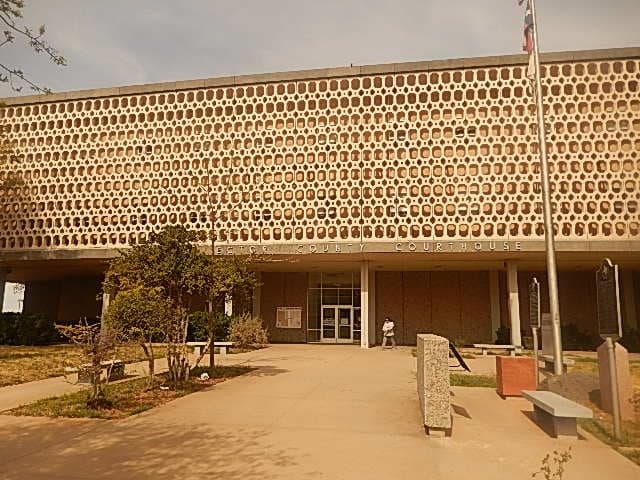
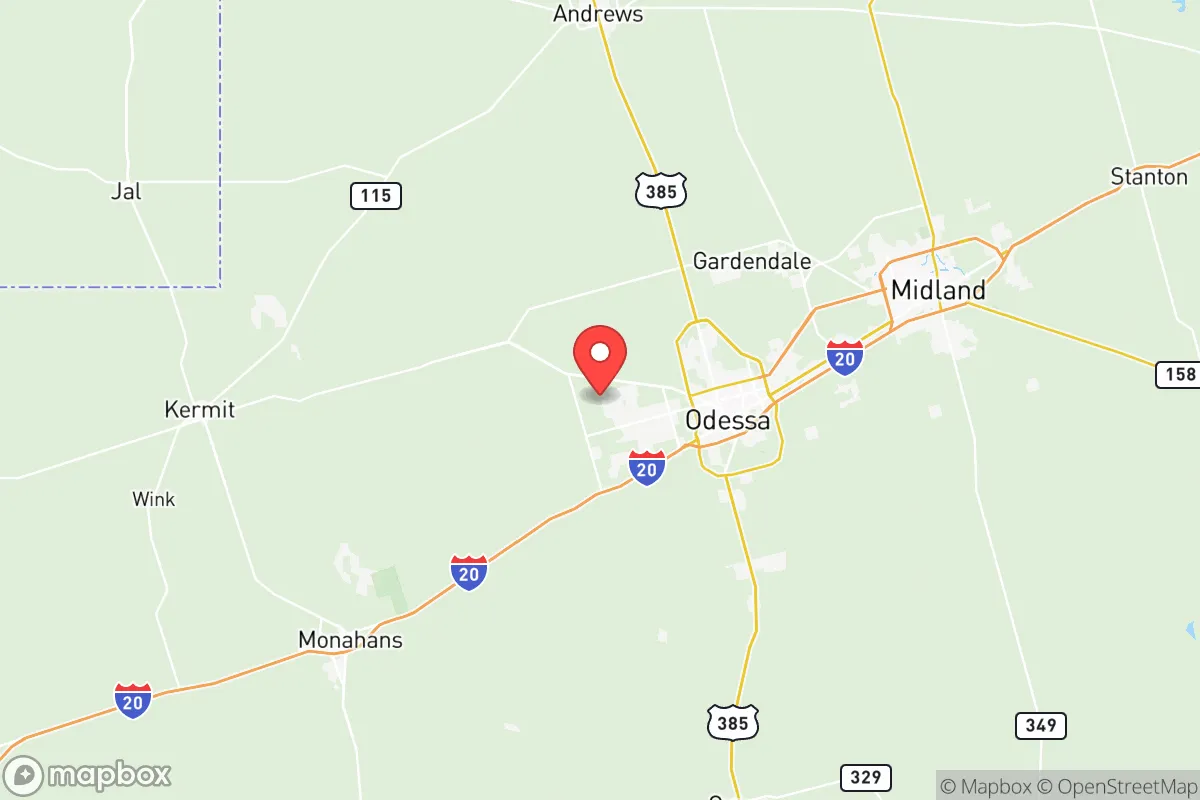
Ector County, anchored by Odessa, is one of the most reliably Republican counties in Texas, with a Cook Partisan Voting Index of R+22 — a full 18 points more conservative than the state’s already R+4 lean. That gap isn’t just a number; it means the county has voted for the GOP presidential candidate by margins of 30 to 40 points in recent cycles, while Texas as a whole has hovered closer to single-digit spreads. The trajectory here is subtle but real: the county is slowly shifting rightward in raw Republican vote share, even as the state’s urban and suburban centers drift left, making Ector County an increasingly distinct conservative stronghold within a diversifying Texas.
How it compares
Statewide, Texas is a competitive red state trending purple in metro areas like Dallas, Houston, and Austin. Ector County, by contrast, is a deep-red island where Democratic presidential candidates rarely crack 35% of the vote. Within the county itself, the political map is not monolithic. Odessa’s west side, particularly precincts around the University of Texas Permian Basin and the medical district, show slightly more moderate leanings — often 5 to 10 points less Republican than the county average, though still safely red. The rural precincts east of town, near the small communities of Goldsmith and West Odessa, are the most conservative, routinely delivering 80%+ GOP margins. There are no blue towns in Ector County — no equivalent of a Marfa or Austin enclave — but the swing precincts are the newer subdivisions on Odessa’s south side, where oilfield workers and young families sometimes split tickets on local bonds and school board races. Compared to Texas as a whole, Ector County is about as Republican as the state’s rural Panhandle or East Texas piney woods, not its suburban swing counties like Collin or Fort Bend.
What this means for residents
For conservative residents, the political climate is a comfortable fit: local offices are almost entirely held by Republicans, tax policy leans heavily toward low property rates and minimal regulation, and the culture of the county reflects traditional West Texas values. Gun rights, energy production, and school choice are broadly popular, and the county commission rarely faces serious opposition to pro-business or pro-oil initiatives. For liberal residents, the reality is more isolating. There is no organized Democratic Party infrastructure to speak of; the county party is small and often struggles to field candidates. Socially progressive views on issues like abortion or LGBTQ+ rights are a minority position, and public discourse tends to assume conservative consensus. That said, the oil and gas economy brings in a transient workforce from more liberal states, so pockets of diversity — both political and demographic — are growing, especially in Odessa’s apartment-heavy neighborhoods near the interstate.
Culturally, Ector County stands apart from the rest of Texas in its unapologetic embrace of the oil patch identity. Permian Basin politics is a distinct subculture: less concerned with suburban school rankings or urban transit debates, and intensely focused on mineral rights, drilling permits, and pipeline easements. The county’s policy priorities — like opposing federal methane rules or pushing for local control of land use — are often at odds with the more moderate, business-friendly conservatism of the Texas Capitol in Austin. For a new resident, the biggest adjustment isn’t the partisan tilt itself, but how deeply that tilt shapes daily life: from the local newspaper’s editorial page to the topics that dominate church sermons and coffee shop conversations. It’s a place where political identity is worn openly, and where the phrase “Keep Odessa Red” isn’t a slogan — it’s a description of how things have been for decades and, by all signs, will remain.

State Political ClimatePolitical Climate in Texas
State Political AnalysisPolitical Environment in the State
Texas has been a reliably Republican state for the past three decades, with a Cook Partisan Voting Index of R+4, but that label masks a dramatic and ongoing realignment. The state hasn't voted for a Democratic presidential candidate since Jimmy Carter in 1976, and Republicans hold every statewide office and both legislative chambers. However, the margin of victory has been shrinking: Donald Trump won Texas by 9 points in 2016, by 5.5 points in 2020, and by about 5.5 points again in 2024. The long-term trajectory is a slow but steady shift toward competitiveness, driven by explosive growth in the urban crescent from Dallas-Fort Worth down through Austin to Houston and San Antonio, while rural and exurban areas harden their Republican lean.
Urban vs. rural divide
The political map of Texas is a study in extremes. The big four metros — Houston (Harris County), Dallas (Dallas County), San Antonio (Bexar County), and Austin (Travis County) — are solidly Democratic and growing fast. Harris County, with a population of 4.8 million, has voted Democratic in every presidential election since 2008 and is now a deep blue organizing hub. Travis County is among the most liberal in the South, routinely giving Democrats 70%+ of the vote. Meanwhile, the vast rural and small-town expanse — places like Lubbock, Midland, Odessa, and the Panhandle — votes 75-85% Republican. The suburbs are the battleground: Collin County (north of Dallas) and Denton County were once Republican strongholds but have shifted purple, with Collin County voting for Trump by only 3 points in 2024 after a 14-point margin in 2020. Tarrant County (Fort Worth) flipped to Biden in 2020 and stayed close in 2024. The Rio Grande Valley, historically Democratic, has been trending Republican, with Starr County flipping to Trump in 2024 — a seismic shift in a region that was 80% Democratic a decade ago.
Policy environment
Texas operates under a low-tax, low-service model that appeals strongly to conservative relocators. There is no state income tax — funded instead by high property taxes (averaging about 1.7% of assessed value) and a 6.25% state sales tax (local options can push it to 8.25%). The regulatory posture is famously business-friendly: no state-level occupational licensing for many trades, weak environmental enforcement, and a right-to-work law that has kept union membership below 5%. Education policy is a flashpoint: the state funds public schools through a Robin Hood system that redistributes property tax revenue from wealthy districts to poor ones, but per-pupil spending remains below the national average. School choice has expanded, with Education Savings Accounts passed in 2023 for students with disabilities and a broader voucher-like program expected in 2025. Healthcare is a gap: Texas has the highest uninsured rate in the nation (about 17%), having refused Medicaid expansion under the ACA. Election laws have tightened: SB 1 (2021) restricted mail-in voting, added ID requirements, and banned 24-hour and drive-through voting. Abortion is effectively banned after six weeks under SB 8 (2021) and a trigger law that took effect in 2022, with no exceptions for rape or incest.
Recent policy direction
The last five years have seen a sharp rightward push on cultural and liberty issues, even as the state's demographics shift left. On gun rights, Texas became a permitless carry state in 2021 (HB 1927), allowing anyone 21 or older who can legally possess a firearm to carry it openly or concealed without a license. On parental and education rights, HB 3979 (2021) and SB 3 (2023) restricted how race and gender can be taught in public schools, banned diversity, equity, and inclusion programs in higher education, and required school libraries to remove books deemed "sexually explicit." On speech and privacy, HB 20 (2023) prohibits social media platforms from moderating content based on viewpoint — a law currently tied up in court. On medical and bodily autonomy, the state has banned gender-affirming care for minors (SB 14, 2023) and restricted abortion to near-total prohibition. On property rights, Texas has no state-level rent control and weak eminent domain protections, though a 2023 law (SB 2039) strengthened compensation for landowners in pipeline cases. On taxation, the 2023 session saw a $18 billion property tax cut package, the largest in state history, which compressed school tax rates and raised the homestead exemption. On voting and ballot access, SB 1 remains the baseline, and a 2023 bill (SB 1070) made it a felony for election officials to send unsolicited mail-in ballot applications.
Civil unrest & political movements
Texas has been a national flashpoint for political activism on both sides. The 2020 Black Lives Matter protests in Austin, Houston, and Dallas were among the largest in the country, with Austin alone seeing 30 consecutive nights of demonstrations. The state's response included a 2021 law (HB 9) that created a new penalty for rioting and protected drivers who strike protesters. On the right, the "constitutional sheriff" movement has strong roots in rural counties, and the Texas Nationalist Movement (secession) has gained enough traction to get on the Republican primary ballot as a non-binding referendum question in 2022 — it passed with 67% support, though it has no legal force. Immigration politics dominate the border region: Governor Abbott's Operation Lone Star has deployed state troopers and National Guard to the border, bused migrants to Democratic-led cities, and installed razor wire and buoys in the Rio Grande. The state has sued the Biden administration dozens of times over border policy. In 2024, the legislature passed SB 4, which allows state and local police to arrest people suspected of illegal entry — a law currently blocked by federal courts. Election integrity remains a live issue: the 2020 and 2022 cycles saw no evidence of widespread fraud, but the issue drives turnout among Republican base voters. A new resident in a blue city like Austin will see regular protests at the Capitol, while in a red suburb like Frisco, the political energy is more about school board meetings and parental rights rallies.
Projection
Over the next 5-10 years, Texas will continue its slow drift toward competitiveness, but it's unlikely to become a true swing state by 2030. The key driver is in-migration: about 1,000 people move to Texas every day, and they are disproportionately young, diverse, and from blue states. However, many of those newcomers are conservative-leaning families seeking lower taxes and less regulation, which may offset the Democratic tilt of urban growth. The suburbs of Dallas-Fort Worth and Houston will be the decisive battlegrounds: places like Collin County, Fort Bend County, and Williamson County are where the election will be won or lost. The Rio Grande Valley's shift toward the GOP could accelerate if Democrats fail to invest in Spanish-language outreach. On policy, expect continued fights over school vouchers (likely to pass in 2025), property tax compression, and further restrictions on abortion and gender-affirming care. The state's power grid (ERCOT) will remain a vulnerability after the 2021 winter storm, and climate-driven disasters (heat, drought, hurricanes) will force spending that strains the low-tax model. A new resident moving in now should expect a state that remains Republican-controlled but increasingly contested, with policy that swings hard right on cultural issues while maintaining a business-friendly tax and regulatory environment.
For a relocator, the bottom line is this: Texas offers a low-tax, high-freedom environment for conservatives, with a booming economy and no state income tax. For liberals, it means living in a state where your vote in statewide races is effectively meaningless, where abortion is banned, and where public schools and social services are underfunded. The practical takeaway is that your experience will depend heavily on where you land — Austin and Houston are blue bubbles with progressive city governments, while the suburbs and rural areas are deeply red. If you're a conservative family, you'll find a welcoming policy environment and a growing network of like-minded communities. If you're a liberal, you'll find vibrant urban enclaves but a state government that is actively hostile to many of your values. Either way, the state is changing fast, and the next decade will determine whether it remains a Republican stronghold or becomes the next Georgia or Arizona.
* Values derived from national, state, county, city and local statistics and may differ in a specific area. Last updated: 2026-06-09T01:27:21.000Z
Narrative content on this page is AI-generated and may contain mistakes. Verify any details that matter before acting on them.
ReloMaps may earn a commission from affiliate links at no extra cost to you.

