
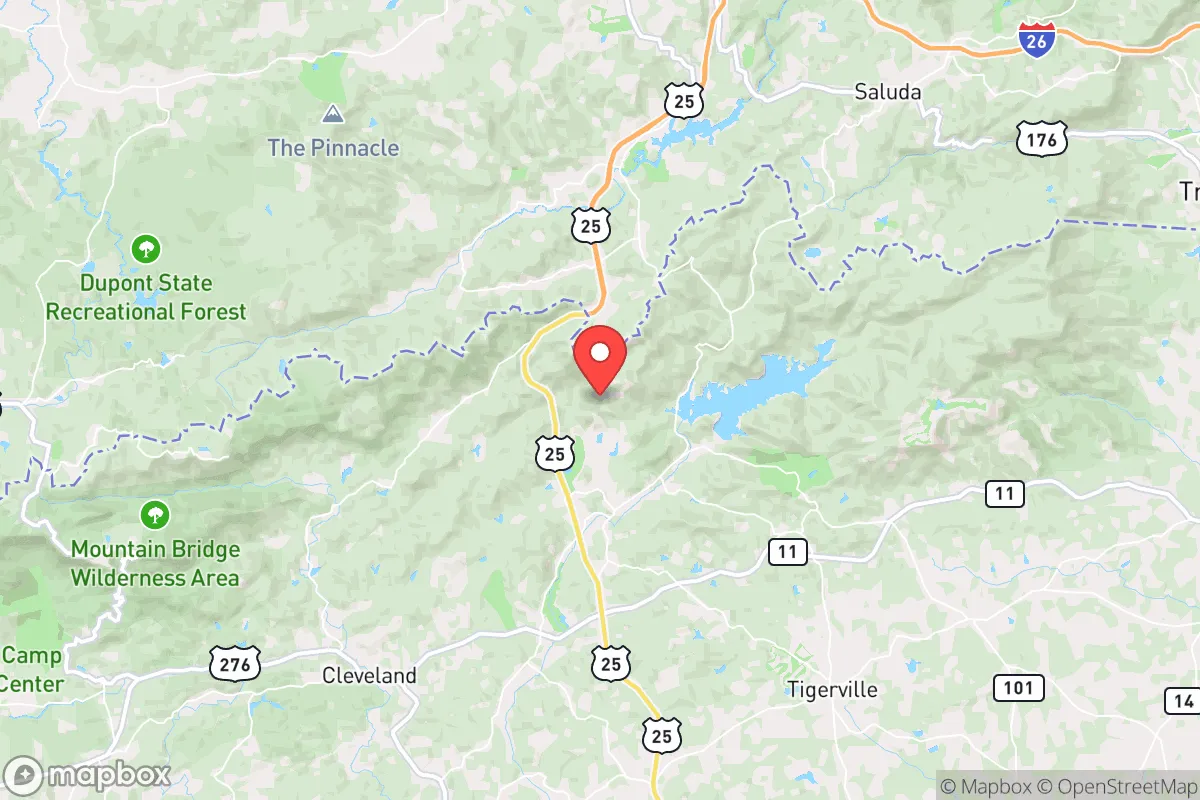
Photo by Alex Reynolds on Unsplash
Demographics of The Cliffs Valley, SC
Historical data isn't available for The Cliffs Valley, SC. Trends shown are for Greenville County, SC.
Affluence Level in The Cliffs Valley, SC
An upper-middle-class area. Household wealth, education levels, and homeownership run ahead of national benchmarks.
People of The Cliffs Valley, SC
The Cliffs Valley, South Carolina, is a small, affluent enclave of roughly 813 residents, characterized by its overwhelming racial homogeneity and high educational attainment. The population is 94.8% White, with a tiny Hispanic minority of 3.8% and a Black population of just 1.4%, while the foreign-born share is a negligible 0.5%. Nearly 44% of adults hold a college degree, reflecting a community built around luxury golf and lake living rather than traditional industry or agriculture. The area’s identity is defined by its gated, master-planned neighborhoods and a demographic profile that has remained remarkably stable for decades.
How the city was settled and grew
The Cliffs Valley is not a historic settlement but a planned recreational community that emerged in the late 20th century. The land was originally part of the Blue Ridge Escarpment, sparsely populated by small-scale farmers and timber workers in the early 1900s. No significant colonial-era town or railroad depot ever developed here; the area remained rural and thinly settled through the mid-20th century. The modern population wave began in the 1990s when the Cliffs Communities development group began acquiring thousands of acres along the North Carolina border. The first gated neighborhood, The Cliffs at Glassy, opened in 1991, drawing affluent retirees and second-home buyers from the Northeast and Midwest. Subsequent phases like The Cliffs at Keowee Vineyards and The Cliffs at Walnut Cove expanded the footprint, each targeting a similar demographic: wealthy, predominantly White professionals seeking a private, amenity-rich lifestyle. No immigrant or minority settlement wave ever occurred; the original handful of local families were gradually displaced by the resort-style development.
Modern era (post-1965)
Post-1965 immigration reforms had zero impact on The Cliffs Valley, as the area had no existing ethnic enclaves or labor markets to attract newcomers. The modern era is defined entirely by domestic in-migration of affluent White households. The 2000s saw the construction of The Cliffs at Mountain Park and The Cliffs at Keowee Springs, which absorbed the bulk of new arrivals—primarily executives, entrepreneurs, and semi-retired professionals from the Atlanta, Charlotte, and Greenville metro areas. The Hispanic population, at 3.8%, is the only non-White group of note, consisting almost entirely of service workers—landscapers, housekeepers, and construction laborers—who live outside the gated communities in nearby unincorporated areas like Marietta or Travelers Rest. The Black population (1.4%) is similarly composed of a handful of long-term local families or staff, not a distinct neighborhood. The Asian and Indian populations are effectively zero, reflecting the absence of any tech or academic sector that would draw those groups. The gated neighborhoods themselves remain 98%+ White, with no internal ethnic clustering.
The future
The population trajectory of The Cliffs Valley points toward continued homogenization and slow, selective growth. The development is nearly built out, with limited remaining lots in The Cliffs at Keowee Falls and The Cliffs at High Point. New residents will continue to be drawn from the same pool—wealthy, White, college-educated buyers aged 45 and older. The Hispanic service-worker population may grow slightly as demand for labor increases, but these workers will remain excluded from the gated communities by housing costs and zoning. The foreign-born share is unlikely to rise above 1-2% given the lack of rental housing, public transit, or entry-level jobs within the development. The area is not tribalizing into distinct enclaves because it is already a single, cohesive demographic bloc. Over the next 10-20 years, the population will likely plateau near 900-1,000, with a rising median age as the original retiree cohort ages in place.
The Cliffs Valley is becoming an increasingly exclusive, age-restricted-style community where demographic change is measured in decades, not years. For a conservative-leaning individual or family moving in now, the area offers extreme stability, high property values, and a like-minded social environment—but virtually no ethnic or economic diversity. The trade-off is clear: a predictable, insulated lifestyle in exchange for a population that is unlikely to change in any meaningful way.

* Values derived from national, state, county, city and local statistics and may differ in a specific area. Last updated: 2026-04-23T03:13:27.000Z
Narrative content on this page is AI-generated and may contain mistakes. Verify any details that matter before acting on them.
ReloMaps may earn a commission from affiliate links at no extra cost to you.

