
Photo by Alex Reynolds on Unsplash
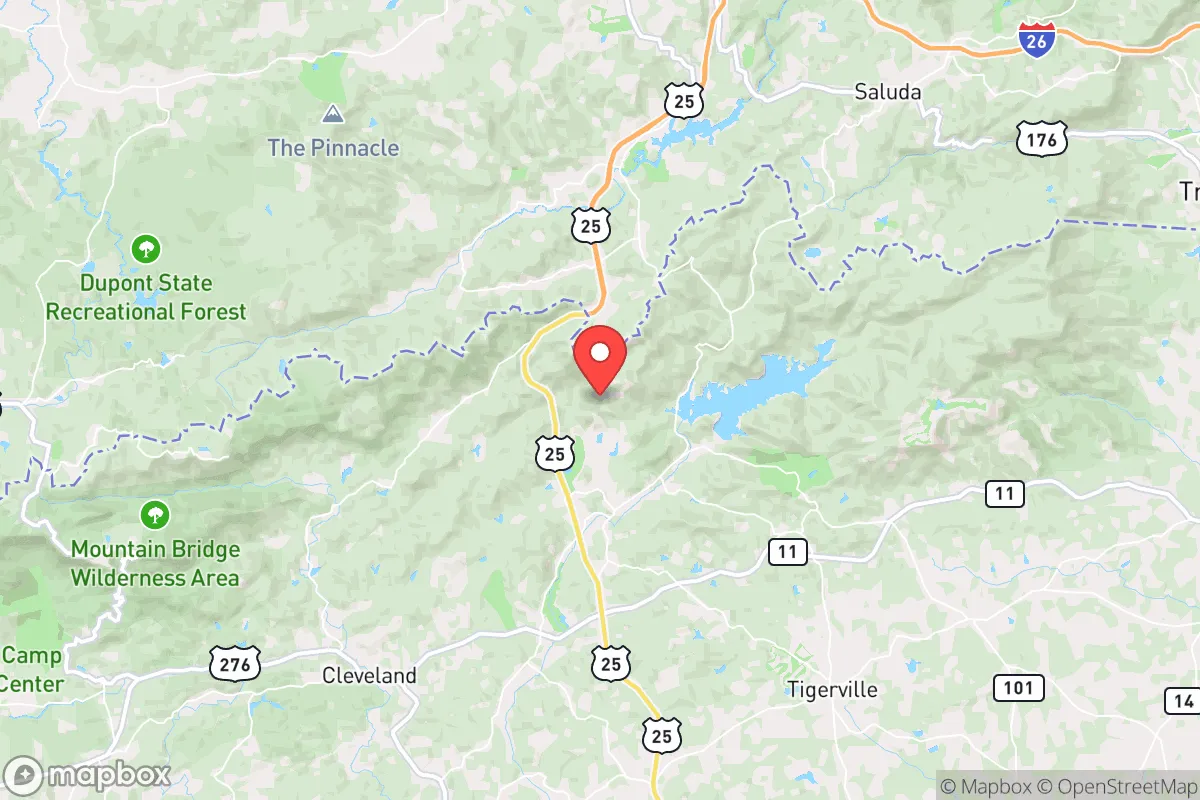
Personal Sovereignty in The Cliffs Valley, SC
Viable for self-reliance. Generally workable, though some barriers may limit total independence.
What does Personal Sovereignty tell us?
Personal Sovereignty measures your capacity for self-reliance and independence with minimal government friction. Higher scores mean fewer barriers between you and the way you want to live... but it assumes you have the space you need and good neighbors.
What does this tell us?
Personal Sovereignty measures your capacity for self-reliance and independence with minimal government friction. Higher scores mean fewer barriers between you and the way you want to live... but it assumes you have the space you need and good neighbors.
State Policy
Energy independence: Importer (25% of energy produced in-state)
Personal Liberty
Homesteading

Personal Liberty Analysis
The Cliffs Valley, South Carolina, offers a level of personal sovereignty that is increasingly rare in the modern United States, making it a serious consideration for those prioritizing autonomy and self-reliance. Nestled in the upstate region near the North Carolina border, this gated community sits within a state that consistently ranks among the most liberty-friendly in the nation, with no state income tax on wages and a political culture that pushes back hard against federal overreach. For individuals and families who view government expansion as a direct threat to personal freedoms, The Cliffs Valley provides a legal and cultural environment where you can largely live by your own rules, provided you respect property rights and local ordinances. The combination of low taxes, strong gun protections, and a rural-minded county government creates a foundation for sovereignty that is difficult to find in coastal or metropolitan areas.
Tax burden and regulatory posture in South Carolina's upstate
South Carolina's tax structure is a major draw for those seeking to minimize government extraction from their earnings. The state imposes a flat income tax rate of 3% on all taxable income, effective 2026, and there is no state income tax on Social Security benefits, military pensions, or most retirement income. Property taxes in Greenville County, where The Cliffs Valley is located, are among the lowest in the region, with an effective rate around 0.55% of assessed value, though the gated community's HOA fees add a layer of private governance that some may view as a trade-off. The regulatory environment is decidedly business-friendly, with no state-level occupational licensing for many trades and a right-to-work law that weakens union influence. However, be aware that the state does impose a 6% sales tax on most goods, and local option taxes can push that higher in some municipalities. For a prepper mindset, the key takeaway is that South Carolina's government is structurally limited—no state-level property tax, no inheritance tax, and a constitutional requirement for a balanced budget—meaning less bureaucratic interference in your daily financial decisions.
Self-defense and gun law specifics for residents
South Carolina is a strong Second Amendment state, and The Cliffs Valley residents benefit from some of the most permissive gun laws in the Southeast. The state operates under a constitutional carry framework, meaning no permit is required to carry a concealed firearm for anyone legally allowed to possess one, effective since 2024. There is no state-level registry, no waiting period for most firearm purchases, and no ban on standard-capacity magazines or common rifle platforms like AR-15s. The Castle Doctrine is codified in state law, with no duty to retreat in your home, vehicle, or place of business, and the "stand your ground" statute extends that protection to any place you are lawfully present. For those concerned about federal overreach, South Carolina passed a Second Amendment Preservation Act in 2021 that purports to nullify any federal gun control measures deemed unconstitutional, though its practical enforcement remains untested in court. The Cliffs Valley itself is a gated community with private security, which adds a layer of physical deterrence, but the surrounding Greenville County has a sheriff's office that is generally supportive of gun rights and does not engage in aggressive enforcement of federal firearms regulations.
Self-reliance and homesteading viability in The Cliffs Valley
The Cliffs Valley sits on large, wooded lots that offer genuine potential for self-sufficiency, though the HOA covenants impose some constraints. Minimum lot sizes in the community range from 1 to 5 acres, depending on the specific neighborhood, which is ample space for a substantial garden, small orchard, or even a few chickens—though livestock like goats or cattle are typically prohibited by HOA rules. The soil in the upstate is generally well-drained and suitable for gardening, with a growing season from April to October, and the area receives about 50 inches of rainfall annually, reducing reliance on irrigation. Off-grid feasibility is limited by the HOA's requirement for connection to public utilities, but solar panels are generally permitted with approval, and the community's location in a rural part of Greenville County means county zoning is minimal. For serious homesteading, look at properties on the outer edges of the development where HOA restrictions are looser, or consider nearby unincorporated areas like northern Greenville County where you can keep livestock and build without a permit for structures under 200 square feet. The local climate supports year-round food production with season extension techniques, and the proximity to the Blue Ridge Mountains provides access to wild game and foraging opportunities for those willing to hunt or gather.
Personal liberties: parental rights, medical autonomy, and property protections
South Carolina has been at the forefront of protecting parental rights, with a 2023 law requiring school districts to notify parents of any changes in a student's health or well-being and prohibiting instruction on gender identity in K-5 classrooms. The state also has a robust medical freedom framework, including a 2022 law that prohibits employers and government entities from mandating COVID-19 vaccines, and a 2023 law that protects healthcare providers who decline to participate in procedures they find morally objectionable. Property rights are strongly protected under the state constitution, with a requirement for just compensation in eminent domain cases and a 2023 law that limits the ability of local governments to impose rent control or restrictive land-use regulations. For those concerned about medical autonomy, South Carolina does not have a state-level health insurance mandate, and the state's certificate of need laws for healthcare facilities were partially repealed in 2024, opening the door for more private medical options. Speech protections are robust, with no state-level hate speech laws and a strong tradition of protecting political expression, though the state does have a law against defamation that can be used to protect reputation.
Overall, The Cliffs Valley offers a sovereignty profile that is significantly stronger than what you would find in most parts of the Northeast, West Coast, or even many Mid-Atlantic states. The combination of no state income tax, constitutional carry, strong parental rights, and a regulatory environment that respects property ownership creates a legal framework where you can largely live as you see fit. The trade-offs are the HOA restrictions within the gated community itself and the relatively high cost of entry—homes here typically start in the $800,000 range and go well into the millions. For those who can afford the premium, The Cliffs Valley provides a secure, liberty-minded enclave in a state that has consistently pushed back against federal overreach, with a local culture that values self-reliance and personal responsibility. If your primary concern is maximizing autonomy while maintaining access to modern amenities and a like-minded community, this area ranks among the top options in the Southeast for strategic relocation.

* Values derived from national, state, county, city and local statistics and may differ in a specific area. Last updated: 2026-04-23T03:13:27.000Z
Narrative content on this page is AI-generated and may contain mistakes. Verify any details that matter before acting on them.
ReloMaps may earn a commission from affiliate links at no extra cost to you.

