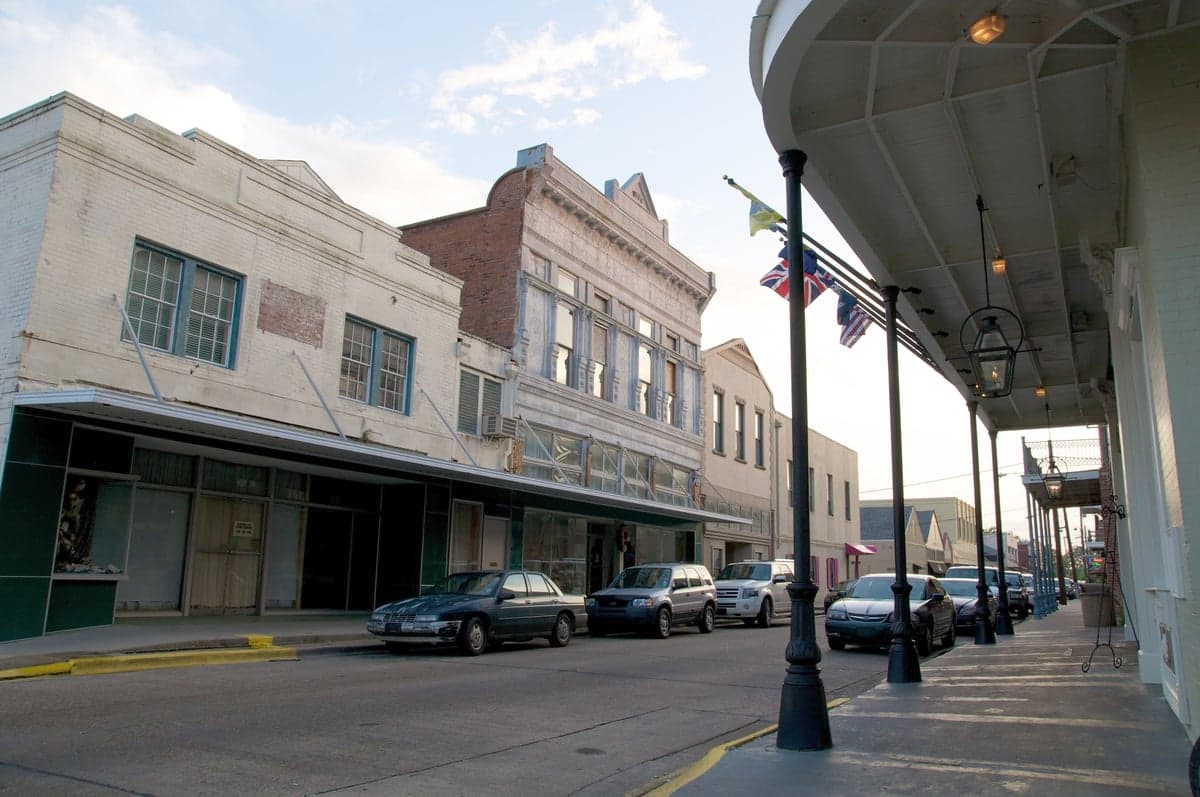
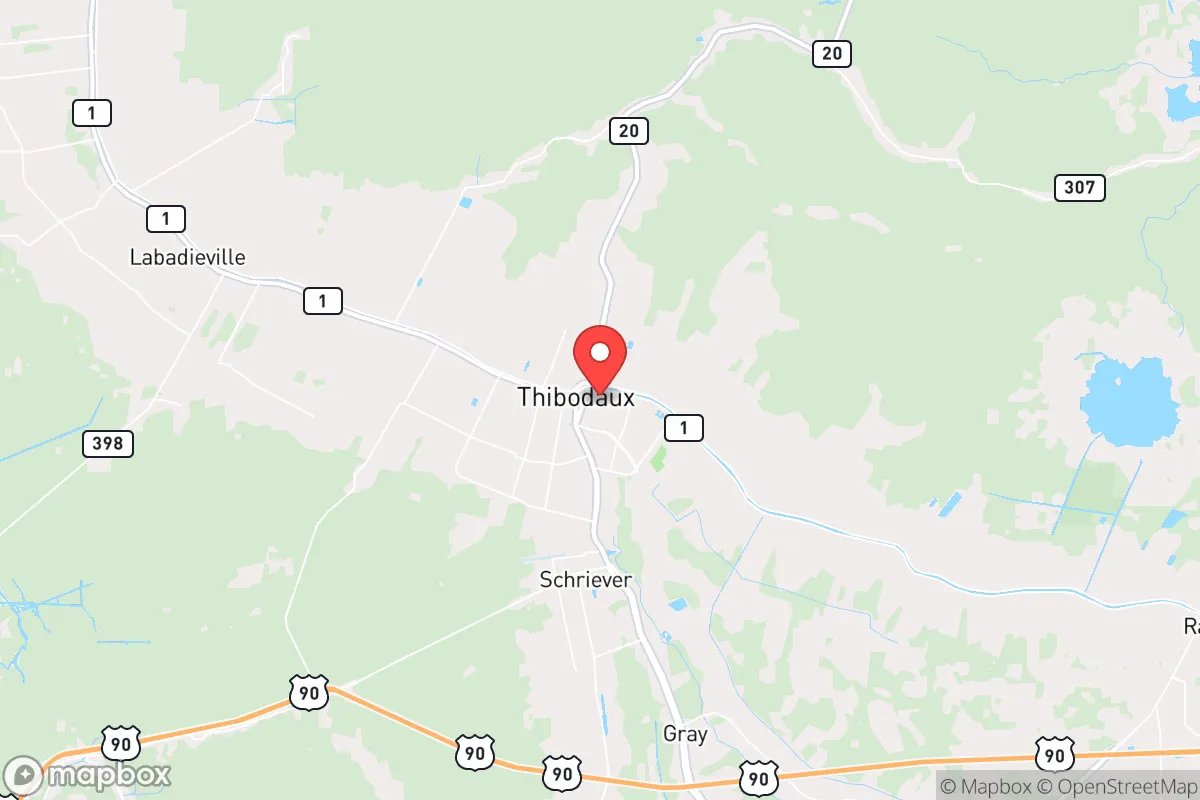
Photo: Wikipedia
Quality of Life in Thibodaux, LA
A high quality of life with strong walkability, manageable living costs, healthy neighborhood signals, and solid amenity access.
What does Quality of Life tell us?
Quality of Life blends cost of living, nearby amenities, socioeconomic signals, and neighborhood character. City-level scores represent the whole municipality; individual neighborhoods can differ.
What does this tell us?
Quality of Life blends cost of living, nearby amenities, socioeconomic signals, and neighborhood character. City-level scores represent the whole municipality; individual neighborhoods can differ.
Cost of Living
15% below national average
The Real Cost of Living in Thibodaux, LA for 2026
| Tier | Individual | Family (4) |
|---|---|---|
| Survival | $16k | $30k |
| Comfortable | $46k | $68k |
| Luxury | $97k+ | $151k+ |
| Elite (Top 5%) | $158k+ | $244k+ |
79%
The Area Signal
A metric tracking the socioeconomic signals of the area.
Hobbies
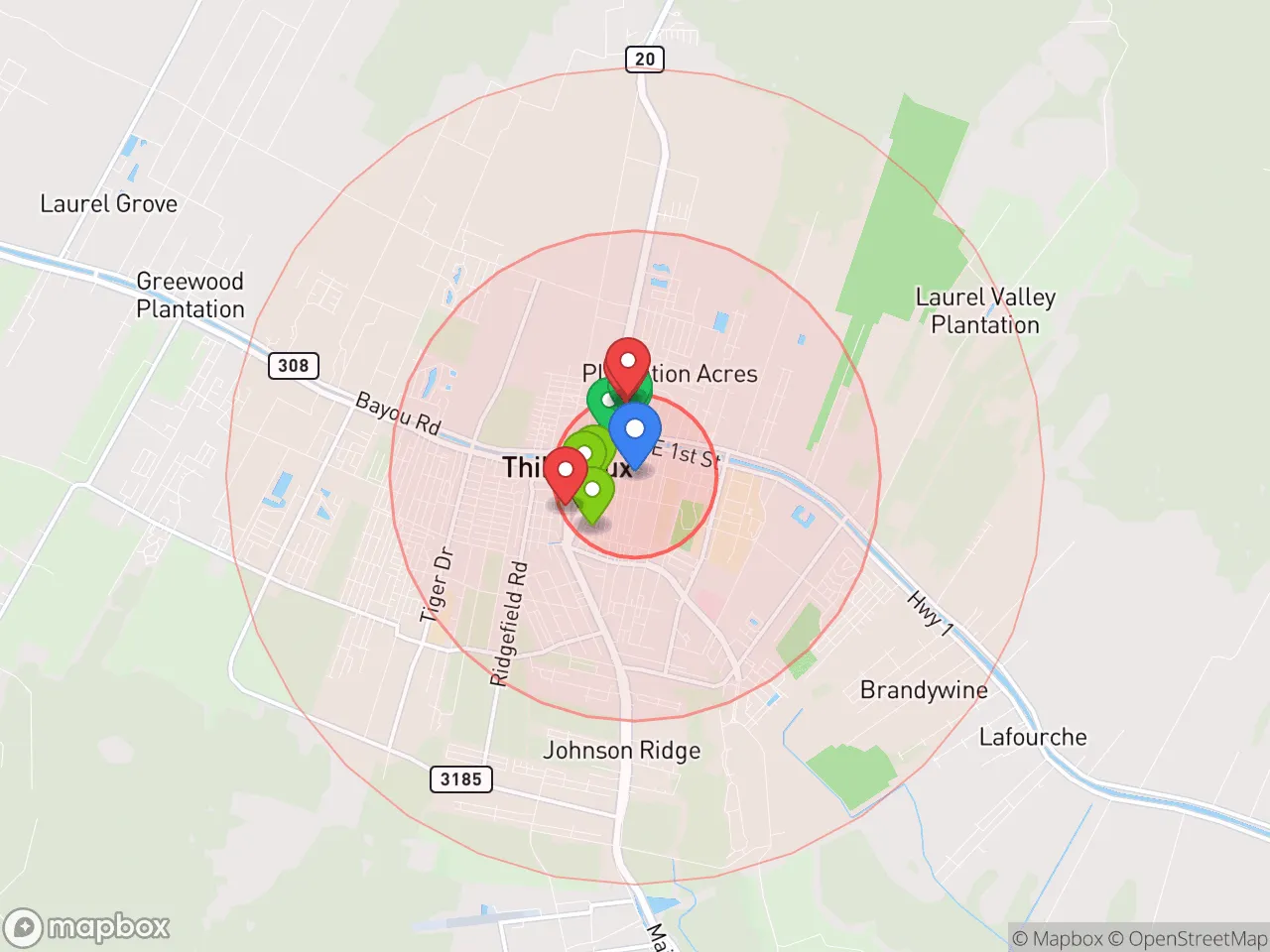
Explore the areaGroceries
1 within 10 miles
Gas
20 within 10 miles
Hospital
10 within 20 miles
Airport
IAH — George Bush Intercontinental
Post Office
USPS — Thibodaux, LA
Critical Amenities
Quality-of-Life Analysis
Thibodaux, Louisiana, offers a quality of life defined by its strong Cajun heritage, a lower cost of living, and a tight-knit community atmosphere that appeals primarily to families, healthcare professionals, and those seeking a slower pace away from major metropolitan sprawl. With a cost of living index of 85 (15% below the U.S. average), the area provides significant financial breathing room compared to national norms, yet its median household income of roughly $47,000 reflects a working-to-middle-class demographic heavily anchored in the energy, healthcare, and education sectors. The population of about 15,000 is notably stable, with many residents having deep multi-generational roots in Lafourche Parish, contributing to a sense of place that newcomers often find welcoming but insular.
Cost of living, housing affordability, and how Thibodaux compares to Houma and New Orleans
Thibodaux’s housing market is the primary driver of its affordability advantage. The median home value sits at $237,400, which is roughly $60,000 less than the national median and significantly lower than the New Orleans metro area (where median values exceed $300,000). For renters, the median rent of $989 is a standout value, especially when compared to Houma’s average of $1,100 or Baton Rouge’s $1,200. This affordability allows households to allocate a smaller percentage of income to housing, though it is worth noting that property insurance premiums in Louisiana are among the highest in the nation due to hurricane risk, which can offset some of the savings. The average commute of 22.4 minutes is notably shorter than the national average of 26 minutes, and far better than the 35+ minute commutes common in suburban New Orleans. Most residents drive to work along U.S. Highway 90 or local parish roads, with traffic congestion rarely a serious issue outside of school drop-off zones.
What daily life is like for families: schools, amenities, and local rhythm
Daily life in Thibodaux revolves around a mix of local institutions and outdoor recreation. The Lafourche Parish Public School System serves the area, with Thibodaux High School and E.D. White Catholic High School being the primary secondary options. Nicholls State University anchors the town’s cultural and economic life, offering public events, athletic programs, and a steady influx of college-age residents. For shopping and dining, the Bayou Lafourche corridor provides a mix of national chains (Walmart, Rouses Market) and local Cajun restaurants like Fremin’s Restaurant and Bub’s Cajun Seafood. The area’s defining amenity is the bayou itself—residents fish, boat, and kayak along the waterway, and the nearby Mandeville Trailhead and Lafourche Parish Recreation Complex offer walking paths and sports fields. Healthcare is anchored by Thibodaux Regional Medical Center, a highly rated 200-bed facility that is the largest employer in the parish. The rhythm of life is distinctly unhurried: most businesses close by 9 p.m., and weekend social life centers on family gatherings, church, and high school football games in the fall.
Thibodaux is best suited for people who prioritize affordability, community connection, and outdoor access over urban nightlife or career diversity. Families with children will find the schools adequate and the cost of living freeing, while retirees and remote workers will appreciate the low stress and short commutes. However, those seeking a diverse job market, high-end retail, or a fast-paced social scene will likely find the area limiting. The town’s strong cultural identity means newcomers should be prepared to engage with local traditions—from Mardi Gras parades to crawfish boils—to fully integrate. For anyone willing to embrace bayou life, Thibodaux delivers a solid, grounded quality of life at a price that is increasingly rare in the Gulf South.

Crime in Thibodaux, LA
Crime rates similar to the national median for U.S. locations.
Violent CrimeViolent Crime Analysis
Property CrimeProperty Crime Analysis
Crime Analysis
Thibodaux, Louisiana, reports a violent crime rate of 264.7 incidents per 100,000 residents and a property crime rate of 2,104.9 per 100,000, placing it in a moderate-risk category compared to national averages. While not among the most dangerous cities in the state, these figures indicate that residents face a tangible risk of both personal and property crime, particularly when contrasted with safer suburban communities. The city's location within Lafourche Parish and its proximity to larger metro areas like Houma and New Orleans means that crime patterns are influenced by regional dynamics, including the policies of local judicial systems.
Crime in context
Thibodaux's violent crime rate of 264.7 per 100,000 is roughly 25% lower than the national average of 380 per 100,000, but it remains a concern for a city of its size. Property crime, at 2,104.9 per 100,000, is about 15% higher than the U.S. average of 1,954 per 100,000, driven largely by theft and burglary. Compared to Louisiana's statewide violent crime rate of approximately 540 per 100,000, Thibodaux appears safer, but the state's overall high crime environment—fueled by poverty and drug trafficking corridors—creates spillover effects. Readers should note that Lafourche Parish operates under a district attorney and judges who, while not as progressive as those in New Orleans, have faced criticism for inconsistent sentencing in drug-related cases, which can contribute to recidivism and public safety concerns.
What residents experience
Daily life in Thibodaux involves a heightened awareness of property crime, with vehicle break-ins and package thefts being the most common complaints among residents. Violent incidents, including aggravated assaults and robberies, tend to cluster near commercial corridors like Canal Boulevard and around the Nicholls State University campus, though the university maintains its own police force. The city's reliance on a small police department means response times can vary, and community policing efforts are limited. For families and retirees, the risk is manageable with standard precautions—locking doors, using security cameras, and avoiding poorly lit areas at night—but the presence of a progressive-leaning judicial philosophy in some local courts, which prioritizes rehabilitation over incarceration for non-violent offenders, raises the likelihood of repeat property crimes in residential neighborhoods.
Neighborhood-level variation is significant in Thibodaux. Areas west of Bayou Lafourche, including the historic district and newer subdivisions near La. Highway 20, generally report lower crime rates, while older neighborhoods closer to the downtown core and industrial zones see higher incident counts. The city's proximity to the Bayou Industrial Group corridor and its role as a regional hub for oil and gas services attract transient workers, which can temporarily elevate crime in rental-heavy areas. Prospective residents should consult local crime maps and consider visiting at different times of day to gauge safety, as block-by-block differences are pronounced.
* Values derived from national, state, county, city and local statistics and may differ in a specific area. Last updated: 2026-10-10T16:29:11.000Z
Narrative content on this page is AI-generated and may contain mistakes. Verify any details that matter before acting on them.
ReloMaps may earn a commission from affiliate links at no extra cost to you.

