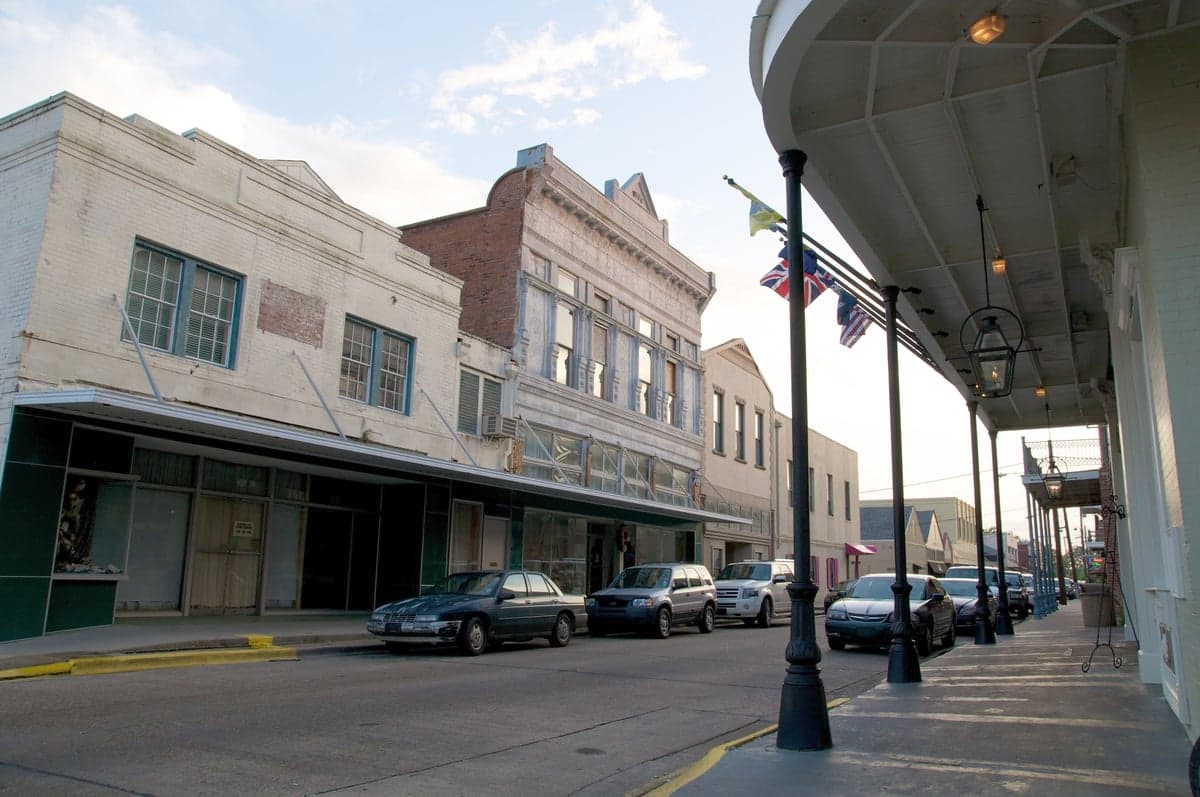

Photo: Wikipedia
Political ClimatePolitical Climate in Thibodaux, LA
District shown is the primary district for this city’s centroid. Cities may span multiple districts.
Local Political AnalysisPolitical Analysis of Thibodaux, LA
Thibodaux is about as solidly conservative as it gets in Louisiana, and that’s not changing anytime soon. The Cook PVI of R+22 tells you the story straight up—this area votes Republican by a massive margin, and it’s been that way for decades. You don’t see the kind of wild swings you get in some suburbs; folks here know what they believe and they stick with it. The trajectory is steady, maybe even a little more conservative as the years go by, because the people moving in tend to be families looking for that small-town, low-tax, low-regulation lifestyle that’s getting harder to find elsewhere.
How it compares
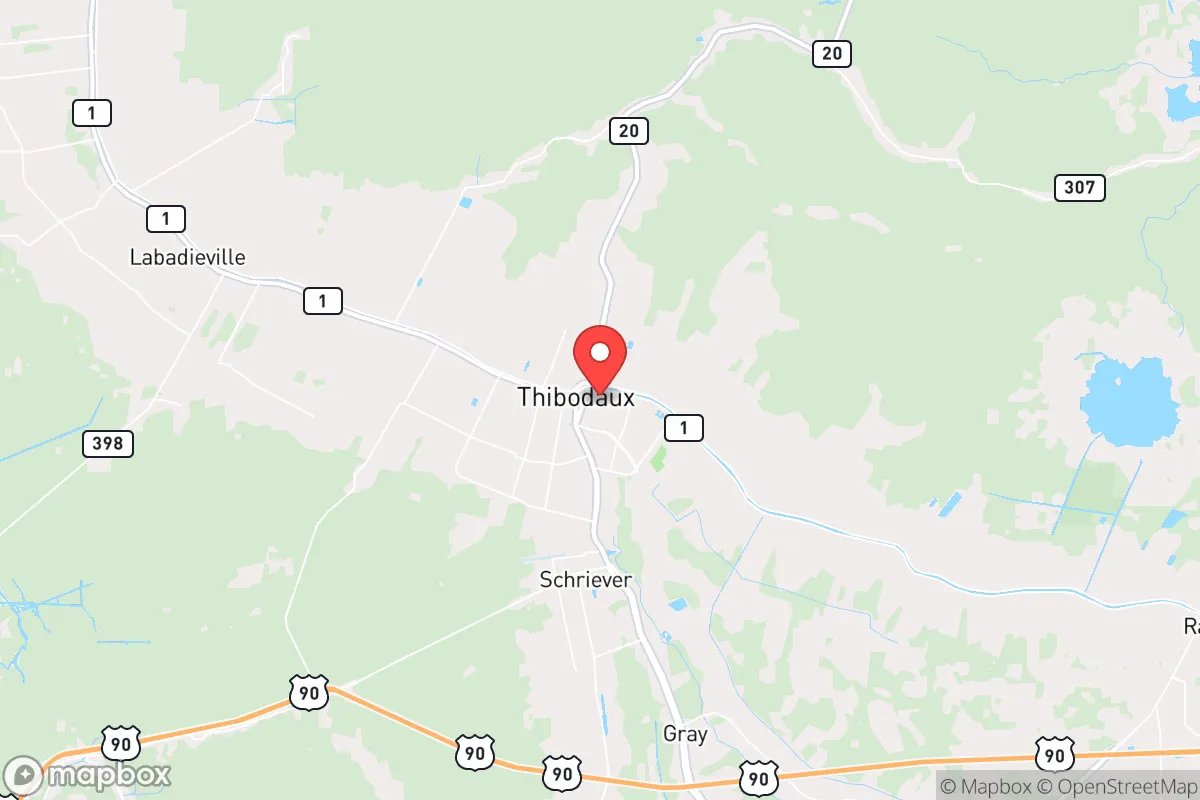
Drive thirty minutes east to Houma, and you’ll find a similar vibe—heavy Republican, blue-collar, oil-and-gas roots. But head west toward Lafayette, and you start seeing a bit more of a mix, especially around the university. Thibodaux itself is the heart of Lafourche Parish, and the parish as a whole leans even redder than the state average. The contrast is sharp if you go south to Grand Isle or north to Baton Rouge; Baton Rouge has that urban-progressive drift that’s been creeping in, with higher taxes and more government meddling in local business. Thibodaux doesn’t have that problem. The local government here still respects that the best way to run a community is to keep the bureaucracy small and let people handle their own affairs. You won’t find the kind of zoning overreach or business-killing regulations that plague bigger cities.
What this means for residents
For the people living here, the political climate translates directly into everyday freedom. Property taxes stay reasonable, there’s no city income tax, and the local school board isn’t pushing radical curriculum changes that ignore parental rights. The Second Amendment is taken seriously—you can carry without a permit, and nobody’s trying to take your guns away. The biggest concern for residents right now is watching how state-level politics might try to impose progressive policies from above, like stricter environmental rules that would hammer the oil-and-gas jobs that keep this town running. There’s a real wariness about any shift toward the kind of government overreach you see in places like New Orleans or California. The local culture is still built around family, church, and hard work, and people here are protective of that.
One thing that sets Thibodaux apart culturally is the strong Cajun and French heritage, which comes with a deep distrust of centralized authority—that’s baked into the DNA. You see it in the way people resist mask mandates, vaccine passports, or any kind of government telling them what to do with their bodies or their businesses. The local festivals, like the Thibodaux Firemen’s Fair, are community-run, not government-managed. The long-term outlook is cautiously optimistic: as long as the state doesn’t get too heavy-handed, Thibodaux will stay a place where conservative values aren’t just tolerated—they’re the norm. But if the progressive wave keeps washing over Louisiana from the bigger cities, you might see more friction between local freedom and state control. For now, though, it’s still a good place to raise a family without the government breathing down your neck.

State Political ClimatePolitical Climate in Louisiana
State Political AnalysisPolitical Environment in the State
Louisiana has long been a reliably red state in federal elections, but its political climate is far more complex than a simple partisan label suggests. The state has voted for the Republican presidential candidate in every election since 2000, with Donald Trump winning it by nearly 20 points in 2020 and by a similar margin in 2024. However, the state’s political landscape is a patchwork of deep-red rural parishes, culturally conservative Cajun country, and increasingly blue urban centers like New Orleans and Baton Rouge. Over the past 20 years, the GOP has consolidated power at the state level, now holding supermajorities in both legislative chambers and every statewide elected office, but the underlying cultural and demographic currents are shifting in ways that could reshape the state’s trajectory.
Urban vs. rural divide
The political map of Louisiana is a textbook case of the urban-rural split that defines American politics. New Orleans (Orleans Parish) is the state’s most reliable Democratic stronghold, delivering over 80% of its vote to Joe Biden in 2020 and Kamala Harris in 2024. Baton Rouge (East Baton Rouge Parish) is more competitive but has trended leftward, with Biden winning it by about 10 points in 2020. The state’s other major city, Shreveport (Caddo Parish), is also solidly blue, driven by a large African American population and unionized industrial workers. In contrast, the rural parishes of north Louisiana—like Ouachita (Monroe), Bossier (Bossier City), and Rapides (Alexandria)—vote Republican by margins of 30 to 40 points. The Acadiana region, centered around Lafayette (Lafayette Parish), is culturally conservative but has a strong independent streak; it votes reliably red but with a libertarian bent, often favoring candidates who emphasize local control and gun rights over establishment GOP figures. The suburban parishes surrounding New Orleans—St. Tammany (north shore of Lake Pontchartrain) and Livingston—are among the most Republican in the state, with St. Tammany voting +35 for Trump in 2020. This geographic divide means that while the state legislature is dominated by rural and suburban Republicans, the urban centers exert outsized influence on cultural and economic policy through their concentration of media, universities, and business interests.
Policy environment
Louisiana’s policy environment is a mixed bag for conservatives. On the positive side, the state has no state income tax on corporate income (though it does have a personal income tax with a flat rate of 3% as of 2025, down from a progressive structure a decade ago). The state’s regulatory posture is generally business-friendly, particularly in the energy and petrochemical sectors, which dominate the economy along the Mississippi River corridor from Baton Rouge to New Orleans. However, the state’s sales tax is among the highest in the nation, averaging over 9.5% when local add-ons are included, which hits low-income families hardest. On education, Louisiana has a robust school choice program, including the Louisiana Scholarship Program and a growing charter school sector, particularly in New Orleans, which has one of the highest percentages of charter school students in the country. However, the state’s public school system consistently ranks near the bottom nationally in test scores and graduation rates. Healthcare policy is a flashpoint: Louisiana expanded Medicaid under the Affordable Care Act in 2016 under then-Governor John Bel Edwards (a Democrat), and the expansion has remained in place despite Republican legislative majorities. Election laws are moderately restrictive: the state requires a photo ID to vote, has no-excuse absentee voting (expanded during COVID but made permanent), and has not adopted widespread mail-in voting. The state’s abortion ban, triggered after the Dobbs decision in 2022, is one of the strictest in the nation, with no exceptions for rape or incest—a policy that remains popular in rural areas but is a source of tension in urban centers.
Trajectory & freedom
Louisiana’s trajectory on personal freedom is a study in contrasts. On gun rights, the state is a clear winner: it has permitless carry (constitutional carry) since 2021, no red flag law, and strong preemption laws that prevent local governments from enacting their own gun restrictions. This is a point of pride for many residents, and the state’s gun culture is deeply ingrained. On parental rights, Louisiana passed the “Parents’ Bill of Rights” in 2024, which requires schools to notify parents of any curriculum related to sexual orientation or gender identity and prohibits instruction on these topics in grades K-5. This law has been a major victory for conservative families. On medical freedom, the state has been more mixed: COVID-19 vaccine mandates were never imposed at the state level, but some local governments (notably New Orleans) required proof of vaccination for indoor dining and events for a period. The state legislature has since passed laws prohibiting vaccine mandates by private employers and government entities, a strong step toward medical autonomy. On property rights, Louisiana’s unique civil law system (based on the Napoleonic Code) gives property owners strong protections against eminent domain, but the state’s high property taxes (relative to other Southern states) are a burden. On taxation, the trend is positive: the flat income tax and elimination of the corporate franchise tax have made the state more competitive, but the high sales tax remains a drag. Overall, the state is becoming more free in the areas of gun rights, parental rights, and medical autonomy, but the high tax burden and weak public education system are persistent concerns.
Civil unrest & political movements
Louisiana has a history of political activism that is both vibrant and, at times, volatile. The Black Lives Matter protests in 2020 were significant in New Orleans and Baton Rouge, with demonstrations over police brutality drawing thousands of participants. These protests were largely peaceful but did lead to some property damage and clashes with law enforcement. On the right, the state has a strong Second Amendment movement, with groups like the Louisiana Shooting Association and the National Rifle Association maintaining a visible presence. The “Cajun Navy,” a volunteer rescue group that formed after Hurricane Katrina, has become a symbol of grassroots conservative self-reliance and community organizing. Immigration politics are less of a flashpoint in Louisiana than in border states, but the state has seen an influx of migrants in recent years, particularly in the New Orleans area, leading to some local tensions over resources. There is no sanctuary city policy in Louisiana; in fact, the state passed a law in 2024 requiring local law enforcement to cooperate with federal immigration authorities. Secessionist rhetoric is minimal, but there is a strong strain of “Louisiana First” populism, particularly in the Acadiana region, that emphasizes state sovereignty and resistance to federal overreach. Election integrity has been a topic of debate since 2020, with the state legislature passing a voter ID law and tightening absentee ballot procedures, though no major controversies have erupted. The most visible political flashpoint for a new resident would likely be the ongoing debate over the state’s education system, with school choice advocates clashing with teachers’ unions in Baton Rouge and New Orleans.
Projection
Over the next 5-10 years, Louisiana is likely to remain a red state at the federal level, but the margins could narrow as the urban centers of New Orleans and Baton Rouge continue to grow and diversify. The state’s population is aging and slowly declining, with younger, more educated residents leaving for Texas, Florida, and Tennessee. This out-migration is a concern for conservatives, as it tends to drain the state of its entrepreneurial and family-oriented population. However, the state is also seeing an influx of retirees and remote workers from higher-tax states like California and New York, drawn by the low cost of living and the state’s cultural appeal. These newcomers tend to be more moderate or libertarian, which could shift the political center of gravity slightly. The biggest wildcard is the state’s vulnerability to hurricanes and coastal erosion, which could drive population shifts away from the southern parishes and toward the northern part of the state. In the legislature, the Republican supermajority is likely to hold, but internal divisions between the business-friendly, establishment wing and the more populist, anti-tax wing could become more pronounced. A new resident moving in now should expect a state that is culturally conservative and politically red, but with a growing libertarian streak and a persistent tension between the urban and rural populations. The high sales tax and weak public schools are likely to remain challenges, but the state’s low housing costs, strong gun rights, and parental rights protections make it an attractive option for families who prioritize those values.
For a new resident, the bottom line is this: Louisiana offers a high degree of personal freedom in the areas that matter most to conservatives—gun rights, parental control over education, and medical autonomy—but you’ll pay for it with a high sales tax and a public school system that may require you to explore private or charter options. The state’s political climate is stable and reliably red, but the cultural divide between New Orleans and the rest of the state is real and will shape your experience depending on where you choose to settle. If you’re looking for a place where your values are reflected in state law and where you can live without heavy-handed government interference, Louisiana is a solid choice—just be prepared for the humidity and the hurricanes.
* Values derived from national, state, county, city and local statistics and may differ in a specific area. Last updated: 2026-10-10T16:29:11.000Z
Narrative content on this page is AI-generated and may contain mistakes. Verify any details that matter before acting on them.
ReloMaps may earn a commission from affiliate links at no extra cost to you.

