Photo: Wikipedia
Strategic Assessment of Thibodaux, LA
Meaningful friction. Expect exposure to either population pressure, blast zones, or natural disaster risk. Consider buying a retreat property.
What does the Strategic Assessment tell us?
Our Strategic Assessment grades tactical survivability of an area. Major population centers, military targets, fallout zones, natural disasters, and border exposure all drive risk — lower exposure means a more defensible position in a crisis.
This is heavily inspired by Joel Skousen's Strategic Relocation book. Highly recommended you checkout the book ($)What does this tell us?
Our Strategic Assessment grades tactical survivability of an area. Major population centers, military targets, fallout zones, natural disasters, and border exposure all drive risk — lower exposure means a more defensible position in a crisis.
This is heavily inspired by Joel Skousen's Strategic Relocation book. Highly recommended you checkout the book ($)Strategic Pillars

Key Distances
Regional Safe Places
Below is our recommended "safe zones" in Louisiana and the surrounding area based on our strategic heuristics. For most people, it's unrealistic to live in a “safe zone” full-time due to work, family or other personal reasons. They tend to be more rural. However, many of these areas are perfect for second homes and retreat properties that double as a vacation home or even a short-term rental.

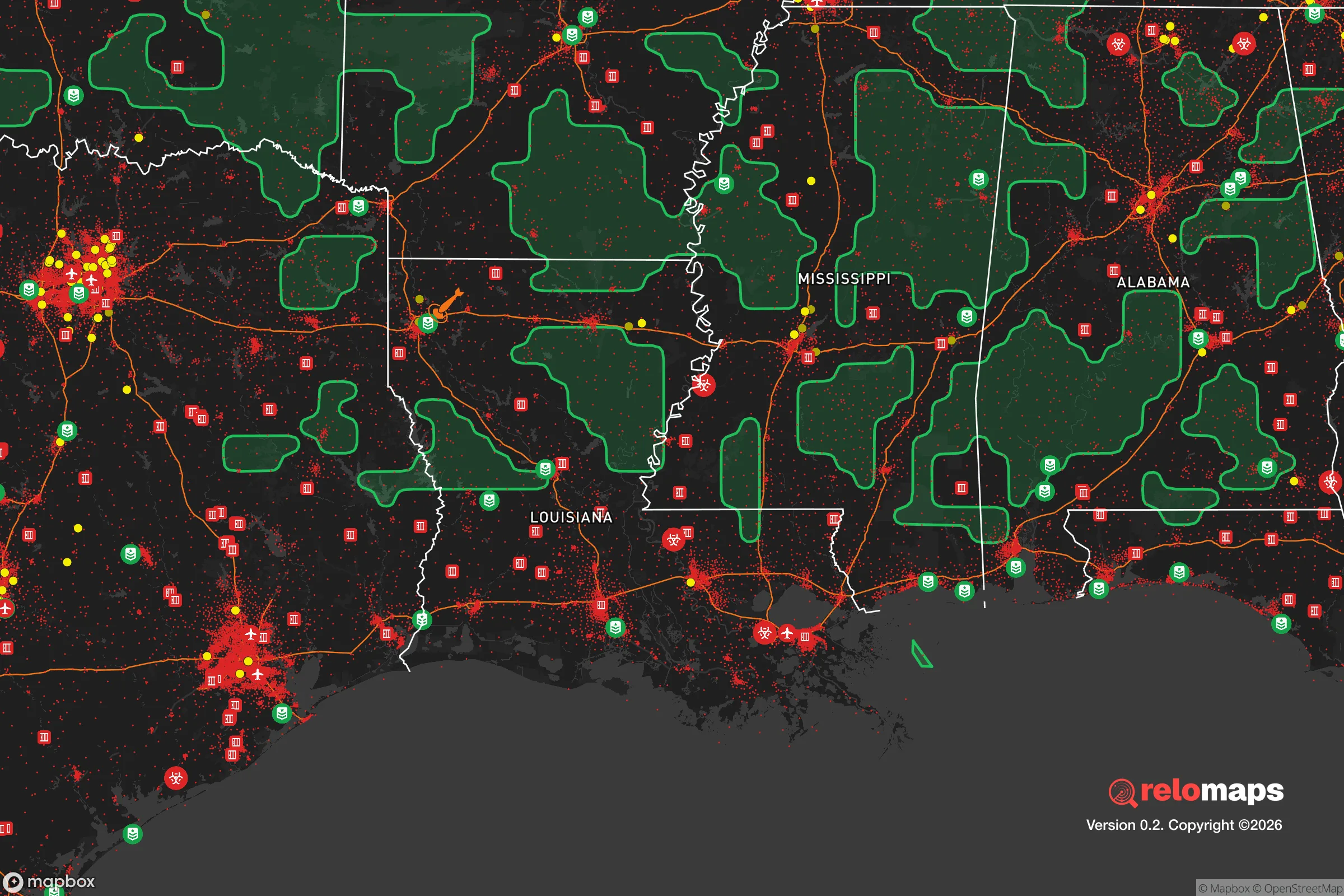


Important Note: For informational purposes only. This does not mean nothing bad ever happens in the green zones. Please use common sense. This is based on public data and modeled with AI. We tried to take a conservative approach but mistakes happen. We update this regularly as new information becomes available.
Solar Generator Recommendations
Backup power matters more here than in safer locations. We've picked three solar generators across budgets and capacity tiers — start with the budget unit if you only need a few essentials, or step up if you want to run a fridge and HVAC for days at a time.

Jackery Portable Power Station Explorer 300
Budget OptionPower on the Go: Weighing only 11 lbs, it's convenient to set up and store with book-sized foldable solar panels

BLUETTI Portable Power Station AC180
Designed for both indoor and outdoor scenarios, AC180 is highly capable as it has a robost capacity and continuous output power.

EF ECOFLOW DELTA Pro Ultra Power Station
Upgraded PickEcoFlow DELTA Pro Ultra is a whole-home energy system designed to grow with your family. Integrated with the Smart Home Panel 2, it scales to meet your evolving energy needs — keeping your home powered, intelligent, and secure through every stage of life.
We earn a commission, at no additional cost to you.
Strategic Assessment Analysis
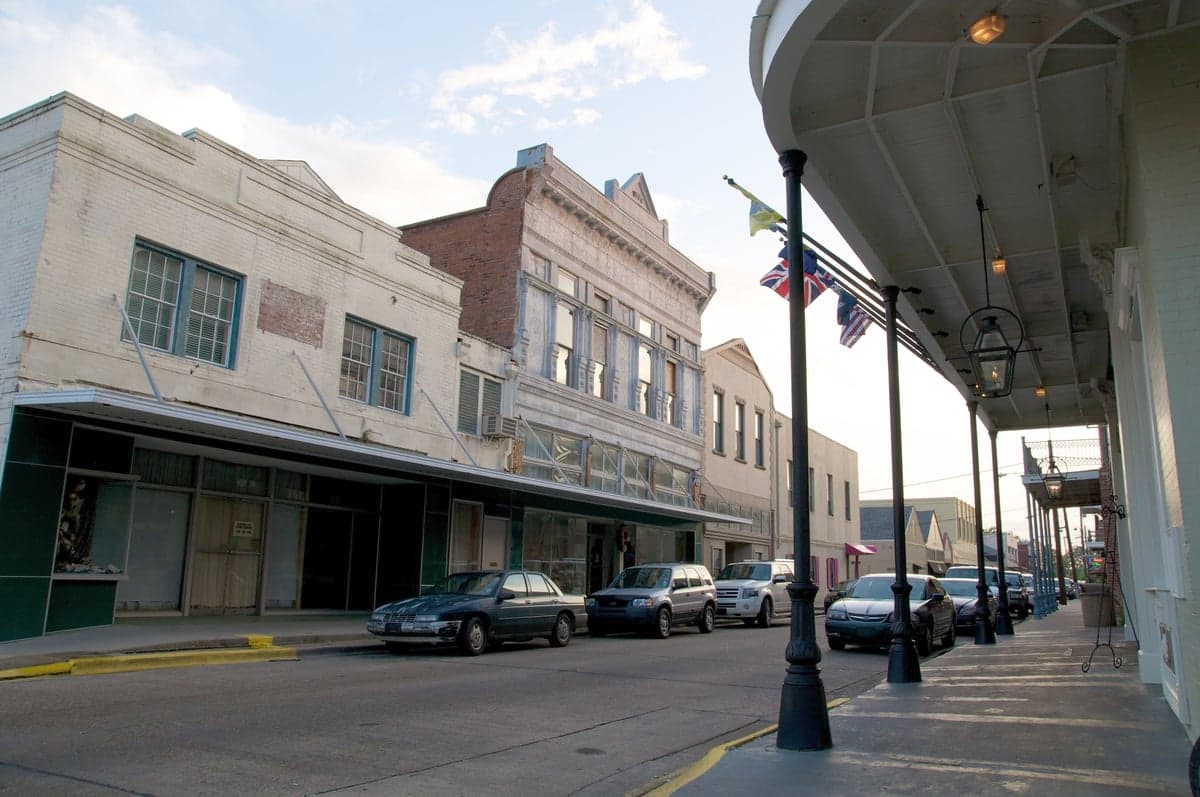
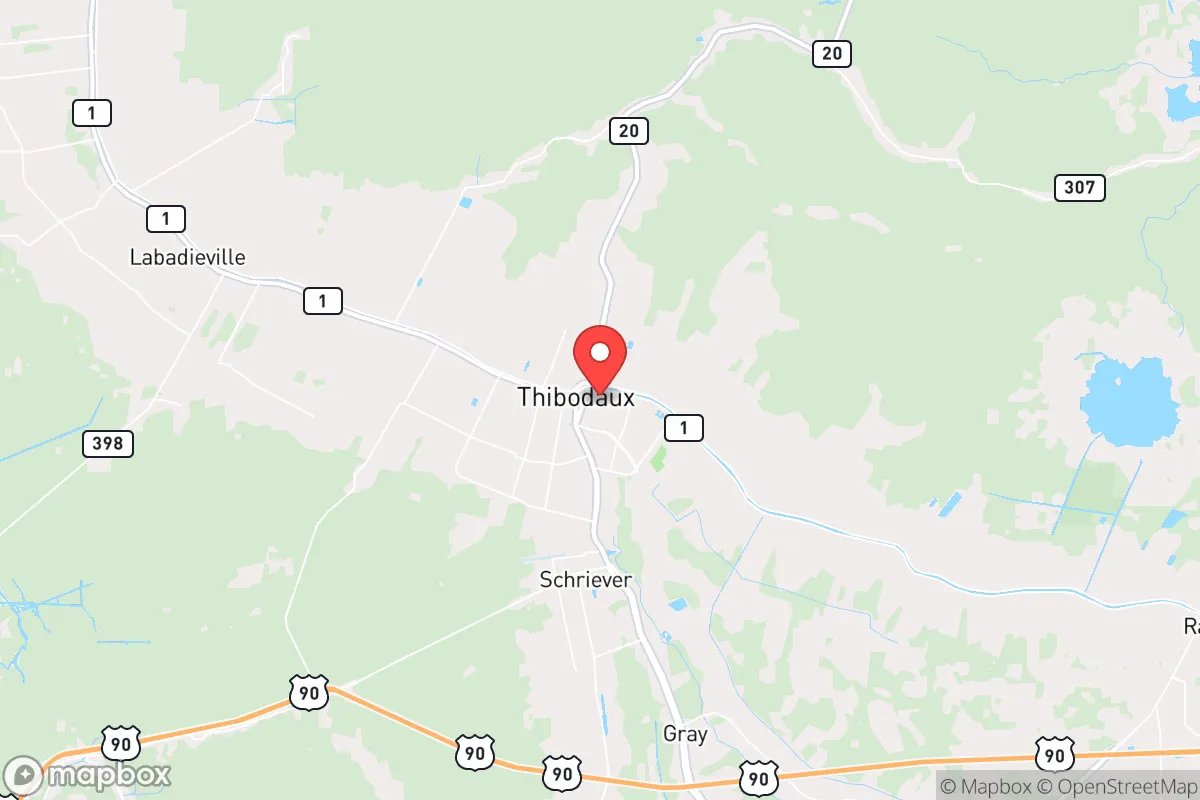
Thibodaux, Louisiana, offers a strategic paradox for the prepper-minded relocator: it sits in a flood-prone delta yet provides a surprising degree of isolation from the worst of America’s potential flashpoints. Located roughly 50 miles southwest of New Orleans and 60 miles south of Baton Rouge, this bayou town of about 15,000 people is far enough from major urban centers to avoid the immediate crush of a collapse event, yet close enough to access critical supplies—if you move fast. The real advantage here isn’t the town itself, but the surrounding Lafourche Parish, a narrow strip of land flanked by swamps and the Gulf, which naturally filters out the chaos of the interstate corridor. For a conservative-leaning individual or family looking to weather civic unrest, mass casualty events, or a breakdown of supply chains, Thibodaux offers a low-profile base with high natural defensibility—provided you understand the trade-offs.
Geographic position and natural advantages for long-term survival
Thibodaux’s location is its strongest card. The town is the seat of Lafourche Parish, which sits on Bayou Lafourche, a 106-mile-long distributary of the Mississippi River. This waterway is a natural barrier and a lifeline: it provides fresh water, fish, and a transportation route that’s hard for outsiders to navigate without local knowledge. The surrounding terrain is a mix of cypress swamps, marshland, and sugarcane fields, creating a natural moat effect. To the east, the vast Barataria Preserve and swampland make overland travel difficult; to the west, the Atchafalaya Basin—the largest swamp in the United States—acts as a buffer against any movement from the I-10 corridor. This means that in a scenario where highways become clogged or dangerous, Thibodaux is effectively an island. The nearest major interstate, I-10, is 35 miles north, and the only practical road access is via LA-1 or LA-20, both two-lane highways that can be easily monitored or blocked. For a family wanting to avoid the fallout of a New Orleans port shutdown or a Baton Rouge refinery disaster, this isolation is a feature, not a bug. The area also has a strong agricultural base—sugarcane, soybeans, and crawfish farming—which means local food production is a reality, not a fantasy. You won’t starve here if the trucks stop running.
Risks, exposures, and proximity to fallout-relevant landmarks
No location is perfect, and Thibodaux has real vulnerabilities that a prepper must account for. The most obvious is hurricane risk. Lafourche Parish is ground zero for Gulf storms; Hurricane Ida (2021) caused catastrophic damage here, with storm surges pushing 12 feet inland and knocking out power for weeks. Any survival plan must include robust flood mitigation—elevated structures, sandbags, and a generator that can run for days. The second risk is industrial. Thibodaux is surrounded by oil and gas infrastructure: the Port of Fourchon, 40 miles south, is a critical hub for Gulf of Mexico energy production, and the LOOP (Louisiana Offshore Oil Port) is nearby. In a mass casualty event or civil unrest, these facilities become targets. A coordinated attack on the LOOP or the refineries in nearby Garyville could trigger a massive fire or chemical release, forcing an evacuation. The prevailing winds blow from the south, so a plume from the port would head straight toward Thibodaux. Additionally, the town is 50 miles from the Waterford Nuclear Generating Station in Killona, a 1,200-megawatt reactor. While it’s not a Chernobyl-style risk, a sabotage event or natural disaster could create a fallout zone that extends into the parish. The good news: Thibodaux is far enough from New Orleans (population 380,000) and Baton Rouge (225,000) that you won’t see the immediate urban panic. But you are within a 100-mile radius of two major petrochemical corridors and a nuclear plant—so your bug-out plan should have a secondary location north of I-10, like in the pine hills of Washington Parish.
Practical resilience for a relocator: food, water, energy, and defensibility
For daily life in a degraded scenario, Thibodaux scores well on the basics. Water is abundant: Bayou Lafourche is a fresh water source, though it requires filtration due to agricultural runoff and saltwater intrusion during droughts. Many locals already rely on rainwater catchment or deep wells—something you’d want to install immediately. The soil is rich, and the growing season is 10 months long, so a family can produce a significant portion of their own food. Hunting and fishing are cultural norms here; deer, duck, and speckled trout are plentiful, and the swamps are full of nutria and alligator if things get desperate. Energy is a mixed bag. The grid is unreliable—hurricanes and thunderstorms cause frequent outages—but natural gas is cheap and widely available. A dual-fuel generator or a propane setup is a must. Solar works, but the humidity and cloud cover reduce efficiency; you’ll need a battery bank and a backup plan. Defensibility is where Thibodaux shines. The town itself is compact, with a grid of streets that can be easily patrolled or barricaded. The surrounding bayous and swamps mean that any approach by land is funneled through a few choke points. The local culture is heavily Cajun and Creole, with a strong tradition of self-reliance, hunting, and community mutual aid. Outsiders are noticed quickly. For a relocator, the key is to integrate—learn French, attend a fais do-do, and buy from local farmers. The parish sheriff’s office is well-funded from oil revenue and has a reputation for quick response, but in a collapse, you’ll rely on neighbors, not 911. The biggest practical challenge is medical access. Thibodaux Regional Medical Center is a solid 200-bed facility, but it’s not a trauma center. For serious injuries, you’re looking at a 45-minute drive to Houma or an hour to New Orleans—both of which could be compromised in a crisis. Stockpile antibiotics, trauma kits, and know basic field medicine.
The overall strategic picture for Thibodaux is one of calculated trade-offs. You get a naturally defensible position with abundant water, food, and a community that already lives with a prepper mindset—just under the guise of Cajun practicality. The downsides are real: hurricane exposure, industrial targets within 50 miles, and a reliance on a single road network for resupply. For a conservative family looking to avoid the urban collapse scenarios playing out in bigger cities, Thibodaux offers a viable long-term base, but it’s not a bug-out location for a SHTF event—it’s a place to be already established when the trouble starts. If you can handle the humidity, the mosquitoes, and the occasional flood, this bayou town gives you a fighting chance to ride out the storm, whatever form it takes.

* Values derived from national, state, county, city and local statistics and may differ in a specific area. Last updated: 2026-10-10T16:29:11.000Z
Narrative content on this page is AI-generated and may contain mistakes. Verify any details that matter before acting on them.
ReloMaps may earn a commission from affiliate links at no extra cost to you.

