 Popular
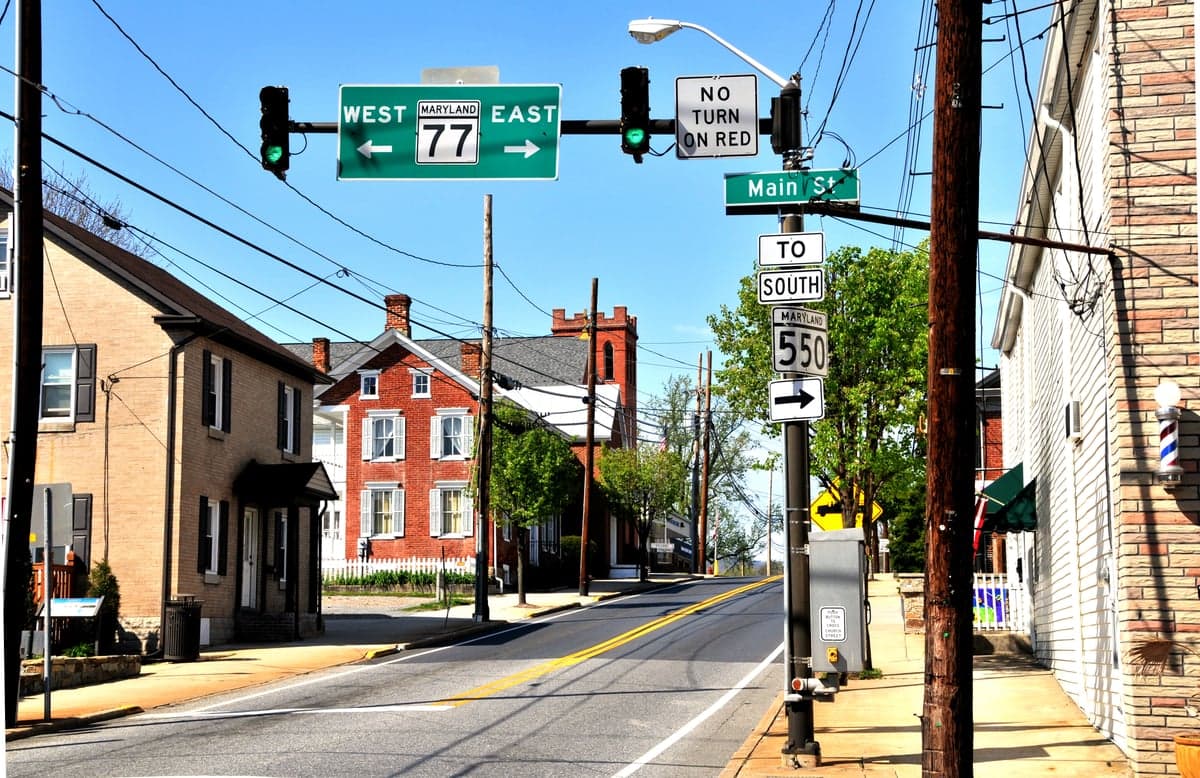
Photo: Wikipedia
Personal Sovereignty in Thurmont, MD
Viable for self-reliance. Generally workable, though some barriers may limit total independence.
What does Personal Sovereignty tell us?
Personal Sovereignty measures your capacity for self-reliance and independence with minimal government friction. Higher scores mean fewer barriers between you and the way you want to live... but it assumes you have the space you need and good neighbors.
What does this tell us?
Personal Sovereignty measures your capacity for self-reliance and independence with minimal government friction. Higher scores mean fewer barriers between you and the way you want to live... but it assumes you have the space you need and good neighbors.
State Policy
Energy independence: Importer (8% of energy produced in-state)
Personal Liberty
Homesteading

Personal Liberty Analysis
Thurmont, Maryland, offers a notably higher degree of personal sovereignty than much of the state, largely due to its rural Frederick County location and the practical realities of small-town life. While Maryland as a whole leans heavily into progressive governance, Thurmont sits in a pocket where local culture, zoning, and enforcement patterns still allow for a meaningful level of self-determination. For a single individual or family with a survivalist or prepper mindset, this town represents a strategic compromise—close enough to the D.C.-Baltimore corridor for economic opportunity, but far enough removed to avoid the worst of the regulatory and cultural overreach that plagues the state’s urban centers.
Tax burden and regulatory posture in Frederick County
Maryland’s state-level tax burden is among the highest in the nation, and Thurmont residents are not exempt from that reality. The state income tax ranges from 2% to 5.75%, and Frederick County adds a local income tax of 3.2%, bringing the combined top marginal rate to nearly 9%. Property taxes in Thurmont are assessed at the county level, with a rate of roughly 1.06% of assessed value—moderate by national standards but high compared to neighboring Pennsylvania or West Virginia. Sales tax is 6%, and the state taxes everything from gasoline to digital services. However, the regulatory posture in Thurmont itself is far more relaxed than in Montgomery or Prince George’s counties. The town’s small government ethos means fewer business license hurdles, less aggressive code enforcement, and a general hands-off approach to property use that you won’t find in more densely populated areas. For someone looking to minimize government friction, Thurmont’s local culture is a significant buffer against Annapolis’s overreach.
Self-defense rights and Maryland gun law specifics
Maryland’s gun laws are restrictive by national standards, and Thurmont residents must navigate them carefully. The state requires a Handgun Qualification License (HQL) to purchase a handgun, which involves a training course, fingerprinting, and a background check. The state also maintains a ban on “assault weapons” as defined by a 2013 law, and magazine capacity is limited to 10 rounds for long guns and 10 rounds for handguns. Concealed carry is permitted with a Wear and Carry Permit, but Maryland is a “may issue” state in practice—though a 2022 Supreme Court ruling (NYSRPA v. Bruen) has forced a shift toward “shall issue” standards. In Frederick County, the Sheriff’s Office has historically been more supportive of Second Amendment rights than counterparts in Baltimore or Montgomery counties, and permit issuance has increased since the ruling. Open carry is legal but rarely practiced and may invite unwanted attention. For preppers, the key takeaway is that while Maryland’s state-level laws are burdensome, Thurmont’s rural environment and local law enforcement culture provide a more permissive atmosphere for responsible gun ownership than the state’s reputation suggests. Stockpiling ammunition and maintaining a defensive firearm are feasible, but you must stay within the letter of state law to avoid legal jeopardy.
Self-reliance and homesteading viability: lot sizes, zoning, and off-grid feasibility
Thurmont’s zoning and lot sizes make it one of the more viable spots in Maryland for self-reliance and homesteading. The town itself has a mix of residential lots, but the surrounding unincorporated areas of Frederick County offer agricultural zoning with minimum lot sizes of 3 to 5 acres, and many properties in the Thurmont area are 10 acres or larger. This allows for substantial gardening, small livestock (chickens, goats, rabbits), and even limited hunting on private land with proper permits. Zoning codes in the county are generally permissive for agricultural uses, though you’ll need to check for specific restrictions on structures like barns, greenhouses, or workshops. Off-grid feasibility is limited by state building codes—Maryland requires connection to the electrical grid for new construction, and solar panels must be grid-tied unless you pursue a costly exemption. Rainwater collection is legal but regulated for potable use. Septic systems are standard for rural properties, and well water is common. Composting toilets are allowed in some circumstances. For a serious prepper, the best approach is to buy a property with existing infrastructure (well, septic, grid power) and then gradually add redundancy—solar backup, wood stoves, food storage—without triggering new inspections. Thurmont’s rural character means neighbors are generally like-minded and will not report you for a chicken coop or a root cellar.
Personal liberties: parental rights, medical autonomy, speech, and property
Maryland’s state government has aggressively expanded its reach into personal liberties in recent years, and Thurmont residents must contend with these policies even if local enforcement is lax. Parental rights have been eroded by laws like the 2023 “Trans Health” bill, which allows minors to consent to gender-affirming care without parental notification, and the state’s sex education curriculum is mandatory and comprehensive. Medical autonomy is further constrained by vaccine mandates for school attendance and healthcare workers, though exemptions exist for medical and religious reasons. Free speech is protected under the First Amendment, but Maryland has a “hate speech” statute that can be used to prosecute certain types of expression, and social media platforms are subject to state-level content moderation laws. Property rights are relatively strong in Frederick County, with no county-level rent control and limited eminent domain abuse, but the state’s environmental regulations can restrict land use near waterways or wetlands. For a conservative individual or parent, the practical reality is that Thurmont’s local community and school board (which leans conservative) provide a buffer against the worst of Annapolis’s overreach. Homeschooling is legal and relatively straightforward, with no mandatory notification of curriculum. Medical freedom is exercised quietly—many residents simply opt out of state mandates by choosing private healthcare or alternative practitioners. The key is to live below the radar and rely on the town’s culture of mutual respect for personal choices.
Overall, Thurmont offers a level of personal sovereignty that is rare in Maryland and increasingly scarce in the Mid-Atlantic region. The town’s rural setting, conservative local governance, and practical enforcement patterns allow residents to live with far less government intrusion than in the state’s urban centers. While you cannot escape Maryland’s high taxes, restrictive gun laws, or progressive state mandates entirely, Thurmont provides a workable base for a self-reliant lifestyle. For a prepper or survivalist, it is a strategic location that balances access to resources with a meaningful degree of autonomy—far better than anything inside the Beltway, but still requiring vigilance against the creep of state-level overreach. If you are willing to navigate the regulatory landscape and build relationships with like-minded neighbors, Thurmont can be a solid anchor for personal freedom in a state that often works against it.

* Values derived from national, state, county, city and local statistics and may differ in a specific area. Last updated: 2026-04-22T02:34:52.000Z
Narrative content on this page is AI-generated and may contain mistakes. Verify any details that matter before acting on them.
ReloMaps may earn a commission from affiliate links at no extra cost to you.

