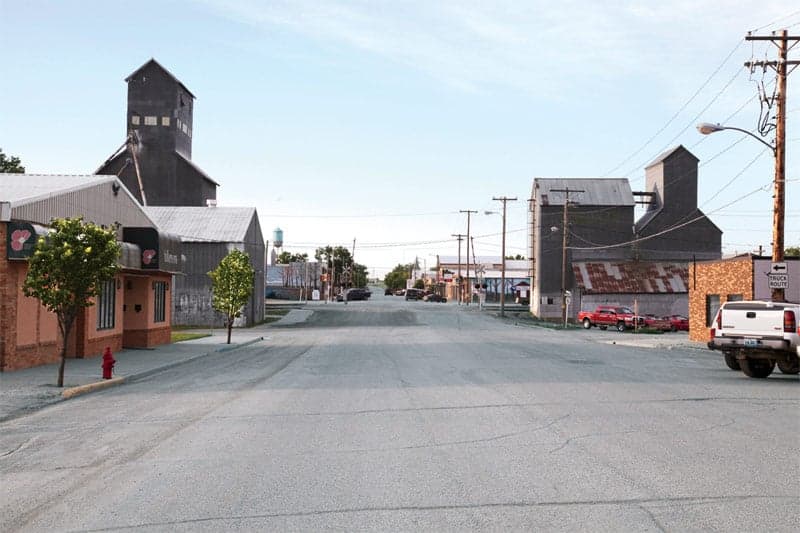
Photo: Wikipedia
Strategic Assessment of Tioga, ND
Workable tactical position. Some exposure to population density or targets, but generally defensible in a crisis.
What does the Strategic Assessment tell us?
Our Strategic Assessment grades tactical survivability of an area. Major population centers, military targets, fallout zones, natural disasters, and border exposure all drive risk — lower exposure means a more defensible position in a crisis.
This is heavily inspired by Joel Skousen's Strategic Relocation book. Highly recommended you checkout the book ($)What does this tell us?
Our Strategic Assessment grades tactical survivability of an area. Major population centers, military targets, fallout zones, natural disasters, and border exposure all drive risk — lower exposure means a more defensible position in a crisis.
This is heavily inspired by Joel Skousen's Strategic Relocation book. Highly recommended you checkout the book ($)Strategic Pillars

Key Distances
Regional Safe Places
Below is our recommended "safe zones" in North Dakota and the surrounding area based on our strategic heuristics. For most people, it's unrealistic to live in a “safe zone” full-time due to work, family or other personal reasons. They tend to be more rural. However, many of these areas are perfect for second homes and retreat properties that double as a vacation home or even a short-term rental.
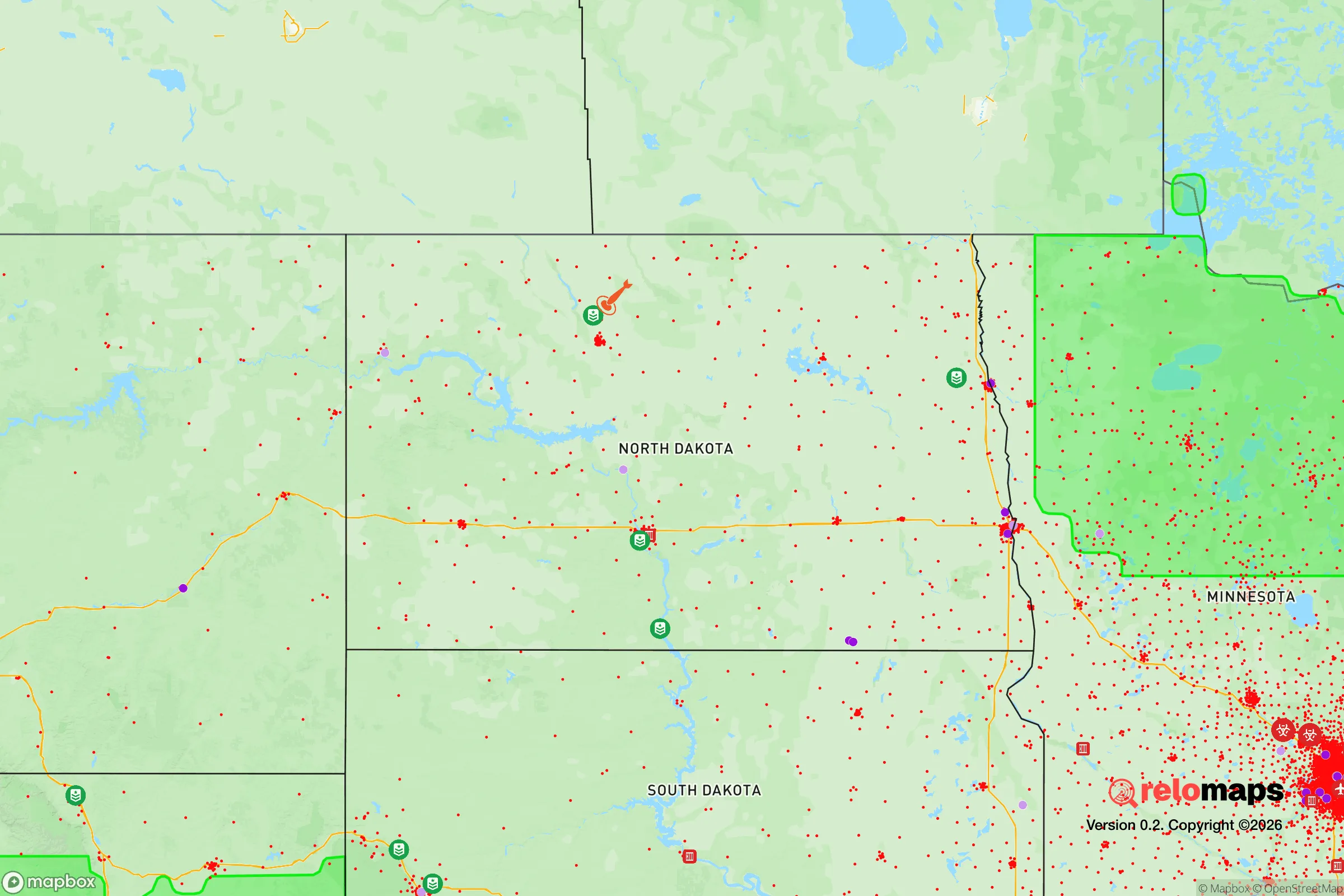
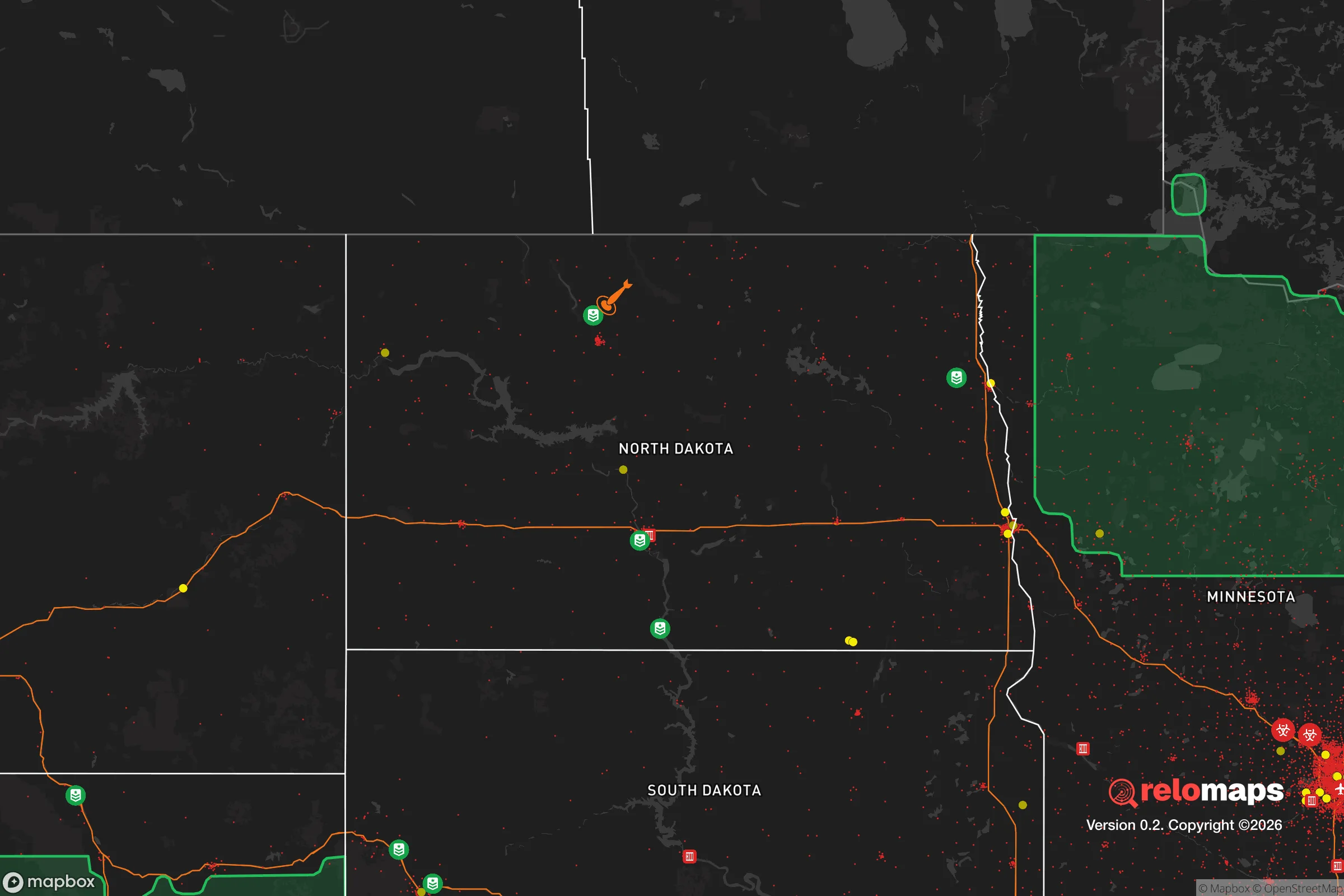


Important Note: For informational purposes only. This does not mean nothing bad ever happens in the green zones. Please use common sense. This is based on public data and modeled with AI. We tried to take a conservative approach but mistakes happen. We update this regularly as new information becomes available.
Solar Generator Recommendations
Backup power matters more here than in safer locations. We've picked three solar generators across budgets and capacity tiers — start with the budget unit if you only need a few essentials, or step up if you want to run a fridge and HVAC for days at a time.

Jackery Portable Power Station Explorer 300
Budget OptionPower on the Go: Weighing only 11 lbs, it's convenient to set up and store with book-sized foldable solar panels

BLUETTI Portable Power Station AC180
Designed for both indoor and outdoor scenarios, AC180 is highly capable as it has a robost capacity and continuous output power.

EF ECOFLOW DELTA Pro Ultra Power Station
Upgraded PickEcoFlow DELTA Pro Ultra is a whole-home energy system designed to grow with your family. Integrated with the Smart Home Panel 2, it scales to meet your evolving energy needs — keeping your home powered, intelligent, and secure through every stage of life.
We earn a commission, at no additional cost to you.
Strategic Assessment Analysis
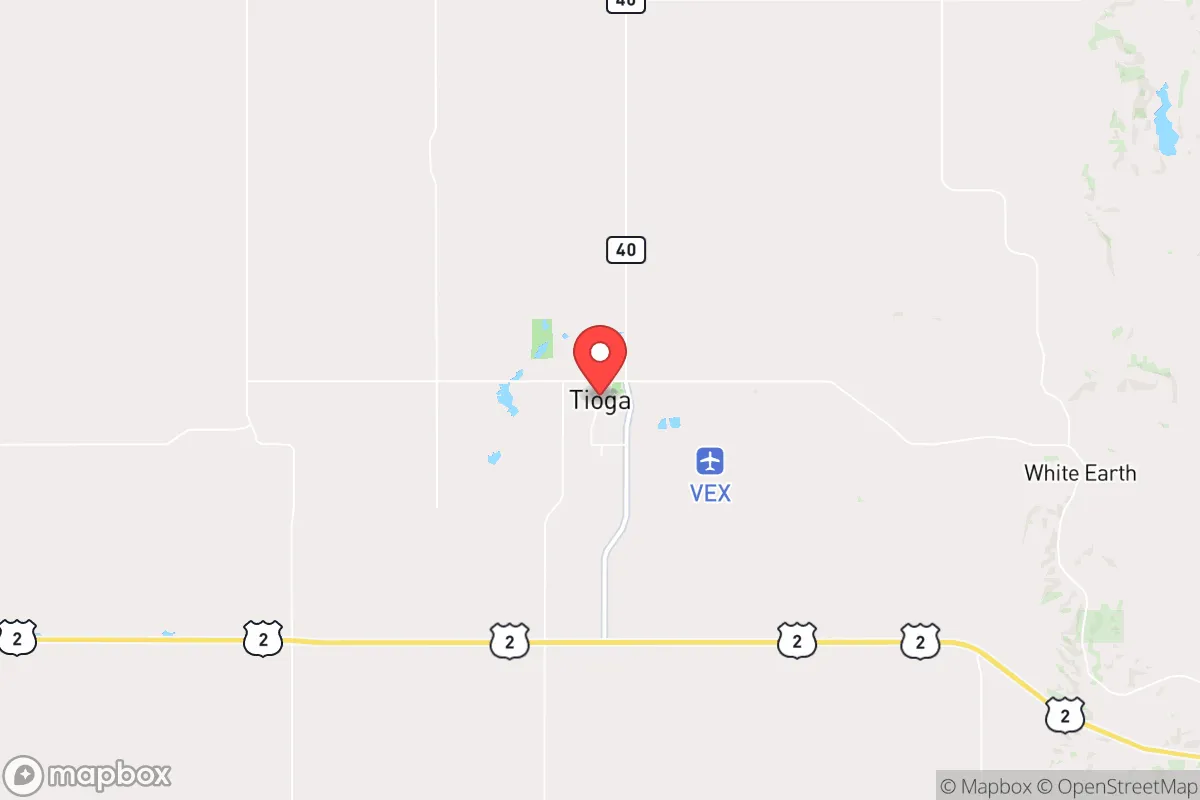
Tioga, North Dakota, sits in the heart of the Bakken oil fields, offering a unique blend of economic resilience and geographic isolation that appeals to those prioritizing long-term preparedness. Its location in northwestern North Dakota, roughly 15 miles from the Canadian border and 50 miles from Williston, places it far from major population centers and the associated risks of civil unrest or mass casualty events. The town’s population hovers around 1,200, with the surrounding Williams County sparsely populated, providing a low-density buffer that is a strategic asset for anyone seeking to avoid the vulnerabilities of urban life.
Geographic position and natural advantages for long-term security
Tioga’s position in the Missouri Plateau region offers several natural advantages for a prepper or survivalist mindset. The area is characterized by rolling plains, buttes, and river valleys, which provide natural cover and defensible terrain. The nearby Little Muddy River and the Missouri River system, about 60 miles south, offer reliable water sources, critical for self-sufficiency. The region’s cold, semi-arid climate—with average winter lows around -10°F and summer highs in the 80s—means fewer pests and disease vectors, reducing the risk of outbreaks that could accompany mass casualty events. The low humidity also preserves stored goods longer, a practical consideration for food and medical supplies. The area’s agricultural potential is limited by short growing seasons, but the surrounding ranchlands and oil infrastructure mean that local food production and energy resources are more accessible than in most rural areas. The flat-to-rolling terrain also allows for effective line-of-sight communication and observation, a key factor for security in uncertain times.
Risks, exposures, and proximity to fallout-relevant landmarks
While Tioga’s isolation is a strength, it is not without risks. The town’s proximity to the Bakken oil fields introduces industrial hazards, including potential well blowouts, pipeline leaks, or explosions. The nearest major fallout-relevant landmark is the Minot Air Force Base, about 100 miles east, which houses nuclear-capable B-52 bombers and is a potential target in a conflict scenario. The prevailing westerly winds mean that fallout from a strike on Minot would likely be carried eastward, away from Tioga, but a strike on the Canadian oil sands or the Bakken infrastructure itself could pose a risk. The area’s low population density reduces the likelihood of targeted attacks, but the oil infrastructure could attract sabotage or civil unrest during a national crisis. The nearest large city is Williston (population 30,000), which, while not a major target, could become a focal point for refugees or resource competition during a collapse. Tioga’s distance from interstates and major highways—U.S. Route 2 runs through town but is lightly traveled—means that mass migration flows are less likely to pass through, but it also limits evacuation options if a localized disaster occurs.
Practical resilience for a relocator: food, water, energy, and defensibility
For a relocator focused on practical resilience, Tioga offers several key advantages. Water access is strong: the town’s municipal water comes from the Missouri River system, but private wells in the area can tap into the Dakota Aquifer, which is deep but reliable. Rainwater collection is feasible, though annual precipitation is only about 15 inches, so storage is essential. Energy is abundant: the Bakken fields mean natural gas and oil are locally available, and many rural properties have access to propane or can install small-scale wind turbines (the area averages 12-15 mph winds). Solar is less effective due to long winters, but combined with wind, it can provide off-grid power. Food production is challenging but possible: the growing season is only 110-120 days, but cold-hardy crops like potatoes, carrots, and kale can thrive. Local ranching provides beef and bison, and hunting (deer, elk, waterfowl) is excellent. The area’s low population means that barter and trade networks are more personal and trust-based, which can be a double-edged sword—outsiders may be viewed with suspicion, but those who integrate can build strong community ties. Defensibility is high: the sparse population and open terrain mean that a well-prepared property with a good perimeter, water source, and stored supplies can be effectively defended. The nearest law enforcement is in Tioga (a small police department) or Williams County Sheriff’s office, but response times in rural areas can be 30 minutes or more, so self-reliance is a must. The town’s location near the border also offers a potential escape route into Canada, though border crossings may be restricted during a crisis.
The overall strategic picture for Tioga is one of trade-offs. It offers genuine isolation from the chaos of urban centers, abundant energy resources, and a climate that discourages large-scale migration. However, the risks from industrial infrastructure and the potential for fallout from distant targets cannot be ignored. For a single individual or family willing to invest in deep winter preparedness, water storage, and community integration, Tioga provides a solid foundation for long-term survival. The key is to recognize that no location is perfect—Tioga’s strengths lie in its remoteness and resource access, but its weaknesses are the harsh climate and industrial hazards. Those who can adapt to the cold, build relationships with locals, and secure their own water and energy will find this area a viable redoubt in an uncertain future.

* Values derived from national, state, county, city and local statistics and may differ in a specific area. Last updated: 2026-04-19T05:22:43.000Z
Narrative content on this page is AI-generated and may contain mistakes. Verify any details that matter before acting on them.
ReloMaps may earn a commission from affiliate links at no extra cost to you.

